Loading...
James A. Garfield vs William Massey
William Massey leads by 14.5 pts · 2 figures compared
…

James A. Garfield
Politician · Modern
40.8Total
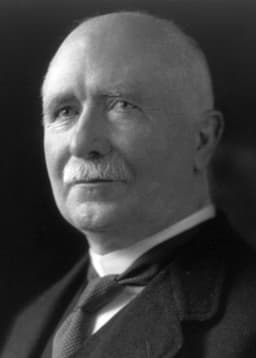
William Massey
Politician · Modern
55.3Total
Basic Information
Born
1831
1856
Died
1881
1925
Era
Modern
Modern
Nationality
United States
New Zealand
Occupation
Politician
Politician
Civilization
Western
Western
Score Comparison
Military (10%)
39.9
49.6
Political (20%)
32.2
60.0
Influence (20%)
47.9
52.5
Legacy (20%)
38.3
45.0
Leadership (15%)
33.6
85.0
Strategy (15%)
53.8
41.9
TOTAL
40.8
55.3
James A. Garfield — Complete Timeline
1880 AD
Election as President of the United StatesPolitical Action◆ Major
Garfield won the 1880 presidential election as a Republican, defeating Democrat Winfield Scott Hancock. The election was closely contested, with Garfield winning the popular vote by a narrow margin but securing a comfortable Electoral College victory.
Presidential ElectionRepublican Party
Impact: national
Advocacy for Civil Rights and EducationPolitical Action
During his brief presidency, Garfield advocated for African American civil rights and federal support for education. He appointed several African Americans to federal positions and supported the Blair Education Bill, which aimed to provide federal aid to public schools.
Civil RightsEducation Policy
Impact: nationalprogressive
1881 AD
Assassination by Charles GuiteauPolitical Action
Garfield was shot by Charles Guiteau, a disgruntled office-seeker, at the Baltimore and Potomac Railroad Station in Washington, D.C. He died from complications of his wounds on September 19, 1881, after serving only 200 days in office.
AssassinationPresidential Death
Impact: nationaltragic
William Massey — Complete Timeline
1912 AD
Became Prime Minister of New ZealandPolitical Action◆ Major
Massey became Prime Minister on 10 July 1912, leading the Reform Party. He succeeded Joseph Ward and began a 13-year tenure that shaped New Zealand's early 20th-century politics.
Prime MinisterReform Party
Impact: national
1914 AD
Led New Zealand in World War IWar◆ Major
Massey led New Zealand through World War I, committing troops to the Allied cause. He supported the British Empire's war effort and oversaw the mobilization of New Zealand's military and economy.
World War IMilitary Mobilization
Impact: global
1919 AD
Signed the Treaty of VersaillesPolitical Action◆ Major
Massey attended the Paris Peace Conference and signed the Treaty of Versailles on behalf of New Zealand. He secured New Zealand's membership in the League of Nations, marking a step in its international recognition.
Treaty of VersaillesLeague of Nations
Impact: globalconstructive
1925 AD
Died in OfficePolitical Action◆ Major
Massey died in office on 10 May 1925, becoming the first New Zealand prime minister to die while serving. His death marked the end of the Reform Party's long dominance.
Death in OfficeEnd of Era
Impact: nationaltragic
Expert Analysis
Origins
James Abram Garfield was born on November 19, 1831, in a log cabin in Orange Township, Ohio. His father died when he was two, leaving the family in poverty. Garfield worked as a canal boat driver to fund his education, eventually graduating from Williams College in 1856. He became a classics professor and later president of the Western Reserve Eclectic Institute (now Hiram College).
William Ferguson Massey was born on March 26, 1856, in Limavady, County Londonderry, Ireland. His family emigrated to New Zealand in 1862, settling in Tamaki, near Auckland. Massey had limited formal education, working on the family farm. He became involved in local politics, serving on the Auckland Provincial Council before entering national politics.
Rise to Power
Garfield's rise began with the American Civil War. He joined the Union Army in 1861, quickly rising to brigadier general after victories at Middle Creek and Chickamauga. In 1862, while still in the army, he was elected to the U.S. House of Representatives. After the war, he became a leading Republican in Congress, serving on key committees. In 1880, the Republican National Convention deadlocked between Ulysses S. Grant and James Blaine; Garfield emerged as a compromise candidate on the 36th ballot, winning the nomination and later the presidency by a narrow margin of 0.1% of the popular vote.
Massey entered the New Zealand House of Representatives in 1894 as a member of the conservative opposition. He became leader of the opposition in 1903, leading the Reform Party. In the 1911 election, his party won the most seats but fell short of a majority. After a period of political instability, Massey became Prime Minister on July 10, 1912, forming a government with the support of independent MPs. His rise was marked by his advocacy for rural farmers and small businessmen against the Liberal Party's urban and labor interests.
Leadership & Governance
Garfield's presidency lasted only 200 days, from March 4 to September 19, 1881. He focused on civil service reform, challenging the patronage system known as the spoils system. He appointed reformers to key positions and advocated for a merit-based system. He also pushed for African American civil rights, appointing several Black officials and speaking out against segregation. However, his brief tenure meant few policies were enacted. His leadership style was conciliatory, seeking to unite factions within the Republican Party.
Massey governed for 13 years, from 1912 to 1925. He implemented conservative policies favoring farmers and business, including land reforms and support for primary industries. During World War I, he led a coalition government with the Liberals, mobilizing New Zealand's economy and committing over 100,000 troops. He introduced conscription in 1916, a controversial move that sparked protests. Massey's leadership was authoritarian but effective; his Reform Party maintained power through rural support. He attended the Paris Peace Conference in 1919, securing New Zealand's independence in foreign affairs and signing the Treaty of Versailles.
Triumph & Tragedy
Garfield's greatest triumph was his election as a dark horse candidate and his early efforts at civil service reform. His assassination led to public outrage that eventually resulted in the Pendleton Civil Service Reform Act of 1883, which established the U.S. Civil Service Commission. His tragedy was his premature death, which cut short his potential. He also failed to resolve the factional disputes within his party.
Massey's triumph was leading New Zealand through World War I and gaining international recognition at Versailles. He successfully managed the war economy and maintained political stability. His tragedy was the heavy cost of war: over 18,000 New Zealanders died, and the 1918 influenza pandemic killed thousands more. His conscription policy alienated labor and Maori, and his later years saw economic troubles and declining health.
Character & Destiny
Garfield was intelligent and principled, a former teacher who believed in education and reform. He was a skilled orator and had a calm demeanor. His fate was sealed by his refusal to bow to patronage demands; Charles Guiteau, a disappointed office-seeker, shot him because he believed Garfield owed him a consulship. Garfield's death spurred civil service reform, a destiny shaped by his integrity.
Massey was pragmatic and stubborn, known as 'Farmer Bill' for his rural roots. He was a strong leader who centralized power, but his inflexibility led to conflicts with labor unions. His long tenure ended with his death in office, a testament to his political endurance. Historians rate his leadership highly (85.0), but his legacy is mixed due to his handling of conscription and Maori land policies.
Legacy
Garfield's legacy is tied to civil service reform. The Pendleton Act, passed after his death, transformed the U.S. government by reducing patronage. He is remembered as a martyr for reform, though his short term limits his direct impact. His total score of 40.8 reflects his brief tenure and limited achievements.
Massey's legacy is more substantial. He established New Zealand as a independent actor in international affairs, secured its place in the League of Nations, and shaped its political landscape for decades. His Reform Party later merged into the National Party, which dominated 20th-century politics. His scores—Political 60.0, Leadership 85.0, Legacy 45.0—reflect his longer, more impactful career. However, his policies toward Maori and labor remain controversial.
Conclusion
William Massey had greater impact than James A. Garfield. Massey's 13 years as prime minister, his leadership during World War I, and his role in securing New Zealand's sovereignty at Versailles produced lasting changes. Garfield's 200-day presidency, while symbolically important for civil service reform, lacked the time to implement significant policies. Massey's total score of 55.3 versus Garfield's 40.8 reflects this disparity. Massey's leadership score of 85.0 is particularly high, while Garfield's highest score is Strategy at 53.8. Massey shaped a nation's identity; Garfield's legacy is primarily a catalyst for reform after his death. The data supports Massey as the more consequential figure.
Rankings
🥇
William MasseyLeader
Mil: 49.6Pol: 60.0Inf: 52.5
55.3
🥈
James A. Garfield
Mil: 39.9Pol: 32.2Inf: 47.9
40.8
+14.5 behind
How This Comparison Works
Algorithm
Each figure is scored on 6 dimensions (0—100 scale) based on structured historical data: Military (10%), Political (20%), Influence (20%), Legacy (20%), Leadership (15%), Strategy (15%). The weighted total produces the final ranking.
Data Sources
Scores are computed from structured sub-indicators in the database. Scale factors adjust for era (Ancient ×0.85, Modern ×1.0) and civilization size (Eastern ×1.05, Other ×0.80) to account for differences in population and military scale.
Maximum 3 Figures
Comparisons are limited to 2—3 figures to ensure readability and statistical meaningfulness.
Error Margins
±5 points per dimension — Sub-scores are derived from historical records with inherent uncertainty. Two figures within 5 points on a dimension should be considered roughly equivalent in that area.
Total Score Accuracy
±3 points overall — The weighted combination of 6 dimensions produces a total score with approximately ±3 points of uncertainty. Differences of less than 3 points are not statistically significant— the figures are effectively tied.
Known Limitations
- Historical records are incomplete and uneven across civilizations
- Figures from oral-tradition societies may be underrepresented
- Occupation labels can misclassify multi-role figures
- Scores measure capability and impact, not moral character
- Quantitative scoring is a comparison tool, not absolute truth
Capability Radar
Military (10%) — Battles & Warfare
Battles
10
27
Win Rate
10
33
Expansion
5
36
Political (20%) — Governance & Reform
Reform
20
55
Diplomacy
30
60
Economy
15
50
Influence (20%) — Cultural & Global Reach
Cultural
15
30
Global
10
25
Legacy (20%) — Historical Impact
Historical
20
40
Longevity
10
30
Leadership (15%) — Power & Stability
Tenure
5
65
Stability
5
55
Strategy (15%) — Tactics & Innovation
Strategy
15
37
Tactics
15
38
Reform
5
45
Similar Comparisons
Comments & Discussion
No comments yet. Be the first to share your thoughts!