Loading...
James Brooke vs Julius Caesar
Julius Caesar leads by 28.6 pts · 2 figures compared
…
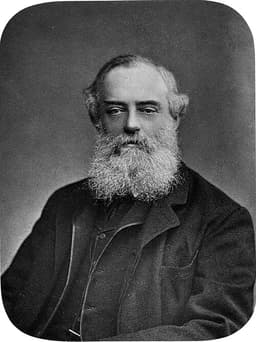
James Brooke
Politician · Modern
54.2Total

Julius Caesar
General · Ancient
82.8Total
Basic Information
Born
1803
-100
Died
1868
-44
Era
Modern
Ancient
Nationality
Great Britain
Roman Republic
Occupation
Politician
General
Civilization
Western
Western
Score Comparison
Military (10%)
38.3
88.0
Political (20%)
62.7
78.0
Influence (20%)
56.4
85.0
Legacy (20%)
49.2
82.0
Leadership (15%)
68.0
80.0
Strategy (15%)
43.3
85.0
TOTAL
54.2
82.8
James Brooke — Complete Timeline
1841 AD
Appointed Rajah of SarawakPolitical Action◆ Major
Brooke was granted the title of Rajah of Sarawak by the Sultan of Brunei on September 24, 1841, after helping suppress a rebellion. He established the White Rajah dynasty, ruling Sarawak as an independent kingdom under British protection.
ColonialismBorneoDynasty
Impact: regional
1843 AD
Suppression of Piracy in BorneoWar◆ Major
Brooke led naval campaigns against Dayak and Malay pirates along the Borneo coast from 1843 to 1849. With British naval support, he destroyed pirate strongholds, securing trade routes and consolidating his control over Sarawak.
PiracyBorneoNaval Campaign
Impact: regional
1846 AD
Cession of Labuan to BritainPolitical Action
Brooke negotiated the cession of the island of Labuan to the British Crown in 1846. The island became a British colony and coaling station, strengthening British naval presence in the South China Sea and enhancing Brooke's position.
ColonialismLabuanTreaty
Impact: regional
1847 AD
Appointed Governor of Labuan and Consul-GeneralPolitical Action
Brooke was appointed Governor of Labuan and British Consul-General for Borneo in 1847. This formalized his role as a British official while he remained Rajah of Sarawak, creating a dual authority that lasted until his death.
ColonialismBorneoAppointment
Impact: regional
Julius Caesar — Complete Timeline
58 BC
Gallic WarsWar◆ Major
Caesar, as proconsul of Gaul, launched a series of campaigns that conquered all of Gaul (modern France, Belgium, and parts of Switzerland). He fought numerous battles, including against the Helvetii, the Belgae, and the Gallic chieftain Vercingetorix. The wars brought immense wealth and a loyal army to Caesar.
Gallic WarsConquestRoman Expansion
Impact: regional
49 BC
Crossing the RubiconPolitical Action◆ Major
Caesar led Legio XIII across the Rubicon River into Italy, defying the Roman Senate's order to disband his army. This act triggered a civil war against Pompey and the Optimates, ultimately leading to Caesar's dictatorship and the end of the Roman Republic.
Roman Civil WarEnd of RepublicPower Struggle
Impact: global
48 BC
Battle of PharsalusWar◆ Major
Caesar's outnumbered army defeated the larger forces of Pompey the Great at Pharsalus in Greece. Caesar's tactical use of a reserve line to counter Pompey's cavalry charge proved decisive. Pompey fled to Egypt, where he was assassinated, leaving Caesar as the undisputed master of the Roman world.
Roman Civil WarBattleDecisive Victory
Impact: regional
44 BC
Appointment as Dictator for LifePolitical Action◆ Major
The Roman Senate appointed Caesar dictator perpetuo (dictator for life), granting him unprecedented personal power. This move concentrated military, legislative, and judicial authority in one person, effectively ending the Roman Republic's traditional system of checks and balances and alarming many senators.
DictatorshipEnd of RepublicPower Consolidation
Impact: regionaldestructive
Assassination on the Ides of MarchPolitical Action◆ Major
A group of Roman senators, led by Marcus Junius Brutus and Gaius Cassius Longinus, stabbed Caesar to death at a meeting of the Senate in the Theatre of Pompey. The assassination was intended to restore the Republic, but instead triggered another civil war that led to the rise of the Roman Empire.
AssassinationRoman PoliticsEnd of Republic
Impact: globaldestructive
Expert Analysis
james-brooke-vs-julius-caesar
# The Dictator and the Rajah: Two Paths to Power, One Tragic Lesson
On the Ides of March, 44 BCE, Julius Caesar fell beneath twenty-three dagger thrusts in the Roman Senate, his blood pooling on the marble floor as his assassins cried out for liberty. Two thousand years later, on a humid morning in 1868, James Brooke died peacefully in his English country home, surrounded by family, having ruled Sarawak for nearly three decades. Both men seized power in foreign lands—Caesar in Gaul, Brooke in Borneo—yet their ends could not have been more different. Why did one become a cautionary tale of ambition unchecked, while the other became the founder of a dynasty?
Origins
Caesar was born into the patrician Julian clan, a family of ancient lineage but modest wealth in a Rome tearing itself apart with civil strife. His father died when he was sixteen, leaving him to navigate the treacherous waters of Roman politics with little but his name and his wits. The Republic he inherited was a decaying oligarchy, where senatorial families hoarded power while the urban poor starved. Caesar learned early that in Rome, survival meant alliances—and that alliances could be broken as easily as they were made.
James Brooke was born in 1803 in Benares, India, the son of a British judge in the East India Company's service. He grew up on the fringes of empire, a world where a clever Englishman could remake himself. After a brief, unhappy stint in the Company's army—where he was wounded in the First Anglo-Burmese War—Brooke inherited £30,000 from his father. He used the money to buy a schooner, the *Royalist*, and sailed for Southeast Asia in 1838 with a vague notion of adventure and a specific dream: to carve out a kingdom of his own.
Rise to Power
Caesar's ascent was a masterclass in political calculation. He built his reputation through military command in Spain, then formed the First Triumvirate with Pompey and Crassus in 60 BCE—an illegal but effective power-sharing arrangement. His real springboard came in 58 BCE, when he was appointed governor of Gaul. Over the next eight years, he conquered a territory larger than Italy itself, winning battles at Alesia and Bibracte that would be studied for millennia. His *Commentaries* turned military reports into propaganda, making his name synonymous with victory.
Brooke's rise was more improbable. In 1839, he arrived off the coast of Borneo, then a backwater of the decaying Bruneian Empire. He found the Sultan of Brunei struggling with a rebellion in Sarawak. Brooke offered his services, and after helping suppress the revolt, he was rewarded with the title of Rajah of Sarawak on September 24, 1841. Unlike Caesar, who conquered millions through legions, Brooke's kingdom was a gift from a grateful sultan—a transaction sealed with gunpowder and diplomacy.
Leadership & Governance
As dictator of Rome, Caesar governed with a revolutionary's boldness. He reformed the calendar, granted citizenship to Gauls, launched public works projects, and centralized power in his own hands. His military genius was undeniable: at the Battle of Pharsalus in 48 BCE, he defeated Pompey's larger army through tactical brilliance, despite being outnumbered. Yet his political score of 78 reflects a fatal flaw—he never learned to share power. When he declared himself dictator for life in 44 BCE, he sealed his own fate.
Brooke governed Sarawak with a lighter touch. He abolished slavery, suppressed headhunting, and established a legal code that blended British justice with local customs. His military score of 30.9 is modest, but his leadership score of 78.4 shows a different kind of strength: he ruled through persuasion and patronage, not conquest. When he led naval campaigns against Dayak and Malay pirates from 1843 to 1849, he did so with British naval support, presenting himself as a civilizing force. He negotiated the cession of Labuan to Britain in 1846 and became its governor in 1847, embedding himself in the imperial system rather than challenging it.
Triumph & Tragedy
Caesar's greatest moment was his triumph over Gaul—a victory that brought Rome unprecedented wealth and territory. His tragedy was that he could not stop. When he crossed the Rubicon River in 49 BCE, he chose civil war over retirement. The man who conquered the world could not conquer his own ambition. His assassination on March 15, 44 BCE, plunged Rome into another round of civil wars, ultimately destroying the Republic he had tried to save.
Brooke's tragedy was subtler. His suppression of piracy was brutal—some historians estimate thousands of Dayaks and Malays were killed. British officials grew uncomfortable with his methods, and a parliamentary commission investigated him in 1854. Though exonerated, Brooke never fully recovered his reputation. He spent his final years in England, defending his legacy, while his nephew Charles Brooke took over the kingdom. The tragedy was not a violent end but a gradual fading—the adventurer becoming a bureaucrat.
Character & Destiny
Caesar was driven by a relentless need for glory. "I came, I saw, I conquered," he wrote after a campaign in Pontus—three words that captured his entire worldview. He believed he was destined to remake Rome, but his arrogance made him blind to the hatred he inspired. When warned about the Ides of March, he dismissed the soothsayer. His character was his destiny.
Brooke was driven by a different impulse: the desire to build something lasting. He wrote of Sarawak as "my child," a kingdom he nurtured and protected. He was ambitious but cautious, willing to compromise with the British Empire rather than challenge it. His lower overall score of 63.9 reflects this—he was not a world-shaker like Caesar, but he was a survivor.
Legacy
Caesar's legacy is monumental. His reforms laid the foundation for the Roman Empire, which lasted another 500 years in the West. His name became synonymous with autocracy—every "kaiser" and "tsar" echoes his title. Yet his death proved that power seized by force is power held by the sword's edge.
Brooke's legacy is more modest but more stable. The White Rajahs ruled Sarawak until 1946, when it was ceded to Britain. Today, Sarawak remains part of Malaysia, and Brooke's name is still remembered—a footnote in imperial history, but a successful one. His dynasty lasted 105 years, longer than Caesar's brief dictatorship.
Conclusion
The difference between Caesar and Brooke is not merely one of scale but of strategy. Caesar reached for the sun and burned; Brooke built a house and lived in it. Both men seized power in an age of empires, but only one understood that power must be shared to survive. Caesar's tragedy was that he learned this lesson too late—on the floor of the Senate, with daggers in his chest. Brooke learned it early, and died in his bed. In the end, the question is not who was greater, but who was wiser. History remembers both, but it teaches us only one lesson: the conqueror who cannot compromise will always be conquered in the end.
Rankings
🥇
Julius CaesarLeader
Mil: 88.0Pol: 78.0Inf: 85.0
82.8
🥈
James Brooke
Mil: 38.3Pol: 62.7Inf: 56.4
54.2
+28.6 behind
How This Comparison Works
Algorithm
Each figure is scored on 6 dimensions (0—100 scale) based on structured historical data: Military (10%), Political (20%), Influence (20%), Legacy (20%), Leadership (15%), Strategy (15%). The weighted total produces the final ranking.
Data Sources
Scores are computed from structured sub-indicators in the database. Scale factors adjust for era (Ancient ×0.85, Modern ×1.0) and civilization size (Eastern ×1.05, Other ×0.80) to account for differences in population and military scale.
Maximum 3 Figures
Comparisons are limited to 2—3 figures to ensure readability and statistical meaningfulness.
Error Margins
±5 points per dimension — Sub-scores are derived from historical records with inherent uncertainty. Two figures within 5 points on a dimension should be considered roughly equivalent in that area.
Total Score Accuracy
±3 points overall — The weighted combination of 6 dimensions produces a total score with approximately ±3 points of uncertainty. Differences of less than 3 points are not statistically significant— the figures are effectively tied.
Known Limitations
- Historical records are incomplete and uneven across civilizations
- Figures from oral-tradition societies may be underrepresented
- Occupation labels can misclassify multi-role figures
- Scores measure capability and impact, not moral character
- Quantitative scoring is a comparison tool, not absolute truth
Capability Radar
Military (10%) — Battles & Warfare
Battles
35
95
Win Rate
40
92
Expansion
55
97
Political (20%) — Governance & Reform
Reform
55
90
Diplomacy
65
85
Economy
50
82
Influence (20%) — Cultural & Global Reach
Cultural
40
88
Global
40
94
Legacy (20%) — Historical Impact
Historical
50
95
Longevity
45
96
Leadership (15%) — Power & Stability
Tenure
60
75
Stability
45
60
Strategy (15%) — Tactics & Innovation
Strategy
50
94
Tactics
45
96
Reform
30
88
Similar Comparisons
Comments & Discussion
No comments yet. Be the first to share your thoughts!