Loading...
This comparison has not been analyzed yet.
One-time AI generation (~1 minute). Scores and timeline are already available below.
James IV of Scotland vs King Gojong of Goryeo
James IV of Scotland leads by 13.0 pts · 2 figures compared
…

James IV of Scotland
Emperor · Medieval
58.3Total
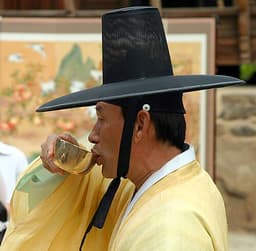
King Gojong of Goryeo
Emperor · Medieval
45.3Total
Basic Information
Born
1473
1192
Died
1513
1259
Era
Medieval
Medieval
Nationality
Scotland
Korea
Occupation
Emperor
Emperor
Civilization
Western
Eastern
Score Comparison
Military (10%)
50.0
25.9
Political (20%)
60.0
37.9
Influence (20%)
59.0
53.3
Legacy (20%)
48.3
45.0
Leadership (15%)
72.0
58.8
Strategy (15%)
66.3
36.8
TOTAL
58.3
45.3
James IV of Scotland — Complete Timeline
1495 AD
Foundation of the University of AberdeenCultural
James IV issued a papal bull to found the University of Aberdeen, Scotland's third university. The university was established to promote education and learning in the north of Scotland, reflecting James's interest in Renaissance humanism.
FoundationEducationRenaissance
Impact: nationalconstructive
1496 AD
Support for Perkin WarbeckPolitical Action
James IV supported the pretender Perkin Warbeck, who claimed to be Richard of Shrewsbury, by invading northern England. The invasion failed, and James later abandoned Warbeck, but the episode strained relations with England.
InvasionPretenderAnglo-Scottish Relations
Impact: regionaldestructive
1503 AD
Marriage to Margaret TudorPolitical Action◆ Major
James IV married Margaret Tudor, daughter of Henry VII of England, under the Treaty of Perpetual Peace. The marriage united the Scottish and English royal houses and later gave James VI a claim to the English throne.
MarriageTreatyUnion of Crowns
Impact: nationalconstructive
1511 AD
Construction of the Great MichaelOther
James IV commissioned the construction of the Great Michael, the largest warship in Europe at the time. The ship was built at Newhaven and cost a fortune, but it was sold to France after Flodden and never saw significant action.
ShipbuildingNavyExpense
Impact: national
1513 AD
Battle of FloddenWar
James IV led a Scottish invasion of England but was defeated at the Battle of Flodden Field near Branxton, Northumberland. James IV was killed along with many Scottish nobles, making it one of Scotland's worst military defeats.
BattleDefeatDeath
Impact: nationaltragic
King Gojong of Goryeo — Complete Timeline
1231 AD
First Mongol Invasion of GoryeoWar
The Mongol Empire under
Mongol InvasionFlight to GanghwaTribute
Impact: regionaldestructive
1232 AD
Second Mongol InvasionWar◆ Major
After the murder of Mongol overseers, the Mongols launched a second invasion. General Saritai led the attack. Goryeo forces resisted fiercely, but the Mongols devastated the countryside. The invasion ended when Saritai was killed by a Buddhist monk.
Mongol InvasionSaritaiResistance
Impact: regionaldestructive
Relocation of Capital to Ganghwa IslandPolitical Action◆ Major
King Gojong moved the royal court and government to Ganghwa Island, a fortified location in the Han River estuary. This relocation was intended to resist Mongol demands and protect the monarchy. The court remained there for nearly 30 years.
Capital MoveResistanceGanghwa Island
Impact: national
1235 AD
Third Mongol Invasion and Peace NegotiationsWar◆ Major
The Mongols launched a third invasion, focusing on destroying Goryeo's ability to resist. They ravaged the mainland while the court remained on Ganghwa. After years of war, King Gojong agreed to peace terms in 1238, including sending a prince as hostage.
Mongol InvasionDevastationPeace Terms
Impact: regionaldestructive
1251 AD
Completion of the Tripitaka Koreana (Second Edition)Cultural
To invoke Buddhist protection against the Mongol invasions, King Gojong ordered the carving of a new set of the Tripitaka Koreana woodblocks. This massive project was completed in 1251, creating a cultural treasure that survives to this day.
Buddhist ScripturesWoodblocksCultural Heritage
Impact: regionalconstructive
1259 AD
Submission to Mongol SuzeraintyPolitical Action
After decades of war, King Gojong finally submitted to Mongol suzerainty. He sent his son, the future King Wonjong, to the Mongol court as a hostage. This ended the military resistance and made Goryeo a vassal state of the Mongol Empire.
SubmissionVassalageMongol Empire
Impact: regionaltragic
This comparison has not been analyzed yet.
One-time AI generation (~1 minute). Scores and timeline are already available below.
Rankings
🥇
James IV of ScotlandLeader
Mil: 50.0Pol: 60.0Inf: 59.0
58.3
🥈
King Gojong of Goryeo
Mil: 25.9Pol: 37.9Inf: 53.3
45.3
+13.0 behind
How This Comparison Works
Algorithm
Each figure is scored on 6 dimensions (0—100 scale) based on structured historical data: Military (10%), Political (20%), Influence (20%), Legacy (20%), Leadership (15%), Strategy (15%). The weighted total produces the final ranking.
Data Sources
Scores are computed from structured sub-indicators in the database. Scale factors adjust for era (Ancient ×0.85, Modern ×1.0) and civilization size (Eastern ×1.05, Other ×0.80) to account for differences in population and military scale.
Maximum 3 Figures
Comparisons are limited to 2—3 figures to ensure readability and statistical meaningfulness.
Error Margins
±5 points per dimension — Sub-scores are derived from historical records with inherent uncertainty. Two figures within 5 points on a dimension should be considered roughly equivalent in that area.
Total Score Accuracy
±3 points overall — The weighted combination of 6 dimensions produces a total score with approximately ±3 points of uncertainty. Differences of less than 3 points are not statistically significant— the figures are effectively tied.
Known Limitations
- Historical records are incomplete and uneven across civilizations
- Figures from oral-tradition societies may be underrepresented
- Occupation labels can misclassify multi-role figures
- Scores measure capability and impact, not moral character
- Quantitative scoring is a comparison tool, not absolute truth
Capability Radar
Military (10%) — Battles & Warfare
Battles
55
20
Win Rate
40
15
Expansion
45
5
Political (20%) — Governance & Reform
Reform
75
20
Diplomacy
65
55
Economy
70
25
Influence (20%) — Cultural & Global Reach
Cultural
55
30
Global
30
20
Legacy (20%) — Historical Impact
Historical
50
40
Longevity
40
30
Leadership (15%) — Power & Stability
Tenure
70
60
Stability
60
15
Strategy (15%) — Tactics & Innovation
Strategy
50
15
Tactics
60
10
Reform
65
5
Similar Comparisons
Comments & Discussion
No comments yet. Be the first to share your thoughts!