Loading...
King Gojong of Goryeo vs Leonardo da Vinci
Leonardo da Vinci leads by 16.8 pts · 2 figures compared
…
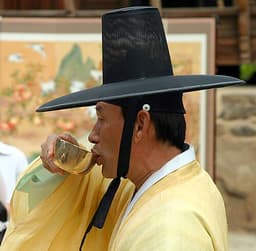
King Gojong of Goryeo
Emperor · Medieval
45.3Total

Leonardo da Vinci
Artist · Medieval
62.1Total
Basic Information
Born
1192
1452
Died
1259
1519
Era
Medieval
Medieval
Nationality
Korea
Italy
Occupation
Emperor
Artist
Civilization
Eastern
Western
Score Comparison
Military (10%)
25.9
34.9
Political (20%)
37.9
20.0
Influence (20%)
53.3
80.0
Legacy (20%)
45.0
90.0
Leadership (15%)
58.8
62.6
Strategy (15%)
36.8
37.0
TOTAL
45.3
62.1
King Gojong of Goryeo — Complete Timeline
1231 AD
First Mongol Invasion of GoryeoWar
The Mongol Empire under
Mongol InvasionFlight to GanghwaTribute
Impact: regionaldestructive
1232 AD
Second Mongol InvasionWar◆ Major
After the murder of Mongol overseers, the Mongols launched a second invasion. General Saritai led the attack. Goryeo forces resisted fiercely, but the Mongols devastated the countryside. The invasion ended when Saritai was killed by a Buddhist monk.
Mongol InvasionSaritaiResistance
Impact: regionaldestructive
Relocation of Capital to Ganghwa IslandPolitical Action◆ Major
King Gojong moved the royal court and government to Ganghwa Island, a fortified location in the Han River estuary. This relocation was intended to resist Mongol demands and protect the monarchy. The court remained there for nearly 30 years.
Capital MoveResistanceGanghwa Island
Impact: national
1235 AD
Third Mongol Invasion and Peace NegotiationsWar◆ Major
The Mongols launched a third invasion, focusing on destroying Goryeo's ability to resist. They ravaged the mainland while the court remained on Ganghwa. After years of war, King Gojong agreed to peace terms in 1238, including sending a prince as hostage.
Mongol InvasionDevastationPeace Terms
Impact: regionaldestructive
1251 AD
Completion of the Tripitaka Koreana (Second Edition)Cultural
To invoke Buddhist protection against the Mongol invasions, King Gojong ordered the carving of a new set of the Tripitaka Koreana woodblocks. This massive project was completed in 1251, creating a cultural treasure that survives to this day.
Buddhist ScripturesWoodblocksCultural Heritage
Impact: regionalconstructive
1259 AD
Submission to Mongol SuzeraintyPolitical Action
After decades of war, King Gojong finally submitted to Mongol suzerainty. He sent his son, the future King Wonjong, to the Mongol court as a hostage. This ended the military resistance and made Goryeo a vassal state of the Mongol Empire.
SubmissionVassalageMongol Empire
Impact: regionaltragic
Leonardo da Vinci — Complete Timeline
1482 AD
Commission for the Sforza HorseCultural
Leonardo was commissioned by Ludovico Sforza to create a colossal bronze equestrian statue, the Sforza Horse. He spent years on designs and a full-scale clay model, but the bronze was used for cannons, and the statue was never cast. The clay model was destroyed in 1499.
SculptureCommissionUnfinished
1488 AD
Design of Flying MachinesInvention
Leonardo designed several flying machines, including an ornithopter with flapping wings inspired by birds. He studied aerodynamics and bird flight, creating detailed sketches. While none were built or flown, his designs demonstrated advanced engineering concepts.
EngineeringFlightDesign
Impact: globalprogressive
1489 AD
Anatomical StudiesInvention◆ Major
Leonardo da Vinci conducted detailed anatomical dissections of human corpses, producing over 200 drawings of muscles, bones, and organs. His studies of the heart, brain, and fetus were centuries ahead of their time, though not published during his lifetime.
ScienceAnatomyDrawing
Impact: globalprogressive
1495 AD
Painting of The Last SupperCultural◆ Major
Leonardo painted The Last Supper on the wall of the refectory of the Convent of Santa Maria delle Grazie in Milan. The mural depicts the moment Jesus announces his betrayal. Its innovative composition and emotional depth made it a seminal work of Renaissance art.
ArtMuralReligious
Impact: globalconstructive
1503 AD
Painting of the Mona LisaCultural
Leonardo da Vinci began painting the Mona Lisa, a portrait of Lisa Gherardini. He used sfumato technique to create a subtle, enigmatic smile. The painting became the most famous artwork in the world, renowned for its composition and technical mastery.
ArtPortraitRenaissance
Impact: globalconstructive
Expert Analysis
Origins
King Gojong of Goryeo (reigned 1213–1259) was born into a dynasty struggling with internal factions and external threats. He ascended the throne at a young age, inheriting a kingdom caught between the rising Mongol Empire and its own aristocratic families. His early years were marked by political maneuvering among the military officials who held real power.
Leonardo da Vinci (1452–1519) was born out of wedlock in Vinci, Tuscany. His father, a notary, and his mother, a peasant, provided him with an informal education. Apprenticed to Andrea del Verrocchio in Florence, he absorbed skills in painting, sculpture, and mechanics. Unlike Gojong, da Vinci’s origins were humble but free from the burdens of state.
Rise to Power
Gojong became king at age 21 after his father’s death. His authority was initially constrained by the Ch’oe military regime, which had dominated the court since 1170. The Mongol invasions began in 1231 under Ögedei Khan. Gojong’s decision to move the capital to Ganghwa Island in 1232 was a strategic retreat, preserving the monarchy but leaving the mainland vulnerable. His submission to Mongol suzerainty in 1259, after decades of war, marked the end of Goryeo’s independence.
Leonardo da Vinci’s rise came through artistic patronage. In 1482, he moved to Milan and offered his services to Ludovico Sforza as a military engineer. His famous letter listing his engineering skills secured him a position. His painting of The Last Supper (1495–1498) and later the Mona Lisa (c. 1503–1519) cemented his reputation. He never held political power, but his genius attracted the support of popes, kings, and nobles.
Leadership & Governance
Gojong’s leadership was defined by survival. He relied on the military regime to defend the realm. His order to carve the Tripitaka Koreana (second edition, completed 1251) was both a religious act and a propaganda tool to unite the people through Buddhism. His governance was reactive, focused on maintaining the dynasty under Mongol pressure. He scored 37.9 in political skills and 58.8 in leadership, reflecting his limited effectiveness in a crisis.
Leonardo da Vinci never governed, but his leadership in the arts and sciences was transformative. He directed workshops, managed apprentices, and completed major commissions. His anatomical studies and engineering designs were ahead of their time, though many were never published. His leadership score of 62.6 is higher than Gojong’s, reflecting his ability to inspire innovation.
Triumph & Tragedy
Gojong’s greatest success was the completion of the Tripitaka Koreana, a massive set of 81,258 woodblocks preserving Buddhist scriptures. This cultural achievement endures as a UNESCO World Heritage site. His tragedy was the loss of Goryeo’s sovereignty. By submitting to the Mongols, he ended the war but subjected his kingdom to centuries of domination. His military score of 25.9 and strategy score of 36.8 show his weakness in direct conflict.
Leonardo da Vinci’s triumphs include the Mona Lisa and The Last Supper, masterpieces that revolutionized art with sfumato and perspective. His anatomical drawings were centuries ahead of their time. However, many of his engineering projects, like the Sforza Horse, were never completed. He died with many notebooks unpublished, limiting his immediate influence. His legacy score of 90.0 reflects his enduring fame, but his political score of 20.0 shows his lack of worldly power.
Character & Destiny
Gojong was a cautious, pious king. His decision to flee to Ganghwa Island saved his life but exposed his people to Mongol raids. He was a survivor, not a conqueror. His reliance on Buddhist rituals and the Tripitaka Koreana reveals a ruler who sought divine intervention over military might.
Leonardo da Vinci was curious, procrastinating, and perfectionist. He left many works unfinished, often moving to new projects. His notebooks show a relentless pursuit of knowledge, but his lack of systematic publication meant many ideas were rediscovered later. His character was that of a genius oblivious to practical constraints.
Legacy
Gojong’s legacy is the Tripitaka Koreana, a masterpiece of woodblock printing that preserved Buddhist texts. It remains a symbol of Korean cultural resilience. Politically, his submission to the Mongols set the stage for the Goryeo dynasty’s eventual decline, but it also prevented total destruction.
Leonardo da Vinci’s legacy is immense. The Mona Lisa is the most famous painting in the world. His anatomical studies influenced later scientists. His notebooks inspired generations of inventors. He is the quintessential Renaissance man, with an influence score of 80.0 and legacy of 90.0. However, his direct impact on technology was limited because many designs were never built.
Conclusion
While both figures shaped their worlds, Leonardo da Vinci had a greater and more lasting impact. His total score of 62.1 far exceeds Gojong’s 45.3. Gojong’s achievements were largely defensive and religious, confined to Korean history. Da Vinci’s art and ideas transcended time and geography, influencing global culture. The Tripitaka Koreana is a treasure, but the Mona Lisa is a universal icon. Leonardo da Vinci wins this comparison decisively.
Rankings
🥇
Leonardo da VinciLeader
Mil: 34.9Pol: 20.0Inf: 80.0
62.1
🥈
King Gojong of Goryeo
Mil: 25.9Pol: 37.9Inf: 53.3
45.3
+16.8 behind
How This Comparison Works
Algorithm
Each figure is scored on 6 dimensions (0—100 scale) based on structured historical data: Military (10%), Political (20%), Influence (20%), Legacy (20%), Leadership (15%), Strategy (15%). The weighted total produces the final ranking.
Data Sources
Scores are computed from structured sub-indicators in the database. Scale factors adjust for era (Ancient ×0.85, Modern ×1.0) and civilization size (Eastern ×1.05, Other ×0.80) to account for differences in population and military scale.
Maximum 3 Figures
Comparisons are limited to 2—3 figures to ensure readability and statistical meaningfulness.
Error Margins
±5 points per dimension — Sub-scores are derived from historical records with inherent uncertainty. Two figures within 5 points on a dimension should be considered roughly equivalent in that area.
Total Score Accuracy
±3 points overall — The weighted combination of 6 dimensions produces a total score with approximately ±3 points of uncertainty. Differences of less than 3 points are not statistically significant— the figures are effectively tied.
Known Limitations
- Historical records are incomplete and uneven across civilizations
- Figures from oral-tradition societies may be underrepresented
- Occupation labels can misclassify multi-role figures
- Scores measure capability and impact, not moral character
- Quantitative scoring is a comparison tool, not absolute truth
Capability Radar
Military (10%) — Battles & Warfare
Battles
20
0
Win Rate
15
0
Expansion
5
0
Political (20%) — Governance & Reform
Reform
20
10
Diplomacy
55
20
Economy
25
10
Influence (20%) — Cultural & Global Reach
Cultural
30
95
Global
20
95
Legacy (20%) — Historical Impact
Historical
40
95
Longevity
30
95
Leadership (15%) — Power & Stability
Tenure
60
0
Stability
15
0
Strategy (15%) — Tactics & Innovation
Strategy
15
20
Tactics
10
25
Reform
5
15
Similar Comparisons
Comments & Discussion
No comments yet. Be the first to share your thoughts!