Loading...
Analysis will be generated on first visit.
Scores and timeline are available below. The page will refresh automatically when ready.
Jan Peter Balkenende vs Napoleon Bonaparte
Napoleon Bonaparte leads by 18.0 pts · 2 figures compared
…

Jan Peter Balkenende
Politician · Modern
64.4Total
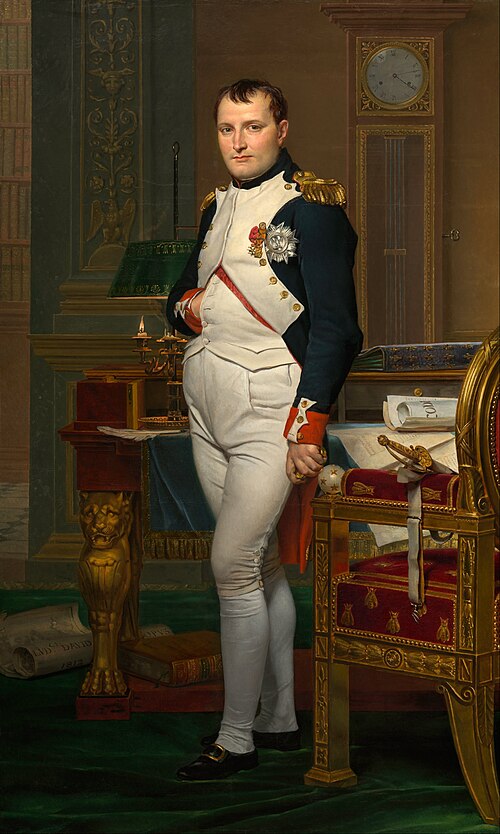
Napoleon Bonaparte
General · Modern
82.4Total
Basic Information
Born
1956
1769
Died
—
1821
Era
Modern
Modern
Nationality
Netherlands
France
Occupation
Politician
General
Civilization
Western
Western
Score Comparison
Military (10%)
55.8
94.0
Political (20%)
72.0
75.0
Influence (20%)
73.7
82.0
Legacy (20%)
58.3
78.0
Leadership (15%)
85.0
80.0
Strategy (15%)
35.3
93.0
TOTAL
64.4
82.4
Rankings
🥇
Napoleon BonaparteLeader
Mil: 94.0Pol: 75.0Inf: 82.0
82.4
🥈
Jan Peter Balkenende
Mil: 55.8Pol: 72.0Inf: 73.7
64.4
+18.0 behind
How This Comparison Works
Algorithm
Each figure is scored on 6 dimensions (0—100 scale) based on structured historical data: Military (10%), Political (20%), Influence (20%), Legacy (20%), Leadership (15%), Strategy (15%). The weighted total produces the final ranking.
Data Sources
Scores are computed from structured sub-indicators in the database. Scale factors adjust for era (Ancient ×0.85, Modern ×1.0) and civilization size (Eastern ×1.05, Other ×0.80) to account for differences in population and military scale.
Maximum 3 Figures
Comparisons are limited to 2—3 figures to ensure readability and statistical meaningfulness.
Error Margins
±5 points per dimension — Sub-scores are derived from historical records with inherent uncertainty. Two figures within 5 points on a dimension should be considered roughly equivalent in that area.
Total Score Accuracy
±3 points overall — The weighted combination of 6 dimensions produces a total score with approximately ±3 points of uncertainty. Differences of less than 3 points are not statistically significant— the figures are effectively tied.
Known Limitations
- Historical records are incomplete and uneven across civilizations
- Figures from oral-tradition societies may be underrepresented
- Occupation labels can misclassify multi-role figures
- Scores measure capability and impact, not moral character
- Quantitative scoring is a comparison tool, not absolute truth
Capability Radar
Military (10%) — Battles & Warfare
Battles
45
95
Win Rate
48
90
Expansion
53
95
Political (20%) — Governance & Reform
Reform
55
95
Diplomacy
60
80
Economy
55
85
Influence (20%) — Cultural & Global Reach
Cultural
30
85
Global
30
90
Legacy (20%) — Historical Impact
Historical
30
95
Longevity
25
90
Leadership (15%) — Power & Stability
Tenure
65
85
Stability
60
70
Strategy (15%) — Tactics & Innovation
Strategy
55
95
Tactics
57
98
Reform
64
92
Analysis will be generated on first visit.
Scores and timeline are available below. The page will refresh automatically when ready.
Jan Peter Balkenende — Complete Timeline
2002 AD
Became Prime Minister of the NetherlandsPolitical Action◆ Major
Balkenende became prime minister after the CDA won the most seats in the 2002 election, following the assassination of Pim Fortuyn. He led four consecutive cabinets (Balkenende I-IV) from 2002 to 2010, making him the second-longest-serving post-war prime minister.
GovernmentLeadershipElection
Impact: national
Presided over the Balkenende I CabinetPolitical Action
Balkenende formed a coalition with the Pim Fortuyn List (LPF) and the VVD. The cabinet collapsed after 87 days due to infighting within the LPF. It was one of the shortest-lived Dutch cabinets, highlighting the instability following Fortuyn's rise.
CoalitionGovernment CollapsePolitical Crisis
Impact: nationaldestructive
2005 AD
Dutch EU Constitution ReferendumPolitical Action◆ Major
Balkenende's government held a non-binding referendum on the European Constitution, which was rejected by 61.5% of voters. The result was a major setback for European integration and forced the government to reconsider its EU policy. It reflected growing Euroscepticism in the Netherlands.
EUReferendumEuroscepticism
Impact: regional
2007 AD
Led the Balkenende IV CabinetPolitical Action◆ Major
Balkenende formed a coalition with the PvdA and ChristenUnie. This cabinet implemented reforms in social security and healthcare, but was marked by tensions over the Dutch mission in Afghanistan. It fell in 2010 over disagreements on extending the Afghan mission.
CoalitionGovernmentReform
Impact: nationalconstructive
2010 AD
Resigned as Prime MinisterPolitical Action◆ Major
Balkenende resigned after the fall of his fourth cabinet over the Afghan mission. He stepped down as CDA leader and left politics. His tenure ended with the Netherlands facing economic challenges and political fragmentation, leading to a caretaker government.
ResignationEnd of TermPolitical Transition
Impact: national
Similar Comparisons
Comments & Discussion
No comments yet. Be the first to share your thoughts!