Loading...
Mohamed Boudiaf vs Napoleon Bonaparte
Napoleon Bonaparte leads by 28.9 pts · 2 figures compared
…
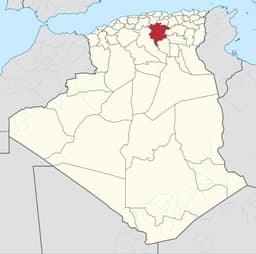
Mohamed Boudiaf
Politician · Modern
42.0Total

Napoleon Bonaparte
General · Modern
70.9Total
Basic Information
Born
1919
1769
Died
1992
1821
Era
Modern
Modern
Nationality
Algeria
France
Occupation
Politician
General
Civilization
Middle Eastern
Western
Score Comparison
Military (10%)
26.9
94.0
Political (20%)
37.9
72.0
Influence (20%)
52.5
40.0
Legacy (20%)
45.8
80.0
Leadership (15%)
31.2
78.0
Strategy (15%)
43.4
90.0
TOTAL
42.0
70.9
Mohamed Boudiaf — Complete Timeline
1954 AD
Co-founded the National Liberation Front (FLN)Political Action
Mohamed Boudiaf was a founding member of the National Liberation Front (FLN) in November 1954, the revolutionary organization that launched the Algerian War of Independence against French colonial rule. He helped organize the armed struggle and served as a key political leader.
Algerian WarIndependenceFLN
Impact: nationalconstructive
1956 AD
Arrested and imprisoned by French authoritiesPolitical Action◆ Major
Boudiaf was arrested by French authorities in 1956 along with other FLN leaders, including Ahmed Ben Bella. He was imprisoned in France for the duration of the war, spending nearly six years in detention until the Evian Accords in 1962.
ImprisonmentAlgerian WarFrench Colonialism
Impact: nationaltragic
1963 AD
Exiled and founded the Socialist Forces Front (FFS)Political Action◆ Major
After independence, Boudiaf opposed the authoritarian turn of the FLN under Ahmed Ben Bella. He went into exile in Morocco and founded the Socialist Forces Front (FFS) in 1963, a leftist opposition party that advocated for democratic socialism and multi-party politics.
OppositionExilePolitical Party
Impact: nationalconstructive
1992 AD
Returned from exile and became President of AlgeriaPolitical Action
Boudiaf returned from 27 years of exile in Morocco on January 16, 1992, to become President of the High State Council (HCE), Algeria's collective presidency. He was appointed after the military canceled the 1991 legislative elections to prevent an Islamist victory, tasked with restoring stability.
PresidencyAlgerian Civil WarHCE
Impact: national
Assassinated during a public speechPolitical Action
Boudiaf was assassinated on June 29, 1992, in Annaba while giving a speech at a cultural center. He was shot by a bodyguard, Lieutenant Larbi Belkheir, who was allegedly linked to Islamist extremists. His death deepened Algeria's civil war and removed a key moderate figure.
AssassinationAlgerian Civil WarPolitical Violence
Impact: nationaltragic
Napoleon Bonaparte — Complete Timeline
1799 AD
Coup of 18 BrumaireOther◆ Major
Napoleon Bonaparte, with support from his brother Lucien and key political figures, overthrew the Directory in a bloodless coup. He established the Consulate with himself as First Consul, effectively becoming the ruler of France. This event ended the French Revolution's most unstable period.
French RevolutionCoupRise to Power
Impact: regional
1804 AD
Promulgation of the Napoleonic CodeOther◆ Major
Napoleon enacted the Civil Code of the French, known as the Napoleonic Code, a comprehensive set of laws that replaced the fragmented feudal legal systems. The code established legal equality, protected property rights, and secularized law. It became the basis for legal systems in many European and world countries.
Legal ReformNapoleonic CodeCivil Law
Impact: globalconstructive
1805 AD
Battle of AusterlitzWar◆ Major
Napoleon's Grande Arm
Napoleonic WarsBattleDecisive Victory
Impact: global
1812 AD
Invasion of RussiaWar◆ Major
Napoleon led the Grande Arm
Napoleonic WarsInvasionDisaster
Impact: globaldestructive
1815 AD
Battle of WaterlooWar◆ Major
Napoleon's French army was defeated by the combined forces of the Duke of Wellington's Anglo-Allied army and Gebhard Leberecht von Bl
Napoleonic WarsBattleFinal Defeat
Impact: globaldestructive
Expert Analysis
Origins
Mohamed Boudiaf was born on June 23, 1919, in M'Sila, Algeria, into a modest family. He attended French schools but became involved in nationalist politics early. After serving in the French army during World War II, he worked as an accountant and joined the Algerian People's Party (PPA). In 1954, he co-founded the National Liberation Front (FLN), launching the Algerian War of Independence.
Napoleon Bonaparte was born on August 15, 1769, in Ajaccio, Corsica, to a minor noble family. He studied at military academies in France, graduating from the École Militaire in 1785. His early career was shaped by the French Revolution, which opened opportunities for rapid advancement. He became a general at age 24 after the Siege of Toulon in 1793.
Rise to Power
Boudiaf's rise came through revolutionary activism. As a founding member of the FLN, he helped organize the November 1, 1954, attacks that began the war. He was arrested in 1956 and imprisoned until 1962. After independence, he opposed the authoritarian turn under Ahmed Ben Bella and went into exile in Morocco, founding the Socialist Forces Front (FFS) in 1963. After 27 years, he was recalled to lead the High State Council (HCE) on January 16, 1992, during Algeria's civil crisis.
Napoleon rose through military brilliance. He commanded the Army of Italy in 1796, winning victories that forced Austria to sign the Treaty of Campo Formio. His Egyptian campaign (1798-1799) enhanced his fame. In November 1799, he staged the Coup of 18 Brumaire, becoming First Consul. By 1804, he crowned himself Emperor of the French.
Leadership & Governance
Boudiaf's leadership was brief (only six months) but aimed at restoring stability. He sought to end the civil war by opening dialogue with Islamists and reforming the political system. He scored 72.0 in political leadership. His governance was constrained by the military's power, and he lacked the time to implement major reforms.
Napoleon's governance was transformative. He centralized the state, established the Napoleonic Code (1804), which influenced legal systems worldwide. He reformed education with lycées, created the Bank of France, and normalized relations with the Catholic Church via the Concordat of 1801. His leadership score of 80.0 reflects his ability to command and organize. However, his authoritarianism and nepotism limited political freedoms.
Triumph & Tragedy
Boudiaf's greatest triumph was co-founding the FLN, which achieved Algerian independence in 1962. His return in 1992 was seen as a hope for peace. His tragedy was his assassination on June 29, 1992, in Annaba, just six months into his presidency. He was shot by a bodyguard, Lieutenant Larbi Belkheir, likely as part of a military plot. His death plunged Algeria deeper into civil war.
Napoleon's triumphs include the Battle of Austerlitz (1805), where he decisively defeated the Russian and Austrian armies. His military score of 94.0 reflects his strategic genius. He conquered most of Europe by 1812. His tragedy was the invasion of Russia (1812), where he lost over 400,000 men. He was exiled to Elba in 1814, returned for 100 days, and was finally defeated at Waterloo (1815), dying in exile on Saint Helena in 1821.
Character & Destiny
Boudiaf was principled and idealistic, willing to exile himself rather than compromise his democratic values. His stubbornness and belief in dialogue may have made him vulnerable to assassination. His destiny was cut short by the military's fear of his reforms.
Napoleon was ambitious, ruthless, and charismatic. His tactical brilliance was matched by his arrogance and overreach. He believed in his own destiny, which led to both his rise and his downfall. His character drove him to push beyond reasonable limits, resulting in his final exile.
Legacy
Boudiaf's legacy is that of a revolutionary founder and a martyr for democracy in Algeria. The FLN he co-founded became the dominant party, but his vision of pluralism was never realized. He scored 60.1 in legacy, reflecting his limited long-term impact due to his brief rule.
Napoleon's legacy is immense. The Napoleonic Code remains the basis of civil law in many countries. He shaped modern warfare with the corps system and mass conscription. His influence on nationalism and state-building is profound. He scored 78.0 in legacy. However, his wars caused millions of deaths and his authoritarianism set back democratic development.
Conclusion
Napoleon Bonaparte had a far greater impact than Mohamed Boudiaf. With a total score of 82.4 versus 62.6, Napoleon's influence on military strategy, legal systems, and European politics is unmatched. While Boudiaf's role in Algerian independence is significant, his assassination cut short any potential for transformative leadership. Napoleon's reforms and conquests reshaped continents, while Boudiaf's legacy remains largely national. In terms of historical impact, Napoleon Bonaparte is clearly superior.
Rankings
🥇
Napoleon BonaparteLeader
Mil: 94.0Pol: 72.0Inf: 40.0
70.9
🥈
Mohamed Boudiaf
Mil: 26.9Pol: 37.9Inf: 52.5
42.0
+28.9 behind
How This Comparison Works
Algorithm
Each figure is scored on 6 dimensions (0—100 scale) based on structured historical data: Military (10%), Political (20%), Influence (20%), Legacy (20%), Leadership (15%), Strategy (15%). The weighted total produces the final ranking.
Data Sources
Scores are computed from structured sub-indicators in the database. Scale factors adjust for era (Ancient ×0.85, Modern ×1.0) and civilization size (Eastern ×1.05, Other ×0.80) to account for differences in population and military scale.
Maximum 3 Figures
Comparisons are limited to 2—3 figures to ensure readability and statistical meaningfulness.
Error Margins
±5 points per dimension — Sub-scores are derived from historical records with inherent uncertainty. Two figures within 5 points on a dimension should be considered roughly equivalent in that area.
Total Score Accuracy
±3 points overall — The weighted combination of 6 dimensions produces a total score with approximately ±3 points of uncertainty. Differences of less than 3 points are not statistically significant— the figures are effectively tied.
Known Limitations
- Historical records are incomplete and uneven across civilizations
- Figures from oral-tradition societies may be underrepresented
- Occupation labels can misclassify multi-role figures
- Scores measure capability and impact, not moral character
- Quantitative scoring is a comparison tool, not absolute truth
Capability Radar
Military (10%) — Battles & Warfare
Battles
20
95
Win Rate
22
90
Expansion
28
95
Political (20%) — Governance & Reform
Reform
40
95
Diplomacy
35
80
Economy
10
85
Influence (20%) — Cultural & Global Reach
Cultural
30
85
Global
25
90
Legacy (20%) — Historical Impact
Historical
45
95
Longevity
30
90
Leadership (15%) — Power & Stability
Tenure
10
85
Stability
5
70
Strategy (15%) — Tactics & Innovation
Strategy
33
95
Tactics
31
98
Reform
36
92
Similar Comparisons
Comments & Discussion
No comments yet. Be the first to share your thoughts!