Loading...
Jawaharlal Nehru vs Julius Caesar
Julius Caesar leads by 22.9 pts · 2 figures compared
…
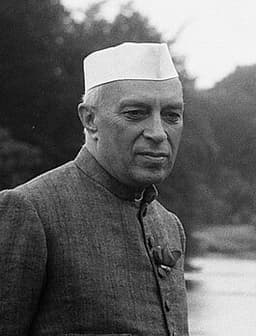
Jawaharlal Nehru
Politician · Modern
59.9Total

Julius Caesar
General · Ancient
82.8Total
Basic Information
Born
1889
-100
Died
1964
-44
Era
Modern
Ancient
Nationality
India
Roman Republic
Occupation
Politician
General
Civilization
Indian
Western
Score Comparison
Military (10%)
10.0
88.0
Political (20%)
78.0
78.0
Influence (20%)
88.0
85.0
Legacy (20%)
40.0
82.0
Leadership (15%)
78.0
80.0
Strategy (15%)
35.0
85.0
TOTAL
59.9
82.8
Jawaharlal Nehru — Complete Timeline
1919 AD
Jallianwala Bagh Massacre ResponsePolitical Action◆ Major
Nehru, deeply affected by the Jallianwala Bagh massacre, joined the Indian independence movement. He became a key leader in the Indian National Congress, advocating for non-violent resistance against British rule.
Independence MovementIndian National CongressNon-violence
Impact: national
1929 AD
Election as Congress President (Lahore Session)Political Action◆ Major
Nehru was elected President of the Indian National Congress at its Lahore session, where he declared Purna Swaraj (complete independence) as the party's goal. This marked a shift from dominion status to full independence.
Indian National CongressIndependencePurna Swaraj
Impact: nationalprogressive
1942 AD
Quit India Movement LeadershipPolitical Action◆ Major
Nehru, alongside Gandhi, led the Quit India Movement, demanding an end to British rule. He was arrested and imprisoned for nearly three years, but the movement intensified pressure on Britain to leave India.
Quit IndiaCivil DisobedienceImprisonment
Impact: nationalprogressive
1947 AD
First Prime Minister of IndiaPolitical Action
Nehru became the first Prime Minister of independent India, delivering his 'Tryst with Destiny' speech. He led the nation through partition, integration of princely states, and the drafting of a secular, democratic constitution.
IndependencePrime MinisterConstitution
Impact: globalconstructive
1961 AD
Founding of the Non-Aligned MovementPolitical Action◆ Major
Nehru co-founded the Non-Aligned Movement with Tito, Nasser, and Sukarno, advocating for a third way during the Cold War. This positioned India as a leader of developing nations, promoting peace and decolonization.
Non-Aligned MovementCold WarForeign Policy
Impact: globalconstructive
Julius Caesar — Complete Timeline
58 BC
Gallic WarsWar◆ Major
Caesar, as proconsul of Gaul, launched a series of campaigns that conquered all of Gaul (modern France, Belgium, and parts of Switzerland). He fought numerous battles, including against the Helvetii, the Belgae, and the Gallic chieftain Vercingetorix. The wars brought immense wealth and a loyal army to Caesar.
Gallic WarsConquestRoman Expansion
Impact: regional
49 BC
Crossing the RubiconPolitical Action◆ Major
Caesar led Legio XIII across the Rubicon River into Italy, defying the Roman Senate's order to disband his army. This act triggered a civil war against Pompey and the Optimates, ultimately leading to Caesar's dictatorship and the end of the Roman Republic.
Roman Civil WarEnd of RepublicPower Struggle
Impact: global
48 BC
Battle of PharsalusWar◆ Major
Caesar's outnumbered army defeated the larger forces of Pompey the Great at Pharsalus in Greece. Caesar's tactical use of a reserve line to counter Pompey's cavalry charge proved decisive. Pompey fled to Egypt, where he was assassinated, leaving Caesar as the undisputed master of the Roman world.
Roman Civil WarBattleDecisive Victory
Impact: regional
44 BC
Appointment as Dictator for LifePolitical Action◆ Major
The Roman Senate appointed Caesar dictator perpetuo (dictator for life), granting him unprecedented personal power. This move concentrated military, legislative, and judicial authority in one person, effectively ending the Roman Republic's traditional system of checks and balances and alarming many senators.
DictatorshipEnd of RepublicPower Consolidation
Impact: regionaldestructive
Assassination on the Ides of MarchPolitical Action◆ Major
A group of Roman senators, led by Marcus Junius Brutus and Gaius Cassius Longinus, stabbed Caesar to death at a meeting of the Senate in the Theatre of Pompey. The assassination was intended to restore the Republic, but instead triggered another civil war that led to the rise of the Roman Empire.
AssassinationRoman PoliticsEnd of Republic
Impact: globaldestructive
Expert Analysis
jawaharlal-nehru-vs-julius-caesar
# The Rubicon and the Raj: Two Paths to Power, Two Visions of Empire
On a January morning in 49 BCE, Julius Caesar stood at the banks of a small river in northern Italy—the Rubicon—and made a decision that would shatter the Roman Republic. On an August midnight in 1947, Jawaharlal Nehru stood before India’s Constituent Assembly and declared that a nation had “awakened to life and freedom.” One man crossed a frontier to seize power; the other inherited a frontier to build a state. Both were architects of transformation, but their worlds—and their legacies—could not have been more different.
Origins
Caesar was born into the twilight of the Roman Republic, a world of senatorial intrigue, slave armies, and aristocratic competition. His family, the Julii, claimed descent from the goddess Venus, but their political fortunes had waned. Young Caesar learned early that in Rome, glory was measured in conquest and gold. He was a patrician who gambled on his own ambition, borrowing fortunes to buy influence and command.
Nehru emerged from a very different crucible. Born in 1889 to a wealthy Kashmiri Brahmin family in Allahabad, he was sent to Harrow and Cambridge, where he absorbed the liberal ideals of the British Empire even as he grew to resent its arrogance. Where Caesar’s world was one of iron and blood, Nehru’s was one of books and debates. The Jallianwala Bagh massacre of 1919—when British troops fired on unarmed Indian civilians—seared his soul and turned a privileged lawyer into a revolutionary.
Rise to Power
Caesar’s ascent was a masterpiece of calculated risk. He served as governor of Hispania, then formed the First Triumvirate with Pompey and Crassus, using their wealth and influence to secure command in Gaul. Over eight years, from 58 to 50 BCE, he conquered a territory that stretched from the Rhine to the Atlantic, slaughtering perhaps a million people and enslaving another million. His Commentaries on the Gallic Wars were not just history—they were propaganda, crafted to make him seem invincible. When the Senate ordered him to disband his army, he chose war. The Rubicon was crossed; the civil war began.
Nehru’s rise was slower, gentler, but no less decisive. He became a protégé of Mahatma Gandhi, who taught him that power could be won without swords. In 1929, as president of the Indian National Congress at its Lahore session, Nehru declared Purna Swaraj—complete independence. He was arrested repeatedly, spending nine years in British prisons. When the Quit India Movement erupted in 1942, he and Gandhi were locked up together, writing letters and planning a future that seemed impossibly distant. But the British Empire, exhausted by two world wars, finally yielded. In 1947, Nehru became the first prime minister of a free India.
Leadership & Governance
Caesar ruled as a dictator—first for ten years, then for life. He reformed the calendar, granted citizenship to provincials, and launched massive public works. But his genius was military, not administrative. He defeated Pompey at Pharsalus, crushed the remnants of the Senate’s armies, and then turned east to conquer Egypt and Pontus. “Veni, vidi, vici”—I came, I saw, I conquered. His reforms were real, but they were imposed by the sword. He centralized power in himself, alienating the old aristocracy, and paid the price.
Nehru governed by persuasion and parliamentary procedure. He championed secularism in a deeply religious land, democracy in a society of castes, and non-alignment in a Cold War world. He built dams, steel mills, and universities; he wrote letters to chief ministers and debated policies in Parliament. His military score of 32.3 reflects a man who never led an army—but his political score of 79.3 and leadership of 78.0 show a different kind of strength. He understood that India’s unity was fragile and that the true conquest was not of territory, but of hearts.
Triumph & Tragedy
Caesar’s greatest triumph was Gaul—a conquest that doubled Rome’s territory and made him the richest man in the Republic. His greatest tragedy was his own success. On the Ides of March, 44 BCE, a conspiracy of senators—men he had pardoned, promoted, and trusted—stabbed him twenty-three times. He fell at the foot of Pompey’s statue, a reminder that power built on fear is never secure.
Nehru’s triumph was midnight on August 15, 1947, when he spoke of India’s “tryst with destiny.” His tragedy came in the same breath: the partition of India, which killed perhaps a million people and displaced fifteen million more. He spent the rest of his life trying to heal that wound, fighting communal violence, and building a secular state. But the Kashmir conflict, the war with China in 1962, and the growing weight of bureaucracy dimmed his vision. He died in 1964, still loved, but weary.
Character & Destiny
Caesar was a man of relentless will. He slept on the ground with his soldiers, dictated letters while riding, and forgave his enemies—until they plotted again. His personality was a weapon: charming, ruthless, and utterly convinced of his own destiny. He believed that the Republic was too corrupt to save and that only a strong man could restore order. That belief cost him his life and gave birth to the Empire.
Nehru was a man of contradictions. He was an aristocrat who loved the masses, an intellectual who led a peasant movement, a democrat who sometimes brooked no dissent. His personality was shaped by his education and his imprisonment—he was both a product of the West and a champion of the East. He believed in reason, science, and progress, but he also inherited Gandhi’s moral authority. His destiny was to hold together a nation that could have shattered into a thousand pieces.
Legacy
Caesar’s legacy is the Roman Empire. His name became a title—Kaiser, Tsar—and his calendar still governs our years. He transformed the ancient world, but he also destroyed the Republic. He is remembered as a genius and a tyrant, a man who crossed a river and changed history.
Nehru’s legacy is modern India. He gave it a constitution, a parliament, a foreign policy, and a dream of secular democracy. His Non-Aligned Movement, founded in 1961 with Tito and Nasser, gave voice to the Global South. But his economic policies faltered, his secularism is under attack, and his legacy is debated fiercely. He is remembered as a builder and a dreamer, a man who spoke at midnight and gave a nation hope.
Conclusion
Two men, two rivers, two worlds. Caesar crossed the Rubicon to seize power; Nehru stood at the threshold of freedom to share it. One built an empire on conquest, the other a nation on consent. Both were flawed, both were brilliant, and both remind us that history is not a march of progress but a series of choices—made by men who believed, with all their hearts, that they were right. The Rubicon still flows, and the tryst is still unfulfilled.
Rankings
🥇
Julius CaesarLeader
Mil: 88.0Pol: 78.0Inf: 85.0
82.8
🥈
Jawaharlal Nehru
Mil: 10.0Pol: 78.0Inf: 88.0
59.9
+22.9 behind
How This Comparison Works
Algorithm
Each figure is scored on 6 dimensions (0—100 scale) based on structured historical data: Military (10%), Political (20%), Influence (20%), Legacy (20%), Leadership (15%), Strategy (15%). The weighted total produces the final ranking.
Data Sources
Scores are computed from structured sub-indicators in the database. Scale factors adjust for era (Ancient ×0.85, Modern ×1.0) and civilization size (Eastern ×1.05, Other ×0.80) to account for differences in population and military scale.
Maximum 3 Figures
Comparisons are limited to 2—3 figures to ensure readability and statistical meaningfulness.
Error Margins
±5 points per dimension — Sub-scores are derived from historical records with inherent uncertainty. Two figures within 5 points on a dimension should be considered roughly equivalent in that area.
Total Score Accuracy
±3 points overall — The weighted combination of 6 dimensions produces a total score with approximately ±3 points of uncertainty. Differences of less than 3 points are not statistically significant— the figures are effectively tied.
Known Limitations
- Historical records are incomplete and uneven across civilizations
- Figures from oral-tradition societies may be underrepresented
- Occupation labels can misclassify multi-role figures
- Scores measure capability and impact, not moral character
- Quantitative scoring is a comparison tool, not absolute truth
Capability Radar
Military (10%) — Battles & Warfare
Battles
26
95
Win Rate
28
92
Expansion
32
97
Political (20%) — Governance & Reform
Reform
85
90
Diplomacy
90
85
Economy
70
82
Influence (20%) — Cultural & Global Reach
Cultural
80
88
Global
85
94
Legacy (20%) — Historical Impact
Historical
85
95
Longevity
80
96
Leadership (15%) — Power & Stability
Tenure
85
75
Stability
75
60
Strategy (15%) — Tactics & Innovation
Strategy
35
94
Tactics
37
96
Reform
36
88
Similar Comparisons
Comments & Discussion
GladiusRex6/17/2026
While Caesar crossed the Rubicon with a single legion, Nehru crossed into power with the weight of 300 million voices—and yet Caesar’s personal ambition reshaped the ancient world far more decisively than Nehru’s democratic mandate ever reshaped modern India for the better. Caesar’s military genius created an empire that lasted half a millennium; Nehru’s Fabian socialism gave us license raj and stagnation. Give me the dictator who built roads over the democrat who built bureaucracy any day.
数据捕手6/17/2026
光看图表数据,Nehru执政期间印度人均GDP年增长仅约1.2%,而Caesar时代罗马GDP基本零增长——但这个比较本身就很荒谬!公元前的经济统计全是后人推算的,连准确的人口普查都没有。更别说把农业社会的奴隶制帝国和工业时代的后殖民民主国家强行对标。数据爱好者们,醒醒吧,这种跨时空比较根本就是个学术玩笑。
LesFleursDuMal6/17/2026
这两个人骨子里都是贵族精英,只不过Caesar的傲慢写在脸上,而Nehru的傲慢藏在剑桥口音和西服底下。Caesar至少敢承认自己在追求权力,Nehru却非要包装成“历史使命”。别忘了,Caesar在元老院被刺杀是因为他太傲慢,而Nehru在1962年中印战争后差点被议会赶下台——同样的结局,不同的死法。
ThermaeRomae6/17/2026
The real tragedy is not the comparison itself but what it reveals about our obsession with “great men.” Both men failed their systems. Caesar’s dictatorship sowed the seeds of imperial tyranny, and Nehru’s one-party dominance crushed India’s federal promise. The irony? Each thought they were saving their nation when they were just building their own monuments. History isn’t a pantheon of heroes; it’s a graveyard of unintended consequences.
昆仑剑客6/17/2026
说Nehru和Caesar都是“帝国建筑师”?荒谬!Caesar征服高卢屠杀了百万生灵,把凯尔特文化几乎连根拔起;而Nehru用非暴力赢得独立,还保住了多元化的印度文明。Caesar建造的是尸骨上的霸权,Nehru建造的是宪法上的民主。记住,公元前49年罗马元老院的精英们嘲讽Caesar僭越,1947年印度农民们却自发走上街头庆祝Nehru的讲话——两种“权力”根本不是一个物种。