Loading...
Jayaprakash Narayan vs Julius Caesar
Julius Caesar leads by 25.0 pts · 2 figures compared
…
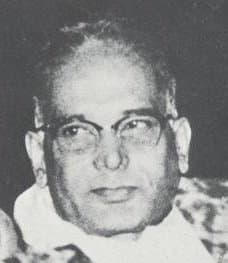
Jayaprakash Narayan
Politician · Modern
57.8Total

Julius Caesar
General · Ancient
82.8Total
Basic Information
Born
1902
-100
Died
1979
-44
Era
Modern
Ancient
Nationality
India
Roman Republic
Occupation
Politician
General
Civilization
Indian
Western
Score Comparison
Military (10%)
37.9
88.0
Political (20%)
68.0
78.0
Influence (20%)
62.0
85.0
Legacy (20%)
54.0
82.0
Leadership (15%)
58.8
80.0
Strategy (15%)
60.0
85.0
TOTAL
57.8
82.8
Jayaprakash Narayan — Complete Timeline
1934 AD
Founded the Socialist PartyPolitical Action◆ Major
Narayan was a founding member of the Congress Socialist Party, a left-wing faction within the Indian National Congress. The party advocated for socialist policies and greater economic equality.
Socialist PartyLeft-WingEconomic Equality
Impact: nationalconstructive
1952 AD
Led the Bihar movement for land reformsPolitical Action◆ Major
Narayan led a movement in Bihar demanding land reforms and the abolition of the zamindari system. He organized peasants and pressured the government to implement land redistribution, though with limited success.
Land ReformsBiharPeasant Movement
Impact: regionalconstructive
1974 AD
Led the Total Revolution movementPolitical Action◆ Major
Narayan launched the 'Total Revolution' (Sampoorna Kranti) movement against the government of Prime Minister Indira Gandhi. He called for a complete overhaul of the political system, leading to widespread protests and the eventual imposition of the Emergency in 1975.
Total RevolutionEmergencyProtest
Impact: nationalconstructive
1975 AD
Imprisoned during the EmergencyPolitical Action◆ Major
Narayan was arrested and imprisoned during the Emergency imposed by Indira Gandhi. His imprisonment made him a symbol of resistance against authoritarian rule.
EmergencyImprisonmentResistance
Impact: nationaltragic
1977 AD
Mediated the formation of the Janata PartyPolitical Action◆ Major
Narayan played a key role in uniting opposition parties to form the Janata Party, which defeated Indira Gandhi's Congress in the 1977 general election. He declined to become Prime Minister, instead supporting Morarji Desai.
Janata Party1977 ElectionCoalition
Impact: nationalconstructive
Julius Caesar — Complete Timeline
58 BC
Gallic WarsWar◆ Major
Caesar, as proconsul of Gaul, launched a series of campaigns that conquered all of Gaul (modern France, Belgium, and parts of Switzerland). He fought numerous battles, including against the Helvetii, the Belgae, and the Gallic chieftain Vercingetorix. The wars brought immense wealth and a loyal army to Caesar.
Gallic WarsConquestRoman Expansion
Impact: regional
49 BC
Crossing the RubiconPolitical Action◆ Major
Caesar led Legio XIII across the Rubicon River into Italy, defying the Roman Senate's order to disband his army. This act triggered a civil war against Pompey and the Optimates, ultimately leading to Caesar's dictatorship and the end of the Roman Republic.
Roman Civil WarEnd of RepublicPower Struggle
Impact: global
48 BC
Battle of PharsalusWar◆ Major
Caesar's outnumbered army defeated the larger forces of Pompey the Great at Pharsalus in Greece. Caesar's tactical use of a reserve line to counter Pompey's cavalry charge proved decisive. Pompey fled to Egypt, where he was assassinated, leaving Caesar as the undisputed master of the Roman world.
Roman Civil WarBattleDecisive Victory
Impact: regional
44 BC
Appointment as Dictator for LifePolitical Action◆ Major
The Roman Senate appointed Caesar dictator perpetuo (dictator for life), granting him unprecedented personal power. This move concentrated military, legislative, and judicial authority in one person, effectively ending the Roman Republic's traditional system of checks and balances and alarming many senators.
DictatorshipEnd of RepublicPower Consolidation
Impact: regionaldestructive
Assassination on the Ides of MarchPolitical Action◆ Major
A group of Roman senators, led by Marcus Junius Brutus and Gaius Cassius Longinus, stabbed Caesar to death at a meeting of the Senate in the Theatre of Pompey. The assassination was intended to restore the Republic, but instead triggered another civil war that led to the rise of the Roman Empire.
AssassinationRoman PoliticsEnd of Republic
Impact: globaldestructive
Expert Analysis
jayaprakash-narayan-vs-julius-caesar
# The General and the Saint: Two Paths to Power
On a January morning in 49 BCE, Julius Caesar stood at the banks of the Rubicon, a small river that marked the boundary of his command. To cross with his army was treason. To turn back was political oblivion. He hesitated, then spoke: *"Alea iacta est"* — the die is cast. Nineteen centuries later, in 1974, another man stood before a different kind of precipice. Jayaprakash Narayan, frail and gray at seventy-two, launched the Total Revolution movement from a platform in Patna, calling on students and peasants to bring down a government he deemed corrupt and authoritarian. Both men sought to reshape the world around them, but their methods, their tools, and their fates could not have been more different. What drove a conqueror to cross rivers and a reformer to cross oceans of political resistance?
Origins
Julius Caesar was born into the patrician Julian clan, but his family had fallen from glory. Rome in the first century BCE was a republic choking on its own ambition — a city of marble and blood, where senators hired gangs and generals bought armies. Caesar’s father died when he was sixteen, leaving him to navigate a world where survival meant audacity. He fled Rome to escape the dictator Sulla, served as a young officer in the east, and learned that in politics, debt was a tool, not a trap. By thirty, he had already been captured by pirates, joked about crucifying them, and then done exactly that.
Jayaprakash Narayan was born in 1902 in a village in Bihar, then part of British India. His family were modest landowners, but his world was one of colonial subjugation, caste hierarchies, and rural poverty. At nine, he watched his father beaten by a landlord’s agent for a land dispute. That moment, he later wrote, planted a seed of rebellion. Unlike Caesar, Narayan had no ancestral glory to reclaim — only a sense that the system itself was broken. He studied in the United States, worked in factories, and returned with a Marxist’s faith in the masses and a Gandhian’s belief in moral struggle.
Rise to Power
Caesar’s ascent was a masterpiece of calculated risk. He climbed the Roman political ladder — quaestor, aedile, praetor — borrowing fortunes to stage lavish games that bought him popularity. In 60 BCE, he formed the First Triumvirate with Pompey and Crassus, an alliance that let him secure the governorship of Gaul. There, over eight years, he conquered a territory larger than Italy, writing his own *Commentaries* to shape his legend. By 49 BCE, he had an army loyal to him, not Rome, and a Senate that feared him enough to demand his disbandment. The Rubicon was the last line.
Narayan’s rise was slower, built on organization, not conquest. In 1934, he helped found the Congress Socialist Party, a left-wing faction within the independence movement. He was jailed repeatedly by the British, but unlike Caesar, he never commanded armies — only ideas. After independence in 1947, he grew disillusioned with the Congress Party’s corruption and drift from Gandhi’s vision. In 1952, he led a movement in Bihar demanding land reforms, organizing peasants against the zamindari system. But power in a democracy is diffuse; Narayan could mobilize crowds, but he could not seize the state.
Leadership & Governance
Caesar governed like a storm. As dictator, he reformed the calendar, granted citizenship to Gauls, redistributed land to veterans, and launched public works. He centralized authority because he believed the Republic was too fractured to rule itself. His military genius was absolute — at the Siege of Alesia (52 BCE), he surrounded a Gallic army while simultaneously building fortifications against a relieving force, a feat of logistics and nerve. But his political wisdom was flawed: he pardoned enemies, but he also humiliated the Senate, accepting a crown offered by Mark Antony while rejecting it theatrically. He ruled as a king in all but name, and that contradiction would kill him.
Narayan ruled nothing. He was a moral force, not a governing one. His leadership was the opposite of Caesar’s: decentralized, dialogic, and suspicious of power itself. In 1974, he led students in Gujarat and Bihar to protest rising prices, unemployment, and authoritarian drift under Indira Gandhi. His "Total Revolution" demanded not a change of rulers, but a transformation of society — village councils, decentralized democracy, and a rejection of top-down governance. He had no legions, only the power of a fast and a prayer. When the Emergency was declared in 1975, he was imprisoned, and his movement was crushed by state force. Yet from his prison cell, he became a symbol of resistance.
Triumph & Tragedy
Caesar’s greatest triumph was not Gaul, but the moment he crossed the Rubicon and marched on Rome. Within five years, he had defeated Pompey, pacified Egypt, and returned to be named dictator for life. His tragedy came on the Ides of March, 44 BCE, when sixty senators stabbed him to death in the Senate chamber. He fell at the feet of a statue of Pompey, his old enemy. His last words, according to legend, were not to Brutus, but a gasp: *"Et tu, Brute?"* The Republic he had tried to save by destroying it collapsed into civil war, and from its ashes rose an empire.
Narayan’s triumph came after his tragedy. In 1977, after the Emergency was lifted, he mediated the formation of the Janata Party, a coalition of opposition groups that defeated Indira Gandhi’s Congress. He was the kingmaker, but not the king. His tragedy was that the Janata government soon collapsed into infighting, and his vision of Total Revolution — a decentralized, participatory democracy — was never realized. He died in 1979, a revered but disappointed man.
Character & Destiny
Caesar was ruthless, charismatic, and impatient. He believed history belonged to the bold, and he was right — but his boldness blinded him to the danger of making enemies feel cornered. He forgave his assassins, but he never understood that some men will kill not from hate, but from fear of losing honor. His character shaped a destiny of conquest and betrayal.
Narayan was humble, persistent, and idealistic. He believed in the goodness of ordinary people, and he was right — but his idealism left him unprepared for the cynicism of power. He could unite parties, but he could not govern them. His character shaped a destiny of sacrifice and partial victory.
Legacy
Caesar’s legacy is the Roman Empire itself. His name became a title — Kaiser, Czar — and his reforms laid the foundation for a millennium of Western civilization. But he also bequeathed a warning: that a republic can die when one man becomes too powerful to tolerate.
Narayan’s legacy is quieter but no less profound. He is remembered as Loknayak, the People’s Leader, a man who proved that moral authority could challenge state power. His Total Revolution inspired later movements for decentralization and grassroots democracy in India. But he also bequeathed a lesson: that revolutions need not just leaders, but institutions.
Conclusion
One man built an empire with a sword; the other tried to build a democracy with a prayer. Caesar crossed the Rubicon, and the world changed forever. Narayan crossed the threshold of old age and illness, and the world changed a little — but perhaps in a direction that still matters. Both were rebels against the systems that raised them. One became the system; the other remained its conscience. In the end, the general and the saint both died with their work unfinished, but they remind us that power takes many forms — and that the river we choose to cross defines who we become.
Rankings
🥇
Julius CaesarLeader
Mil: 88.0Pol: 78.0Inf: 85.0
82.8
🥈
Jayaprakash Narayan
Mil: 37.9Pol: 68.0Inf: 62.0
57.8
+25.0 behind
How This Comparison Works
Algorithm
Each figure is scored on 6 dimensions (0—100 scale) based on structured historical data: Military (10%), Political (20%), Influence (20%), Legacy (20%), Leadership (15%), Strategy (15%). The weighted total produces the final ranking.
Data Sources
Scores are computed from structured sub-indicators in the database. Scale factors adjust for era (Ancient ×0.85, Modern ×1.0) and civilization size (Eastern ×1.05, Other ×0.80) to account for differences in population and military scale.
Maximum 3 Figures
Comparisons are limited to 2—3 figures to ensure readability and statistical meaningfulness.
Error Margins
±5 points per dimension — Sub-scores are derived from historical records with inherent uncertainty. Two figures within 5 points on a dimension should be considered roughly equivalent in that area.
Total Score Accuracy
±3 points overall — The weighted combination of 6 dimensions produces a total score with approximately ±3 points of uncertainty. Differences of less than 3 points are not statistically significant— the figures are effectively tied.
Known Limitations
- Historical records are incomplete and uneven across civilizations
- Figures from oral-tradition societies may be underrepresented
- Occupation labels can misclassify multi-role figures
- Scores measure capability and impact, not moral character
- Quantitative scoring is a comparison tool, not absolute truth
Capability Radar
Military (10%) — Battles & Warfare
Battles
46
95
Win Rate
47
92
Expansion
48
97
Political (20%) — Governance & Reform
Reform
75
90
Diplomacy
60
85
Economy
20
82
Influence (20%) — Cultural & Global Reach
Cultural
55
88
Global
55
94
Legacy (20%) — Historical Impact
Historical
65
95
Longevity
50
96
Leadership (15%) — Power & Stability
Tenure
30
75
Stability
25
60
Strategy (15%) — Tactics & Innovation
Strategy
53
94
Tactics
55
96
Reform
57
88
Similar Comparisons
Comments & Discussion
No comments yet. Be the first to share your thoughts!