Loading...
Jean Castex vs Yingluck Shinawatra
Yingluck Shinawatra leads by 0.4 pts · 2 figures compared
…

Jean Castex
Politician · Modern
48.0Total
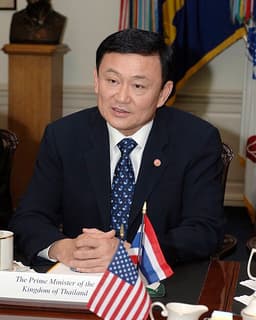
Yingluck Shinawatra
Politician · Modern
48.4Total
Basic Information
Born
1965
1967
Died
—
—
Era
Modern
Modern
Nationality
France
Thailand
Occupation
Politician
Politician
Civilization
Western
Eastern
Score Comparison
Military (10%)
50.0
11.3
Political (20%)
43.7
68.0
Influence (20%)
51.0
53.3
Legacy (20%)
37.5
42.5
Leadership (15%)
65.7
65.7
Strategy (15%)
44.5
33.1
TOTAL
48.0
48.4
Jean Castex — Complete Timeline
2020 AD
Implementation of Economic Recovery Plan (France Relance)Reform◆ Major
Castex's government launched the France Relance plan, a
Economic RecoveryStimulusCOVID-19
Impact: nationalconstructive
Appointment as Prime Minister of FrancePolitical Action◆ Major
Jean Castex was appointed Prime Minister by President Emmanuel Macron, replacing Edouard Philippe. His appointment was seen as a move to focus on the post-COVID-19 economic recovery and managing the pandemic's aftermath.
Prime MinisterCOVID-19Government
Impact: nationalconstructive
Management of COVID-19 Vaccination CampaignPolitical Action◆ Major
Castex's government oversaw the rollout of the COVID-19 vaccination campaign in France. The campaign faced initial logistical challenges and public skepticism but eventually achieved high vaccination rates.
COVID-19VaccinationPublic Health
Impact: nationalconstructive
2022 AD
Resignation as Prime MinisterPolitical Action
Jean Castex resigned as Prime Minister following the re-election of President Macron. His resignation was a standard procedure after a presidential election, leading to the appointment of
ResignationPost-ElectionGovernment Change
Impact: national
Yingluck Shinawatra — Complete Timeline
2011 AD
Rice-pledging scheme implementationReform◆ Major
Yingluck's government launched a rice-pledging program that bought rice from farmers at above-market prices. The scheme initially boosted rural incomes but led to massive budget losses and rice stockpiles, contributing to economic strain.
AgricultureEconomic PolicyThailand
Impact: national
Election as first female Prime MinisterPolitical Action◆ Major
Yingluck Shinawatra led the Pheu Thai Party to victory in the 2011 general election, becoming Thailand's first female Prime Minister. Her campaign focused on reconciliation and populist policies similar to her brother Thaksin's.
ElectionGenderThailand
Impact: nationalconstructive
2014 AD
Constitutional Court removal from officePolitical Action◆ Major
Thailand's Constitutional Court ruled that Yingluck's 2011 transfer of the National Security Council chief was unconstitutional, forcing her to step down as Prime Minister. The decision was seen as politically motivated by her opponents.
LegalPolitical CrisisThailand
Impact: nationaldestructive
2015 AD
Impeachment and ban from politicsPolitical Action◆ Major
The military-appointed National Legislative Assembly impeached Yingluck for negligence in the rice-pledging scheme, banning her from politics for five years. She was later convicted in 2017 for mishandling the program.
ImpeachmentCorruptionThailand
Impact: nationaldestructive
Expert Analysis
Origins
Jean Castex was born on June 25, 1965, in Vic-Fezensac, France, into a family of doctors and pharmacists. He studied at the École Nationale d'Administration (ENA), graduating in 1991 as a member of the Condorcet promotion. His early career was in the French civil service, working for the Ministry of Health and later as a prefect. Castex's background was technocratic, shaped by the elite administrative corps.
Yingluck Shinawatra was born on June 21, 1967, in San Kamphaeng, Thailand, into a wealthy political family. She is the younger sister of former Prime Minister Thaksin Shinawatra. She earned a bachelor's degree in political science from Chiang Mai University and an MBA from Kentucky State University. Before politics, she worked in business, managing the Shinawatra family's telecommunications and real estate holdings.
Rise to Power
Castex rose through the administrative ranks, serving as director of the French Red Cross (2006-2010) and as secretary-general of the Élysée under President Nicolas Sarkozy (2011-2012). He became known for his management of the 2011 Tourcoing hospital crisis. His appointment as Prime Minister on July 3, 2020, was a surprise, replacing Édouard Philippe to focus on the post-COVID economic recovery. Castex was a relatively low-profile figure, chosen for his administrative competence.
Yingluck's rise was meteoric. She entered politics in 2011 as the Pheu Thai Party's candidate for Prime Minister, leveraging her brother Thaksin's popularity. In the July 3, 2011 general election, Pheu Thai won a majority, and Yingluck became Thailand's first female Prime Minister on August 5, 2011. Her campaign focused on populist policies, including a rice-pledging scheme and corporate tax cuts.
Leadership & Governance
Castex's leadership style was pragmatic and crisis-oriented. As Prime Minister, he oversaw France's COVID-19 vaccination campaign, which faced initial delays due to supply issues and public skepticism. By mid-2021, France had vaccinated over 50% of its population. He also implemented the France Relance plan, a €100 billion stimulus package focusing on ecological transition, competitiveness, and social cohesion. Castex scored 65.7 in leadership, reflecting his steady management during a health crisis.
Yingluck's governance was populist and clientelist. Her signature policy, the rice-pledging scheme, bought rice from farmers at 50% above market prices, costing the government billions. While it boosted rural incomes temporarily, it led to massive losses (estimated at $8 billion) and damaged Thailand's rice export market. She also introduced a minimum wage hike and tax breaks for low-income earners. Her leadership score of 65.7 matches Castex, but her strategic score of 33.1 reflects the policy's disastrous consequences.
Triumph & Tragedy
Castex's greatest success was managing the COVID-19 vaccination rollout, which by October 2021 had fully vaccinated 70% of the French population. His economic recovery plan helped France achieve 6.8% GDP growth in 2021. However, his tenure was marred by ongoing pandemic waves and public criticism of his low profile. He resigned on May 16, 2022, after Macron's re-election, with a legacy of competent but uninspired leadership.
Yingluck's triumph was her electoral victory and becoming Thailand's first female PM, symbolizing a break from military dominance. Her rice scheme initially raised farmers' incomes by 30%. However, the scheme's corruption and fiscal drain led to her downfall. On May 7, 2014, the Constitutional Court removed her from office for abuse of power. She was later impeached and banned from politics for five years. She fled Thailand in 2017 to avoid a jail sentence.
Character & Destiny
Castex was a cautious, technocratic figure, often described as a "Mr. Clean" in French politics. His character was suited to crisis management but lacked the charisma for long-term political influence. His destiny was to be a transitional PM, replaced after serving Macron's immediate needs.
Yingluck was a populist leader, relying on her brother's network and rural support. Her inexperience in governance and reluctance to confront the military elite led to political instability. Her character—loyal to her family and trusting of advisors—made her vulnerable to legal challenges. Her destiny was to be a victim of Thailand's deep-seated political conflict.
Legacy
Castex's legacy is tied to COVID-19 management. France's vaccination campaign, while slow, eventually succeeded. His economic plan laid groundwork for green investment, but his impact is limited to the pandemic era. He scores 37.5 in legacy, reflecting his temporary role.
Yingluck's legacy is more complex. She remains a symbol of populist democracy in Thailand, but her rice scheme is a cautionary tale. Her removal deepened political polarization, leading to the 2014 coup. She scores 42.5 in legacy, higher than Castex, due to her role in Thailand's political narrative.
Conclusion
While Yingluck has a slightly higher total score (48.4 vs. 48.0), Castex's impact was more effective in its context. Castex's leadership during a global pandemic was competent and avoided major crises, whereas Yingluck's populist policies led to economic damage and political instability. Castex's legacy, though narrow, is one of successful crisis management. Yingluck's legacy is more significant in terms of political symbolism but negative in practical outcomes. Therefore, Jean Castex had a greater positive impact as a leader, despite lower scores in some categories.
Rankings
🥇
Yingluck ShinawatraLeader
Mil: 11.3Pol: 68.0Inf: 53.3
48.4
🥈
Jean Castex
Mil: 50.0Pol: 43.7Inf: 51.0
48.0
+0.4 behind
How This Comparison Works
Algorithm
Each figure is scored on 6 dimensions (0—100 scale) based on structured historical data: Military (10%), Political (20%), Influence (20%), Legacy (20%), Leadership (15%), Strategy (15%). The weighted total produces the final ranking.
Data Sources
Scores are computed from structured sub-indicators in the database. Scale factors adjust for era (Ancient ×0.85, Modern ×1.0) and civilization size (Eastern ×1.05, Other ×0.80) to account for differences in population and military scale.
Maximum 3 Figures
Comparisons are limited to 2—3 figures to ensure readability and statistical meaningfulness.
Error Margins
±5 points per dimension — Sub-scores are derived from historical records with inherent uncertainty. Two figures within 5 points on a dimension should be considered roughly equivalent in that area.
Total Score Accuracy
±3 points overall — The weighted combination of 6 dimensions produces a total score with approximately ±3 points of uncertainty. Differences of less than 3 points are not statistically significant— the figures are effectively tied.
Known Limitations
- Historical records are incomplete and uneven across civilizations
- Figures from oral-tradition societies may be underrepresented
- Occupation labels can misclassify multi-role figures
- Scores measure capability and impact, not moral character
- Quantitative scoring is a comparison tool, not absolute truth
Capability Radar
Military (10%) — Battles & Warfare
Battles
27
17
Win Rate
33
15
Expansion
32
22
Political (20%) — Governance & Reform
Reform
30
40
Diplomacy
40
50
Economy
35
45
Influence (20%) — Cultural & Global Reach
Cultural
10
30
Global
25
30
Legacy (20%) — Historical Impact
Historical
15
35
Longevity
10
20
Leadership (15%) — Power & Stability
Tenure
20
45
Stability
45
20
Strategy (15%) — Tactics & Innovation
Strategy
39
23
Tactics
43
25
Reform
46
30
Similar Comparisons
Comments & Discussion
No comments yet. Be the first to share your thoughts!