Loading...
John Agyekum Kufuor vs Yingluck Shinawatra
John Agyekum Kufuor leads by 9.6 pts · 2 figures compared
…

John Agyekum Kufuor
Politician · Modern
58.0Total
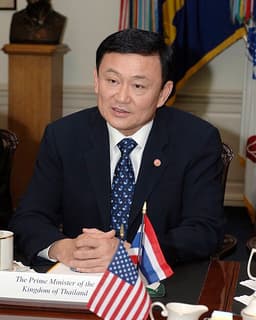
Yingluck Shinawatra
Politician · Modern
48.4Total
Basic Information
Born
1938
1967
Died
—
—
Era
Modern
Modern
Nationality
Ghana
Thailand
Occupation
Politician
Politician
Civilization
Other
Eastern
Score Comparison
Military (10%)
49.5
11.3
Political (20%)
72.0
68.0
Influence (20%)
57.2
53.3
Legacy (20%)
47.5
42.5
Leadership (15%)
78.0
65.7
Strategy (15%)
44.0
33.1
TOTAL
58.0
48.4
John Agyekum Kufuor — Complete Timeline
2000 AD
Elected President of GhanaPolitical Action◆ Major
Kufuor won the presidential election in December 2000, defeating John Atta Mills. This marked the first peaceful transfer of power between democratically elected governments in Ghana's history, consolidating the country's democratic transition.
DemocracyElectionGhana
Impact: nationalconstructive
2001 AD
Implementation of HIPC InitiativeReform◆ Major
Kufuor's government secured Ghana's qualification for the Heavily Indebted Poor Countries (HIPC) initiative, leading to substantial debt relief. This allowed the government to redirect funds toward infrastructure, education, and health programs, contributing to economic recovery.
Economic ReformDebt ReliefGhana
Impact: nationalconstructive
2003 AD
Introduction of National Health Insurance SchemeReform◆ Major
Kufuor's administration launched the National Health Insurance Scheme (NHIS) to replace the cash-and-carry system. The NHIS expanded access to healthcare for millions of Ghanaians, though implementation faced challenges with funding and coverage.
HealthcareSocial PolicyGhana
Impact: nationalconstructive
2007 AD
Chairmanship of the African UnionPolitical Action
Kufuor served as Chairman of the African Union from January 2007 to January 2008. During his tenure, he advocated for continental integration and conflict resolution, including efforts to mediate crises in Sudan and Somalia.
African UnionDiplomacyLeadership
Impact: regionalconstructive
2008 AD
Peaceful Transfer of Power to John Atta MillsPolitical Action◆ Major
After serving two terms, Kufuor oversaw a peaceful transfer of power to opposition candidate John Atta Mills following the 2008 election. This reinforced Ghana's reputation as a stable democracy in West Africa.
DemocracyElectionGhana
Impact: nationalconstructive
Yingluck Shinawatra — Complete Timeline
2011 AD
Rice-pledging scheme implementationReform◆ Major
Yingluck's government launched a rice-pledging program that bought rice from farmers at above-market prices. The scheme initially boosted rural incomes but led to massive budget losses and rice stockpiles, contributing to economic strain.
AgricultureEconomic PolicyThailand
Impact: national
Election as first female Prime MinisterPolitical Action◆ Major
Yingluck Shinawatra led the Pheu Thai Party to victory in the 2011 general election, becoming Thailand's first female Prime Minister. Her campaign focused on reconciliation and populist policies similar to her brother Thaksin's.
ElectionGenderThailand
Impact: nationalconstructive
2014 AD
Constitutional Court removal from officePolitical Action◆ Major
Thailand's Constitutional Court ruled that Yingluck's 2011 transfer of the National Security Council chief was unconstitutional, forcing her to step down as Prime Minister. The decision was seen as politically motivated by her opponents.
LegalPolitical CrisisThailand
Impact: nationaldestructive
2015 AD
Impeachment and ban from politicsPolitical Action◆ Major
The military-appointed National Legislative Assembly impeached Yingluck for negligence in the rice-pledging scheme, banning her from politics for five years. She was later convicted in 2017 for mishandling the program.
ImpeachmentCorruptionThailand
Impact: nationaldestructive
Expert Analysis
Origins
John Agyekum Kufuor was born on December 8, 1938, in Kumasi, Ghana, into a wealthy family of the Ashanti region. His father was a cocoa farmer and businessman. Kufuor studied at Prempeh College and later earned a law degree from the University of Oxford (Exeter College). He also attended the Inns of Court School of Law in London. His early career included working as a lawyer and entering politics as a member of the Progress Party.
Yingluck Shinawatra was born on June 21, 1967, in San Kamphaeng, Chiang Mai, Thailand, into a wealthy family with Chinese ancestry. She is the youngest of nine children, with her brother Thaksin Shinawatra later becoming prime minister. Yingluck earned a BA in political science from Chiang Mai University and an MA in public administration from Kentucky State University in the US. She worked in business, managing telecommunications and property companies owned by her family.
Rise to Power
Kufuor's political rise was gradual. He served as a member of parliament from 1969 to 1972, and later held ministerial positions under the military government of the Supreme Military Council in the 1970s. He was a founding member of the New Patriotic Party (NPP) in 1992. After losing the 1996 presidential election to Jerry Rawlings, Kufuor won the 2000 election on December 28, 2000, defeating John Atta Mills with 56.9% of the vote. This marked Ghana's first peaceful transfer of power between democratically elected governments.
Yingluck's rise was more rapid. She was nominated as the Pheu Thai Party's candidate in 2011, just months before the election, largely due to her connection to her brother Thaksin, who had been ousted in a 2006 coup. She campaigned on a platform of reconciliation and populist policies. On July 3, 2011, Yingluck won the general election, capturing 265 of 500 seats in the House of Representatives. She became Thailand's first female prime minister at age 44.
Leadership & Governance
Kufuor's leadership focused on economic stabilization and social welfare. His government implemented the Heavily Indebted Poor Countries (HIPC) Initiative in 2001, securing $4.5 billion in debt relief, which freed resources for development. He introduced the National Health Insurance Scheme (NHIS) in 2003, expanding healthcare access from 15% to over 60% of the population by 2008. Kufuor also pursued macroeconomic stability, reducing inflation from 40% in 2000 to 10% by 2008, and achieving GDP growth averaging 6% annually. His leadership style was consultative, and he respected term limits, stepping down after two terms.
Yingluck's governance was marked by populist programs and political instability. Her flagship policy was the rice-pledging scheme, which bought rice from farmers at 50% above market prices. While initially popular, the scheme cost the government $15 billion and led to massive losses, corruption, and a buildup of rice stockpiles. She also attempted to pass an amnesty bill that would have allowed her brother Thaksin to return, sparking mass protests. Her leadership was seen as indecisive and heavily influenced by her brother. She scored 65.7 in Leadership, lower than Kufuor's 78.0.
Triumph & Tragedy
Kufuor's greatest success was overseeing Ghana's economic recovery and democratic consolidation. He achieved debt relief, reduced inflation, and improved infrastructure. His peaceful transfer of power in 2008 was a landmark for African democracy. However, his tenure saw limited progress in reducing poverty and corruption. The NHIS faced funding challenges, and inequality remained high. His legacy score is 47.5.
Yingluck's triumph was becoming Thailand's first female PM and winning a decisive election. Her populist policies initially boosted rural support. However, her tragedy was the failure of the rice-pledging scheme, which led to a budget deficit and accusations of negligence. She was removed from office by the Constitutional Court in May 2014 for abuse of power in transferring a security official. Later, she was impeached and banned from politics for five years. The military coup in May 2014 ended her government. Her legacy score is 42.5.
Character & Destiny
Kufuor was a measured, pragmatic leader who prioritized stability and consensus. He was known as a 'gentleman politician' and avoided confrontation. His respect for democratic norms ensured Ghana's peaceful transitions. His character aligned with his destiny as a reformer who strengthened institutions.
Yingluck was charismatic but inexperienced. She relied heavily on her brother's network and policies. Her decision-making was often reactive, and she failed to manage the political crisis caused by the amnesty bill. Her character led to a destiny of political turmoil and eventual removal. Historians note that she lacked the political acumen to navigate Thailand's volatile landscape.
Legacy
Kufuor's legacy endures in Ghana's democratic stability and economic reforms. The HIPC initiative and NHIS are remembered as key achievements. He is regarded as one of Ghana's most effective presidents. His Political score of 72.0 reflects his skill in governance.
Yingluck's legacy is mixed. She is remembered as a symbol of women's political participation but also as a leader who deepened political divisions. The rice-pledging scheme is a cautionary tale of populist economics. Her influence score is 53.3.
Conclusion
John Kufuor had greater impact than Yingluck Shinawatra. His total score of 58.0 exceeds Yingluck's 48.4. Kufuor's leadership (78.0) and political skills (72.0) produced tangible reforms that improved millions of lives and strengthened democratic institutions. Yingluck's tenure, while historic, ended in failure and instability. Kufuor's legacy of peaceful transitions and economic recovery is more enduring. Therefore, Kufuor is the more successful leader.
Rankings
🥇
John Agyekum KufuorLeader
Mil: 49.5Pol: 72.0Inf: 57.2
58.0
🥈
Yingluck Shinawatra
Mil: 11.3Pol: 68.0Inf: 53.3
48.4
+9.6 behind
How This Comparison Works
Algorithm
Each figure is scored on 6 dimensions (0—100 scale) based on structured historical data: Military (10%), Political (20%), Influence (20%), Legacy (20%), Leadership (15%), Strategy (15%). The weighted total produces the final ranking.
Data Sources
Scores are computed from structured sub-indicators in the database. Scale factors adjust for era (Ancient ×0.85, Modern ×1.0) and civilization size (Eastern ×1.05, Other ×0.80) to account for differences in population and military scale.
Maximum 3 Figures
Comparisons are limited to 2—3 figures to ensure readability and statistical meaningfulness.
Error Margins
±5 points per dimension — Sub-scores are derived from historical records with inherent uncertainty. Two figures within 5 points on a dimension should be considered roughly equivalent in that area.
Total Score Accuracy
±3 points overall — The weighted combination of 6 dimensions produces a total score with approximately ±3 points of uncertainty. Differences of less than 3 points are not statistically significant— the figures are effectively tied.
Known Limitations
- Historical records are incomplete and uneven across civilizations
- Figures from oral-tradition societies may be underrepresented
- Occupation labels can misclassify multi-role figures
- Scores measure capability and impact, not moral character
- Quantitative scoring is a comparison tool, not absolute truth
Capability Radar
Military (10%) — Battles & Warfare
Battles
20
17
Win Rate
26
15
Expansion
29
22
Political (20%) — Governance & Reform
Reform
75
40
Diplomacy
72
50
Economy
78
45
Influence (20%) — Cultural & Global Reach
Cultural
40
30
Global
45
30
Legacy (20%) — Historical Impact
Historical
55
35
Longevity
30
20
Leadership (15%) — Power & Stability
Tenure
70
45
Stability
68
20
Strategy (15%) — Tactics & Innovation
Strategy
32
23
Tactics
32
25
Reform
36
30
Similar Comparisons
Comments & Discussion
No comments yet. Be the first to share your thoughts!