Loading...
Jeongjo of Joseon vs Julius Caesar
Julius Caesar leads by 31.5 pts · 2 figures compared
…
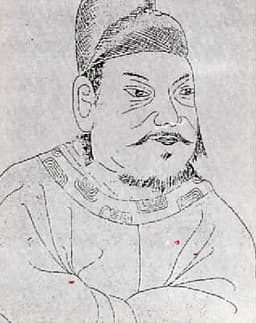
Jeongjo of Joseon
Emperor · Modern
51.3Total

Julius Caesar
General · Ancient
82.8Total
Basic Information
Born
1752
-100
Died
1800
-44
Era
Modern
Ancient
Nationality
Korea
Roman Republic
Occupation
Emperor
General
Civilization
Eastern
Western
Score Comparison
Military (10%)
10.2
88.0
Political (20%)
60.0
78.0
Influence (20%)
57.2
85.0
Legacy (20%)
46.7
82.0
Leadership (15%)
72.0
80.0
Strategy (15%)
45.0
85.0
TOTAL
51.3
82.8
Jeongjo of Joseon — Complete Timeline
1776 AD
Establishment of Kyujanggak Royal LibraryCultural◆ Major
Jeongjo founded the Kyujanggak library to house royal documents and promote scholarship. He appointed talented scholars regardless of faction, fostering intellectual growth. The library became a center for Silhak (Practical Learning) and reformist ideas.
LibraryScholarshipSilhak
Impact: nationalconstructive
1791 AD
Reforms in Taxation and AdministrationReform
Jeongjo implemented the 'Sagyek' system to improve tax collection and reduce corruption. He also reformed the land tax and military service system, easing burdens on peasants. These reforms strengthened the state but faced resistance from entrenched interests.
Tax ReformAdministrationEconomy
Impact: nationalconstructive
1794 AD
Construction of Hwaseong FortressCultural◆ Major
King Jeongjo built Hwaseong Fortress in Suwon to honor his father Crown Prince Sado and to establish a new administrative center. The fortress incorporated advanced Western and Eastern military architecture. It was completed in 1796 and is now a UNESCO World Heritage site.
ArchitectureFortressUNESCO
Impact: nationalconstructive
1800 AD
Mysterious Death of JeongjoOther◆ Major
King Jeongjo died suddenly at age 48, possibly from illness or poisoning. His death was suspicious, as he was in good health. It led to a purge of his reformist supporters by the Andong Kim clan, ending his progressive policies.
DeathConspiracyPower Shift
Impact: nationaltragic
Julius Caesar — Complete Timeline
58 BC
Gallic WarsWar◆ Major
Caesar, as proconsul of Gaul, launched a series of campaigns that conquered all of Gaul (modern France, Belgium, and parts of Switzerland). He fought numerous battles, including against the Helvetii, the Belgae, and the Gallic chieftain Vercingetorix. The wars brought immense wealth and a loyal army to Caesar.
Gallic WarsConquestRoman Expansion
Impact: regional
49 BC
Crossing the RubiconPolitical Action◆ Major
Caesar led Legio XIII across the Rubicon River into Italy, defying the Roman Senate's order to disband his army. This act triggered a civil war against Pompey and the Optimates, ultimately leading to Caesar's dictatorship and the end of the Roman Republic.
Roman Civil WarEnd of RepublicPower Struggle
Impact: global
48 BC
Battle of PharsalusWar◆ Major
Caesar's outnumbered army defeated the larger forces of Pompey the Great at Pharsalus in Greece. Caesar's tactical use of a reserve line to counter Pompey's cavalry charge proved decisive. Pompey fled to Egypt, where he was assassinated, leaving Caesar as the undisputed master of the Roman world.
Roman Civil WarBattleDecisive Victory
Impact: regional
44 BC
Appointment as Dictator for LifePolitical Action◆ Major
The Roman Senate appointed Caesar dictator perpetuo (dictator for life), granting him unprecedented personal power. This move concentrated military, legislative, and judicial authority in one person, effectively ending the Roman Republic's traditional system of checks and balances and alarming many senators.
DictatorshipEnd of RepublicPower Consolidation
Impact: regionaldestructive
Assassination on the Ides of MarchPolitical Action◆ Major
A group of Roman senators, led by Marcus Junius Brutus and Gaius Cassius Longinus, stabbed Caesar to death at a meeting of the Senate in the Theatre of Pompey. The assassination was intended to restore the Republic, but instead triggered another civil war that led to the rise of the Roman Empire.
AssassinationRoman PoliticsEnd of Republic
Impact: globaldestructive
Expert Analysis
jeongjo-of-joseon-vs-julius-caesar
# The General and the Scholar-King
On a winter morning in 44 BCE, Gaius Julius Caesar walked into the Senate chamber in Rome, ignoring a soothsayer's warning to beware the Ides of March. Within hours, he lay bleeding from twenty-three stab wounds, the Roman Republic bleeding with him. Half a world away and eighteen centuries later, on a spring day in 1800, King Jeongjo of Joseon died suddenly at his palace in Hwaseong Fortress—a man of forty-eight, in seemingly good health, whose passing remains shrouded in whispers of poison. One was the West's most brilliant military conqueror; the other, the East's most ambitious reformer. Both were murdered by the very systems they sought to transform. Why did Caesar's ambition forge an empire that lasted a millennium, while Jeongjo's vision crumbled within decades? The answer lies not in their deeds, but in the worlds they inherited.
Origins
Caesar was born into the twilight of the Roman Republic, a world of crumbling aristocratic norms and rising military strongmen. His family, the Julii, claimed descent from the goddess Venus, but they were political outsiders in a system dominated by a handful of noble clans. From childhood, Caesar learned that in Rome, glory was measured in conquests and consulships—and that the old rules were made to be broken. His uncle Marius had already shown that a general with a loyal army could defy the Senate.
Jeongjo was born into a very different order: the five-hundred-year-old Joseon dynasty, a Confucian kingdom where stability was the highest virtue, and where a king's power was hemmed in by centuries of ritual and by factions of scholar-officials who had learned to resist reform by outlasting their monarchs. His father, Crown Prince Sado, had been executed by his own father—locked alive in a rice chest to starve—for mental instability and political rebellion. Jeongjo inherited not only a throne but a trauma: the knowledge that a king who challenged the system could be destroyed by it. His path was carved not by the open fields of Gaul, but by the narrow corridors of a palace where every move was watched.
Rise to Power
Caesar's ascent was a masterpiece of calculated risk. He borrowed fortunes to fund public games, won military command in Spain, then forged the First Triumvirate with Pompey and Crassus—a backroom deal that bypassed the Senate. His conquest of Gaul from 58 to 50 BCE was not just a war; it was a political machine. He wrote his own commentaries, crafting a legend that made him the most famous man in Rome. When the Senate ordered him to disband his army, he crossed the Rubicon River with a single legion, declaring, "The die is cast." Within five years, he was dictator for life.
Jeongjo's path was quieter but no less cunning. He became king at twenty-four, inheriting a court poisoned by the faction that had destroyed his father. He could not raise an army; his weapons were books and bureaucracy. In 1776, he established the Kyujanggak Royal Library, not merely as a repository of texts, but as a new institution to train scholars loyal to the throne, not to the old factions. He appointed talented men from outside the aristocracy, creating a parallel power structure. Where Caesar conquered provinces, Jeongjo conquered a fortress of ink and paper.
Leadership & Governance
As ruler, Caesar was a whirlwind. He reformed the calendar, granted citizenship to provincials, initiated public works, and centralised authority. His military genius was unmatched: at the Siege of Alesia in 52 BCE, he defeated a Gallic army three times his size by building a double ring of fortifications, starving both the besieged and his own besiegers into submission. Yet his political wisdom was brittle. He collected honours like trophies, alienated the Senate, and treated the Republic as his personal estate. When he accepted the title "dictator for life," he signed his death warrant.
Jeongjo governed by patience and subtlety. His 1791 tax reforms—the Sagyek system—aimed to reduce corruption by simplifying collection and shifting burdens from peasants to landlords. He promoted commerce and technology, even encouraging the use of Western scientific instruments. His crowning achievement was Hwaseong Fortress, built from 1794 to honour his father and to create a new administrative centre free from Seoul's entrenched factions. The fortress was a marvel of practical design, incorporating both Korean tradition and European fortification techniques. Yet Jeongjo's reforms never touched the core of Joseon's power: the aristocratic landowning class. He could outmanoeuvre them, but he could not overthrow them.
Triumph & Tragedy
Caesar's greatest triumph was also his tragedy. He conquered Gaul, invaded Britain, defeated his rival Pompey in a civil war, and stood atop the world. But his victory was so complete that it destroyed the system that had made him. The Senate that killed him was not a cabal of villains; it was a last gasp of a dying republic. His assassination did not restore the old order—it unleashed a century of civil war that ended with his adopted heir Octavian becoming the first emperor.
Jeongjo's tragedy was more subtle. He built Hwaseong Fortress as a symbol of a new Joseon—prosperous, technologically advanced, and just. He died before it could become more than a symbol. His mysterious death at age forty-eight, possibly from poisoning by conservative factions, left his reforms unfinished. His son, Sunjo, was a child, and the regency fell to the very aristocrats Jeongjo had spent his reign outflanking. Within decades, Joseon slid into decline, and by the nineteenth century, it was known as the "Hermit Kingdom," too weak to resist foreign powers.
Character & Destiny
Caesar was audacious, charismatic, and ruthlessly pragmatic. He pardoned his enemies, promoted talent regardless of birth, and understood that in Rome, perception was power. But he also believed his own legend. When his friend Marcus Junius Brutus joined the conspirators, Caesar's last words—"Et tu, Brute?"—were a cry of personal betrayal from a man who thought his charm could conquer anything.
Jeongjo was cautious, intellectual, and deeply haunted. He never forgot his father's fate, and it made him both more careful and more determined. He ruled through institutions, not personality, because he knew that a king who relied on charisma alone could be destroyed by a single faction's whisper. Where Caesar gambled everything on a single throw of the dice, Jeongjo tried to change the game itself—slowly, methodically, from within the rules. His caution preserved his life for twenty-four years, but it also meant his reforms never took root deep enough to survive him.
Legacy
Caesar's legacy is the Roman Empire, and through it, Western civilisation itself. His name became a title—Kaiser, Tsar—and his calendar is still used today. He is remembered as a genius and a tyrant, a man who destroyed a republic to save it, and whose ambition reshaped the world.
Jeongjo's legacy is quieter but no less real. Hwaseong Fortress, now a UNESCO World Heritage site, stands as a monument to his vision. The Kyujanggak library preserved Korea's intellectual heritage through centuries of turmoil. His reforms, though incomplete, laid the groundwork for later modernisation. In South Korea today, he is remembered as a wise and benevolent king, a symbol of what Joseon might have become.
Conclusion
Standing at the Rubicon and standing at Hwaseong Fortress, these two men faced the same fundamental question: how does a leader transform a system that resists change? Caesar's answer was to break the system, to seize power so completely that history had no choice but to follow. Jeongjo's answer was to reshape the system from within, to build slowly, to hope that institutions would outlast the men who opposed him. One died by the sword, the other by poison—but both were killed by the same truth: that the old order will fight to survive, and that the price of transformation is always the reformer's life. Their stories are not a lesson in which approach was better, but a reminder that every leader must choose between speed and stability, between glory and endurance. And that, in the end, history judges not by intentions, but by what endures.
Rankings
🥇
Julius CaesarLeader
Mil: 88.0Pol: 78.0Inf: 85.0
82.8
🥈
Jeongjo of Joseon
Mil: 10.2Pol: 60.0Inf: 57.2
51.3
+31.5 behind
How This Comparison Works
Algorithm
Each figure is scored on 6 dimensions (0—100 scale) based on structured historical data: Military (10%), Political (20%), Influence (20%), Legacy (20%), Leadership (15%), Strategy (15%). The weighted total produces the final ranking.
Data Sources
Scores are computed from structured sub-indicators in the database. Scale factors adjust for era (Ancient ×0.85, Modern ×1.0) and civilization size (Eastern ×1.05, Other ×0.80) to account for differences in population and military scale.
Maximum 3 Figures
Comparisons are limited to 2—3 figures to ensure readability and statistical meaningfulness.
Error Margins
±5 points per dimension — Sub-scores are derived from historical records with inherent uncertainty. Two figures within 5 points on a dimension should be considered roughly equivalent in that area.
Total Score Accuracy
±3 points overall — The weighted combination of 6 dimensions produces a total score with approximately ±3 points of uncertainty. Differences of less than 3 points are not statistically significant— the figures are effectively tied.
Known Limitations
- Historical records are incomplete and uneven across civilizations
- Figures from oral-tradition societies may be underrepresented
- Occupation labels can misclassify multi-role figures
- Scores measure capability and impact, not moral character
- Quantitative scoring is a comparison tool, not absolute truth
Capability Radar
Military (10%) — Battles & Warfare
Battles
10
95
Win Rate
10
92
Expansion
5
97
Political (20%) — Governance & Reform
Reform
75
90
Diplomacy
55
85
Economy
65
82
Influence (20%) — Cultural & Global Reach
Cultural
55
88
Global
30
94
Legacy (20%) — Historical Impact
Historical
50
95
Longevity
40
96
Leadership (15%) — Power & Stability
Tenure
60
75
Stability
60
60
Strategy (15%) — Tactics & Innovation
Strategy
25
94
Tactics
20
96
Reform
40
88
Similar Comparisons
Comments & Discussion
SilverTongueSenator6/17/2026
Caesar had a dynasty because he knew how to pick allies and enemies—Pompey first, then Brutus. Jeongjo outmaneuvered factions but never crushed them; poison doesn’t wait for philosophy. Caesar's Rubicon was a line crossed; Jeongjo’s Hwaseong fortress was a wall built. Walls hold threats out, but they also trap the builder inside.|
戈壁学者6/17/2026
别拿君王比征服者。朝鲜正祖把辫子梳得再顺,也没打过鞑子一场仗。凯撒在西班牙杀过百万高卢人,正祖翻遍《经世遗表》也找不出点血性。帝国强在铁蹄,不在朱笔。乱世需要剑,不是奏折。|
CensoriousClassicist6/17/2026
You all ignore the structural poison in the system. Caesar broke the Republic because it was already broken—his dictatorship was a symptom, not a cause. Jeongjo tried to reform Joseon from within Neo-Confucian orthodoxy, which was identical to, not separate from, state power. You cannot overhaul the machine while serving as its engine.|
历史骡夫6/17/2026
正祖死得窝囊,一堆清唱本子和庸医挡箭。凯撒好歹让人捅了之后还安排后事继承人。比较?一个是草草收场的闹剧,一个是鲜血浇灌的史诗。别替朝鲜遮羞,他那叫殉国,凯撒这就叫逐鹿。|
MartianMarshal6/17/2026
Military lens here: Caesar literally rewrote the book on siege warfare and logistics. Jeongjo commissioned books on land reform. One took Gaul, the other took notes. When enemies march, deeds beat doctrines every time. Rome's legions outlasted the Senate; Joseon's yangban drowned Jeongjo's reforms in tea and protocol.