Loading...
Jeremiah Manele vs Walter Ulbricht
Walter Ulbricht leads by 16.7 pts · 2 figures compared
…
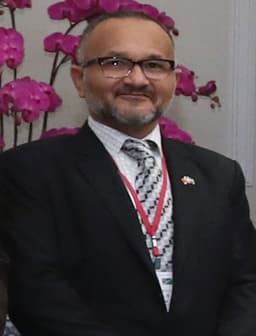
Jeremiah Manele
Politician · Modern
44.0Total

Walter Ulbricht
Politician · Modern
60.7Total
Basic Information
Born
1968
1893
Died
—
1973
Era
Modern
Modern
Nationality
Solomon Islands
East Germany
Occupation
Politician
Politician
Civilization
Other
Western
Score Comparison
Military (10%)
50.0
50.0
Political (20%)
42.3
72.0
Influence (20%)
47.9
61.0
Legacy (20%)
36.7
58.0
Leadership (15%)
48.4
72.0
Strategy (15%)
42.8
43.6
TOTAL
44.0
60.7
Jeremiah Manele — Complete Timeline
2012 AD
Appointed Permanent Representative to the United NationsPolitical Action
Jeremiah Manele was appointed as the Solomon Islands' Permanent Representative to the United Nations. He represented the country in diplomatic negotiations and multilateral forums.
DiplomacyUN
Impact: national
2024 AD
Elected Prime Minister of Solomon IslandsPolitical Action◆ Major
Manele was elected Prime Minister by the National Parliament following the 2024 general election. He succeeded Manasseh Sogavare and formed a coalition government.
ElectionGovernment Change
Impact: national
Reaffirmed Solomon Islands' One-China PolicyPolitical Action◆ Major
Manele's government reaffirmed diplomatic recognition of the People's Republic of China, maintaining the Solomon Islands' shift away from Taiwan. This decision impacted regional geopolitics.
Foreign PolicyChinaTaiwan
Impact: regional
Walter Ulbricht — Complete Timeline
1950 AD
Appointment as First Secretary of the SEDPolitical Action◆ Major
Ulbricht became General Secretary of the Socialist Unity Party of Germany (SED), effectively becoming the leader of East Germany. He oversaw the Stalinization of the country and the establishment of a one-party state.
Communist leadership
Impact: national
1953 AD
Uprising of 1953 in East GermanyPolitical Action◆ Major
A workers' uprising in East Berlin and other cities was violently suppressed by Soviet troops. Ulbricht's government had raised work quotas, sparking the protests. The uprising was a major challenge to his rule and led to a temporary relaxation of policies.
UprisingRepression
Impact: nationaltragic
1961 AD
Construction of the Berlin WallPolitical Action
Ulbricht was the primary architect of the Berlin Wall, which was built to stop the mass exodus of East Germans to the West. The wall physically divided the city and became a central symbol of the Cold War.
Cold WarBerlin Wall
Impact: globaldestructive
1963 AD
Introduction of the New Economic SystemReform
Ulbricht introduced economic reforms that decentralized decision-making and gave more autonomy to enterprises. The reforms aimed to improve efficiency and productivity but were later reversed by his successor, Honecker.
Economic reform
Impact: nationalconstructive
Expert Analysis
Origins
Jeremiah Manele was born in 1968 in the Solomon Islands, a Pacific nation of over 900 islands. He pursued education in public administration and diplomacy at the University of the South Pacific and later at the Australian National University. His early career was shaped by the country's transition to independence (1978) and its fragile democratic institutions. Manele's background as a career diplomat, serving as Permanent Representative to the UN from 2011 to 2014, provided him with international experience but limited exposure to domestic governance.
Walter Ulbricht was born in 1893 in Leipzig, Germany, into a working-class family. He became a carpenter and joined the Social Democratic Party in 1912. After World War I, he was a founding member of the Communist Party of Germany (KPD). Ulbricht received training in Moscow during the 1920s, where he internalized Stalinist methods. His early career was marked by underground political work against the Weimar Republic and later against the Nazi regime, spending years in exile in the Soviet Union.
Rise to Power
Manele's rise was gradual and institutional. He entered politics in the 2010s, serving as Minister of Foreign Affairs from 2014 to 2019 under Prime Minister Manasseh Sogavare. In 2024, after the general election, Manele was elected Prime Minister by the National Parliament, securing a coalition government. His ascendancy reflected the Solomon Islands' democratic process, where leadership changes occur through parliamentary votes.
Ulbricht's rise was marked by manipulation and Soviet backing. After World War II, he led the merger of the KPD and SPD to form the Socialist Unity Party (SED) in 1946. By 1950, he became General Secretary of the SED, effectively the leader of East Germany. He consolidated power by purging rivals and aligning with Joseph Stalin. The 1953 uprising, which he suppressed with Soviet tanks, solidified his control. Ulbricht's political score of 72.0 reflects his mastery of authoritarian power dynamics, while Manele's 42.3 indicates his less central role in global politics.
Leadership & Governance
Manele leads a democratic coalition government in a small Pacific island nation. His governance style is consultative and diplomatic, focusing on maintaining stability and international partnerships. He has reaffirmed the Solomon Islands' One-China Policy, aligning with Beijing, which has brought infrastructure investments but also debt concerns. His domestic agenda includes economic development and climate resilience, but his tenure is too recent for major reforms.
Ulbricht led a Soviet-style dictatorship. He implemented Stalinist policies, including collectivization of agriculture and nationalization of industry. His New Economic System in 1963 introduced limited decentralization to improve efficiency, but political repression remained. The Berlin Wall, built in 1961 under his direction, was a symbol of his regime's brutality, stopping the exodus of East Germans. Ulbricht's leadership score of 72.0 indicates his firm control, while Manele's 48.4 reflects his constrained democratic authority.
Triumph & Tragedy
Manele's triumph is his peaceful election as Prime Minister in a functioning democracy, a rare success in the volatile Pacific. His reaffirmation of the One-China Policy has secured Chinese aid for infrastructure projects. However, his tragedy is the lack of significant achievements so far; his political score of 42.3 suggests limited impact. He also faces challenges of corruption and economic dependence.
Ulbricht's triumph was the construction of the Berlin Wall, which stabilized East Germany's population and economy in the short term. His New Economic System improved industrial output. However, his tragedy was the human cost: the Wall divided families and caused deaths, and the 1953 uprising was brutally crushed. His legacy is tainted by oppression, with an influence score of 61.0 reflecting his significant but negative impact.
Character & Destiny
Manele is characterized as a pragmatic diplomat, cautious and consensus-seeking. His destiny is tied to the Solomon Islands' fragile democracy; his success depends on navigating great-power rivalries (China vs. Western nations). His strategy score of 42.8 suggests limited strategic vision.
Ulbricht was dogmatic, ruthless, and ideologically rigid. He was a master of bureaucratic infighting and Soviet patronage. His destiny was to be the architect of a divided Germany, but his policies ultimately contributed to East Germany's economic stagnation and eventual collapse. His strategy score of 43.6 is similar to Manele's, but his political acumen was far higher.
Legacy
Manele's legacy is nascent. He may be remembered as a leader who maintained stability and deepened ties with China, but his impact is unlikely to extend beyond the Solomon Islands.
Ulbricht's legacy is profound. The Berlin Wall became the symbol of the Cold War. He shaped East Germany's identity as a socialist state, but his repressive methods discredited communism. His total score of 60.7 reflects his significant historical footprint, while Manele's 44.0 indicates a much smaller impact.
Conclusion
Walter Ulbricht had a far greater historical impact than Jeremiah Manele. While Manele operates in a small democratic context, Ulbricht's actions—the Berlin Wall, suppression of dissent, and Cold War maneuvering—directly affected millions and shaped global history. Ulbricht's total score of 60.7 versus Manele's 44.0 reflects this disparity. However, Ulbricht's legacy is largely negative, whereas Manele's, though minor, is potentially positive. In terms of raw influence, Ulbricht wins decisively.
Rankings
🥇
Walter UlbrichtLeader
Mil: 50.0Pol: 72.0Inf: 61.0
60.7
🥈
Jeremiah Manele
Mil: 50.0Pol: 42.3Inf: 47.9
44.0
+16.7 behind
How This Comparison Works
Algorithm
Each figure is scored on 6 dimensions (0—100 scale) based on structured historical data: Military (10%), Political (20%), Influence (20%), Legacy (20%), Leadership (15%), Strategy (15%). The weighted total produces the final ranking.
Data Sources
Scores are computed from structured sub-indicators in the database. Scale factors adjust for era (Ancient ×0.85, Modern ×1.0) and civilization size (Eastern ×1.05, Other ×0.80) to account for differences in population and military scale.
Maximum 3 Figures
Comparisons are limited to 2—3 figures to ensure readability and statistical meaningfulness.
Error Margins
±5 points per dimension — Sub-scores are derived from historical records with inherent uncertainty. Two figures within 5 points on a dimension should be considered roughly equivalent in that area.
Total Score Accuracy
±3 points overall — The weighted combination of 6 dimensions produces a total score with approximately ±3 points of uncertainty. Differences of less than 3 points are not statistically significant— the figures are effectively tied.
Known Limitations
- Historical records are incomplete and uneven across civilizations
- Figures from oral-tradition societies may be underrepresented
- Occupation labels can misclassify multi-role figures
- Scores measure capability and impact, not moral character
- Quantitative scoring is a comparison tool, not absolute truth
Capability Radar
Military (10%) — Battles & Warfare
Battles
20
31
Win Rate
26
29
Expansion
29
32
Political (20%) — Governance & Reform
Reform
30
70
Diplomacy
45
60
Economy
25
55
Influence (20%) — Cultural & Global Reach
Cultural
10
40
Global
15
55
Legacy (20%) — Historical Impact
Historical
10
65
Longevity
10
50
Leadership (15%) — Power & Stability
Tenure
20
85
Stability
20
65
Strategy (15%) — Tactics & Innovation
Strategy
31
39
Tactics
31
43
Reform
35
44
Similar Comparisons
Comments & Discussion
No comments yet. Be the first to share your thoughts!