Loading...
Manuel Azana vs Walter Ulbricht
Walter Ulbricht leads by 11.0 pts · 2 figures compared
…
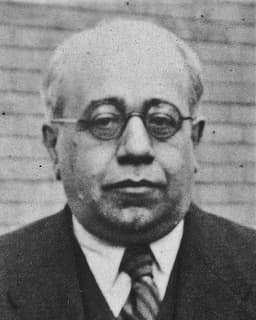
Manuel Azana
Politician · Modern
49.7Total

Walter Ulbricht
Politician · Modern
60.7Total
Basic Information
Born
1880
1893
Died
1940
1973
Era
Modern
Modern
Nationality
Spain
East Germany
Occupation
Politician
Politician
Civilization
Western
Western
Score Comparison
Military (10%)
10.0
50.0
Political (20%)
68.0
72.0
Influence (20%)
53.3
61.0
Legacy (20%)
45.0
58.0
Leadership (15%)
67.0
72.0
Strategy (15%)
38.3
43.6
TOTAL
49.7
60.7
Manuel Azana — Complete Timeline
1931 AD
Prime Minister and Azaña ReformsReform◆ Major
As Prime Minister from 1931 to 1933, Azana implemented major reforms including military reduction, land redistribution, and secularization of education. These reforms aimed to modernize Spain but faced opposition from conservatives and the military.
ReformsModernizationSecond Republic
Impact: nationalprogressive
1933 AD
Casas Viejas IncidentPolitical Action
During Azana's premiership, the Guardia Civil violently suppressed an anarchist uprising in Casas Viejas, killing 24 villagers. The incident caused a political scandal, damaged Azana's reputation, and contributed to his government's fall.
RepressionAnarchismScandal
Impact: nationaldestructive
1936 AD
President of the Second Spanish RepublicPolitical Action◆ Major
Azana was elected President of the Second Spanish Republic in May 1936, succeeding Niceto Alcala-Zamora. His presidency coincided with increasing political polarization and the outbreak of the Spanish Civil War in July 1936.
PresidencySpanish RepublicCivil War
Impact: national
1939 AD
Exile and Death in FrancePolitical Action◆ Major
After the Republican defeat in the Spanish Civil War, Azana fled to France in February 1939. He resigned as President in March 1939 and died in exile in Montauban in November 1940, never returning to Spain.
ExileSpanish Civil WarDeath
Impact: nationaltragic
Walter Ulbricht — Complete Timeline
1950 AD
Appointment as First Secretary of the SEDPolitical Action◆ Major
Ulbricht became General Secretary of the Socialist Unity Party of Germany (SED), effectively becoming the leader of East Germany. He oversaw the Stalinization of the country and the establishment of a one-party state.
Communist leadership
Impact: national
1953 AD
Uprising of 1953 in East GermanyPolitical Action◆ Major
A workers' uprising in East Berlin and other cities was violently suppressed by Soviet troops. Ulbricht's government had raised work quotas, sparking the protests. The uprising was a major challenge to his rule and led to a temporary relaxation of policies.
UprisingRepression
Impact: nationaltragic
1961 AD
Construction of the Berlin WallPolitical Action
Ulbricht was the primary architect of the Berlin Wall, which was built to stop the mass exodus of East Germans to the West. The wall physically divided the city and became a central symbol of the Cold War.
Cold WarBerlin Wall
Impact: globaldestructive
1963 AD
Introduction of the New Economic SystemReform
Ulbricht introduced economic reforms that decentralized decision-making and gave more autonomy to enterprises. The reforms aimed to improve efficiency and productivity but were later reversed by his successor, Honecker.
Economic reform
Impact: nationalconstructive
Expert Analysis
Origins
Manuel Azana was born on January 10, 1880, in Alcalá de Henares, Spain, into a wealthy liberal family. His father was a lawyer and mayor; his mother died when he was young. He studied law at the University of Madrid and later became a civil servant and writer, translating works of Rousseau and Mill. His intellectual background shaped his secular, republican ideals.
Walter Ulbricht was born on June 30, 1893, in Leipzig, Germany, into a working-class family. His father was a tailor and Social Democrat. Ulbricht left school early to work as a cabinetmaker, joining the Social Democratic Party in 1912. He served in World War I, then joined the Communist Party of Germany (KPD) in 1919, rising through its ranks.
Rise to Power
Azana entered politics in the 1920s as a member of the Republican Action party. He became Minister of War in 1931 under the provisional government of the Second Republic. As Prime Minister from October 1931 to September 1933, he implemented his reform program. His role in suppressing the Casas Viejas incident (January 1933) damaged his reputation. After a period out of power, he became President in May 1936, following the victory of the Popular Front. His presidency was immediately challenged by the military uprising that began the Spanish Civil War on July 17, 1936.
Ulbricht rose in the KPD, spending the Nazi years in exile in Moscow. He returned to Germany in 1945 with the Soviet occupation forces. He became First Secretary of the Socialist Unity Party (SED) in 1950, effectively leader of East Germany. He consolidated power by purging rivals and aligning closely with Stalin. His leadership was tested by the 1953 uprising, which was crushed by Soviet tanks.
Leadership & Governance
Azana's leadership was characterized by a commitment to parliamentary democracy and social reform. As Prime Minister, he reduced the army by 40%, redistributed land to peasants, and secularized education. However, his reforms alienated landowners, the church, and the military. During the Civil War, as President, he struggled to maintain unity among Republican factions, from anarchists to communists. His political score of 68.0 reflects his ability to implement reforms but also his failure to prevent the conflict.
Ulbricht ruled as a Stalinist autocrat. He centralized power, suppressed dissent, and built a secret police force (Stasi). He was the architect of the Berlin Wall (1961), which stopped the brain drain but symbolized repression. His New Economic System (1963) introduced limited decentralization, improving efficiency. His political score of 72.0 indicates stronger control and longevity, but his methods were coercive.
Triumph & Tragedy
Azana's greatest triumph was the establishment of the Second Republic and its progressive reforms, which modernized Spain's political and social structures. His greatest tragedy was the Casas Viejas incident, where government forces killed 24 anarchist villagers, tarnishing his reputation. The Civil War and his exile in France, where he died in 1940, marked his personal and political failure.
Ulbricht's triumph was building East Germany into a stable state and overseeing its economic recovery. The Berlin Wall effectively stopped emigration, stabilizing the workforce. His tragedy was the 1953 uprising, which exposed the regime's unpopularity, and the long-term stagnation of the economy. He was ousted in 1971, replaced by Erich Honecker, and died in 1973.
Character & Destiny
Azana was an intellectual, aloof, and idealistic. He believed in reason and reform but lacked the ruthlessness to navigate the violent polarization of 1930s Spain. His character led him to prioritize legality and coalition-building, which proved insufficient against the military rebellion. Historians often describe him as a tragic figure—a democrat in an age of extremism.
Ulbricht was dogmatic, pragmatic, and authoritarian. He was a master of party machinery and survival, bending to Soviet will while pursuing his own goals. His character made him effective at building a state but also at creating a repressive system that ultimately failed to win popular loyalty. His legacy is tied to the Wall and the Stasi.
Legacy
Azana's legacy is the Second Republic itself, which remains a symbol of democratic hope in Spain. His reforms influenced later Spanish democracy after Franco. His scores: Military 10.0, Political 68.0, Influence 53.3, Legacy 45.0, Leadership 67.0, Strategy 38.3, Total 49.7. He is remembered as a principled but ineffective leader.
Ulbricht's legacy is the division of Germany and the communist state he built. The Berlin Wall fell in 1989, but his policies shaped East German society for decades. His scores: Military 50.0, Political 72.0, Influence 61.0, Legacy 58.0, Leadership 72.0, Strategy 43.6, Total 60.7. He is remembered as a ruthless builder of a failed system.
Conclusion
Walter Ulbricht had greater impact than Manuel Azana, as reflected in his higher total score (60.7 vs 49.7). Ulbricht shaped a state that lasted 40 years and divided Europe, while Azana's Republic lasted only eight years and was crushed by fascism. However, Azana's democratic ideals have a more positive legacy, while Ulbricht's is largely negative. In terms of historical influence, Ulbricht's actions—especially the Berlin Wall—had a more profound and lasting effect on global politics.
Rankings
🥇
Walter UlbrichtLeader
Mil: 50.0Pol: 72.0Inf: 61.0
60.7
🥈
Manuel Azana
Mil: 10.0Pol: 68.0Inf: 53.3
49.7
+11.0 behind
How This Comparison Works
Algorithm
Each figure is scored on 6 dimensions (0—100 scale) based on structured historical data: Military (10%), Political (20%), Influence (20%), Legacy (20%), Leadership (15%), Strategy (15%). The weighted total produces the final ranking.
Data Sources
Scores are computed from structured sub-indicators in the database. Scale factors adjust for era (Ancient ×0.85, Modern ×1.0) and civilization size (Eastern ×1.05, Other ×0.80) to account for differences in population and military scale.
Maximum 3 Figures
Comparisons are limited to 2—3 figures to ensure readability and statistical meaningfulness.
Error Margins
±5 points per dimension — Sub-scores are derived from historical records with inherent uncertainty. Two figures within 5 points on a dimension should be considered roughly equivalent in that area.
Total Score Accuracy
±3 points overall — The weighted combination of 6 dimensions produces a total score with approximately ±3 points of uncertainty. Differences of less than 3 points are not statistically significant— the figures are effectively tied.
Known Limitations
- Historical records are incomplete and uneven across civilizations
- Figures from oral-tradition societies may be underrepresented
- Occupation labels can misclassify multi-role figures
- Scores measure capability and impact, not moral character
- Quantitative scoring is a comparison tool, not absolute truth
Capability Radar
Military (10%) — Battles & Warfare
Battles
0
31
Win Rate
0
29
Expansion
0
32
Political (20%) — Governance & Reform
Reform
60
70
Diplomacy
30
60
Economy
20
55
Influence (20%) — Cultural & Global Reach
Cultural
30
40
Global
20
55
Legacy (20%) — Historical Impact
Historical
40
65
Longevity
20
50
Leadership (15%) — Power & Stability
Tenure
40
85
Stability
10
65
Strategy (15%) — Tactics & Innovation
Strategy
0
39
Tactics
0
43
Reform
10
44
Similar Comparisons
Comments & Discussion
No comments yet. Be the first to share your thoughts!