Loading...
Joe Biden vs Sato Kilman
Joe Biden leads by 10.5 pts · 2 figures compared
…

Joe Biden
Politician · Modern
55.0Total
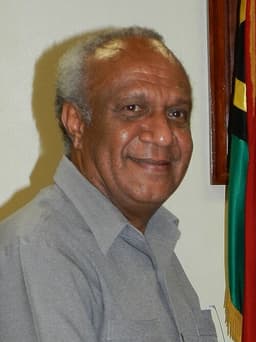
Sato Kilman
Politician · Modern
44.5Total
Basic Information
Born
1942
1957
Died
—
—
Era
Modern
Modern
Nationality
United States
Vanuatu
Occupation
Politician
Politician
Civilization
Western
Other
Score Comparison
Military (10%)
49.3
14.3
Political (20%)
62.7
42.3
Influence (20%)
61.0
47.1
Legacy (20%)
45.8
39.2
Leadership (15%)
66.0
74.0
Strategy (15%)
41.0
40.4
TOTAL
55.0
44.5
Joe Biden — Complete Timeline
2020 AD
Election as President of the United StatesPolitical Action◆ Major
Biden won the 2020 presidential election against incumbent Donald Trump, receiving over 81 million votes, the most ever for a presidential candidate. His victory was certified after the January 6 Capitol attack, and he was inaugurated on January 20, 2021.
Presidential ElectionDemocratic Party
Impact: global
2021 AD
Withdrawal of U.S. Troops from AfghanistanWar
Biden completed the withdrawal of U.S. troops from Afghanistan, ending the 20-year war. The withdrawal was chaotic, with the Taliban rapidly taking control of the country. The fall of Kabul led to a humanitarian crisis and widespread criticism of the administration's planning.
Afghanistan WarMilitary Withdrawal
Impact: globaltragic
Signing of the American Rescue Plan ActPolitical Action◆ Major
Biden signed the American Rescue Plan Act, a $1.9 trillion economic stimulus package to address the COVID-19 pandemic and its economic impact. The act included direct payments to individuals, expanded unemployment benefits, and funding for vaccine distribution.
COVID-19 PandemicEconomic Stimulus
Impact: nationalconstructive
Sato Kilman — Complete Timeline
2010 AD
First Term as Prime MinisterPolitical Action◆ Major
Sato Kilman became Prime Minister of Vanuatu for the first time, leading a coalition government. His tenure was marked by political instability and frequent changes in alliances.
Prime MinisterCoalition Government
Impact: national
2012 AD
Re-elected Prime MinisterPolitical Action
Kilman was re-elected as Prime Minister after the 2012 general election. His second term continued to face challenges from opposition parties and votes of no confidence.
Re-electionGovernance
Impact: national
2015 AD
Resigned as Prime MinisterPolitical Action◆ Major
Sato Kilman resigned as Prime Minister amid a political crisis and a pending vote of no confidence. His resignation led to the formation of a new government.
ResignationPolitical Crisis
Impact: nationaldestructive
Expert Analysis
Origins
Joe Biden was born in 1942 in Scranton, Pennsylvania, into a middle-class Catholic family. He studied at the University of Delaware and Syracuse Law School, becoming a public defender before entering politics. His early life was marked by personal tragedy: his first wife and daughter died in a car crash in 1972, shortly after his first Senate election.
Sato Kilman was born in 1957 in Malekula, Vanuatu, into a family of modest means. He attended local schools and later studied at the University of the South Pacific in Fiji. Before politics, he worked as a civil servant and businessman. He founded the People's Progress Party in 2001, a centrist political party focused on economic development.
Rise to Power
Biden's rise was gradual. He was elected to the New Castle County Council in 1970, then to the U.S. Senate in 1972 at age 30, one of the youngest senators in history. He served six terms, chairing the Senate Judiciary and Foreign Relations Committees. In 2008, he was selected as Barack Obama's running mate and served two terms as Vice President. He secured the Democratic nomination in 2020 and defeated incumbent Donald Trump in the general election, receiving over 81 million votes.
Kilman's rise was rapid but unstable. He entered parliament in 2004 as a member of the People's Progress Party. He became Prime Minister in 2011 after a series of no-confidence votes removed previous leaders. His first term lasted only until 2012, when he resigned amid a political crisis. He returned as Prime Minister after the 2012 election, serving until 2013. He held the office again in 2015-2016 and briefly in 2023. His leadership was characterized by coalition politics and frequent changes of government.
Leadership & Governance
Biden's leadership style is institutional and collaborative. He emphasizes unity and restoration of norms. His governance includes the American Rescue Plan Act ($1.9 trillion stimulus), the Infrastructure Investment and Jobs Act, and the Inflation Reduction Act. He has focused on climate change, healthcare, and foreign policy alliances. His approval ratings have been moderate, averaging around 45%.
Kilman's leadership is more transactional and coalition-based. He has focused on economic development, infrastructure, and tourism in Vanuatu. His tenure saw the introduction of a value-added tax and efforts to improve air connectivity. However, political instability hindered long-term planning. He faced multiple no-confidence votes and was often forced to resign or reshuffle cabinets.
Triumph & Tragedy
Biden's triumphs include passing major legislation in a divided Congress, such as the CHIPS Act and the Infrastructure Act. He also oversaw a strong economic recovery post-COVID, with unemployment dropping to historic lows. His tragedy includes the chaotic withdrawal from Afghanistan in 2021, which resulted in the deaths of 13 U.S. service members and a rapid Taliban takeover. He also faced criticism for his handling of inflation and the border crisis.
Kilman's triumphs include maintaining political stability during his terms and securing international aid for development projects. He also established diplomatic relations with China. His tragedies include frequent political turmoil, with three of his terms ending in resignation. He was also criticized for corruption allegations and lack of progress in poverty reduction.
Character & Destiny
Biden is known for his empathy and persistence. He has overcome personal tragedies and a stutter. His decision-making is deliberate but sometimes slow. Historical assessments note his legislative achievements but also his missteps in Afghanistan. He scores 66.0 in leadership and 41.0 in strategy, reflecting a mixed record.
Kilman is seen as a pragmatic politician who navigates Vanuatu's complex political landscape. His resilience is notable, returning to power multiple times. However, his lack of a clear ideological vision and tendency toward short-term fixes have limited his impact. He scores 74.0 in leadership but only 40.4 in strategy, indicating strong personal leadership but weak strategic planning.
Legacy
Biden's legacy will be shaped by his domestic legislative achievements and foreign policy decisions. He has restored U.S. participation in the Paris Agreement and strengthened NATO. His long-term impact includes significant investments in infrastructure and clean energy. He ranks 45.8 in legacy, with potential for upward revision.
Kilman's legacy is more modest. He is remembered as a key figure in Vanuatu's political instability, but also as a leader who kept the country afloat. His influence is primarily domestic, with a score of 47.1. He has not left a lasting institutional legacy.
Conclusion
Joe Biden had a greater impact than Sato Kilman, with a total score of 55.0 vs 44.5. Biden's influence spans global affairs and domestic policy, while Kilman's influence is limited to a small Pacific nation. Even in political leadership, Biden's 62.7 surpasses Kilman's 42.3. The score gap of 10.5 points reflects Biden's broader reach and more consequential actions.
Rankings
🥇
Joe BidenLeader
Mil: 49.3Pol: 62.7Inf: 61.0
55.0
🥈
Sato Kilman
Mil: 14.3Pol: 42.3Inf: 47.1
44.5
+10.5 behind
How This Comparison Works
Algorithm
Each figure is scored on 6 dimensions (0—100 scale) based on structured historical data: Military (10%), Political (20%), Influence (20%), Legacy (20%), Leadership (15%), Strategy (15%). The weighted total produces the final ranking.
Data Sources
Scores are computed from structured sub-indicators in the database. Scale factors adjust for era (Ancient ×0.85, Modern ×1.0) and civilization size (Eastern ×1.05, Other ×0.80) to account for differences in population and military scale.
Maximum 3 Figures
Comparisons are limited to 2—3 figures to ensure readability and statistical meaningfulness.
Error Margins
±5 points per dimension — Sub-scores are derived from historical records with inherent uncertainty. Two figures within 5 points on a dimension should be considered roughly equivalent in that area.
Total Score Accuracy
±3 points overall — The weighted combination of 6 dimensions produces a total score with approximately ±3 points of uncertainty. Differences of less than 3 points are not statistically significant— the figures are effectively tied.
Known Limitations
- Historical records are incomplete and uneven across civilizations
- Figures from oral-tradition societies may be underrepresented
- Occupation labels can misclassify multi-role figures
- Scores measure capability and impact, not moral character
- Quantitative scoring is a comparison tool, not absolute truth
Capability Radar
Military (10%) — Battles & Warfare
Battles
31
19
Win Rate
33
23
Expansion
33
26
Political (20%) — Governance & Reform
Reform
55
30
Diplomacy
65
40
Economy
50
30
Influence (20%) — Cultural & Global Reach
Cultural
40
10
Global
55
10
Legacy (20%) — Historical Impact
Historical
45
15
Longevity
30
20
Leadership (15%) — Power & Stability
Tenure
70
60
Stability
45
25
Strategy (15%) — Tactics & Innovation
Strategy
37
32
Tactics
40
33
Reform
41
39
Similar Comparisons
Comments & Discussion
No comments yet. Be the first to share your thoughts!