Loading...
Kofi Annan vs Sato Kilman
Kofi Annan leads by 13.2 pts · 2 figures compared
…
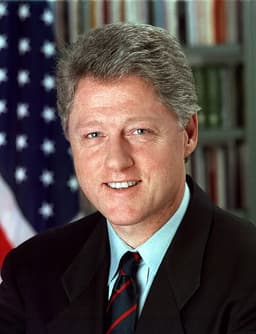
Kofi Annan
Politician · Modern
57.7Total
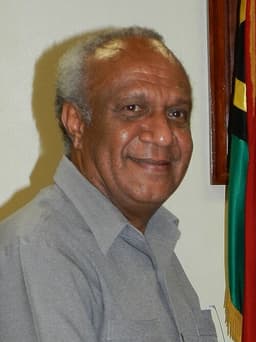
Sato Kilman
Politician · Modern
44.5Total
Basic Information
Born
1938
1957
Died
—
—
Era
Modern
Modern
Nationality
Ghana
Vanuatu
Occupation
Politician
Politician
Civilization
Other
Other
Score Comparison
Military (10%)
46.6
14.3
Political (20%)
70.0
42.3
Influence (20%)
55.0
47.1
Legacy (20%)
52.0
39.2
Leadership (15%)
78.0
74.0
Strategy (15%)
40.8
40.4
TOTAL
57.7
44.5
Kofi Annan — Complete Timeline
1997 AD
Elected Secretary-General of the United NationsPolitical Action◆ Major
Kofi Annan became the seventh Secretary-General of the United Nations, the first from sub-Saharan Africa. His election followed the US veto of Boutros-Ghali, and he pledged to reform the UN and strengthen peacekeeping.
UN Secretary-GeneralReformPeacekeeping
Impact: globalconstructive
2000 AD
Launched the Millennium Development GoalsReform◆ Major
Annan spearheaded the adoption of the Millennium Development Goals at the UN Millennium Summit, setting targets for poverty reduction, education, health, and environmental sustainability by 2015.
MDGsDevelopmentGlobal Goals
Impact: globalconstructive
2001 AD
Awarded the Nobel Peace PrizeCultural◆ Major
Kofi Annan and the United Nations were jointly awarded the Nobel Peace Prize for their work in promoting peace, human rights, and global cooperation. The prize recognized Annan's leadership in UN reform and conflict resolution.
Nobel PrizePeaceUN
Impact: globalconstructive
2004 AD
Investigated the Oil-for-Food Programme scandalPolitical Action◆ Major
Annan faced criticism over the UN Oil-for-Food Programme in Iraq, which was marred by corruption and mismanagement. An independent inquiry found no direct evidence of Annan's involvement but cited systemic failures.
CorruptionIraqUN Scandal
Impact: globaldestructive
2005 AD
Advocated for the Responsibility to Protect doctrinePolitical Action◆ Major
Annan promoted the Responsibility to Protect doctrine, endorsed by the UN World Summit, asserting that states have a responsibility to protect populations from genocide, war crimes, and crimes against humanity.
R2PHuman RightsUN Doctrine
Impact: globalconstructive
Sato Kilman — Complete Timeline
2010 AD
First Term as Prime MinisterPolitical Action◆ Major
Sato Kilman became Prime Minister of Vanuatu for the first time, leading a coalition government. His tenure was marked by political instability and frequent changes in alliances.
Prime MinisterCoalition Government
Impact: national
2012 AD
Re-elected Prime MinisterPolitical Action
Kilman was re-elected as Prime Minister after the 2012 general election. His second term continued to face challenges from opposition parties and votes of no confidence.
Re-electionGovernance
Impact: national
2015 AD
Resigned as Prime MinisterPolitical Action◆ Major
Sato Kilman resigned as Prime Minister amid a political crisis and a pending vote of no confidence. His resignation led to the formation of a new government.
ResignationPolitical Crisis
Impact: nationaldestructive
Expert Analysis
Origins
Kofi Annan was born on April 8, 1938, in Kumasi, Gold Coast (now Ghana), into a prominent family of Fante chiefs. He studied at the Kwame Nkrumah University of Science and Technology and later at Macalester College in the US, earning a degree in economics. He also studied at the Graduate Institute of International Studies in Geneva and earned an MBA from MIT. His early career began at the World Health Organization, a UN agency, setting the stage for his lifelong association with the UN.
Sato Kilman was born on December 30, 1957, in Malakula, Vanuatu. Little is known about his early education, but he entered politics through local government, becoming a member of parliament for Malakula in 1987. He joined the People's Progress Party and rose through its ranks, eventually leading it. His background is rooted in the post-independence political landscape of Vanuatu, a Pacific island nation that gained independence in 1980.
Rise to Power
Kofi Annan's rise was steady within the UN bureaucracy. He served as Under-Secretary-General for Peacekeeping Operations from 1993 to 1996, overseeing missions in Somalia, Bosnia, and Rwanda. His handling of the Rwandan genocide and the Bosnian war drew criticism, but he was appointed Secretary-General in 1997, succeeding Boutros Boutros-Ghali. Annan's election was historic as the first from sub-Saharan Africa, and he was re-elected in 2001.
Sato Kilman became Prime Minister for the first time on December 2, 2010, after a motion of no confidence ousted Edward Natapei. His rise was characterized by frequent changes in government due to Vanuatu's unstable coalition politics. He led a coalition government but faced constant challenges from opposition parties. His tenure was marked by political instability, with multiple votes of no confidence.
Leadership & Governance
Kofi Annan's leadership was diplomatic and reform-oriented. He promoted the Millennium Development Goals (MDGs), adopted in 2000, which set targets for poverty reduction, education, and health. He also advocated for the Responsibility to Protect (R2P) doctrine, endorsed by the UN in 2005. Annan's governance style emphasized multilateralism and consensus-building. However, his tenure was marred by the Oil-for-Food Programme scandal, where an independent inquiry found mismanagement but no direct corruption by Annan. His leadership scored 78.0, reflecting his ability to navigate global politics.
Sato Kilman's leadership was more focused on domestic issues in Vanuatu. He prioritized economic development and infrastructure, but his governance was hampered by political instability. He resigned in 2011 amid a vote of no confidence, only to be re-elected in 2012. His leadership score is 74.0, indicating effectiveness within the constraints of a small Pacific nation. He lacked the global platform of Annan and focused on coalition management.
Triumph & Tragedy
Kofi Annan's greatest success was winning the Nobel Peace Prize in 2001, jointly with the UN, for his work in promoting peace and human rights. The MDGs were a landmark achievement, though they were only partially met by 2015. His advocacy for R2P influenced international norms, though its application has been controversial. His greatest failure was the UN's inability to prevent the Rwandan genocide in 1994, for which he, as head of peacekeeping, was criticized. The Oil-for-Food scandal also tarnished his legacy, though he was cleared of direct wrongdoing.
Sato Kilman's triumph was becoming Prime Minister multiple times, showing resilience in Vanuatu's volatile politics. He oversaw economic growth and maintained stability during his terms. His tragedy was the constant political instability, leading to his resignation in 2011 and again in 2015 after a no-confidence motion. His legacy is limited by the small scale of his influence, scoring 39.2 in legacy compared to Annan's 52.0.
Character & Destiny
Kofi Annan was known for his calm, diplomatic demeanor and commitment to international law. He was a consensus-builder, often described as a 'quiet diplomat'. His character shaped his destiny as a global statesman, but also led to criticism for being too cautious. Historical assessments view him as a principled leader who strengthened the UN's moral authority, despite operational failures.
Sato Kilman is seen as a pragmatic politician, adept at navigating Vanuatu's factional politics. His determination to hold power despite repeated challenges shows resilience. However, his character is less defined on the global stage, and his destiny is tied to the small island nation's political cycles. He scored 42.3 in political power, reflecting his limited reach.
Legacy
Kofi Annan's legacy is global. The MDGs evolved into the Sustainable Development Goals, and R2P remains a key UN doctrine. The Annan Foundation continues his work. He is remembered as an effective UN Secretary-General who modernized the organization. His legacy score of 52.0 reflects his enduring impact.
Sato Kilman's legacy is confined to Vanuatu. He is remembered as a frequent prime minister during a period of instability. His policies had limited long-term impact, and he did not introduce major reforms. His legacy score of 39.2 is modest.
Conclusion
Kofi Annan had greater impact than Sato Kilman. Annan's influence was global, shaping international norms and development goals. His total score of 57.7 far exceeds Kilman's 44.5. While Kilman was effective in his local context, Annan's work affected billions through the MDGs and R2P. The score gap of 13.2 points underscores the disparity in their historical significance. Annan's legacy is secure as a transformative UN leader, while Kilman's is a footnote in Pacific island politics.
Rankings
🥇
Kofi AnnanLeader
Mil: 46.6Pol: 70.0Inf: 55.0
57.7
🥈
Sato Kilman
Mil: 14.3Pol: 42.3Inf: 47.1
44.5
+13.2 behind
How This Comparison Works
Algorithm
Each figure is scored on 6 dimensions (0—100 scale) based on structured historical data: Military (10%), Political (20%), Influence (20%), Legacy (20%), Leadership (15%), Strategy (15%). The weighted total produces the final ranking.
Data Sources
Scores are computed from structured sub-indicators in the database. Scale factors adjust for era (Ancient ×0.85, Modern ×1.0) and civilization size (Eastern ×1.05, Other ×0.80) to account for differences in population and military scale.
Maximum 3 Figures
Comparisons are limited to 2—3 figures to ensure readability and statistical meaningfulness.
Error Margins
±5 points per dimension — Sub-scores are derived from historical records with inherent uncertainty. Two figures within 5 points on a dimension should be considered roughly equivalent in that area.
Total Score Accuracy
±3 points overall — The weighted combination of 6 dimensions produces a total score with approximately ±3 points of uncertainty. Differences of less than 3 points are not statistically significant— the figures are effectively tied.
Known Limitations
- Historical records are incomplete and uneven across civilizations
- Figures from oral-tradition societies may be underrepresented
- Occupation labels can misclassify multi-role figures
- Scores measure capability and impact, not moral character
- Quantitative scoring is a comparison tool, not absolute truth
Capability Radar
Military (10%) — Battles & Warfare
Battles
19
19
Win Rate
27
23
Expansion
28
26
Political (20%) — Governance & Reform
Reform
70
30
Diplomacy
85
40
Economy
60
30
Influence (20%) — Cultural & Global Reach
Cultural
55
10
Global
75
10
Legacy (20%) — Historical Impact
Historical
70
15
Longevity
60
20
Leadership (15%) — Power & Stability
Tenure
75
60
Stability
65
25
Strategy (15%) — Tactics & Innovation
Strategy
33
32
Tactics
32
33
Reform
38
39
Similar Comparisons
Comments & Discussion
No comments yet. Be the first to share your thoughts!