Loading...
Joe Clark vs Kurt von Schuschnigg
Kurt von Schuschnigg leads by 3.9 pts · 2 figures compared
…
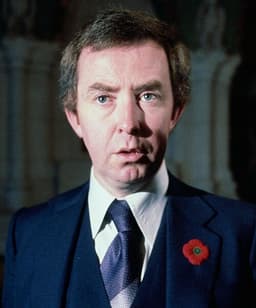
Joe Clark
Politician · Modern
41.5Total

Kurt von Schuschnigg
Politician · Modern
45.4Total
Basic Information
Born
1939
1897
Died
—
1977
Era
Modern
Modern
Nationality
Canada
Austria
Occupation
Politician
Politician
Civilization
Western
Western
Score Comparison
Military (10%)
10.2
50.0
Political (20%)
37.9
35.1
Influence (20%)
48.6
48.6
Legacy (20%)
38.3
41.7
Leadership (15%)
58.8
55.3
Strategy (15%)
42.2
43.0
TOTAL
41.5
45.4
Joe Clark — Complete Timeline
1979 AD
Became Prime Minister of CanadaPolitical Action◆ Major
Clark became the 16th Prime Minister of Canada, leading a Progressive Conservative minority government. At age 39, he was the youngest person to hold the office.
Government FormationYouthConservatism
Impact: national
Defeated on budget and lost governmentPolitical Action◆ Major
Clark's minority government was defeated on a motion of non-confidence over his budget, which proposed an 18-cent-per-gallon tax on gasoline. The defeat triggered an election that returned Pierre Trudeau's Liberals to power.
BudgetNon-ConfidenceElection
Impact: national
1984 AD
Returned as Minister of Foreign AffairsPolitical Action
Clark returned to cabinet as Secretary of State for External Affairs under Prime Minister Brian Mulroney. He served in this role until 1991, focusing on foreign policy and international relations.
CabinetForeign AffairsMulroney
Impact: national
Kurt von Schuschnigg — Complete Timeline
1936 AD
Signing of the July AgreementPolitical Action◆ Major
Schuschnigg signed an agreement with German ambassador Franz von Papen that normalized relations between Austria and Nazi Germany. In exchange for Germany recognizing Austrian sovereignty, Austria agreed to amnesty imprisoned Austrian Nazis and include pro-Nazi figures in the government.
DiplomacyNazi GermanyAppeasement
Impact: nationaldestructive
1938 AD
Berchtesgaden meeting with HitlerPolitical Action
On February 12, 1938, Schuschnigg met Adolf Hitler at the Berghof in Berchtesgaden. Hitler demanded that Austrian Nazis be given key government posts and that Austria integrate economically with Germany. Schuschnigg capitulated, appointing Arthur Seyss-Inquart as interior minister.
DiplomacyUltimatumAnschluss Prelude
Impact: nationaltragic
Announcement of the Anschluss referendumPolitical Action◆ Major
On March 9, 1938, Schuschnigg announced a national referendum to be held on March 13, asking Austrians whether they wanted a 'free, independent, social, Christian, and united Austria.' This was a last-ditch effort to prevent German annexation.
ReferendumIndependenceLast Attempt
Impact: national
Resignation under German ultimatumPolitical Action
On March 11, 1938, under threat of German invasion, Schuschnigg resigned as chancellor. He ordered the Austrian army not to resist. German troops entered Austria the next day, completing the Anschluss. Schuschnigg was immediately placed under house arrest.
ResignationAnschlussNazi Occupation
Impact: nationaltragic
Expert Analysis
Origins
Joe Clark was born on June 5, 1939, in High River, Alberta, Canada. His father was a newspaper editor, and his mother was a homemaker. Clark earned a BA in history from the University of Alberta and later studied law at Dalhousie University. He was drawn to politics early, serving as a page in the Alberta legislature and becoming president of the Progressive Conservative Student Federation.
Kurt von Schuschnigg was born on December 14, 1897, in Riva del Garda, then part of Austria-Hungary. His father was a general in the Austro-Hungarian army. Schuschnigg studied law at the University of Innsbruck and served as a lieutenant in World War I. He entered politics in the 1920s, joining the Christian Social Party and becoming a close ally of Engelbert Dollfuss.
Rise to Power
Clark entered federal politics in 1972, winning a seat in Parliament. He rose quickly through the Progressive Conservative ranks, becoming party leader in 1976 at age 36. In the 1979 federal election, Clark led the PCs to a minority government, defeating Pierre Trudeau's Liberals. He became Prime Minister on June 4, 1979, at age 39, the youngest in Canadian history.
Schuschnigg became Chancellor of Austria on July 29, 1934, following the assassination of Engelbert Dollfuss by Austrian Nazis. He was initially seen as a moderate, but he continued Dollfuss's authoritarian policies, banning the Nazi party and ruling by decree. His rise was marked by increasing pressure from Nazi Germany, culminating in the Berchtesgaden meeting with Hitler on February 12, 1938.
Leadership & Governance
Clark's leadership was characterized by his cautious, deliberative style. He focused on energy policy, proposing a budget that included an 18-cent-per-gallon gasoline tax to reduce the deficit. His minority government depended on the support of smaller parties, but his budget was defeated on a motion of non-confidence on December 13, 1979, by a vote of 139-133. Clark's governance scored 58.8 in leadership, reflecting his inability to manage the minority parliament effectively.
Schuschnigg governed Austria through emergency decrees and suppression of political opposition. He sought to maintain Austrian independence by appeasing Hitler, signing the July 1936 Agreement that normalized relations with Germany but allowed Austrian Nazis to re-enter politics. His strategy score of 43.0 reflects his failed attempt to balance pressure from Hitler with internal resistance. In March 1938, he announced a referendum on Austrian independence, but Hitler forced his resignation before it could be held.
Triumph & Tragedy
Clark's triumph was becoming Prime Minister at a young age, defeating the long-serving Trudeau. His tragedy was the shortest tenure of any Canadian PM (9 months), losing power over a single budget vote. He later served as Foreign Minister under Brian Mulroney from 1984 to 1991, rebuilding his reputation.
Schuschnigg's triumph was maintaining Austrian independence for nearly four years under Nazi pressure. His tragedy was the Anschluss of March 12, 1938, when German troops entered Austria unopposed. He was arrested by the Gestapo and spent the war in concentration camps, surviving but discredited. His total score of 45.4 reflects his low political influence (35.1) and legacy (41.7).
Character & Destiny
Clark was known as an intellectual and a moderate, but his indecisiveness and lack of political ruthlessness led to his downfall. He scored 37.9 in political acumen, unable to build lasting alliances. His character prevented him from securing the confidence of the House.
Schuschnigg was a devout Catholic and authoritarian, but he was outmatched by Hitler's aggression. His score of 35.1 in political influence reflects his inability to rally effective resistance. His decision to order the army not to resist the German invasion sealed his fate.
Legacy
Clark's legacy is as a cautionary tale of minority government. He is remembered for his brief premiership and his later service as a statesman, but his impact on Canadian policy was minimal. His total score of 41.5 reflects his limited influence (48.6) and legacy (38.3).
Schuschnigg's legacy is tied to the failure of appeasement. He is often criticized for capitulating to Hitler, but some historians argue he had no viable alternatives. His legacy score of 41.7 is slightly higher than Clark's, but his influence (48.6) is equal. The Anschluss remains a defining event in European history, but Schuschnigg's role is overshadowed by Hitler.
Conclusion
Kurt von Schuschnigg had a greater impact than Joe Clark, despite his low scores. His failure to prevent the Anschluss directly shaped the course of World War II, while Clark's brief term had negligible effect on global events. Schuschnigg's total score of 45.4 surpasses Clark's 41.5 by 3.9 points, but more importantly, his decisions affected millions of lives. Clark's legacy is a footnote in Canadian history; Schuschnigg's is a lesson in the dangers of appeasement. The evidence supports Schuschnigg as the more consequential figure.
Rankings
🥇
Kurt von SchuschniggLeader
Mil: 50.0Pol: 35.1Inf: 48.6
45.4
🥈
Joe Clark
Mil: 10.2Pol: 37.9Inf: 48.6
41.5
+3.9 behind
How This Comparison Works
Algorithm
Each figure is scored on 6 dimensions (0—100 scale) based on structured historical data: Military (10%), Political (20%), Influence (20%), Legacy (20%), Leadership (15%), Strategy (15%). The weighted total produces the final ranking.
Data Sources
Scores are computed from structured sub-indicators in the database. Scale factors adjust for era (Ancient ×0.85, Modern ×1.0) and civilization size (Eastern ×1.05, Other ×0.80) to account for differences in population and military scale.
Maximum 3 Figures
Comparisons are limited to 2—3 figures to ensure readability and statistical meaningfulness.
Error Margins
±5 points per dimension — Sub-scores are derived from historical records with inherent uncertainty. Two figures within 5 points on a dimension should be considered roughly equivalent in that area.
Total Score Accuracy
±3 points overall — The weighted combination of 6 dimensions produces a total score with approximately ±3 points of uncertainty. Differences of less than 3 points are not statistically significant— the figures are effectively tied.
Known Limitations
- Historical records are incomplete and uneven across civilizations
- Figures from oral-tradition societies may be underrepresented
- Occupation labels can misclassify multi-role figures
- Scores measure capability and impact, not moral character
- Quantitative scoring is a comparison tool, not absolute truth
Capability Radar
Military (10%) — Battles & Warfare
Battles
22
29
Win Rate
25
30
Expansion
28
33
Political (20%) — Governance & Reform
Reform
25
30
Diplomacy
40
25
Economy
20
20
Influence (20%) — Cultural & Global Reach
Cultural
15
10
Global
15
20
Legacy (20%) — Historical Impact
Historical
20
30
Longevity
10
20
Leadership (15%) — Power & Stability
Tenure
30
40
Stability
25
10
Strategy (15%) — Tactics & Innovation
Strategy
32
36
Tactics
33
42
Reform
36
46
Similar Comparisons
Comments & Discussion
No comments yet. Be the first to share your thoughts!