Loading...
Ali Bongo Ondimba vs Kurt von Schuschnigg
Kurt von Schuschnigg leads by 1.7 pts · 2 figures compared
…
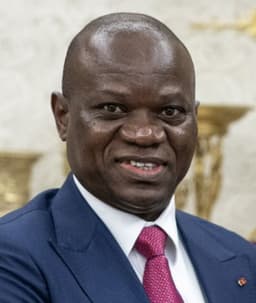
Ali Bongo Ondimba
Politician · Modern
43.7Total

Kurt von Schuschnigg
Politician · Modern
45.4Total
Basic Information
Born
1959
1897
Died
—
1977
Era
Modern
Modern
Nationality
Gabon
Austria
Occupation
Politician
Politician
Civilization
Other
Western
Score Comparison
Military (10%)
48.1
50.0
Political (20%)
32.2
35.1
Influence (20%)
47.9
48.6
Legacy (20%)
37.5
41.7
Leadership (15%)
55.3
55.3
Strategy (15%)
44.0
43.0
TOTAL
43.7
45.4
Ali Bongo Ondimba — Complete Timeline
2009 AD
Elected President of GabonPolitical Action◆ Major
Following the death of his father Omar Bongo, Ali Bongo Ondimba won the presidential election in Gabon. His victory was contested by the opposition, leading to protests and accusations of electoral fraud.
ElectionSuccessionControversy
Impact: national
2018 AD
Suffered StrokeOther◆ Major
Ali Bongo Ondimba suffered a stroke while attending a summit in Saudi Arabia. He spent months abroad recovering, which fueled speculation about his health and ability to govern, leading to a power vacuum and attempted coup in 2019.
Health CrisisPower VacuumSpeculation
Impact: nationaltragic
2023 AD
Overthrown in Coup d'ÉtatPolitical Action
On August 30, 2023, military officers led by General Brice Oligui Nguema announced the overthrow of President Ali Bongo Ondimba. The coup occurred shortly after Bongo was declared winner of a disputed election, ending his 14-year rule.
CoupEnd of RegimeMilitary Takeover
Impact: nationaldestructive
Kurt von Schuschnigg — Complete Timeline
1936 AD
Signing of the July AgreementPolitical Action◆ Major
Schuschnigg signed an agreement with German ambassador Franz von Papen that normalized relations between Austria and Nazi Germany. In exchange for Germany recognizing Austrian sovereignty, Austria agreed to amnesty imprisoned Austrian Nazis and include pro-Nazi figures in the government.
DiplomacyNazi GermanyAppeasement
Impact: nationaldestructive
1938 AD
Berchtesgaden meeting with HitlerPolitical Action
On February 12, 1938, Schuschnigg met Adolf Hitler at the Berghof in Berchtesgaden. Hitler demanded that Austrian Nazis be given key government posts and that Austria integrate economically with Germany. Schuschnigg capitulated, appointing Arthur Seyss-Inquart as interior minister.
DiplomacyUltimatumAnschluss Prelude
Impact: nationaltragic
Announcement of the Anschluss referendumPolitical Action◆ Major
On March 9, 1938, Schuschnigg announced a national referendum to be held on March 13, asking Austrians whether they wanted a 'free, independent, social, Christian, and united Austria.' This was a last-ditch effort to prevent German annexation.
ReferendumIndependenceLast Attempt
Impact: national
Resignation under German ultimatumPolitical Action
On March 11, 1938, under threat of German invasion, Schuschnigg resigned as chancellor. He ordered the Austrian army not to resist. German troops entered Austria the next day, completing the Anschluss. Schuschnigg was immediately placed under house arrest.
ResignationAnschlussNazi Occupation
Impact: nationaltragic
Expert Analysis
Origins
Ali Bongo Ondimba was born on February 9, 1959, in Brazzaville, Congo, as the son of Omar Bongo, who would become Gabon's long-serving president. He studied law at the Sorbonne in Paris but did not complete a degree. His early career included serving as his father's personal representative and later as Minister of Foreign Affairs from 1989 to 1991.
Kurt von Schuschnigg was born on December 14, 1897, in Riva del Garda, then part of Austria-Hungary, to a military family. He studied law at the University of Innsbruck and became a lawyer. He entered politics in the 1920s, joining the Christian Social Party, and served as Minister of Justice in 1932.
Rise to Power
Ali Bongo rose to prominence through his father's patronage. After Omar Bongo's death in 2009, he won the presidential election with 41.7% of the vote, though the opposition alleged fraud. He consolidated power by controlling the ruling Gabonese Democratic Party and securing oil revenues.
Schuschnigg became Chancellor of Austria on July 29, 1934, following the assassination of Engelbert Dollfuss by Nazis. He maintained the authoritarian Fatherland Front regime, banning political parties and suppressing socialists. His legitimacy rested on a 1934 constitution that concentrated power in the chancellor.
Leadership & Governance
Ali Bongo's governance was marked by corruption and reliance on oil wealth. Gabon's economy remained undiversified, with 80% of exports from oil. He faced criticism for suppressing dissent and rigging elections. In 2016, his narrow victory led to violent protests. His leadership score of 55.3 reflects moderate stability but poor democratic performance.
Schuschnigg attempted to preserve Austrian independence through appeasement of Nazi Germany. He signed the July 1936 Agreement, which normalized relations but allowed Nazi infiltration. His leadership score of 55.3 matches Bongo's, but his strategic score of 43.0 was lower due to failed diplomacy. He relied on Italy's Mussolini for support, but after Italy aligned with Germany, Austria was isolated.
Triumph & Tragedy
Ali Bongo's triumphs include maintaining power for 14 years and overseeing economic growth driven by oil. However, his tragedy was the 2023 coup, where military officers overthrew him after a disputed election. He scored 48.1 in military, reflecting his inability to secure military loyalty.
Schuschnigg's triumph was his attempt to hold a referendum on March 9, 1938, to assert Austrian independence. However, Hitler demanded cancellation, and Schuschnigg resigned under threat of invasion. His tragedy was the Anschluss on March 12, 1938, ending Austrian sovereignty. He scored 50.0 in military, but his political score of 35.1 shows his failure to build alliances.
Character & Destiny
Ali Bongo was seen as aloof and reliant on his father's legacy. His stroke in 2018 weakened his grip, and he failed to reform the political system. His destiny was sealed by a military that saw him as a liability.
Schuschnigg was a devout Catholic and legalist, believing in diplomacy over force. His character led him to avoid bloodshed, ordering the army not to resist. This decision preserved lives but ended Austria's independence. Historians note his naivety in dealing with Hitler.
Legacy
Ali Bongo's legacy is that of a flawed democrat overthrown by a coup. Gabon remains under military rule, and his family's 55-year dynasty ended. His scores in influence (47.9) and legacy (37.5) reflect limited global impact.
Schuschnigg's legacy is as the last chancellor of a free Austria. He was imprisoned after the Anschluss but survived WWII. His actions delayed but could not prevent Nazi takeover. He scored 48.6 in influence and 41.7 in legacy. The Anschluss remains a cautionary tale of appeasement.
Conclusion
Kurt von Schuschnigg had greater historical impact, as his decisions shaped the fate of Austria and contributed to the narrative of Nazi aggression. His total score of 45.4 edges out Ali Bongo's 43.7. While both were overwhelmed by events, Schuschnigg's role in a pivotal moment of 20th-century history gives him more enduring significance.
Rankings
🥇
Kurt von SchuschniggLeader
Mil: 50.0Pol: 35.1Inf: 48.6
45.4
🥈
Ali Bongo Ondimba
Mil: 48.1Pol: 32.2Inf: 47.9
43.7
+1.7 behind
How This Comparison Works
Algorithm
Each figure is scored on 6 dimensions (0—100 scale) based on structured historical data: Military (10%), Political (20%), Influence (20%), Legacy (20%), Leadership (15%), Strategy (15%). The weighted total produces the final ranking.
Data Sources
Scores are computed from structured sub-indicators in the database. Scale factors adjust for era (Ancient ×0.85, Modern ×1.0) and civilization size (Eastern ×1.05, Other ×0.80) to account for differences in population and military scale.
Maximum 3 Figures
Comparisons are limited to 2—3 figures to ensure readability and statistical meaningfulness.
Error Margins
±5 points per dimension — Sub-scores are derived from historical records with inherent uncertainty. Two figures within 5 points on a dimension should be considered roughly equivalent in that area.
Total Score Accuracy
±3 points overall — The weighted combination of 6 dimensions produces a total score with approximately ±3 points of uncertainty. Differences of less than 3 points are not statistically significant— the figures are effectively tied.
Known Limitations
- Historical records are incomplete and uneven across civilizations
- Figures from oral-tradition societies may be underrepresented
- Occupation labels can misclassify multi-role figures
- Scores measure capability and impact, not moral character
- Quantitative scoring is a comparison tool, not absolute truth
Capability Radar
Military (10%) — Battles & Warfare
Battles
21
29
Win Rate
24
30
Expansion
30
33
Political (20%) — Governance & Reform
Reform
15
30
Diplomacy
30
25
Economy
20
20
Influence (20%) — Cultural & Global Reach
Cultural
10
10
Global
15
20
Legacy (20%) — Historical Impact
Historical
15
30
Longevity
10
20
Leadership (15%) — Power & Stability
Tenure
40
40
Stability
10
10
Strategy (15%) — Tactics & Innovation
Strategy
31
36
Tactics
34
42
Reform
35
46
Similar Comparisons
Comments & Discussion
No comments yet. Be the first to share your thoughts!