Loading...
Johan Ferrier vs Julius Caesar
Julius Caesar leads by 32.6 pts · 2 figures compared
…
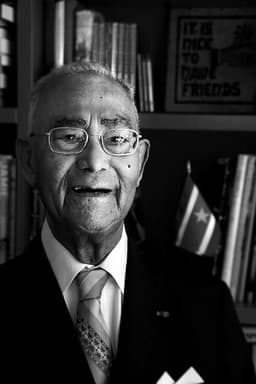
Johan Ferrier
Politician · Modern
50.2Total

Julius Caesar
General · Ancient
82.8Total
Basic Information
Born
1910
-100
Died
2010
-44
Era
Modern
Ancient
Nationality
Suriname
Roman Republic
Occupation
Politician
General
Civilization
Other
Western
Score Comparison
Military (10%)
35.1
88.0
Political (20%)
68.0
78.0
Influence (20%)
52.5
85.0
Legacy (20%)
44.2
82.0
Leadership (15%)
53.2
80.0
Strategy (15%)
42.9
85.0
TOTAL
50.2
82.8
Johan Ferrier — Complete Timeline
1968 AD
Governor of SurinamePolitical Action◆ Major
Ferrier served as Governor of Suriname, the representative of the Dutch monarch, from 1968 to 1975. He played a key role in negotiations for independence and maintaining stability during the transition period.
GovernorColonial AdministrationIndependence
Impact: nationalconstructive
1975 AD
First President of Independent SurinamePolitical Action
Johan Ferrier became the first President of Suriname upon its independence from the Netherlands on November 25, 1975. He served as a ceremonial head of state, overseeing the transition to sovereignty and the drafting of the constitution.
IndependencePresidencyConstitution
Impact: nationalconstructive
1980 AD
Resignation After the 1980 CoupPolitical Action◆ Major
Ferrier resigned as President in 1980 after a military coup led by Desi Bouterse overthrew the civilian government. His resignation marked the end of democratic rule and the beginning of military dictatorship in Suriname.
CoupResignationMilitary Rule
Impact: nationaltragic
Post-Presidency Exile and ReturnPolitical Action
After the coup, Ferrier went into exile in the Netherlands, where he remained for several years. He later returned to Suriname after the restoration of democracy in the 1990s, but did not re-enter politics.
ExileReturnDemocracy
Impact: national
Julius Caesar — Complete Timeline
58 BC
Gallic WarsWar◆ Major
Caesar, as proconsul of Gaul, launched a series of campaigns that conquered all of Gaul (modern France, Belgium, and parts of Switzerland). He fought numerous battles, including against the Helvetii, the Belgae, and the Gallic chieftain Vercingetorix. The wars brought immense wealth and a loyal army to Caesar.
Gallic WarsConquestRoman Expansion
Impact: regional
49 BC
Crossing the RubiconPolitical Action◆ Major
Caesar led Legio XIII across the Rubicon River into Italy, defying the Roman Senate's order to disband his army. This act triggered a civil war against Pompey and the Optimates, ultimately leading to Caesar's dictatorship and the end of the Roman Republic.
Roman Civil WarEnd of RepublicPower Struggle
Impact: global
48 BC
Battle of PharsalusWar◆ Major
Caesar's outnumbered army defeated the larger forces of Pompey the Great at Pharsalus in Greece. Caesar's tactical use of a reserve line to counter Pompey's cavalry charge proved decisive. Pompey fled to Egypt, where he was assassinated, leaving Caesar as the undisputed master of the Roman world.
Roman Civil WarBattleDecisive Victory
Impact: regional
44 BC
Appointment as Dictator for LifePolitical Action◆ Major
The Roman Senate appointed Caesar dictator perpetuo (dictator for life), granting him unprecedented personal power. This move concentrated military, legislative, and judicial authority in one person, effectively ending the Roman Republic's traditional system of checks and balances and alarming many senators.
DictatorshipEnd of RepublicPower Consolidation
Impact: regionaldestructive
Assassination on the Ides of MarchPolitical Action◆ Major
A group of Roman senators, led by Marcus Junius Brutus and Gaius Cassius Longinus, stabbed Caesar to death at a meeting of the Senate in the Theatre of Pompey. The assassination was intended to restore the Republic, but instead triggered another civil war that led to the rise of the Roman Empire.
AssassinationRoman PoliticsEnd of Republic
Impact: globaldestructive
Expert Analysis
johan-ferrier-vs-julius-caesar
### The General and the Gentleman
In the summer of 44 BCE, Rome burned with civil war, its streets slick with the blood of a dictator. In the summer of 1980, Paramaribo fell silent as a military coup ended a democracy barely five years old. Two men, separated by two thousand years and an ocean of culture, each stood at the precipice of history: Julius Caesar, the architect of his own apotheosis; Johan Ferrier, the reluctant guardian of a fragile nation. Their stories, when placed side by side, ask a haunting question: what separates a man who reshapes the world from a man who simply tries to keep it from crumbling?
### Origins
Gaius Julius Caesar was born into the patrician Julian clan, a family of ancient lineage but modest wealth in a Republic ruled by oligarchs. His Rome was a cauldron of ambition—a city where a general could win glory in Spain, buy votes in the Forum, and forge alliances with the powerful. Caesar’s youth was marked by danger: he fled Sulla’s proscriptions, was captured by pirates (whom he later crucified), and learned early that life was a gamble for the highest stakes. His era demanded audacity, and he was its perfect son.
Johan Ferrier, by contrast, was born in 1910 in Paramaribo, a small colonial capital on the South American coast. Suriname was a Dutch plantation society, its economy built on sugar and bauxite, its people a mosaic of African, Javanese, Hindustani, and indigenous roots. Ferrier’s father was a teacher; his mother, a homemaker of modest means. He grew up in a world where the color of your skin often determined your path, but where education offered a narrow door to advancement. He studied in the Netherlands, became a teacher himself, and later the head of a teachers’ college. His era was one of decolonization—a quiet, patient tide that would eventually lift him, but never with the violent force of Caesar’s storms.
### Rise to Power
Caesar’s ascent was a masterpiece of calculated risk. He climbed the *cursus honorum*—quaestor, aedile, praetor—each step financed by debt and lubricated by populist charm. His true breakthrough came in 58 BCE, when he secured command of Gaul. Over eight years, he conquered a territory larger than Italy, wrote commentaries that became classics, and built an army loyal to him alone, not the Senate. When ordered to disband, he crossed the Rubicon River in 49 BCE, a line that meant civil war. “The die is cast,” he said—and with that throw, he seized Rome.
Ferrier’s rise was the opposite: a study in cautious duty. He became Governor of Suriname in 1968, representing the Dutch queen in a colony moving slowly toward self-rule. His role was ceremonial yet pivotal—he was the bridge between the Netherlands and a fractious local parliament. When independence came on November 25, 1975, Ferrier was the natural choice for president. He did not seize power; it was handed to him, wrapped in a constitution and a hope that Suriname’s diverse peoples could govern together. Where Caesar broke laws, Ferrier upheld them.
### Leadership & Governance
As dictator, Caesar was a whirlwind of reform. He reorganized the calendar (the Julian calendar we still use), granted citizenship to provincials, initiated public works, and centralized power in his own hands. His military genius was absolute—at Alesia, he defeated a Gallic army three times his size through siegecraft and discipline. Yet his political wisdom was flawed: he pardoned enemies who would later kill him, and he accepted the title “dictator for life,” a crown that smelled of monarchy to a Republic that despised kings.
Ferrier’s governance was the quiet opposite. As president, he had limited executive power; Suriname’s system was parliamentary, with a prime minister handling day-to-day affairs. Ferrier’s role was to be a symbol of unity—a former teacher who could mediate between ethnic parties and calm tensions. He had no army, no legions. His “military” score of 30.2 reflects not cowardice but reality: he was a statesman, not a soldier. His greatest achievement was simply keeping the new nation stable for five years—a fragile peace in a land of deep divisions.
### Triumph & Tragedy
Caesar’s triumph was the conquest of Gaul and the defeat of his rival Pompey, culminating in a four-fold triumph in Rome in 46 BCE. He stood at the summit of the world, a man who had remade history. His tragedy came on the Ides of March, 44 BCE, when sixty senators stabbed him to death in the Senate chamber. He fell at the feet of a statue of Pompey, his blood pooling on the marble. His final moments—whether he said “Et tu, Brute?”—remain legend, but the truth is stark: he died because he had seized too much power, and the old order could not forgive him.
Ferrier’s triumph was the peaceful transfer of power on Independence Day, 1975. He stood before the world as the first president of a new nation, a quiet man from a small country who had helped guide his people to freedom. His tragedy came on February 25, 1980, when a sergeant named Desi Bouterse led a coup that overthrew the government. Ferrier, refusing to legitimize the junta, resigned. He went into exile in the Netherlands, a president without a country, watching his young democracy crumble into dictatorship. He lived to be 99, long enough to see Bouterse’s regime fall, but never to see Suriname fully recover.
### Character & Destiny
Caesar was driven by an insatiable will. He was charming, ruthless, and brilliant—a man who could weep at the sight of Alexander the Great’s statue because he had not yet matched his glory. His personality shaped his destiny: he saw the Republic as a corpse and himself as its necessary heir. That vision made him great, but it also made him blind to the hatred he inspired. He trusted too much in his own legend.
Ferrier was driven by duty. He was patient, diplomatic, and principled—a man who believed in institutions, not personalities. His personality shaped his destiny in a quieter key: he saw his role as that of a caretaker, a guardian of democracy, not its master. That humility made him beloved, but it also made him vulnerable. He could not stop the coup because he would not become a dictator to prevent it.
### Legacy
Caesar’s legacy is the Roman Empire. His adopted heir, Octavian, became Augustus, and the world shifted from republic to monarchy. For two millennia, Caesar has been the archetype of the conqueror—his name synonymous with emperor, from Kaiser to Tsar. He is remembered in bronze and marble, in Shakespeare’s verse and in the calendars we still use. His influence score of 85.0 is a measure of how he reshaped civilization itself.
Ferrier’s legacy is quieter but no less real. He is remembered in Suriname as a father of independence, a man of integrity in a world of corruption. His legacy score of 57.9 reflects a smaller stage, but also a different kind of heroism: the courage to step down. In an age of strongmen, he chose to be weak for the sake of law. That choice may not conquer Gaul, but it preserves something more precious: the idea that power should serve the people, not itself.
### Conclusion
Standing at the end of their stories, we see two men who faced the same fundamental choice: what to do with power. Caesar chose to wield it absolutely, and in doing so, built an empire but died by the sword. Ferrier chose to hold it lightly, and in doing so, lost his country but kept his soul. Their lives are a mirror held up to our own age, where leaders still must decide between the glory of conquest and the quiet dignity of service. Caesar changed the world; Ferrier tried to save a small piece of it. Which path is greater? The answer, perhaps, depends on whether you are the one holding the knife—or the one who refuses to draw it.
Rankings
🥇
Julius CaesarLeader
Mil: 88.0Pol: 78.0Inf: 85.0
82.8
🥈
Johan Ferrier
Mil: 35.1Pol: 68.0Inf: 52.5
50.2
+32.6 behind
How This Comparison Works
Algorithm
Each figure is scored on 6 dimensions (0—100 scale) based on structured historical data: Military (10%), Political (20%), Influence (20%), Legacy (20%), Leadership (15%), Strategy (15%). The weighted total produces the final ranking.
Data Sources
Scores are computed from structured sub-indicators in the database. Scale factors adjust for era (Ancient ×0.85, Modern ×1.0) and civilization size (Eastern ×1.05, Other ×0.80) to account for differences in population and military scale.
Maximum 3 Figures
Comparisons are limited to 2—3 figures to ensure readability and statistical meaningfulness.
Error Margins
±5 points per dimension — Sub-scores are derived from historical records with inherent uncertainty. Two figures within 5 points on a dimension should be considered roughly equivalent in that area.
Total Score Accuracy
±3 points overall — The weighted combination of 6 dimensions produces a total score with approximately ±3 points of uncertainty. Differences of less than 3 points are not statistically significant— the figures are effectively tied.
Known Limitations
- Historical records are incomplete and uneven across civilizations
- Figures from oral-tradition societies may be underrepresented
- Occupation labels can misclassify multi-role figures
- Scores measure capability and impact, not moral character
- Quantitative scoring is a comparison tool, not absolute truth
Capability Radar
Military (10%) — Battles & Warfare
Battles
21
95
Win Rate
26
92
Expansion
25
97
Political (20%) — Governance & Reform
Reform
40
90
Diplomacy
60
85
Economy
35
82
Influence (20%) — Cultural & Global Reach
Cultural
30
88
Global
25
94
Legacy (20%) — Historical Impact
Historical
35
95
Longevity
30
96
Leadership (15%) — Power & Stability
Tenure
55
75
Stability
45
60
Strategy (15%) — Tactics & Innovation
Strategy
33
94
Tactics
33
96
Reform
35
88
Similar Comparisons
Comments & Discussion
CAESAR'S_STANDARD6/17/2026
Anyone comparing a schoolmaster to Caesar is like weighing a legionary’s gladius against a ceremonial dagger. Ferrier was an honorable man who stepped aside when the army came knocking – that’s not leadership, that’s surrender. Caesar crossed the Rubicon, took personal command of his destiny, and reshaped Western civilization. His Commentaries alone contain more strategic insight than Ferrier's entire political career. This isn't a contest; it's a category error. A governor holds the line; a gen
帝师之辩6/17/2026
把费里尔这种殖民地的过渡人物跟凯撒大帝放一起,简直是对历史的侮辱。前者是个被枪炮吓退的书生,后者是击败高卢、改写罗马法、创立儒略历的传奇。费里尔当了十五年总督,最出名的就是辞职;凯撒从西班牙征战到埃及,每次胜利都在改变世界。一个时代需要巨人,不需要退缩的管家。这种比较不是历史,是政治正确的人造鸡汤。
DATA_OR_DEATH6/17/2026
Objectively speaking, Ferrier oversaw a peaceful transition of a 300-year colony to independence with zero ethnic violence – that’s statistically rarer than Caesar’s crossing of the Rubicon. Caesar’s Gallic Wars killed an estimated one million people, while Ferrier’s tenure saw exactly zero deaths from his policies. If we’re measuring impact per life lived, Ferrier’s quiet stability beats Caesar’s theatrical violence. The body count doesn’t lie, no matter how many statues you build.
边缘视角6/17/2026
你们都在吹凯撒的军事天才,但看看历史边缘的人吧:苏里南有印第安人、爪哇人、非裔等九个族群,费里尔在1980年恐怖的环境下硬是维持了多族和谐,而凯撒在高卢搞的是种族清洗。高卢人口减少了三分之一,这还叫伟业?费里尔至少让每个孩子都能上学,凯撒只教人如何打仗和征服。从被殖民者角度看,凯撒是灾星,费里尔是善人。
THE_CLASSICS_GUY6/17/2026
You cannot compare a man who invented the concept of the dictatorship, reformed the calendar to 365 days, and led the first recorded invasion of Britain, to a schoolteacher who inherited a colony on its last legs. Caesar’s assassination alone is a case study in power dynamics still taught in military academies. Ferrier retired to write memoirs. Caesar’s death launched the Roman Empire. The scale of subject, ambition, and consequence are galaxies apart. This is not history; it's affirmative actio
文字工人6/17/2026
史料最诚实:凯撒写了《高卢战记》,费里尔写了《回忆录》——一本改变世界,一本被