Loading...
This comparison has not been analyzed yet.
One-time AI generation (~1 minute). Scores and timeline are already available below.
John Compton vs Leon Blum
John Compton leads by 0.2 pts · 2 figures compared
…

John Compton
Politician · Modern
54.6Total
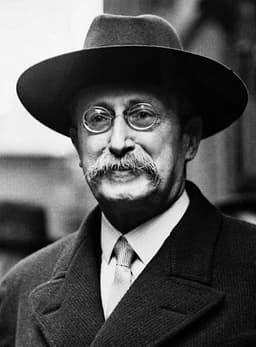
Leon Blum
Politician · Modern
54.4Total
Basic Information
Born
1925
1872
Died
—
1950
Era
Modern
Modern
Nationality
Saint Lucia
France
Occupation
Politician
Politician
Civilization
Other
Western
Score Comparison
Military (10%)
36.5
50.0
Political (20%)
72.0
70.0
Influence (20%)
57.2
55.0
Legacy (20%)
47.5
52.0
Leadership (15%)
66.0
53.2
Strategy (15%)
41.1
41.8
TOTAL
54.6
54.4
John Compton — Complete Timeline
1964 AD
Founded United Workers PartyPolitical Action◆ Major
Compton founded the United Workers Party (UWP) in 1964, which became a dominant political force in Saint Lucia. The party advocated for economic development and eventual independence from Britain.
Political PartySaint LuciaUWP
Impact: nationalconstructive
1970 AD
Promoted Tourism DevelopmentReform◆ Major
Compton implemented policies to develop Saint Lucia's tourism industry, including infrastructure projects and incentives for foreign investment. This transformed the economy from agriculture-dependent to tourism-driven.
TourismEconomic DevelopmentSaint Lucia
Impact: nationalconstructive
1979 AD
Led Saint Lucia to IndependencePolitical Action
As premier, John Compton negotiated Saint Lucia's independence from the United Kingdom on February 22, 1979. He became the first prime minister of the newly sovereign nation, earning the title 'Father of Independence'.
IndependenceSaint LuciaDecolonization
Impact: nationalconstructive
1982 AD
Returned to Power in 1982Political Action◆ Major
After losing the 1979 election, Compton led the UWP to victory in the 1982 general election, returning as prime minister. He served until 1996, overseeing economic growth and regional integration.
ElectionSaint LuciaUWP
Impact: nationalconstructive
2006 AD
Served as Prime Minister Again in 2006Political Action◆ Major
Compton returned to power at age 81, winning the 2006 general election. He became prime minister again but died in office in 2007, ending his long political career.
ElectionSaint LuciaUWP
Impact: national
Leon Blum — Complete Timeline
1936 AD
Matignon AgreementsReform◆ Major
Blum's government mediated the Matignon Agreements between employers and unions, ending a wave of strikes. The agreements mandated paid vacations, a 40-hour work week, and wage increases, transforming French labor relations and establishing key welfare state elements.
Labor ReformStrikesSocial Policy
Impact: nationalprogressive
Formation of the Popular Front GovernmentPolitical Action
Blum became Prime Minister of France leading the Popular Front coalition, a left-wing alliance of Socialists, Radicals, and Communists. His government enacted the Matignon Agreements, granting workers paid leave, a 40-hour work week, and collective bargaining rights, significantly advancing labor rights.
Popular FrontLabor RightsSocial Reform
Impact: nationalprogressive
1938 AD
Second Popular Front GovernmentPolitical Action
Blum formed a short-lived second government in March 1938, lasting only one month. He sought to broaden the coalition to address the growing threat of Nazi Germany but failed to secure support for his economic and defense policies, leading to his resignation.
Popular FrontGovernment FormationThird Republic
Impact: national
1942 AD
Arrest and Trial at RiomPolitical Action◆ Major
The Vichy regime arrested Blum and put him on trial at Riom for allegedly causing France's defeat in 1940. Blum used the trial to defend the Third Republic and criticize the Vichy government. The trial was suspended in 1943, and Blum was deported to Buchenwald concentration camp.
Vichy FranceTrialWorld War II
Impact: nationaltragic
1946 AD
Interim Presidency of the Provisional GovernmentPolitical Action
After World War II, Blum served as interim President of the Provisional Government of the French Republic from December 1946 to January 1947. He oversaw the transition to the Fourth Republic and worked to stabilize the post-war economy and political system.
Fourth RepublicPost-WarProvisional Government
Impact: nationalconstructive
This comparison has not been analyzed yet.
One-time AI generation (~1 minute). Scores and timeline are already available below.
Rankings
🥇
John ComptonLeader
Mil: 36.5Pol: 72.0Inf: 57.2
54.6
🥈
Leon Blum
Mil: 50.0Pol: 70.0Inf: 55.0
54.4
+0.2 behind
How This Comparison Works
Algorithm
Each figure is scored on 6 dimensions (0—100 scale) based on structured historical data: Military (10%), Political (20%), Influence (20%), Legacy (20%), Leadership (15%), Strategy (15%). The weighted total produces the final ranking.
Data Sources
Scores are computed from structured sub-indicators in the database. Scale factors adjust for era (Ancient ×0.85, Modern ×1.0) and civilization size (Eastern ×1.05, Other ×0.80) to account for differences in population and military scale.
Maximum 3 Figures
Comparisons are limited to 2—3 figures to ensure readability and statistical meaningfulness.
Error Margins
±5 points per dimension — Sub-scores are derived from historical records with inherent uncertainty. Two figures within 5 points on a dimension should be considered roughly equivalent in that area.
Total Score Accuracy
±3 points overall — The weighted combination of 6 dimensions produces a total score with approximately ±3 points of uncertainty. Differences of less than 3 points are not statistically significant— the figures are effectively tied.
Known Limitations
- Historical records are incomplete and uneven across civilizations
- Figures from oral-tradition societies may be underrepresented
- Occupation labels can misclassify multi-role figures
- Scores measure capability and impact, not moral character
- Quantitative scoring is a comparison tool, not absolute truth
Capability Radar
Military (10%) — Battles & Warfare
Battles
22
28
Win Rate
24
29
Expansion
26
37
Political (20%) — Governance & Reform
Reform
70
75
Diplomacy
60
65
Economy
55
60
Influence (20%) — Cultural & Global Reach
Cultural
40
50
Global
35
50
Legacy (20%) — Historical Impact
Historical
45
55
Longevity
30
45
Leadership (15%) — Power & Stability
Tenure
65
60
Stability
50
40
Strategy (15%) — Tactics & Innovation
Strategy
33
37
Tactics
35
39
Reform
35
44
Similar Comparisons
Comments & Discussion
No comments yet. Be the first to share your thoughts!