Loading...
John Hyrcanus vs Lysimachus
John Hyrcanus leads by 4.2 pts · 2 figures compared
…
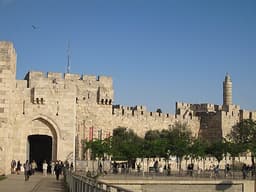
John Hyrcanus
Emperor · Ancient
59.6Total
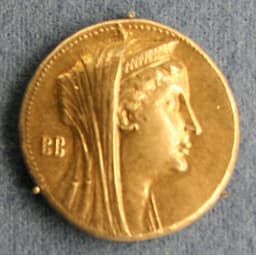
Lysimachus
Emperor · Ancient
55.4Total
Basic Information
Born
-164
-361
Died
-104
-281
Era
Ancient
Ancient
Nationality
Judea
Macedon
Occupation
Emperor
Emperor
Civilization
Middle Eastern
Western
Score Comparison
Military (10%)
67.5
67.3
Political (20%)
68.0
61.3
Influence (20%)
55.7
51.0
Legacy (20%)
48.3
42.5
Leadership (15%)
74.0
74.0
Strategy (15%)
55.0
50.0
TOTAL
59.6
55.4
John Hyrcanus — Complete Timeline
134 BC
Accession as High Priest and Ruler of JudeaPolitical Action◆ Major
John Hyrcanus succeeded his father Simon Thassi as High Priest and ethnarch of Judea. He consolidated Hasmonean rule, combining religious and political authority. His reign marked the peak of Hasmonean power and territorial expansion.
AccessionHasmonean DynastyHigh Priest
Impact: regionalconstructive
129 BC
Alliance with the Roman RepublicPolitical Action
John Hyrcanus renewed the alliance with the Roman Republic, which had been established by his predecessors. This alliance provided diplomatic support against the Seleucid Empire and helped secure Judean independence.
AllianceRomeDiplomacy
Impact: regionalconstructive
110 BC
Conquest of Samaria and IdumeaWar◆ Major
John Hyrcanus led military campaigns that conquered Samaria and Idumea. He destroyed the Samaritan temple on Mount Gerizim and forced the Idumeans to convert to Judaism. These conquests expanded the Jewish state and solidified Hasmonean control.
ConquestExpansionForced Conversion
Impact: regionaldestructive
108 BC
Destruction of the Samaritan TempleWar◆ Major
John Hyrcanus destroyed the Samaritan temple on Mount Gerizim, which had been a rival to the Jerusalem Temple. This act deepened the schism between Jews and Samaritans and asserted the primacy of the Jerusalem Temple.
Temple DestructionSamaritansReligious Schism
Impact: regionaldestructive
Lysimachus — Complete Timeline
306 BC
Foundation of the Kingdom of ThracePolitical Action◆ Major
Lysimachus declared himself king of Thrace, establishing a Hellenistic kingdom in the region. He ruled over Thrace, parts of Asia Minor, and later Macedonia, but his kingdom was short-lived and fragmented after his death.
DiadochiThraceKingship
Impact: regionalconstructive
301 BC
Battle of IpsusWar
Lysimachus fought alongside Seleucus I against Antigonus I at Ipsus. The victory allowed Lysimachus to expand his territory in Asia Minor, gaining control of much of Anatolia. However, his alliance with Seleucus later turned to conflict.
DiadochiBattleAnatolia
Impact: regional
284 BC
Execution of AgathoclesPolitical Action◆ Major
Lysimachus ordered the execution of his son Agathocles on the instigation of his wife Arsinoe II. This act caused a revolt among his subjects and led to the defection of many supporters to Seleucus, weakening Lysimachus' position before Corupedium.
DiadochiDynastic ConflictThrace
Impact: regionaldestructive
281 BC
Battle of CorupediumWar◆ Major
Lysimachus fought against Seleucus I at Corupedium in Lydia. He was defeated and killed in battle, ending his rule. This victory allowed Seleucus to claim control over Asia Minor, but Seleucus was assassinated shortly after.
DiadochiBattleDeath
Impact: regionaltragic
Expert Analysis
Origins
John Hyrcanus was born around 164 BCE, the son of Simon Thassi, the Hasmonean ruler of Judea. He was raised in a priestly family that had led the Maccabean revolt against the Seleucid Empire. His early life was shaped by the consolidation of Jewish independence and the fusion of religious and political authority. Lysimachus was born around 360 BCE in Pella, Macedon, as a member of the Macedonian nobility. He served as a bodyguard to Alexander the Great during the Asian campaigns, gaining military experience and connections. After Alexander's death in 323 BCE, Lysimachus was appointed satrap of Thrace, a region he would later turn into a kingdom.
Rise to Power
John Hyrcanus became High Priest and ethnarch of Judea after his father's assassination in 135 BCE. He quickly asserted authority by suppressing internal opposition and renewing the alliance with the Roman Republic (established by his father in 139 BCE). His rise was marked by military campaigns against the Seleucids, taking advantage of their internal strife. In 129 BCE, he defeated the Seleucid general Cendebaeus, securing Judean independence. Lysimachus's rise came through the Wars of the Diadochi. He fought alongside Seleucus I at the Battle of Ipsus in 301 BCE, where they defeated Antigonus I Monophthalmus. As a result, Lysimachus gained control of Asia Minor (modern Turkey) and later declared himself king of Thrace, expanding his realm into Macedon and parts of Greece.
Leadership & Governance
John Hyrcanus combined religious and secular authority as High Priest and ethnarch. He enforced Jewish law, destroyed the Samaritan temple on Mount Gerizim (around 110 BCE), and forced the Idumeans to convert to Judaism. His governance centralized power in Jerusalem and expanded the Hasmonean state. He scored 74.0 in leadership, reflecting his ability to unite the Jewish people under a single ruler. Lysimachus ruled as a Hellenistic monarch, founding cities like Lysimachia and issuing coinage. He maintained control through military garrisons and alliances, but his leadership was marred by a brutal act: he executed his son Agathocles in 283 BCE on his wife Arsinoe II's instigation, causing a revolt. His leadership score is also 74.0, but his political score of 61.3 (vs Hyrcanus's 68.0) shows weaker statecraft.
Triumph & Tragedy
John Hyrcanus's greatest triumph was the expansion of Judea to its largest extent since the Kingdom of David. He conquered Samaria and Idumea, destroyed the Samaritan temple, and brought the Jewish state to a peak of power. His tragedy was the deepening of sectarian divisions, particularly the rift between Pharisees and Sadducees, which contributed to future Hasmonean decline. He scored 55.7 in influence, limited by the small scale of his state. Lysimachus's triumph was building a kingdom from Thrace to Asia Minor, controlling key trade routes. His tragedy was his defeat and death at the Battle of Corupedium in 281 BCE against Seleucus I, ending his dynasty. He scored 42.5 in legacy, as his kingdom quickly disintegrated.
Character & Destiny
John Hyrcanus was pragmatic and religiously devout, using religion to unify his people. He balanced between the Pharisee and Sadducee factions but ultimately leaned toward the Sadducees, alienating some. His character helped him expand Judea but also sowed seeds of internal conflict. Lysimachus was ambitious and ruthless, as shown by his son's execution. His character made him a successful general but a poor politician; his cruelty turned allies into enemies. Historical assessments note that Lysimachus's military skill (67.3) was comparable to Hyrcanus (67.5), but his lack of political acumen cost him his kingdom.
Legacy
John Hyrcanus's legacy is the expansion of Jewish sovereignty and the Hasmonean state, which lasted until Roman conquest. His destruction of the Samaritan temple deepened the Jewish-Samaritan schism, still present today. His reign set precedents for combining religious and political power in Judea. Lysimachus's legacy is more limited: he founded a short-lived kingdom, but his name survives in the city of Lysimachia and his coinage. His defeat at Corupedium ended the last major Diadochi conflict, allowing Seleucus to briefly reunite Alexander's empire. However, his impact on history is less than Hyrcanus's, as the Hasmonean dynasty influenced Jewish history and religion for centuries.
Conclusion
John Hyrcanus had a greater impact than Lysimachus. Despite a narrow score gap of 4.2 points (59.6 vs 55.4), Hyrcanus's legacy is more enduring: he shaped the Jewish state and religion, while Lysimachus's kingdom vanished. Hyrcanus's combination of religious and political authority created a model that influenced later Jewish leaders. Lysimachus, though a competent general, failed to build a lasting state. The data supports this: Hyrcanus scores higher in political (68.0 vs 61.3) and influence (55.7 vs 51.0), reflecting his deeper impact. Thus, John Hyrcanus stands as the more significant historical figure.
Rankings
🥇
John HyrcanusLeader
Mil: 67.5Pol: 68.0Inf: 55.7
59.6
🥈
Lysimachus
Mil: 67.3Pol: 61.3Inf: 51.0
55.4
+4.2 behind
How This Comparison Works
Algorithm
Each figure is scored on 6 dimensions (0—100 scale) based on structured historical data: Military (10%), Political (20%), Influence (20%), Legacy (20%), Leadership (15%), Strategy (15%). The weighted total produces the final ranking.
Data Sources
Scores are computed from structured sub-indicators in the database. Scale factors adjust for era (Ancient ×0.85, Modern ×1.0) and civilization size (Eastern ×1.05, Other ×0.80) to account for differences in population and military scale.
Maximum 3 Figures
Comparisons are limited to 2—3 figures to ensure readability and statistical meaningfulness.
Error Margins
±5 points per dimension — Sub-scores are derived from historical records with inherent uncertainty. Two figures within 5 points on a dimension should be considered roughly equivalent in that area.
Total Score Accuracy
±3 points overall — The weighted combination of 6 dimensions produces a total score with approximately ±3 points of uncertainty. Differences of less than 3 points are not statistically significant— the figures are effectively tied.
Known Limitations
- Historical records are incomplete and uneven across civilizations
- Figures from oral-tradition societies may be underrepresented
- Occupation labels can misclassify multi-role figures
- Scores measure capability and impact, not moral character
- Quantitative scoring is a comparison tool, not absolute truth
Capability Radar
Military (10%) — Battles & Warfare
Battles
55
70
Win Rate
60
60
Expansion
65
75
Political (20%) — Governance & Reform
Reform
55
40
Diplomacy
50
55
Economy
50
50
Influence (20%) — Cultural & Global Reach
Cultural
55
30
Global
40
35
Legacy (20%) — Historical Impact
Historical
60
45
Longevity
50
30
Leadership (15%) — Power & Stability
Tenure
60
65
Stability
45
40
Strategy (15%) — Tactics & Innovation
Strategy
55
70
Tactics
50
65
Reform
45
30
Similar Comparisons
Comments & Discussion
No comments yet. Be the first to share your thoughts!