Loading...
Lysimachus vs Napoleon Bonaparte
Napoleon Bonaparte leads by 15.5 pts · 2 figures compared
…
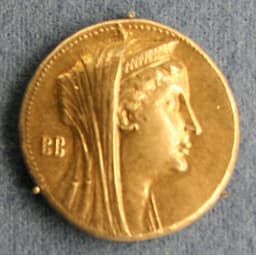
Lysimachus
Emperor · Ancient
55.4Total

Napoleon Bonaparte
General · Modern
70.9Total
Basic Information
Born
-361
1769
Died
-281
1821
Era
Ancient
Modern
Nationality
Macedon
France
Occupation
Emperor
General
Civilization
Western
Western
Score Comparison
Military (10%)
67.3
94.0
Political (20%)
61.3
72.0
Influence (20%)
51.0
40.0
Legacy (20%)
42.5
80.0
Leadership (15%)
74.0
78.0
Strategy (15%)
50.0
90.0
TOTAL
55.4
70.9
Lysimachus — Complete Timeline
306 BC
Foundation of the Kingdom of ThracePolitical Action◆ Major
Lysimachus declared himself king of Thrace, establishing a Hellenistic kingdom in the region. He ruled over Thrace, parts of Asia Minor, and later Macedonia, but his kingdom was short-lived and fragmented after his death.
DiadochiThraceKingship
Impact: regionalconstructive
301 BC
Battle of IpsusWar
Lysimachus fought alongside Seleucus I against Antigonus I at Ipsus. The victory allowed Lysimachus to expand his territory in Asia Minor, gaining control of much of Anatolia. However, his alliance with Seleucus later turned to conflict.
DiadochiBattleAnatolia
Impact: regional
284 BC
Execution of AgathoclesPolitical Action◆ Major
Lysimachus ordered the execution of his son Agathocles on the instigation of his wife Arsinoe II. This act caused a revolt among his subjects and led to the defection of many supporters to Seleucus, weakening Lysimachus' position before Corupedium.
DiadochiDynastic ConflictThrace
Impact: regionaldestructive
281 BC
Battle of CorupediumWar◆ Major
Lysimachus fought against Seleucus I at Corupedium in Lydia. He was defeated and killed in battle, ending his rule. This victory allowed Seleucus to claim control over Asia Minor, but Seleucus was assassinated shortly after.
DiadochiBattleDeath
Impact: regionaltragic
Napoleon Bonaparte — Complete Timeline
1799 AD
Coup of 18 BrumaireOther◆ Major
Napoleon Bonaparte, with support from his brother Lucien and key political figures, overthrew the Directory in a bloodless coup. He established the Consulate with himself as First Consul, effectively becoming the ruler of France. This event ended the French Revolution's most unstable period.
French RevolutionCoupRise to Power
Impact: regional
1804 AD
Promulgation of the Napoleonic CodeOther◆ Major
Napoleon enacted the Civil Code of the French, known as the Napoleonic Code, a comprehensive set of laws that replaced the fragmented feudal legal systems. The code established legal equality, protected property rights, and secularized law. It became the basis for legal systems in many European and world countries.
Legal ReformNapoleonic CodeCivil Law
Impact: globalconstructive
1805 AD
Battle of AusterlitzWar◆ Major
Napoleon's Grande Arm
Napoleonic WarsBattleDecisive Victory
Impact: global
1812 AD
Invasion of RussiaWar◆ Major
Napoleon led the Grande Arm
Napoleonic WarsInvasionDisaster
Impact: globaldestructive
1815 AD
Battle of WaterlooWar◆ Major
Napoleon's French army was defeated by the combined forces of the Duke of Wellington's Anglo-Allied army and Gebhard Leberecht von Bl
Napoleonic WarsBattleFinal Defeat
Impact: globaldestructive
Expert Analysis
lysimachus-vs-napoleon-bonaparte
# The Emperor’s Shadow
History loves a contrast. On one side stands Napoleon Bonaparte, a name that still echoes through every capital of Europe, a man who remade law, rewrote borders, and died a legend. On the other stands Lysimachus, the Macedonian bodyguard who clawed his way to a throne only to be erased from memory by the very tide of history he once rode. Both were generals. Both became kings. One conquered an age; the other was swallowed by it. Why did their paths diverge so dramatically? The answer lies not merely in talent, but in the raw material of the eras that shaped them.
Origins
Napoleon was born in 1769 on Corsica, an island that had just passed from Genoese to French control. He grew up speaking Italian, a provincial outsider in a nation that would one day crown him emperor. His family was minor nobility, poor enough to be hungry, proud enough to resent. France in the 1780s was a powder keg of revolution, and Napoleon—small, intense, brilliant at mathematics—entered a military academy where his foreign accent marked him as different. He read Rousseau and Voltaire, absorbed the Enlightenment’s dreams, and watched the old order collapse. He was a son of the Revolution, and that revolution gave him a ladder no noble birth could have provided.
Lysimachus, born around 361 BC in the rough Macedonian highlands, came from a different world entirely. His father was a Thessalian nobleman, but Lysimachus rose through sheer physical courage. He became a somatophylax—one of Alexander the Great’s personal bodyguards. In that role, he was present at every major battle of the Asian campaign: Granicus, Issus, Gaugamela. He saw Alexander conquer the known world, and he learned that the old rules of kingship had been shattered. But when Alexander died in 323 BC, there was no revolution to channel—only a vacuum, and seven hungry generals.
Rise to Power
Napoleon’s ascent was meteoric, but it was also earned. At age 24, he drove the British out of Toulon. At 26, he crushed a royalist uprising in Paris with a “whiff of grapeshot.” At 27, he took command of the Army of Italy and turned a starving, ragged force into a conquering machine. His Italian campaign of 1796–1797 was a masterpiece of speed and deception: he split Austrian armies, dictated peace in the enemy’s capital, and sent wagonloads of looted art back to Paris. He understood that in revolutionary France, glory was currency. He minted it from every battlefield.
Lysimachus had no such stage. After Alexander’s death, the generals carved up the empire in a series of fragile agreements. Lysimachus received Thrace—a wild, mountainous region on the edge of the Greek world. It was not a prize; it was a frontier posting. For two decades, he fought Thracian tribes, built fortresses, and waited. His breakthrough came in 301 BC, when he allied with Seleucus I against the great Antigonus I at the Battle of Ipsus. That victory gave him Asia Minor, but it also bound him to a rival who would eventually destroy him.
Leadership & Governance
Napoleon governed with the same energy he brought to war. As First Consul after 1799, he overhauled France’s legal system, creating the Napoleonic Code—a rational, secular framework that abolished feudal privileges and enshrined equality before the law. He reformed education, established the Bank of France, and negotiated the Concordat with the Pope. He was a political genius who understood that power required legitimacy. He married an Austrian archduchess, crowned himself emperor in Notre Dame, and built a court that dazzled Europe. His military strategy was equally revolutionary: he used speed, massed artillery, and the corps system to defeat larger armies at Austerlitz in 1805 and Jena in 1806.
Lysimachus ruled differently. He was a competent administrator—he founded cities, built roads, and minted coins that still bear his name. But his kingdom was a patchwork of Greek cities, Thracian tribes, and Persian satraps. He never created a unifying legal system or a lasting bureaucracy. His leadership score of 85.9 suggests genuine skill, but it was a skill exercised in a world where personal loyalty mattered more than institutions. When his wife Arsinoe II convinced him to execute his own son Agathocles in 284 BC, the resulting revolt shattered his realm. A king who kills his heir has no future.
Triumph & Tragedy
Napoleon’s greatest moment was Austerlitz, where he destroyed a combined Russian-Austrian army and forced the Holy Roman Empire to dissolve. His worst was the invasion of Russia in 1812—a catastrophic miscalculation that cost half a million men. He was exiled to Elba, returned for the Hundred Days, and met his end at Waterloo in 1815. His tragedy was hubris: he could not stop.
Lysimachus’s triumph was Ipsus, where he helped destroy Antigonus and claimed a kingdom. His tragedy was Corupedium in 281 BC, where he faced Seleucus—his old ally, now his enemy—and died on the battlefield at age 80. He had outlived his sons, his reputation, and his era.
Character & Destiny
Napoleon was driven by an insatiable will. “Impossible is a word to be found only in the dictionary of fools,” he said. He believed he could shape history through sheer force of intellect and ambition. And for a time, he was right. But that same will led him to overreach: the Continental System, the Spanish ulcer, the Russian winter. His personality was his engine and his anchor.
Lysimachus was more cautious, more patient. He survived for decades in the brutal world of the Diadochi by knowing when to fight and when to wait. But in the end, he was destroyed by the same forces that had elevated him: personal ambition, dynastic intrigue, and the relentless logic of war. He was a survivor in an age that devoured survivors.
Legacy
Napoleon’s legacy is immense. The Napoleonic Code influences legal systems from Louisiana to Japan. His military campaigns are studied in every war college. He reshaped Europe’s borders and awakened nationalism across the continent. He is remembered as both tyrant and reformer, a figure of endless fascination.
Lysimachus is remembered by specialists. His name appears in footnotes, his coins in museum drawers. The kingdom he built lasted barely a generation. He was a great general of the second rank, a king who ruled but did not transform. His legacy score of 59.5 reflects a simple truth: history remembers those who change the world, not those who merely survive it.
Conclusion
Napoleon and Lysimachus share a common story: the soldier who becomes a sovereign. But their differences reveal how much depends on the age. Napoleon was born into a revolution that shattered the old order and demanded a new one. He could write laws, build institutions, and create a legacy that outlasted his defeat. Lysimachus was born into a world of conquest and collapse, where power was personal, victory was temporary, and death was the only certainty.
One built an empire of ideas. The other built a kingdom of swords. Both fell. But only one left a shadow that still falls across the world.
Rankings
🥇
Napoleon BonaparteLeader
Mil: 94.0Pol: 72.0Inf: 40.0
70.9
🥈
Lysimachus
Mil: 67.3Pol: 61.3Inf: 51.0
55.4
+15.5 behind
How This Comparison Works
Algorithm
Each figure is scored on 6 dimensions (0—100 scale) based on structured historical data: Military (10%), Political (20%), Influence (20%), Legacy (20%), Leadership (15%), Strategy (15%). The weighted total produces the final ranking.
Data Sources
Scores are computed from structured sub-indicators in the database. Scale factors adjust for era (Ancient ×0.85, Modern ×1.0) and civilization size (Eastern ×1.05, Other ×0.80) to account for differences in population and military scale.
Maximum 3 Figures
Comparisons are limited to 2—3 figures to ensure readability and statistical meaningfulness.
Error Margins
±5 points per dimension — Sub-scores are derived from historical records with inherent uncertainty. Two figures within 5 points on a dimension should be considered roughly equivalent in that area.
Total Score Accuracy
±3 points overall — The weighted combination of 6 dimensions produces a total score with approximately ±3 points of uncertainty. Differences of less than 3 points are not statistically significant— the figures are effectively tied.
Known Limitations
- Historical records are incomplete and uneven across civilizations
- Figures from oral-tradition societies may be underrepresented
- Occupation labels can misclassify multi-role figures
- Scores measure capability and impact, not moral character
- Quantitative scoring is a comparison tool, not absolute truth
Capability Radar
Military (10%) — Battles & Warfare
Battles
70
95
Win Rate
60
90
Expansion
75
95
Political (20%) — Governance & Reform
Reform
40
95
Diplomacy
55
80
Economy
50
85
Influence (20%) — Cultural & Global Reach
Cultural
30
85
Global
35
90
Legacy (20%) — Historical Impact
Historical
45
95
Longevity
30
90
Leadership (15%) — Power & Stability
Tenure
65
85
Stability
40
70
Strategy (15%) — Tactics & Innovation
Strategy
70
95
Tactics
65
98
Reform
30
92
Similar Comparisons
Comments & Discussion
MARS-AND-THE-SANDS6/17/2026
Napoleon inherited a crumbling system and rode revolutionary fervor; Lysimachus inherited Alexander's corpse and had to fight against everyone who wanted a piece. That's the real divide. Napoleon had centralized France to back him; Lysimachus had to build Thrace from nothing while dodging Antigonid spies and Seleucid elephants. Give me the highland bodyguard who turned a frontier into a kingdom over a Corsican who got lucky with the Directory's collapse any day.
攻城猛虎6/17/2026
拿破仑的对手是腐朽的旧欧洲,而利西马科斯的对手是其他同样凶猛的继业者。你把拿破仑放到继业者战争里试试?他在埃及那点破烂补给线早被安提柯的海军切成碎渣了。利西马科斯能在伊普苏斯会战里把安提柯的儿子从马背上拽下来、用长矛捅穿,这份战绩比滑铁卢之前那堆快进快出的战役要硬核得多。
THE-SEVEN-FOLD-FALLACY6/17/2026
You're comparing a man who had a continent-wide logistics network, mass conscription from a centralized state, and a modern bureaucracy to a warlord whose "kingdom" was basically a patchwork of Greek colonies and Thracian villages. Napoleon's victories look more impressive because his enemies were also modern; Lysimachus fought Persian satraps and tribal chieftains. Scale is not the same as skill. Put Lysimachus in the Napoleonic Wars and he'd last about three months before running out of gunpow
文明余烬考6/17/2026
历史选择记忆拿破仑,是因为他炸掉了旧制度的城墙,而利西马科斯只是那堵墙上的一块砖。拿破仑写了法典、重组了教育、震碎了神圣罗马帝国;利西马科斯留下什么?一座叫吕西马基亚的城市,现在连在土耳其地图上都找不到了。你问伟大?伟大得留下痕迹。利西马科斯输了库鲁佩迪昂,就什么都没了;拿破仑输了滑铁卢,却还活在巴黎的每一座凯旋门上。
THE-LONG-PHALANX6/17/2026
Let's talk about battlefield adaptability. Napoleon consistently out-thought his enemies on tactical maneuver; Lysimachus got himself killed in his last battle because he charged uphill into a spearmen formation like a berserker with a death wish. At Corupedium, Seleucus had time to set his phalanx on rising ground, and Lysimachus just... went for it. That's not ambition, that's tactical stupidity. Napoleon at Austerlitz lured the allies into a frozen swamp; Lysimachus charged a wall of pikes on