Loading...
John II of Aragon vs Minkyinyo
John II of Aragon leads by 8.4 pts · 2 figures compared
…
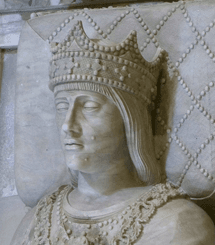
John II of Aragon
Emperor · Medieval
58.7Total

Minkyinyo
Emperor · Medieval
50.3Total
Basic Information
Born
1398
1459
Died
1479
1530
Era
Medieval
Medieval
Nationality
Aragon
Myanmar
Occupation
Emperor
Emperor
Civilization
Western
Eastern
Score Comparison
Military (10%)
40.0
10.0
Political (20%)
68.0
54.7
Influence (20%)
58.3
53.3
Legacy (20%)
58.0
45.8
Leadership (15%)
74.0
74.0
Strategy (15%)
43.3
51.7
TOTAL
58.7
50.3
John II of Aragon — Complete Timeline
1447 AD
Marriage to Juana EnríquezPolitical Action◆ Major
John II of Aragon married Juana Enr
Dynastic marriageSpanish unification
Impact: nationalconstructive
1462 AD
Catalan Civil WarWar
John II faced a rebellion from the Catalan nobility and the city of Barcelona, who opposed his centralizing policies and his appointment of a Castilian viceroy. The civil war lasted a decade, devastating Catalonia and weakening the Crown of Aragon, though John II ultimately retained control.
Catalan rebellionCivil war
Impact: regionaldestructive
1469 AD
Marriage of Ferdinand and IsabellaPolitical Action
John II arranged the marriage of his son Ferdinand to Isabella I of Castile, a union that would eventually unite the crowns of Aragon and Castile. The marriage was conducted in secret due to opposition from Henry IV of Castile, but it laid the foundation for the creation of a unified Spanish kingdom.
Spanish unificationDynastic union
Impact: globalconstructive
Minkyinyo — Complete Timeline
1510 AD
Minkyinyo's military campaigns against AvaWar◆ Major
Minkyinyo led a series of military campaigns against the Ava Kingdom, gradually expanding Toungoo's territory. He captured key towns and fortresses, weakening Ava and establishing Toungoo as a major power in Upper Burma.
WarExpansionAva
Impact: regional
Minkyinyo's administrative reformsReform
Minkyinyo implemented administrative reforms to centralize power and improve governance in the Toungoo kingdom. He established a system of provincial governors and standardized taxation, which strengthened the state's ability to wage war and maintain order.
ReformAdministrationCentralization
Impact: regionalconstructive
Founding of the Toungoo dynastyPolitical Action
Minkyinyo declared independence from the Ava Kingdom and established the Toungoo dynasty at the city of Toungoo. He consolidated control over central Burma and laid the foundation for the reunification of the country after the collapse of the Pagan Empire.
DynastyIndependenceUnification
Impact: regionalconstructive
Expert Analysis
Origins
John II of Aragon was born in 1398 to King Ferdinand I of Aragon and Eleanor of Alburquerque. He was the second son, not initially destined for the throne. His upbringing in the Aragonese court exposed him to the complex politics of the Crown of Aragon, a confederation of kingdoms including Aragon, Catalonia, Valencia, and others. John's early education emphasized governance and military tactics, but he lacked the charisma of his older brother Alfonso V. After Alfonso's death in 1458, John inherited the throne at age 60, having already served as lieutenant general for decades. His marriage to Juana Enríquez in 1447 strengthened ties with Castile, as she was from a powerful Castilian noble family.
Minkyinyo was born around 1450 in the Ava Kingdom (present-day Myanmar). He was of royal lineage, but his early life is obscure. He grew up during a period of decline for Ava, which faced internal rebellions and external threats from neighboring states like the Shan principalities. Minkyinyo likely received military training and developed ambitions to restore Burmese power. In 1485, he declared independence from Ava and established the Toungoo dynasty at the city of Toungoo, a strategic location in central Burma. His background as a regional leader shaped his focus on consolidation and expansion.
Rise to Power
John II's rise to power was gradual. He served as lieutenant general for his brother Alfonso V, managing the Aragonese territories while Alfonso pursued campaigns in Italy. Upon Alfonso's death in 1458, John became king. His reign was immediately challenged by the Catalan Civil War (1462-1472), triggered by his centralizing policies and appointment of a Castilian constable. The war pitted John against the Catalan nobility and Barcelona, who feared loss of traditional privileges. John's perseverance and alliance with France (via the Treaty of Bayonne) eventually suppressed the rebellion, but at great cost. His most strategic move was arranging the marriage of his son Ferdinand to Isabella I of Castile in 1469, which laid the groundwork for the union of Spain.
Minkyinyo's rise began with his declaration of independence in 1485. He consolidated control over the Toungoo region through military campaigns against Ava, capturing key towns like Prome and Toungoo. His campaigns were methodical, focusing on weakening Ava's hold on central Burma. By 1490, he had established Toungoo as a viable kingdom, attracting followers from other regions. Unlike John, Minkyinyo's rise was purely military, with no diplomatic marriages or alliances. His leadership score of 74.0 reflects his ability to inspire loyalty and build a state from scratch.
Leadership & Governance
John II's leadership style was pragmatic but confrontational. He centralized authority, reducing the power of the Catalan nobility, which led to the civil war. His governance relied on the support of the Aragonese nobility and the Church. He implemented fiscal reforms to fund his wars, but his policies often alienated subjects. His political score of 68.0 indicates effective maneuvering, but his military score of 40.0 reflects his inability to win decisive battles. The marriage of Ferdinand and Isabella was his greatest political achievement, securing a dynastic union that would create Spain.
Minkyinyo focused on administrative reforms to centralize power in Toungoo. He established a system of provincial governors, reducing the autonomy of local chiefs. He also promoted Buddhism to legitimize his rule. His governance was more stable than John's, as he faced fewer internal revolts. However, his kingdom remained small compared to Aragon. His leadership score of 74.0 matches John's, but his political score of 54.7 is lower, reflecting limited diplomatic reach.
Triumph & Tragedy
John II's greatest triumph was the marriage of Ferdinand and Isabella, which eventually led to the unification of Spain. He also survived the Catalan Civil War, preserving the Crown of Aragon. His tragedy was the devastation of Catalonia during the war, which left the region economically weakened. He also failed to secure Navarre, losing it to France.
Minkyinyo's triumph was founding the Toungoo dynasty, which would later unify Burma under his grandson Bayinnaung. He successfully expanded Toungoo's territory and established a stable administration. His tragedy was that his achievements were overshadowed by his successors; he died in 1501 before Toungoo became a major power. His military score of 10.0 is surprisingly low, but this may reflect limited direct combat leadership.
Character & Destiny
John II was stubborn and calculating. His decision to centralize power provoked rebellion, but his persistence paid off. He was a skilled diplomat, as shown by the marriage alliance. His character shaped his destiny: his inflexibility caused the civil war, but his strategic vision created Spain. Historians view him as a competent but unloved king.
Minkyinyo was ambitious and methodical. He built a kingdom through careful planning and military campaigns. His character of patience and pragmatism allowed him to withstand Ava's counterattacks. He is remembered as a founder, but his destiny was limited by his era—he never saw the full extent of Toungoo's rise.
Legacy
John II's legacy is the union of Aragon and Castile through his son Ferdinand. This union created the foundations of modern Spain. His centralizing policies set precedents for absolutism. However, his legacy score of 58.0 reflects that his role is often overshadowed by Ferdinand and Isabella.
Minkyinyo's legacy is the Toungoo dynasty, which became the largest empire in Burmese history. He established a model of governance that his successors used. His legacy score of 45.8 is lower because his dynasty collapsed in the 18th century, and his personal role is less known.
Conclusion
John II of Aragon had a greater impact than Minkyinyo, as his actions directly led to the unification of Spain, a major European power. His political score of 68.0 and leadership of 74.0 enabled him to overcome civil war and secure a dynastic marriage that changed history. Minkyinyo's founding of Toungoo was significant regionally, but his lower total score of 50.3 and limited global influence make John II the more consequential figure. The 8.4-point gap in total scores reflects this difference. John II's ability to shape the future of Spain outweighs Minkyinyo's foundational role in Burma.
Rankings
🥇
John II of AragonLeader
Mil: 40.0Pol: 68.0Inf: 58.3
58.7
🥈
Minkyinyo
Mil: 10.0Pol: 54.7Inf: 53.3
50.3
+8.4 behind
How This Comparison Works
Algorithm
Each figure is scored on 6 dimensions (0—100 scale) based on structured historical data: Military (10%), Political (20%), Influence (20%), Legacy (20%), Leadership (15%), Strategy (15%). The weighted total produces the final ranking.
Data Sources
Scores are computed from structured sub-indicators in the database. Scale factors adjust for era (Ancient ×0.85, Modern ×1.0) and civilization size (Eastern ×1.05, Other ×0.80) to account for differences in population and military scale.
Maximum 3 Figures
Comparisons are limited to 2—3 figures to ensure readability and statistical meaningfulness.
Error Margins
±5 points per dimension — Sub-scores are derived from historical records with inherent uncertainty. Two figures within 5 points on a dimension should be considered roughly equivalent in that area.
Total Score Accuracy
±3 points overall — The weighted combination of 6 dimensions produces a total score with approximately ±3 points of uncertainty. Differences of less than 3 points are not statistically significant— the figures are effectively tied.
Known Limitations
- Historical records are incomplete and uneven across civilizations
- Figures from oral-tradition societies may be underrepresented
- Occupation labels can misclassify multi-role figures
- Scores measure capability and impact, not moral character
- Quantitative scoring is a comparison tool, not absolute truth
Capability Radar
Military (10%) — Battles & Warfare
Battles
45
40
Win Rate
40
45
Expansion
50
45
Political (20%) — Governance & Reform
Reform
55
50
Diplomacy
70
40
Economy
50
35
Influence (20%) — Cultural & Global Reach
Cultural
55
30
Global
55
20
Legacy (20%) — Historical Impact
Historical
65
40
Longevity
60
35
Leadership (15%) — Power & Stability
Tenure
60
55
Stability
45
30
Strategy (15%) — Tactics & Innovation
Strategy
40
40
Tactics
35
35
Reform
30
50
Similar Comparisons
Comments & Discussion
No comments yet. Be the first to share your thoughts!