Loading...
John II of Aragon vs Napoleon Bonaparte
Napoleon Bonaparte leads by 12.2 pts · 2 figures compared
…
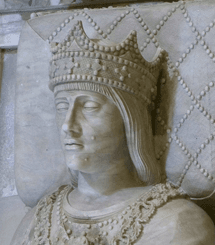
John II of Aragon
Emperor · Medieval
58.7Total

Napoleon Bonaparte
General · Modern
70.9Total
Basic Information
Born
1398
1769
Died
1479
1821
Era
Medieval
Modern
Nationality
Aragon
France
Occupation
Emperor
General
Civilization
Western
Western
Score Comparison
Military (10%)
40.0
94.0
Political (20%)
68.0
72.0
Influence (20%)
58.3
40.0
Legacy (20%)
58.0
80.0
Leadership (15%)
74.0
78.0
Strategy (15%)
43.3
90.0
TOTAL
58.7
70.9
John II of Aragon — Complete Timeline
1447 AD
Marriage to Juana EnríquezPolitical Action◆ Major
John II of Aragon married Juana Enr
Dynastic marriageSpanish unification
Impact: nationalconstructive
1462 AD
Catalan Civil WarWar
John II faced a rebellion from the Catalan nobility and the city of Barcelona, who opposed his centralizing policies and his appointment of a Castilian viceroy. The civil war lasted a decade, devastating Catalonia and weakening the Crown of Aragon, though John II ultimately retained control.
Catalan rebellionCivil war
Impact: regionaldestructive
1469 AD
Marriage of Ferdinand and IsabellaPolitical Action
John II arranged the marriage of his son Ferdinand to Isabella I of Castile, a union that would eventually unite the crowns of Aragon and Castile. The marriage was conducted in secret due to opposition from Henry IV of Castile, but it laid the foundation for the creation of a unified Spanish kingdom.
Spanish unificationDynastic union
Impact: globalconstructive
Napoleon Bonaparte — Complete Timeline
1799 AD
Coup of 18 BrumaireOther◆ Major
Napoleon Bonaparte, with support from his brother Lucien and key political figures, overthrew the Directory in a bloodless coup. He established the Consulate with himself as First Consul, effectively becoming the ruler of France. This event ended the French Revolution's most unstable period.
French RevolutionCoupRise to Power
Impact: regional
1804 AD
Promulgation of the Napoleonic CodeOther◆ Major
Napoleon enacted the Civil Code of the French, known as the Napoleonic Code, a comprehensive set of laws that replaced the fragmented feudal legal systems. The code established legal equality, protected property rights, and secularized law. It became the basis for legal systems in many European and world countries.
Legal ReformNapoleonic CodeCivil Law
Impact: globalconstructive
1805 AD
Battle of AusterlitzWar◆ Major
Napoleon's Grande Arm
Napoleonic WarsBattleDecisive Victory
Impact: global
1812 AD
Invasion of RussiaWar◆ Major
Napoleon led the Grande Arm
Napoleonic WarsInvasionDisaster
Impact: globaldestructive
1815 AD
Battle of WaterlooWar◆ Major
Napoleon's French army was defeated by the combined forces of the Duke of Wellington's Anglo-Allied army and Gebhard Leberecht von Bl
Napoleonic WarsBattleFinal Defeat
Impact: globaldestructive
Expert Analysis
john-ii-of-aragon-vs-napoleon-bonaparte
# The Emperor and the Kingmaker
On a June morning in 1815, Napoleon Bonaparte stood on a muddy field near Waterloo, watching his Imperial Guard march into cannon fire for the last time. Three and a half centuries earlier, in a quiet palace in Aragon, an aging king named John II lay on his deathbed, having never commanded an army in a great battle, yet having done something far more enduring: he had arranged a marriage that would create Spain. These two men, both rulers of their age, could hardly have been more different—one a comet that blazed across Europe and burned out, the other a patient spider who wove a web that caught a kingdom. What separates a conqueror from a unifier, and why does history remember one as a titan and the other as a footnote?
Origins
Napoleon Bonaparte was born in 1769 on the island of Corsica, a place that had only recently become French. His family was minor nobility, struggling and proud. From his earliest years, he absorbed the volatile energies of the Enlightenment and the French Revolution—a world being torn apart and remade. He was short, intense, and ferociously ambitious, a boy who devoured military history and dreamed of glory. His era was one of chaos, where old thrones were toppling and new ones were there for the taking.
John II of Aragon, born in 1398, came from a very different world. He was the son of a king, raised in the rigid hierarchies of medieval Iberia, where power was measured in bloodlines, marriages, and the slow accumulation of alliances. His Spain was a patchwork of Christian kingdoms—Aragon, Castile, Navarre—each with its own laws, languages, and proud nobles who resisted central authority. John II was not a man of fire but of patience. He had learned that in the medieval world, a crown was not won on a battlefield but at a negotiating table.
Rise to Power
Napoleon’s rise was a thunderbolt. In 1793, at age twenty-four, he drove the British out of Toulon. By 1796, he was commanding the Army of Italy, winning battle after battle against the Austrians. His Italian campaign of 1796-1797 was a masterpiece of speed and deception—he moved faster than his enemies could think, striking at their flanks and rear. By 1799, he had seized control of France in a coup. He was thirty years old. He had gone from Corsican outsider to master of Europe’s most powerful nation in less than a decade.
John II’s rise was glacial. He became King of Aragon in 1458, already sixty years old, after a lifetime of maneuvering. He had spent decades as a prince and then as a king consort of Navarre, learning the art of politics through marriage, diplomacy, and endless patience. His great turning point came not with a sword but with a wedding contract. In 1469, he arranged the marriage of his son Ferdinand to Isabella of Castile. This was not a romantic gesture; it was a strategic masterstroke. John II understood that the future of Spain lay not in conquest but in union.
Leadership & Governance
Napoleon ruled through sheer force of will. He reorganized France’s laws into the Napoleonic Code, a system that still underpins much of European law today. He built roads, schools, and a centralized bureaucracy. But his governance was always an extension of his military mind—he saw every problem as a battle to be won. His political wisdom, rated at 75.0, was real but brittle: he could inspire loyalty but could not tolerate dissent. His military genius, scoring 93.0 in strategy, was his true language.
John II governed through alliance and endurance. His political score of 85.9 reflects a man who understood that power in medieval Iberia came from balancing factions, not crushing them. When the Catalan nobility rebelled against his centralizing policies in 1462, starting the Catalan Civil War, John II did not simply march an army to crush them—he negotiated, compromised, and waited. He fought when he had to, but his military score of 34.6 shows he was no general. He was a king who knew that a crown held by force alone would not last.
Triumph & Tragedy
Napoleon’s greatest moment was Austerlitz in 1805, where he destroyed the combined armies of Russia and Austria. It was his masterpiece, a battle of perfect timing and deception. His greatest tragedy was the invasion of Russia in 1812—half a million men marched east, and only a few tens of thousands returned. He never recovered. Waterloo in 1815 was the final act, a defeat that sent him to a lonely death on Saint Helena in 1821.
John II’s triumph was quieter. He lived to see his son Ferdinand marry Isabella, laying the foundation for a unified Spain. His tragedy was the Catalan Civil War, which tore his kingdom apart for a decade. He died in 1479, just as the union of Spain was becoming a reality. He never saw the full fruits of his work.
Character & Destiny
Napoleon was driven by an insatiable hunger for glory. “Impossible is a word to be found only in the dictionary of fools,” he once said. His personality was a force of nature—brilliant, arrogant, and ultimately self-destructive. He could not stop. His destiny was to rise higher than any man of his age, and to fall further.
John II was driven by a different hunger—for stability, for legacy, for the slow building of something lasting. He was a pragmatist, not a dreamer. “Patience is the art of hoping,” might have been his motto. His destiny was to be the bridge between a fractured medieval past and a unified early modern future.
Legacy
Napoleon left behind a legend. His name is synonymous with military genius, with ambition, with the modern state. His Napoleonic Code, his reforms, his battles—they are studied in every military academy and law school in the world. His legacy score of 78.0 reflects a man who changed Europe forever, even if his empire crumbled.
John II left behind a kingdom. His son Ferdinand and daughter-in-law Isabella completed the unification of Spain, sponsored Columbus, and created an empire. John II’s legacy score of 68.0 is lower, but it is a legacy of substance: the foundation of modern Spain. He is remembered not as a conqueror, but as a kingmaker.
Conclusion
Napoleon Bonaparte and John II of Aragon represent two poles of leadership: the warrior and the diplomat, the comet and the spider. Napoleon conquered a continent but could not hold it; John II built a kingdom that lasted centuries. In the end, perhaps the question is not who was greater, but what kind of greatness lasts. Napoleon’s glory still dazzles us, but John II’s patience reminds us that the quietest hands often shape the deepest history. Both men, in their own ways, understood that power is not just about taking—it is about building something that endures beyond the grave.
Rankings
🥇
Napoleon BonaparteLeader
Mil: 94.0Pol: 72.0Inf: 40.0
70.9
🥈
John II of Aragon
Mil: 40.0Pol: 68.0Inf: 58.3
58.7
+12.2 behind
How This Comparison Works
Algorithm
Each figure is scored on 6 dimensions (0—100 scale) based on structured historical data: Military (10%), Political (20%), Influence (20%), Legacy (20%), Leadership (15%), Strategy (15%). The weighted total produces the final ranking.
Data Sources
Scores are computed from structured sub-indicators in the database. Scale factors adjust for era (Ancient ×0.85, Modern ×1.0) and civilization size (Eastern ×1.05, Other ×0.80) to account for differences in population and military scale.
Maximum 3 Figures
Comparisons are limited to 2—3 figures to ensure readability and statistical meaningfulness.
Error Margins
±5 points per dimension — Sub-scores are derived from historical records with inherent uncertainty. Two figures within 5 points on a dimension should be considered roughly equivalent in that area.
Total Score Accuracy
±3 points overall — The weighted combination of 6 dimensions produces a total score with approximately ±3 points of uncertainty. Differences of less than 3 points are not statistically significant— the figures are effectively tied.
Known Limitations
- Historical records are incomplete and uneven across civilizations
- Figures from oral-tradition societies may be underrepresented
- Occupation labels can misclassify multi-role figures
- Scores measure capability and impact, not moral character
- Quantitative scoring is a comparison tool, not absolute truth
Capability Radar
Military (10%) — Battles & Warfare
Battles
45
95
Win Rate
40
90
Expansion
50
95
Political (20%) — Governance & Reform
Reform
55
95
Diplomacy
70
80
Economy
50
85
Influence (20%) — Cultural & Global Reach
Cultural
55
85
Global
55
90
Legacy (20%) — Historical Impact
Historical
65
95
Longevity
60
90
Leadership (15%) — Power & Stability
Tenure
60
85
Stability
45
70
Strategy (15%) — Tactics & Innovation
Strategy
40
95
Tactics
35
98
Reform
30
92
Similar Comparisons
Comments & Discussion
CannonCounterfactual6/17/2026
Comparing Napoleon to John II is like comparing a wildfire to a foundation stone. Napoleon crushed Europe with guns and glory, but Waterloo ended it all in a single day. John II never won a major battle, but his daughter Isabella’s marriage to Ferdinand of Aragon literally created Spain as we know it. Military impact isn't just body counts — it's about what outlasts the generals. John’s quiet diplomacy built something Napoleon’s cannonballs never could: a kingdom that lasted centuries.
战术木偶6/17/2026
拿破仑是军事天才没错,但他本质上是个赌徒,把帝国押在奥斯特里茨那样的豪赌场。约翰二世从不靠战场翻身,他靠的是“联姻外交”这种更阴的手段。想想吧,斐迪南和伊莎贝拉的婚礼是他一手策划的。你拿破仑打个滑铁卢就灰飞烟灭,人家约翰沉默没几年,西班牙帝国吃掉了半个美洲。
修正史学家6/17/2026
浪漫化拿破仑是种欧洲病。他推着共和主义的大炮横扫旧制度,但自己却当了皇帝搞独裁。约翰二世呢?他在西班牙搞出的联姻,直接建筑了天主教君主联盟,开启了宗教迫害的机械。别只看谁更“伟大”,问问谁的遗产流了更多血。拿破仑短暂地打乱了欧洲,约翰默默地埋下了五百年的冲突。
Historian4466/17/2026
Let’s be real: Napoleon conquered over 70 million subjects for a few decades. John II’s matchmaking netted Spain an empire that controlled more than 10% of the world’s population for centuries. If we measure by long-term demographic legacy, John wins hands down. Napoleon’s glory is a short-lived spike on the population chart; John’s is a plateau that endured. History books inflate the flashy emperor, but the unifiers win the actual game.
Chronicler91356/17/2026
From a classical lens, Napoleon is an epic hero — hubris, glory, and a tragic fall that Plutarch would have wept over. John II is more like a Greek *polymechane*: cunning, patient, weaving alliances instead of winning battles. The comparison misses that one is a tragedy and the other is an administrative epic. Napoleon gives us drama; John gives us dynastic longevity. History needs both, but the unifier’s work is the more enduring art.