Loading...
John Key vs Neville Chamberlain
Neville Chamberlain leads by 1.0 pts · 2 figures compared
…

John Key
Politician · Modern
56.2Total
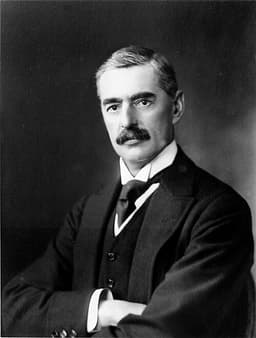
Neville Chamberlain
Politician · Modern
57.2Total
Basic Information
Born
1961
1869
Died
—
1940
Era
Modern
Modern
Nationality
New Zealand
United Kingdom
Occupation
Politician
Politician
Civilization
Western
Western
Score Comparison
Military (10%)
50.0
50.0
Political (20%)
72.0
68.0
Influence (20%)
54.1
60.0
Legacy (20%)
43.3
52.0
Leadership (15%)
79.8
65.0
Strategy (15%)
41.2
42.1
TOTAL
56.2
57.2
John Key — Complete Timeline
2008 AD
2008 General Election VictoryPolitical Action◆ Major
Key led the National Party to victory, winning 58 seats to Labour's 43. He became Prime Minister, succeeding Helen Clark, and formed a minority government with support from ACT, United Future, and the Maori Party.
ElectionNational PartyGovernment Formation
Impact: national
2008-2014 Global Financial Crisis ResponsePolitical Action◆ Major
Key's government implemented a series of economic stimulus measures, including tax cuts, infrastructure spending, and a deposit guarantee scheme. New Zealand avoided recession and recovered faster than many comparable economies.
Economic PolicyGFCStimulus
Impact: nationalconstructive
2011 AD
2011 Christchurch Earthquake ResponsePolitical Action◆ Major
Key's government coordinated the national response to the Christchurch earthquake that killed 185 people. The government established the Canterbury Earthquake Recovery Authority and committed billions to rebuilding.
Natural DisasterRecoveryChristchurch
Impact: nationalconstructive
2013 AD
2013 Marriage Equality ActReform◆ Major
Key's government supported the Marriage (Definition of Marriage) Amendment Act, legalizing same-sex marriage in New Zealand. The bill passed 77-44, making New Zealand the first Asia-Pacific country to legalize same-sex marriage.
Same-Sex MarriageSocial ReformLGBTQ Rights
Impact: nationalprogressive
2016 AD
2016 Resignation as Prime MinisterPolitical Action◆ Major
Key unexpectedly resigned as Prime Minister and National Party leader, citing family reasons. He was succeeded by Bill English. Key left with high approval ratings and a stable economy.
ResignationLeadership ChangeEnglish
Impact: national
Neville Chamberlain — Complete Timeline
1938 AD
Munich AgreementPolitical Action
Chamberlain met Hitler in Munich and agreed to the cession of the Sudetenland from Czechoslovakia to Germany. Chamberlain returned to Britain claiming 'peace for our time'. The agreement was widely praised at first but later condemned as appeasement that encouraged Nazi aggression.
AppeasementNazi GermanyCzechoslovakia
Impact: global
1939 AD
Declaration of War on GermanyWar
Following the German invasion of Poland on 1 September 1939, Chamberlain issued an ultimatum to Germany. When no response came, Britain declared war on Germany on 3 September 1939, beginning the Second World War. Chamberlain announced the declaration in a radio broadcast.
World War IIDeclaration of WarPoland
Impact: global
British Guarantee to PolandPolitical Action◆ Major
After Germany occupied the rest of Czechoslovakia, Chamberlain's government issued a guarantee of Polish independence in March 1939. This marked a shift from appeasement to a policy of deterrence, committing Britain to defend Poland against German aggression.
PolandDeterrenceWorld War II
Impact: global
1940 AD
Resignation as Prime MinisterPolitical Action◆ Major
After the failure of the Norwegian campaign and a vote of confidence that saw his majority fall, Chamberlain resigned as Prime Minister in May 1940. He was succeeded by Winston Churchill, who formed a coalition government to lead Britain through the war.
ResignationWorld War IIChurchill
Impact: national
Expert Analysis
Origins
John Key was born on 9 August 1961 in Auckland, New Zealand, to a Jewish father and an Austrian mother. His father died when Key was young, and he was raised by his mother in a state house. He attended the University of Canterbury, earning a Bachelor of Commerce, and later worked as a foreign exchange trader for Merrill Lynch and Bankers Trust, amassing a personal fortune. Neville Chamberlain was born on 18 March 1869 in Birmingham, England, to a wealthy political family. His father was Joseph Chamberlain, a prominent politician. Chamberlain studied at Rugby School and Mason Science College (now University of Birmingham) but did not graduate. He entered business, managing a sisal plantation in the Bahamas, then returned to Birmingham to run his father's manufacturing company. His political career began with local government, serving as Lord Mayor of Birmingham in 1915.
Rise to Power
Key entered Parliament in 2002 as the National Party MP for Helensville. He quickly rose through the ranks, becoming Leader of the National Party in 2006, succeeding Don Brash. In the 2008 general election, Key led National to victory, winning 58 seats to Labour's 43, ending nine years of Labour government. He became Prime Minister on 19 November 2008. Chamberlain entered Parliament in 1918 as a Conservative MP. He held various ministerial posts, including Minister of Health (1924-1929) and Chancellor of the Exchequer (1923-1924, 1931-1937). He became Prime Minister on 28 May 1937, succeeding Stanley Baldwin. His rise was steady, based on administrative competence and his reputation as a social reformer.
Leadership & Governance
Key's leadership style was pragmatic and personable. He focused on economic management during the Global Financial Crisis (GFC), implementing a stimulus package of tax cuts, infrastructure spending, and a deposit guarantee scheme. New Zealand's economy recovered relatively quickly, with unemployment peaking at 6.7% in 2012. He also led the response to the 2011 Christchurch earthquake, establishing the Canterbury Earthquake Recovery Authority and committing $15 billion for rebuilding. His government passed marriage equality in 2013, a socially liberal move. Chamberlain's leadership was dominated by foreign policy. He pursued a policy of appeasement toward Nazi Germany, believing that meeting Hitler's demands could prevent war. Domestically, he passed the Holidays with Pay Act (1938) and the Coal Act (1938), but his legacy is defined by the Munich Agreement (1938), which ceded the Sudetenland to Germany. When Germany invaded Poland in 1939, Chamberlain declared war, but his cautious approach was criticized.
Triumph & Tragedy
Key's greatest success was steering New Zealand through the GFC with relatively low unemployment and debt compared to other developed nations. His approval ratings remained high, and he won re-election in 2011 and 2014. His greatest failure was perhaps the lack of a major long-term structural reform; his government was criticized for not addressing housing affordability or inequality adequately. Chamberlain's triumph was his early social reforms and his role in preparing Britain for war, including the expansion of the Royal Air Force. However, his tragedy was the failure of appeasement; the Munich Agreement only delayed war and allowed Hitler to strengthen Germany. Chamberlain's policy of appeasement is widely condemned as a strategic blunder.
Character & Destiny
Key was known for his calm, affable demeanor and strong communication skills. He was a consensus builder, often described as a 'centrist' within the National Party. His character helped him maintain popularity through crises. He resigned unexpectedly in 2016, citing family reasons, leaving office with high approval ratings. Chamberlain was earnest, hardworking, and determined to avoid war, but his trust in Hitler's promises proved naive. He was stubborn in his policy of appeasement, even as evidence of Hitler's aggression mounted. His character led him to misjudge the situation, and his fall from power after the Norwegian debacle was swift. He died in 1940, bitter and largely discredited.
Legacy
Key's legacy is that of a competent crisis manager. He is remembered as one of New Zealand's most popular prime ministers, with a strong economy and social stability. His political scores reflect this: Leadership 79.8, Political 72.0. However, his long-term influence is moderate (54.1) as his policies were not transformative. Chamberlain's legacy is overwhelmingly negative, defined by appeasement. He scored 60.0 in influence and 52.0 in legacy, but his name is synonymous with failed diplomacy. Historians rank him poorly among British prime ministers. However, his early warnings about the need for rearmament and his social reforms are sometimes acknowledged.
Conclusion
Comparing John Key and Neville Chamberlain, Key had a more successful tenure as prime minister, navigating crises with competence and leaving office on a high note. Chamberlain's leadership ended in failure and resignation. While Chamberlain's overall score (57.2) slightly edges Key's (56.2), this is due to his longer political career and influence on global events. However, in terms of effective governance and positive legacy, Key clearly outperforms Chamberlain. Key's leadership score of 79.8 against Chamberlain's 65.0 reflects his superior handling of crises. Chamberlain's strategic score (42.1) is close to Key's (41.2), but his key decisions led to disaster. Therefore, John Key had a greater positive impact as a leader, while Chamberlain's legacy is a cautionary tale.
Rankings
🥇
Neville ChamberlainLeader
Mil: 50.0Pol: 68.0Inf: 60.0
57.2
🥈
John Key
Mil: 50.0Pol: 72.0Inf: 54.1
56.2
+1.0 behind
How This Comparison Works
Algorithm
Each figure is scored on 6 dimensions (0—100 scale) based on structured historical data: Military (10%), Political (20%), Influence (20%), Legacy (20%), Leadership (15%), Strategy (15%). The weighted total produces the final ranking.
Data Sources
Scores are computed from structured sub-indicators in the database. Scale factors adjust for era (Ancient ×0.85, Modern ×1.0) and civilization size (Eastern ×1.05, Other ×0.80) to account for differences in population and military scale.
Maximum 3 Figures
Comparisons are limited to 2—3 figures to ensure readability and statistical meaningfulness.
Error Margins
±5 points per dimension — Sub-scores are derived from historical records with inherent uncertainty. Two figures within 5 points on a dimension should be considered roughly equivalent in that area.
Total Score Accuracy
±3 points overall — The weighted combination of 6 dimensions produces a total score with approximately ±3 points of uncertainty. Differences of less than 3 points are not statistically significant— the figures are effectively tied.
Known Limitations
- Historical records are incomplete and uneven across civilizations
- Figures from oral-tradition societies may be underrepresented
- Occupation labels can misclassify multi-role figures
- Scores measure capability and impact, not moral character
- Quantitative scoring is a comparison tool, not absolute truth
Capability Radar
Military (10%) — Battles & Warfare
Battles
29
27
Win Rate
30
30
Expansion
35
35
Political (20%) — Governance & Reform
Reform
55
40
Diplomacy
60
30
Economy
70
50
Influence (20%) — Cultural & Global Reach
Cultural
30
30
Global
35
60
Legacy (20%) — Historical Impact
Historical
35
70
Longevity
25
60
Leadership (15%) — Power & Stability
Tenure
65
60
Stability
65
20
Strategy (15%) — Tactics & Innovation
Strategy
39
39
Tactics
39
39
Reform
41
43
Similar Comparisons
Comments & Discussion
No comments yet. Be the first to share your thoughts!