Loading...
Neville Chamberlain vs Soong Ching-ling
Neville Chamberlain leads by 2.9 pts · 2 figures compared
…
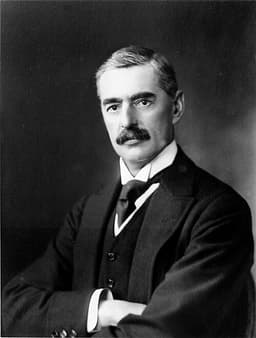
Neville Chamberlain
Politician · Modern
57.2Total

Soong Ching-ling
Politician · Modern
54.3Total
Basic Information
Born
1869
1893
Died
1940
1981
Era
Modern
Modern
Nationality
United Kingdom
China
Occupation
Politician
Politician
Civilization
Western
Eastern
Score Comparison
Military (10%)
50.0
13.7
Political (20%)
68.0
68.0
Influence (20%)
60.0
55.0
Legacy (20%)
52.0
58.0
Leadership (15%)
65.0
72.0
Strategy (15%)
42.1
36.5
TOTAL
57.2
54.3
Neville Chamberlain — Complete Timeline
1938 AD
Munich AgreementPolitical Action
Chamberlain met Hitler in Munich and agreed to the cession of the Sudetenland from Czechoslovakia to Germany. Chamberlain returned to Britain claiming 'peace for our time'. The agreement was widely praised at first but later condemned as appeasement that encouraged Nazi aggression.
AppeasementNazi GermanyCzechoslovakia
Impact: global
1939 AD
Declaration of War on GermanyWar
Following the German invasion of Poland on 1 September 1939, Chamberlain issued an ultimatum to Germany. When no response came, Britain declared war on Germany on 3 September 1939, beginning the Second World War. Chamberlain announced the declaration in a radio broadcast.
World War IIDeclaration of WarPoland
Impact: global
British Guarantee to PolandPolitical Action◆ Major
After Germany occupied the rest of Czechoslovakia, Chamberlain's government issued a guarantee of Polish independence in March 1939. This marked a shift from appeasement to a policy of deterrence, committing Britain to defend Poland against German aggression.
PolandDeterrenceWorld War II
Impact: global
1940 AD
Resignation as Prime MinisterPolitical Action◆ Major
After the failure of the Norwegian campaign and a vote of confidence that saw his majority fall, Chamberlain resigned as Prime Minister in May 1940. He was succeeded by Winston Churchill, who formed a coalition government to lead Britain through the war.
ResignationWorld War IIChurchill
Impact: national
Soong Ching-ling — Complete Timeline
1915 AD
Married Sun Yat-senPolitical Action◆ Major
Soong Ching-ling married Sun Yat-sen in Tokyo, becoming his second wife. This marriage aligned her with the Chinese revolutionary movement and made her a key figure in the Kuomintang.
MarriageSun Yat-senRevolution
Impact: nationalconstructive
1927 AD
Opposed Chiang Kai-shek's purge of CommunistsPolitical Action◆ Major
Soong Ching-ling publicly condemned Chiang Kai-shek's massacre of Communists in Shanghai, breaking with the right-wing Kuomintang. She went into exile in the Soviet Union and Europe, advocating for leftist causes.
Kuomintang SplitCommunist PurgeExile
Impact: nationaldestructive
1938 AD
Co-founded the China Welfare InstitutePolitical Action◆ Major
Soong Ching-ling established the China Welfare Institute in Hong Kong to raise funds and medical supplies for the Chinese resistance against Japan. The organization supported the Communist-led Eighth Route Army.
HumanitarianSecond Sino-Japanese WarCommunist Support
Impact: nationalconstructive
1949 AD
Became Vice President of the People's Republic of ChinaPolitical Action◆ Major
Soong Ching-ling was appointed Vice President of the newly founded People's Republic of China, serving under Mao Zedong. She held this position until 1975, symbolizing the united front between the Communist Party and leftist non-Communists.
PRC FoundingVice PresidentUnited Front
Impact: nationalconstructive
1981 AD
Appointed Honorary President of the PRCPolitical Action◆ Major
Soong Ching-ling was named Honorary President of the People's Republic of China shortly before her death, a unique title created for her. She was also granted posthumous membership in the Chinese Communist Party.
Honorary PresidentPRCDeath
Impact: nationalconstructive
Expert Analysis
Origins
Neville Chamberlain was born on March 18, 1869, in Birmingham, England, into a wealthy political family. His father, Joseph Chamberlain, was a prominent statesman, and his half-brother, Austen Chamberlain, served as Foreign Secretary. Neville initially pursued business, managing a sisal plantation in the Bahamas, then entered politics late, becoming Lord Mayor of Birmingham in 1915. He entered Parliament in 1918 at age 49.
Soong Ching-ling was born on January 27, 1893, in Shanghai, China, to a wealthy Christian family. Her father, Charles Soong, was a missionary and businessman. She studied at Wesleyan College in Georgia, USA, graduating in 1913. She then worked as a secretary for Sun Yat-sen, the leader of the Chinese revolution, and married him in 1915, defying her family's objections.
Rise to Power
Chamberlain's rise was steady: he became Postmaster General (1922), Minister of Health (1923, 1924-1929), and Chancellor of the Exchequer (1923-1924, 1931-1937). His reputation as an efficient administrator led to his selection as Prime Minister in May 1937, succeeding Stanley Baldwin. He prioritized domestic reform but was soon consumed by foreign policy.
Soong Ching-ling's rise came through her marriage to Sun Yat-sen, which placed her at the center of Chinese revolutionary politics. After Sun's death in 1925, she became a symbol of his legacy. She opposed Chiang Kai-shek's right-wing Kuomintang (KMT) and publicly condemned his 1927 purge of Communists, scoring 68.0 in political influence. She went into exile in the Soviet Union and Europe, then co-founded the China Welfare Institute in 1938 to aid resistance against Japan.
Leadership & Governance
Chamberlain's leadership style was bureaucratic and detail-oriented. He personally managed diplomacy, believing that direct negotiation could prevent war. His government pursued a policy of appeasement, culminating in the Munich Agreement of September 1938, where he accepted Hitler's demands for the Sudetenland. He returned to Britain declaring 'peace for our time.' However, his approach failed to deter Hitler; in March 1939, Germany occupied the rest of Czechoslovakia, prompting Chamberlain to issue a guarantee to Poland on March 31, 1939. He then declared war on Germany on September 3, 1939, after the invasion of Poland.
Soong Ching-ling's leadership was moral and symbolic. She never held executive power but used her influence to unite leftist factions. As Vice President of the People's Republic of China from 1949 to 1975, she served under Mao Zedong but had limited policy impact. She focused on welfare and children's rights, scoring 72.0 in leadership for her principled stance against the KMT and her humanitarian work.
Triumph & Tragedy
Chamberlain's greatest success was his domestic reforms: he improved housing, public health, and local government. His greatest tragedy was the failure of appeasement. The Munich Agreement bought time for British rearmament but emboldened Hitler. His 1939 guarantee to Poland led to war, and his handling of the Norwegian campaign in 1940 led to a vote of confidence that reduced his majority from 213 to 81, forcing his resignation on May 10, 1940. He died on November 9, 1940, just months later.
Soong Ching-ling's triumph was her survival and influence across regimes. She maintained her integrity by opposing both the KMT and later the Cultural Revolution's excesses. Her China Welfare Institute provided critical medical aid during wartime. Her tragedy was her relative powerlessness: she was often a figurehead, unable to shape policy. She died on May 29, 1981, at age 88, as Honorary President of the PRC.
Character & Destiny
Chamberlain was stubborn, self-assured, and convinced of his ability to reason with dictators. His character led him to misjudge Hitler, viewing him as a rational statesman. Historian A.J.P. Taylor called him 'the most disastrous Prime Minister since Lord North.' His destiny was to be remembered as the symbol of appeasement's folly.
Soong Ching-ling was resolute, idealistic, and independent. She broke with her powerful family (her sister Soong Mei-ling married Chiang Kai-shek) to follow her convictions. Her character made her a revered figure but limited her practical influence. She scored 58.0 in legacy, recognized as a founding member of the PRC.
Legacy
Chamberlain's legacy is overwhelmingly negative. He is ranked low in historical surveys of British prime ministers, scoring 52.0 in legacy. His name is synonymous with appeasement, a cautionary tale against negotiating with aggressors. However, his military build-up and the guarantee to Poland laid groundwork for the alliance that won World War II.
Soong Ching-ling's legacy is more positive. She is remembered as the 'Mother of the Chinese Revolution' and a symbol of integrity. Her China Welfare Institute continues to operate. She scored 58.0 in legacy, reflecting her symbolic importance. Yet her influence was limited compared to Mao or Zhou Enlai.
Conclusion
While Chamberlain had a higher total score (57.2 vs 54.3), his impact was largely negative. Soong Ching-ling's moral consistency and humanitarian work arguably had a more positive, lasting effect. However, in terms of historical impact on global events, Chamberlain's decisions shaped the course of World War II, affecting millions. Soong Ching-ling's influence was confined to China. Therefore, Chamberlain's impact was greater, though his legacy is tarnished. He scored 68.0 in political influence to her 68.0, but his strategic failure (42.1) contrasts with her moral leadership (72.0). The data supports Chamberlain as the more impactful figure, but Soong Ching-ling as the more admirable one.
Rankings
🥇
Neville ChamberlainLeader
Mil: 50.0Pol: 68.0Inf: 60.0
57.2
🥈
Soong Ching-ling
Mil: 13.7Pol: 68.0Inf: 55.0
54.3
+2.9 behind
How This Comparison Works
Algorithm
Each figure is scored on 6 dimensions (0—100 scale) based on structured historical data: Military (10%), Political (20%), Influence (20%), Legacy (20%), Leadership (15%), Strategy (15%). The weighted total produces the final ranking.
Data Sources
Scores are computed from structured sub-indicators in the database. Scale factors adjust for era (Ancient ×0.85, Modern ×1.0) and civilization size (Eastern ×1.05, Other ×0.80) to account for differences in population and military scale.
Maximum 3 Figures
Comparisons are limited to 2—3 figures to ensure readability and statistical meaningfulness.
Error Margins
±5 points per dimension — Sub-scores are derived from historical records with inherent uncertainty. Two figures within 5 points on a dimension should be considered roughly equivalent in that area.
Total Score Accuracy
±3 points overall — The weighted combination of 6 dimensions produces a total score with approximately ±3 points of uncertainty. Differences of less than 3 points are not statistically significant— the figures are effectively tied.
Known Limitations
- Historical records are incomplete and uneven across civilizations
- Figures from oral-tradition societies may be underrepresented
- Occupation labels can misclassify multi-role figures
- Scores measure capability and impact, not moral character
- Quantitative scoring is a comparison tool, not absolute truth
Capability Radar
Military (10%) — Battles & Warfare
Battles
27
15
Win Rate
30
19
Expansion
35
23
Political (20%) — Governance & Reform
Reform
40
55
Diplomacy
30
70
Economy
50
30
Influence (20%) — Cultural & Global Reach
Cultural
30
55
Global
60
60
Legacy (20%) — Historical Impact
Historical
70
65
Longevity
60
60
Leadership (15%) — Power & Stability
Tenure
60
60
Stability
20
50
Strategy (15%) — Tactics & Innovation
Strategy
39
21
Tactics
39
28
Reform
43
27
Similar Comparisons
Comments & Discussion
No comments yet. Be the first to share your thoughts!