Loading...
John Knox vs Julius Caesar
Julius Caesar leads by 28.1 pts · 2 figures compared
…
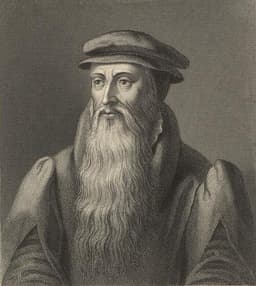
John Knox
Politician · Modern
54.7Total

Julius Caesar
General · Ancient
82.8Total
Basic Information
Born
1514
-100
Died
1572
-44
Era
Modern
Ancient
Nationality
Scotland
Roman Republic
Occupation
Politician
General
Civilization
Western
Western
Score Comparison
Military (10%)
49.7
88.0
Political (20%)
61.3
78.0
Influence (20%)
55.0
85.0
Legacy (20%)
55.0
82.0
Leadership (15%)
58.8
80.0
Strategy (15%)
42.2
85.0
TOTAL
54.7
82.8
John Knox — Complete Timeline
1558 AD
First Blast of the Trumpet Against the Monstrous Regiment of WomenCultural◆ Major
John Knox published this pamphlet attacking female rulers, specifically Mary Tudor and Mary of Guise. The work argued that women ruling over men was against divine law. It provoked controversy and influenced Protestant political thought across Europe.
PamphletReligious PolemicGender Politics
Impact: regional
1560 AD
Scottish Reformation ParliamentPolitical Action
John Knox led the Protestant faction that pushed through legislation establishing Presbyterianism in Scotland. The parliament abolished papal authority, banned the Mass, and adopted the Scots Confession. This created the Church of Scotland.
ReformationReligious ChangeLegislation
Impact: nationalconstructive
1561 AD
Disputation with Mary, Queen of ScotsPolitical Action
John Knox engaged in a series of private debates with Mary, Queen of Scots over religious authority. He defended Protestant doctrine against her Catholic position. The confrontations became legendary in Scottish history, symbolizing the clash between crown and kirk.
DebateReligious ConflictMonarchy vs Church
Impact: national
Julius Caesar — Complete Timeline
58 BC
Gallic WarsWar◆ Major
Caesar, as proconsul of Gaul, launched a series of campaigns that conquered all of Gaul (modern France, Belgium, and parts of Switzerland). He fought numerous battles, including against the Helvetii, the Belgae, and the Gallic chieftain Vercingetorix. The wars brought immense wealth and a loyal army to Caesar.
Gallic WarsConquestRoman Expansion
Impact: regional
49 BC
Crossing the RubiconPolitical Action◆ Major
Caesar led Legio XIII across the Rubicon River into Italy, defying the Roman Senate's order to disband his army. This act triggered a civil war against Pompey and the Optimates, ultimately leading to Caesar's dictatorship and the end of the Roman Republic.
Roman Civil WarEnd of RepublicPower Struggle
Impact: global
48 BC
Battle of PharsalusWar◆ Major
Caesar's outnumbered army defeated the larger forces of Pompey the Great at Pharsalus in Greece. Caesar's tactical use of a reserve line to counter Pompey's cavalry charge proved decisive. Pompey fled to Egypt, where he was assassinated, leaving Caesar as the undisputed master of the Roman world.
Roman Civil WarBattleDecisive Victory
Impact: regional
44 BC
Appointment as Dictator for LifePolitical Action◆ Major
The Roman Senate appointed Caesar dictator perpetuo (dictator for life), granting him unprecedented personal power. This move concentrated military, legislative, and judicial authority in one person, effectively ending the Roman Republic's traditional system of checks and balances and alarming many senators.
DictatorshipEnd of RepublicPower Consolidation
Impact: regionaldestructive
Assassination on the Ides of MarchPolitical Action◆ Major
A group of Roman senators, led by Marcus Junius Brutus and Gaius Cassius Longinus, stabbed Caesar to death at a meeting of the Senate in the Theatre of Pompey. The assassination was intended to restore the Republic, but instead triggered another civil war that led to the rise of the Roman Empire.
AssassinationRoman PoliticsEnd of Republic
Impact: globaldestructive
Expert Analysis
john-knox-vs-julius-caesar
# The Dictator and the Preacher: Two Paths to Transform a World
The Ides of March dawned cold and gray over Rome. Julius Caesar, the master of the known world, walked into the Senate chamber, ignoring the warnings of soothsayers and the pleas of his wife. Within minutes, he would fall, stabbed twenty-three times by men he had pardoned, promoted, and trusted. Less than sixteen hundred years later, in a cramped chamber of Edinburgh’s Holyrood Palace, John Knox sat across from Mary, Queen of Scots, a young woman whose authority he had publicly denounced as a "monstrous regiment." She wept. He preached. Neither man would blink. One built an empire with a sword; the other tore down a church with a sermon. Their worlds could not have been more different, yet both men shared a single, burning conviction: that they alone could reshape the destiny of their people.
Origins
Julius Caesar was born into the chaos of the late Roman Republic, a world of crumbling aristocratic ideals and rising military ambition. His family, the Julii, claimed descent from the goddess Venus, but they were politically marginal. His father died when Caesar was sixteen, leaving him to navigate a system where power belonged to those who could buy it, marry it, or seize it. He grew up in the shadow of civil wars, proscriptions, and the dictatorship of Sulla, a man who taught Caesar a brutal lesson: mercy was a weapon, and timing was everything.
John Knox emerged from a very different world—the small, windswept kingdom of Scotland in the early sixteenth century. Born in Haddington around 1514, he was the son of a merchant farmer, a man of modest means but fierce Catholic piety. The Scotland of Knox’s youth was a land of clan feuds, French influence, and a Church rotting from within. Knox was ordained a priest but found his true calling not in the Mass but in the Bible—a book that, in the hands of reformers like Martin Luther and John Calvin, had become a revolutionary text. Where Caesar learned to read men by their ambitions, Knox learned to read them by their souls.
Rise to Power
Caesar’s path to power was a masterclass in calculated risk. He borrowed fortunes to fund his political career, seduced the wives of his enemies, and forged the First Triumvirate with Pompey and Crassus—two men he knew he would eventually have to destroy. His true ascent began in Gaul, where between 58 and 50 BCE he conquered a territory larger than Italy itself, writing his own legend as he went. His *Commentaries* were not just military reports; they were campaign ads for his own greatness. When the Senate ordered him to disband his army, he crossed the Rubicon River in 49 BCE, uttering the famous words, *"Alea iacta est"*—the die is cast. Civil war followed, and Caesar won.
Knox’s rise was slower, harder, and far less glamorous. He escaped Scotland in 1547 as a fugitive, after the French captured St. Andrews and condemned him to row in the galleys. For nineteen months, he pulled an oar under the Mediterranean sun, a living corpse. Freed, he fled to England, then to Geneva, where he sat at the feet of John Calvin. It was in Geneva that Knox published his most infamous work, *The First Blast of the Trumpet Against the Monstrous Regiment of Women* (1558), a furious pamphlet arguing that female rulers were an abomination before God. The timing was catastrophic: it appeared just as Elizabeth I took the English throne. She never forgave him. But Knox did not care. He returned to Scotland in 1559, a man with nothing left to lose and a God to serve.
Leadership & Governance
Caesar governed as he conquered: with speed, audacity, and a calculated generosity that disarmed his enemies. As dictator, he reformed the calendar, granted citizenship to provincials, and launched massive public works to employ the poor. He centralized power in his own hands but never abolished the Senate—he simply made it irrelevant. His military genius lay in his ability to inspire loyalty. His soldiers did not fight for Rome; they fought for Caesar. When he marched into Egypt, he did not just defeat the enemy; he seduced Cleopatra, turning a foreign queen into a Roman ally and a personal legend.
Knox governed through the pulpit. He had no army, no treasury, no legions. His weapon was the Word of God, and he wielded it with terrifying precision. In the Scottish Reformation Parliament of 1560, Knox and his Protestant allies pushed through legislation that abolished papal authority, outlawed the Mass, and established Presbyterianism as the national church. He did not compromise. When Mary, Queen of Scots, returned from France in 1561, she summoned him to debate. She was young, beautiful, and Catholic; he was old, scarred, and unyielding. She accused him of treason; he accused her of idolatry. She wept; he preached. In the end, she could not break him, and he could not convert her. Their conflict was a stalemate, but Knox’s church survived.
Triumph & Tragedy
Caesar’s greatest triumph was his conquest of Gaul—a campaign that made him rich, famous, and feared. His greatest tragedy was his own success. By concentrating all power in his hands, he made himself a target. The Ides of March in 44 BCE was not a spontaneous act of violence; it was the logical conclusion of a system he had broken. His assassins believed they were saving the Republic; instead, they plunged Rome into another civil war, from which Caesar’s adopted heir, Octavian, would emerge as the first emperor. Caesar had won everything, and lost everything, in the same moment.
Knox’s triumph was the Scottish Reformation itself. He lived to see the Church of Scotland established, the Mass abolished, and a system of parish schools created that would educate generations. His tragedy was personal. He died in 1572, disappointed and exhausted. His final years were spent watching his own movement fracture, as nobles fought for control of the church he had built. He had spent his life fighting kings and queens, only to find that the devil wore many masks—and some of them were Protestant.
Character & Destiny
Caesar was a man of immense charm, ruthless ambition, and a deep, almost theatrical sense of his own destiny. He forgave his enemies because he believed he was above revenge. He took risks because he believed he was lucky. His fatal flaw was not pride—it was impatience. He knew the Republic was dying, but he tried to force its death on his own schedule. The daggers of the Senate were the price of his haste.
Knox was a man of iron conviction and little charm. He had no sense of humor, no patience for compromise, and no mercy for those he considered enemies of God. His fatal flaw was rigidity. He could not adapt, could not soften, could not see that politics requires persuasion, not just proclamation. Yet his rigidity was also his strength. In an age of shifting alliances and convenient conversions, John Knox never wavered. He was the rock upon which the Scottish Reformation was built.
Legacy
Caesar’s legacy is the Roman Empire. His name became a title—*Kaiser, Tsar, Caesar*—used by rulers for two thousand years. His military tactics are still studied; his reforms shaped Western law, language, and culture. But he also left a warning: that the desire for order can destroy liberty, and that the man who saves the Republic may also be the one who buries it.
Knox’s legacy is the Presbyterian Church and the Scottish identity that grew from it. His fierce insistence on education, on the right of ordinary people to read the Bible, and on the limits of royal authority planted seeds that would bloom in the Scottish Enlightenment and, eventually, in the American Revolution. He gave Scotland a voice, even if that voice was often angry and always unyielding.
Conclusion
Two men, separated by fifteen centuries, by language, by culture, by everything that should divide human beings. And yet, standing at the end of their lives, they shared one thing: the knowledge that they had changed the world, and that the world would never forgive them for it. Caesar died on the marble floor of a Senate chamber, bleeding into the dust of a Republic he had outgrown. Knox died in his bed, surrounded by the books he had written and the church he had built. One was murdered by his equals; the other was ignored by his successors. But both men understood that history does not reward the humble. It rewards the ones who dare to cross the Rubicon—whether that river is a stream in northern Italy or the dark waters of a soul that refuses to drown.
Rankings
🥇
Julius CaesarLeader
Mil: 88.0Pol: 78.0Inf: 85.0
82.8
🥈
John Knox
Mil: 49.7Pol: 61.3Inf: 55.0
54.7
+28.1 behind
How This Comparison Works
Algorithm
Each figure is scored on 6 dimensions (0—100 scale) based on structured historical data: Military (10%), Political (20%), Influence (20%), Legacy (20%), Leadership (15%), Strategy (15%). The weighted total produces the final ranking.
Data Sources
Scores are computed from structured sub-indicators in the database. Scale factors adjust for era (Ancient ×0.85, Modern ×1.0) and civilization size (Eastern ×1.05, Other ×0.80) to account for differences in population and military scale.
Maximum 3 Figures
Comparisons are limited to 2—3 figures to ensure readability and statistical meaningfulness.
Error Margins
±5 points per dimension — Sub-scores are derived from historical records with inherent uncertainty. Two figures within 5 points on a dimension should be considered roughly equivalent in that area.
Total Score Accuracy
±3 points overall — The weighted combination of 6 dimensions produces a total score with approximately ±3 points of uncertainty. Differences of less than 3 points are not statistically significant— the figures are effectively tied.
Known Limitations
- Historical records are incomplete and uneven across civilizations
- Figures from oral-tradition societies may be underrepresented
- Occupation labels can misclassify multi-role figures
- Scores measure capability and impact, not moral character
- Quantitative scoring is a comparison tool, not absolute truth
Capability Radar
Military (10%) — Battles & Warfare
Battles
27
95
Win Rate
34
92
Expansion
35
97
Political (20%) — Governance & Reform
Reform
70
90
Diplomacy
40
85
Economy
20
82
Influence (20%) — Cultural & Global Reach
Cultural
65
88
Global
55
94
Legacy (20%) — Historical Impact
Historical
70
95
Longevity
60
96
Leadership (15%) — Power & Stability
Tenure
30
75
Stability
25
60
Strategy (15%) — Tactics & Innovation
Strategy
40
94
Tactics
40
96
Reform
42
88
Similar Comparisons
Comments & Discussion
Gallic-Slayer-556/17/2026
Caesar crushed 800 towns in Gaul and sold 100,000 Gauls into slavery—dude literally industrialized genocide. Knox just yelled at a queen. Give me the conqueror who restructured Europe's map over a preacher who bitched about women ruling. Caesar wrote the playbook for empire; Knox wrote pamphlets. Not even close—Caesar reshaped the Mediterranean world with blood and law. Knox reshaped a damp island's theology. Rome still matters. Calvinism? Meh.
斯丛之锤6/17/2026
拿凯撒跟诺克斯比,跟拿罗马军团对比高地长矛一样荒谬。凯撒跨过卢比孔河时就没想过妥协,一句"骰子已掷出",整个共和体制就完了。诺克斯呢?跟玛丽女王吵完架,还得跑路去日内瓦。
Legion-Logos6/17/2026
Both men were authoritarian ideologues who weaponized language, but Knox had the harder fight. Caesar faced scared senators with daggers; Knox faced a queen with both youth and popular legitimacy. Knox's *First Blast of the Trumpet* openly called for overthrowing female rule—treason in any era. Caesar wrote clean Latin prose but never risked his neck on a theological argument. One man died in the Senate; the other died in his bed, having forced a kingdom to bow to God, not Caesar.
雷厉斯6/17/2026
你这是在比谁更会『治理』?凯撒是带着十军团屠杀了百万高卢人。诺克斯用布道讲章逼玛丽女王流泪退位。流血 vs 流泪。但我要说,真正改变世界的是诺克斯——他用『预定论』这把镰刀割掉了苏格兰教会的腐枝,直接催生清教徒革命、新大陆的建立。凯撒留下了内战和奥古斯都;诺克斯留下了美国新教徒的DNA。凯撒的罗马早埋在土里了,诺克斯的苏格兰仍在教会里争论着。