Loading...
John Redmond vs Julius Caesar
Julius Caesar leads by 28.4 pts · 2 figures compared
…
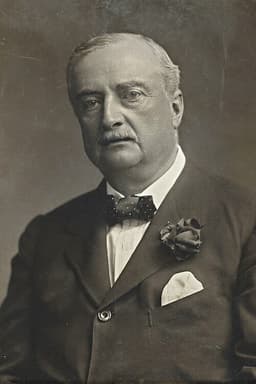
John Redmond
Politician · Modern
54.4Total

Julius Caesar
General · Ancient
82.8Total
Basic Information
Born
1856
-100
Died
1918
-44
Era
Modern
Ancient
Nationality
Ireland
Roman Republic
Occupation
Politician
General
Civilization
Western
Western
Score Comparison
Military (10%)
50.0
88.0
Political (20%)
68.0
78.0
Influence (20%)
54.1
85.0
Legacy (20%)
46.7
82.0
Leadership (15%)
65.7
80.0
Strategy (15%)
41.3
85.0
TOTAL
54.4
82.8
John Redmond — Complete Timeline
1900 AD
Election as Leader of the Irish Parliamentary PartyPolitical Action◆ Major
Redmond was elected chairman of the reunited Irish Parliamentary Party, succeeding the Parnell split. He led the party in the House of Commons, advocating for Home Rule for Ireland.
LeadershipHome RuleParliamentary Politics
Impact: nationalconstructive
1912 AD
Third Home Rule Bill Passed by CommonsPolitical Action◆ Major
The Third Home Rule Bill was introduced and passed by the House of Commons, thanks to the Parliament Act 1911 removing the Lords' veto. Redmond's party held the balance of power and secured the bill's passage.
Home RuleLegislationParliamentary Victory
Impact: nationalprogressive
1914 AD
Home Rule Bill Enacted but SuspendedPolitical Action◆ Major
The Government of Ireland Act 1914 (Home Rule) received royal assent but was suspended for the duration of World War I. Redmond accepted this compromise, urging Irishmen to support the British war effort.
Home RuleWorld War ICompromise
Impact: national
Call for Irishmen to Join the British ArmyPolitical Action◆ Major
Redmond made a speech at Woodenbridge, County Wicklow, calling on Irishmen to enlist in the British Army to fight in World War I. This split the Irish Volunteers, with a majority opposing his call.
World War IEnlistmentIrish Volunteers
Impact: national
1916 AD
Easter RisingWar
The Easter Rising in Dublin, led by republican opponents of Redmond's constitutional approach, took place. The rising was suppressed, but its execution of leaders shifted public opinion away from Redmond's Home Rule policy.
Easter RisingRebellionPolitical Shift
Impact: nationaldestructive
1917 AD
Irish ConventionPolitical Action◆ Major
Redmond chaired the Irish Convention, a failed attempt to reach a consensus on Home Rule implementation. The convention broke down over partition and Ulster's exclusion, marking the failure of Redmond's constitutional approach.
ConventionHome RuleFailure
Impact: nationaltragic
Julius Caesar — Complete Timeline
58 BC
Gallic WarsWar◆ Major
Caesar, as proconsul of Gaul, launched a series of campaigns that conquered all of Gaul (modern France, Belgium, and parts of Switzerland). He fought numerous battles, including against the Helvetii, the Belgae, and the Gallic chieftain Vercingetorix. The wars brought immense wealth and a loyal army to Caesar.
Gallic WarsConquestRoman Expansion
Impact: regional
49 BC
Crossing the RubiconPolitical Action◆ Major
Caesar led Legio XIII across the Rubicon River into Italy, defying the Roman Senate's order to disband his army. This act triggered a civil war against Pompey and the Optimates, ultimately leading to Caesar's dictatorship and the end of the Roman Republic.
Roman Civil WarEnd of RepublicPower Struggle
Impact: global
48 BC
Battle of PharsalusWar◆ Major
Caesar's outnumbered army defeated the larger forces of Pompey the Great at Pharsalus in Greece. Caesar's tactical use of a reserve line to counter Pompey's cavalry charge proved decisive. Pompey fled to Egypt, where he was assassinated, leaving Caesar as the undisputed master of the Roman world.
Roman Civil WarBattleDecisive Victory
Impact: regional
44 BC
Appointment as Dictator for LifePolitical Action◆ Major
The Roman Senate appointed Caesar dictator perpetuo (dictator for life), granting him unprecedented personal power. This move concentrated military, legislative, and judicial authority in one person, effectively ending the Roman Republic's traditional system of checks and balances and alarming many senators.
DictatorshipEnd of RepublicPower Consolidation
Impact: regionaldestructive
Assassination on the Ides of MarchPolitical Action◆ Major
A group of Roman senators, led by Marcus Junius Brutus and Gaius Cassius Longinus, stabbed Caesar to death at a meeting of the Senate in the Theatre of Pompey. The assassination was intended to restore the Republic, but instead triggered another civil war that led to the rise of the Roman Empire.
AssassinationRoman PoliticsEnd of Republic
Impact: globaldestructive
Expert Analysis
john-redmond-vs-julius-caesar
# The Crossroads of Power: Caesar and Redmond
On a January morning in 49 BCE, Julius Caesar stood at the Rubicon River, a small stream that marked the boundary of his legal command. To cross with his army was treason; to turn back was political oblivion. He hesitated, then uttered his famous words: *"Alea iacta est"*—the die is cast. Two thousand years later, in September 1914, John Redmond stood at Woodenbridge in County Wicklow, calling on Irishmen to join the British Army. He too believed he was casting a die, but for him, the gamble would end not in triumph but in ruin. What drove these two men to such different fates?
Origins
Julius Caesar was born into the patrician Julian clan, an ancient but politically diminished family in the Roman Republic. His uncle by marriage, Gaius Marius, was a populist general, while his father-in-law, Lucius Cinna, led the radical faction. Growing up amidst civil wars and proscriptions, Caesar learned early that power belonged to those who seized it. The Republic was already cracking under the weight of its own expansion, and Caesar absorbed the lesson that traditional institutions could be bent or broken.
John Redmond, by contrast, came from a comfortable Catholic gentry family in County Wexford, Ireland. His father was a Home Rule MP, and young John grew up in the shadow of the Great Famine and the failed 1848 rebellion. Ireland in the late 19th century was a land of landless peasants, absentee landlords, and a simmering cultural revival. Redmond’s world was one of parliamentary procedure, not military glory. He studied law at Trinity College Dublin, but his true education came in the corridors of Westminster, where he learned to negotiate, compromise, and wait.
Rise to Power
Caesar’s ascent was audacious and swift. He borrowed enormous sums to fund his political career, serving as a military tribune, then quaestor in Spain, where he wept before a statue of Alexander the Great, lamenting that he had done nothing at an age when Alexander had conquered the world. His real breakthrough came with the formation of the First Triumvirate in 60 BCE, an informal alliance with Pompey and Crassus. This gave him command of Gaul, where he spent eight years conquering a territory that made him rich, famous, and dangerous.
Redmond’s path was slower and more grinding. He entered Parliament in 1881, during the Land War, and was soon caught in the wreckage of Charles Stewart Parnell’s fall. For a decade, the Irish Parliamentary Party was split and broken. Redmond’s election as its chairman in 1900 was less a triumph than a salvage operation. He reunited the party through patience and personal diplomacy, not by force of arms. His power came from his ability to hold together a coalition of moderates, priests, and farmers—a fragile thing compared to Caesar’s legions.
Leadership & Governance
Caesar governed through sheer force of will and strategic genius. As a military commander, he was unmatched: he defeated the Helvetii, crushed the Germanic tribes, and twice invaded Britain. At Alesia in 52 BCE, he besieged a Gallic army while simultaneously repelling a massive relief force—a double encirclement that remains a classic of military history. As dictator, he reformed the calendar, granted citizenship to provincials, and began public works projects that employed the poor. But his governance was always autocratic. He centralized power, packed the Senate with his supporters, and accepted the title “dictator for life.” His political score of 78 reflects a man who was brilliant but ultimately unable to build lasting institutions.
Redmond’s leadership was constitutional and democratic. He believed in the power of the ballot box and the British parliamentary system. His greatest achievement was the Third Home Rule Bill, which passed the House of Commons in 1912 and became law in 1914. It was a monumental political victory, won through years of alliance-building with the Liberal Party and the use of the Parliament Act to override the House of Lords. But Redmond lacked military instincts entirely—his strategy score of 35.3 is telling. He could navigate Westminster, but he could not navigate war.
Triumph & Tragedy
Caesar’s greatest triumph was his conquest of Gaul, which he recorded in his *Commentaries* with a blend of self-promotion and literary elegance that still captivates readers. His greatest tragedy was his own success: the dictatorship he built made him a tyrant in the eyes of the old aristocracy, and on the Ides of March, 44 BCE, he was stabbed to death by senators he had pardoned. His last words, according to tradition, were *“Et tu, Brute?”*—a recognition that even friendship could not survive absolute power.
Redmond’s triumph was the Home Rule Bill. In 1914, it seemed that after forty years of struggle, Ireland would finally have its own parliament. But the tragedy came swiftly. The outbreak of World War I led to the bill’s suspension, and Redmond’s call for Irish enlistment in the British Army—made in good faith, to prove Ireland’s loyalty—alienated the growing republican movement. The Easter Rising of 1916, a small rebellion led by men who rejected his entire approach, was crushed by the British, but its leaders were executed, turning them into martyrs. Redmond watched his life’s work crumble. He died in 1918, a broken man.
Character & Destiny
Caesar was driven by an insatiable ambition. He was generous to his soldiers, merciful to his enemies, but utterly ruthless in pursuit of power. His personality combined charm, intellect, and a cold calculation that could dissolve into rage. He gambled everything on the Rubicon because he could not imagine being second. That same pride made him careless: he dismissed warnings of the conspiracy against him, believing his popularity would protect him. It did not.
Redmond was a man of patience and principle, but also of limits. He believed in the slow work of democracy, in the decency of British institutions, and in the loyalty of Irish Catholics to the Crown. He was not naive—he knew the Unionist threat—but he could not imagine that the Irish people would turn against him. The Easter Rising revealed a gap between his world and theirs. He was a constitutional nationalist in an age that was turning revolutionary.
Legacy
Caesar’s legacy is immense. He destroyed the Roman Republic and created the Roman Empire, a political structure that lasted for centuries. His name became a title—*Kaiser*, *Tsar*—and his writings shaped Western literature. He is remembered as a military genius, a reformer, and a tyrant, all at once.
Redmond’s legacy is quieter but no less significant. He is often overshadowed by the men who led the 1916 Rising, but his constitutional path was the one that ultimately prevailed: the Irish Free State, created in 1922, was a form of Home Rule. He failed in his own time, but his methods—negotiation, patience, and faith in democracy—remain a powerful alternative to violence. He is remembered as a tragic figure, a man who was right but too early.
Conclusion
Caesar and Redmond never could have met. One commanded legions, the other commanded committees. One crossed a river and changed the world; the other crossed a stream of words and saw his world change without him. Yet both faced the same fundamental question: how does a leader navigate the gap between what is just and what is possible? Caesar answered by seizing everything, and died for it. Redmond answered by yielding too much, and died of it. Their stories remind us that history rewards audacity, but also that audacity without timing is just another form of failure. The die is always cast—but not everyone gets to choose how it lands.
Rankings
🥇
Julius CaesarLeader
Mil: 88.0Pol: 78.0Inf: 85.0
82.8
🥈
John Redmond
Mil: 50.0Pol: 68.0Inf: 54.1
54.4
+28.4 behind
How This Comparison Works
Algorithm
Each figure is scored on 6 dimensions (0—100 scale) based on structured historical data: Military (10%), Political (20%), Influence (20%), Legacy (20%), Leadership (15%), Strategy (15%). The weighted total produces the final ranking.
Data Sources
Scores are computed from structured sub-indicators in the database. Scale factors adjust for era (Ancient ×0.85, Modern ×1.0) and civilization size (Eastern ×1.05, Other ×0.80) to account for differences in population and military scale.
Maximum 3 Figures
Comparisons are limited to 2—3 figures to ensure readability and statistical meaningfulness.
Error Margins
±5 points per dimension — Sub-scores are derived from historical records with inherent uncertainty. Two figures within 5 points on a dimension should be considered roughly equivalent in that area.
Total Score Accuracy
±3 points overall — The weighted combination of 6 dimensions produces a total score with approximately ±3 points of uncertainty. Differences of less than 3 points are not statistically significant— the figures are effectively tied.
Known Limitations
- Historical records are incomplete and uneven across civilizations
- Figures from oral-tradition societies may be underrepresented
- Occupation labels can misclassify multi-role figures
- Scores measure capability and impact, not moral character
- Quantitative scoring is a comparison tool, not absolute truth
Capability Radar
Military (10%) — Battles & Warfare
Battles
29
95
Win Rate
29
92
Expansion
36
97
Political (20%) — Governance & Reform
Reform
55
90
Diplomacy
50
85
Economy
30
82
Influence (20%) — Cultural & Global Reach
Cultural
35
88
Global
30
94
Legacy (20%) — Historical Impact
Historical
50
95
Longevity
30
96
Leadership (15%) — Power & Stability
Tenure
45
75
Stability
20
60
Strategy (15%) — Tactics & Innovation
Strategy
36
94
Tactics
41
96
Reform
43
88
Similar Comparisons
Comments & Discussion
No comments yet. Be the first to share your thoughts!