Loading...
Johnson Aguiyi-Ironsi vs Lakshmibai
Lakshmibai leads by 18.1 pts · 2 figures compared
…

Johnson Aguiyi-Ironsi
General · Modern
38.9Total
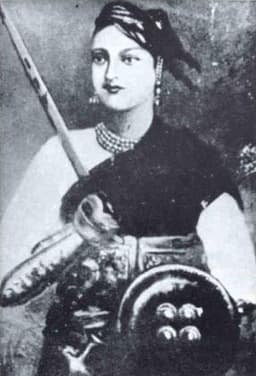
Lakshmibai
General · Modern
57.0Total
Basic Information
Born
1924
1828
Died
—
1858
Era
Modern
Modern
Nationality
Nigeria
India
Occupation
General
General
Civilization
Other
Indian
Score Comparison
Military (10%)
22.6
55.0
Political (20%)
25.0
36.5
Influence (20%)
49.4
82.0
Legacy (20%)
40.0
52.0
Leadership (15%)
40.9
43.8
Strategy (15%)
43.7
60.0
TOTAL
38.9
57.0
Johnson Aguiyi-Ironsi — Complete Timeline
1966 AD
Implemented Unification DecreeReform◆ Major
Ironsi issued Decree No. 34 in 1966, abolishing Nigeria's federal system and replacing it with a unitary state. This move aimed to reduce regional tensions but was widely opposed, particularly in the north, and contributed to his downfall.
NigeriaUnitary StateReform
Impact: nationaldestructive
Became First Military Head of State of NigeriaPolitical Action◆ Major
Ironsi became Nigeria's first military head of state in 1966 after leading a coup that overthrew the civilian government. He suspended the constitution and established a military regime, citing corruption and political instability.
NigeriaCoupMilitary
Impact: national
Assassinated in Counter-CoupPolitical Action◆ Major
Ironsi was assassinated in 1966 during a counter-coup led by northern military officers. He was killed in Ibadan along with his host, Lieutenant Colonel Fajuyi. The coup brought Yakubu Gowon to power and deepened ethnic tensions.
NigeriaCoupAssassination
Impact: nationaltragic
Lakshmibai — Complete Timeline
1857 AD
Refusal to Surrender JhansiPolitical Action◆ Major
Lakshmibai refused to surrender Jhansi to the British after the outbreak of the Indian Rebellion, choosing to fight. She organized the defense of the city and became a key leader of the rebellion in central India.
RebellionLeadership
Impact: regional
1858 AD
Defense of JhansiWar◆ Major
Lakshmibai led the defense of Jhansi against British forces under Sir Hugh Rose during the Indian Rebellion of 1857. Despite fierce resistance, the fort fell after a two-week siege, and she escaped to continue the fight.
SiegeRebellion
Impact: regional
Battle of Kotah-ki-SeraiWar◆ Major
Lakshmibai was killed in action at the Battle of Kotah-ki-Serai near Gwalior, fighting against British forces. Her death marked the end of organized resistance in central India during the rebellion, and she became a symbol of Indian resistance.
BattleDeathRebellion
Impact: regionaltragic
Capture of GwaliorWar
Lakshmibai and rebel forces captured Gwalior from the Scindia dynasty, which was allied with the British. This victory briefly established a rebel stronghold, but was soon reversed by British counterattacks.
Military CampaignRebellion
Impact: regional
Expert Analysis
Origins
**Johnson Aguiyi-Ironsi** was born on March 3, 1924, in Umuahia, Nigeria, to an Igbo family. He attended Methodist College, Uzuakoli, and later joined the Nigerian Army in 1942. He served in World War II and the Korean War, rising through the ranks. His formative experiences included training at Eaton Hall in England and Staff College in Camberley, which shaped his military professionalism.
**Lakshmibai** was born on November 19, 1828, in Varanasi, India, as Manikarnika Tambe. She was educated at home, learning sword fighting, horse riding, and shooting. In 1842, she married Raja Gangadhar Rao Newalkar, the Maharaja of Jhansi. Her early life was marked by independence and martial training, preparing her for later conflict.
Rise to Power
**Ironsi** rose to prominence after Nigeria's independence in 1960. He became the General Officer Commanding the Nigerian Army in 1965. On January 15, 1966, a coup led by young officers overthrew the civilian government. Ironsi, though not directly involved, emerged as the head of the new military government, becoming the first military head of state of Nigeria on January 16, 1966. His rise was swift, based on his seniority and the collapse of civilian rule.
**Lakshmibai** became the Rani of Jhansi upon her marriage, but her rise to power as a rebel leader came after the death of her husband in 1853. The British East India Company refused to recognize her adopted son as heir and annexed Jhansi under the Doctrine of Lapse. She protested and was given a pension, but when the Indian Rebellion of 1857 erupted, she assumed leadership of Jhansi's defenses. On June 5, 1857, she led the massacre of British officers and proclaimed her rule, emerging as a central figure in the rebellion.
Leadership & Governance
**Ironsi** governed Nigeria for only six months. His major policy was the Unification Decree (Decree No. 34) of May 24, 1966, which abolished the federal system and created a unitary state. This aimed to reduce regional tensions but was perceived as Igbo domination by northern elites. He also purged many northern officers, which deepened ethnic divisions. His leadership was top-down, lacking political consultation, and his decrees sparked resentment.
**Lakshmibai** led Jhansi as a ruler and military commander. She organized defenses, repaired fortifications, and mobilized women and children. She maintained law and order in the city during the siege. Her governance was decisive and hands-on; she personally inspected troops and led charges. She refused to surrender to British forces, showing strategic resolve. However, her rule was brief and confined to a region under siege.
Triumph & Tragedy
**Ironsi**'s greatest success was becoming Nigeria's first military head of state and attempting national unity. However, his failure was catastrophic: his Unification Decree ignited ethnic violence and led to his assassination on July 29, 1966, during a counter-coup. He was killed in Ibadan along with his host. His policies directly contributed to the Nigerian Civil War (1967-1970). His score of 38.9 reflects his short tenure and negative impact.
**Lakshmibai**'s triumph was her heroic defense of Jhansi from March to April 1858, where she held out against British forces under Sir Hugh Rose. She escaped with her son and later captured Gwalior on June 1, 1858, in a stunning victory. Her tragedy was her death on June 18, 1858, at the Battle of Kotah-ki-Serai, fighting in male attire. She became a symbol of resistance, but her rebellion ultimately failed. She scored 57.0 overall, with high influence (82.0) and strategy (60.0).
Character & Destiny
**Ironsi** was described as cautious and professional but indecisive. He failed to anticipate the backlash to his unitary policies. His character—lacking political acumen and relying on military decrees—doomed his regime. He was a victim of the ethnic tensions he sought to suppress. Historians note his naivety in governance.
**Lakshmibai** was fearless, charismatic, and determined. She refused to accept British domination and chose to fight against overwhelming odds. Her character inspired loyalty and fearlessness. Her destiny was to die in battle, becoming a martyr. She is celebrated as a nationalist icon in India.
Legacy
**Ironsi**'s legacy is negative in Nigeria. He is remembered as the leader who accelerated ethnic conflict and set the stage for civil war. His unification decree is seen as a major miscalculation. He remains a controversial figure, with his tenure a cautionary tale of military rule.
**Lakshmibai**'s legacy is overwhelmingly positive. She is revered as a symbol of Indian resistance and women's empowerment. Her story is taught in schools, and she appears in films and literature. The Indian National Army named a women's regiment after her. Her influence score of 82.0 reflects her enduring symbolic power.
Conclusion
Lakshmibai had a greater impact than Johnson Aguiyi-Ironsi. Her score of 57.0 vs. Ironsi's 38.9 reflects her higher military (55.0 vs 22.6), influence (82.0 vs 49.4), and strategy (60.0 vs 43.7). While Ironsi's brief rule had negative consequences, Lakshmibai's defiance inspired generations. Her legacy transcends her military defeat, while Ironsi's is tied to failure. The data supports that Lakshmibai's influence and strategic leadership outweigh Ironsi's short-lived political control. Her story continues to inspire, whereas Ironsi's is a footnote in Nigerian history.
Rankings
🥇
LakshmibaiLeader
Mil: 55.0Pol: 36.5Inf: 82.0
57.0
🥈
Johnson Aguiyi-Ironsi
Mil: 22.6Pol: 25.0Inf: 49.4
38.9
+18.1 behind
How This Comparison Works
Algorithm
Each figure is scored on 6 dimensions (0—100 scale) based on structured historical data: Military (10%), Political (20%), Influence (20%), Legacy (20%), Leadership (15%), Strategy (15%). The weighted total produces the final ranking.
Data Sources
Scores are computed from structured sub-indicators in the database. Scale factors adjust for era (Ancient ×0.85, Modern ×1.0) and civilization size (Eastern ×1.05, Other ×0.80) to account for differences in population and military scale.
Maximum 3 Figures
Comparisons are limited to 2—3 figures to ensure readability and statistical meaningfulness.
Error Margins
±5 points per dimension — Sub-scores are derived from historical records with inherent uncertainty. Two figures within 5 points on a dimension should be considered roughly equivalent in that area.
Total Score Accuracy
±3 points overall — The weighted combination of 6 dimensions produces a total score with approximately ±3 points of uncertainty. Differences of less than 3 points are not statistically significant— the figures are effectively tied.
Known Limitations
- Historical records are incomplete and uneven across civilizations
- Figures from oral-tradition societies may be underrepresented
- Occupation labels can misclassify multi-role figures
- Scores measure capability and impact, not moral character
- Quantitative scoring is a comparison tool, not absolute truth
Capability Radar
Military (10%) — Battles & Warfare
Battles
10
35
Win Rate
10
40
Expansion
5
20
Political (20%) — Governance & Reform
Reform
10
20
Diplomacy
10
30
Economy
5
15
Influence (20%) — Cultural & Global Reach
Cultural
10
60
Global
15
50
Legacy (20%) — Historical Impact
Historical
20
65
Longevity
10
55
Leadership (15%) — Power & Stability
Tenure
5
25
Stability
5
15
Strategy (15%) — Tactics & Innovation
Strategy
20
40
Tactics
20
45
Reform
15
30
Similar Comparisons
Comments & Discussion
No comments yet. Be the first to share your thoughts!