Loading...
Lakshmibai vs Sun Kewang
Lakshmibai leads by 15.3 pts · 2 figures compared
…
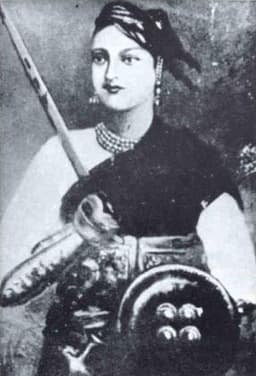
Lakshmibai
General · Modern
57.0Total

Sun Kewang
General · Modern
41.7Total
Basic Information
Born
1828
1618
Died
1858
1660
Era
Modern
Modern
Nationality
India
China
Occupation
General
General
Civilization
Indian
Eastern
Score Comparison
Military (10%)
55.0
20.0
Political (20%)
36.5
30.8
Influence (20%)
82.0
49.4
Legacy (20%)
52.0
40.0
Leadership (15%)
43.8
45.0
Strategy (15%)
60.0
60.0
TOTAL
57.0
41.7
Lakshmibai — Complete Timeline
1857 AD
Refusal to Surrender JhansiPolitical Action◆ Major
Lakshmibai refused to surrender Jhansi to the British after the outbreak of the Indian Rebellion, choosing to fight. She organized the defense of the city and became a key leader of the rebellion in central India.
RebellionLeadership
Impact: regional
1858 AD
Defense of JhansiWar◆ Major
Lakshmibai led the defense of Jhansi against British forces under Sir Hugh Rose during the Indian Rebellion of 1857. Despite fierce resistance, the fort fell after a two-week siege, and she escaped to continue the fight.
SiegeRebellion
Impact: regional
Battle of Kotah-ki-SeraiWar◆ Major
Lakshmibai was killed in action at the Battle of Kotah-ki-Serai near Gwalior, fighting against British forces. Her death marked the end of organized resistance in central India during the rebellion, and she became a symbol of Indian resistance.
BattleDeathRebellion
Impact: regionaltragic
Capture of GwaliorWar
Lakshmibai and rebel forces captured Gwalior from the Scindia dynasty, which was allied with the British. This victory briefly established a rebel stronghold, but was soon reversed by British counterattacks.
Military CampaignRebellion
Impact: regional
Sun Kewang — Complete Timeline
1630 AD
Joined the Xiying rebel armyPolitical Action◆ Major
Sun Kewang joined the peasant rebellion led by Zhang Xianzhong. He became one of Zhang's adopted sons and a leading general in the Xiying army that fought against the Ming.
RebellionXiying
Impact: regionaldestructive
1647 AD
Became leader of the Xiying armyPolitical Action◆ Major
After Zhang Xianzhong's death, Sun Kewang took command of the Xiying army. He led the remnants into Guizhou and Yunnan, establishing a base and allying with the Southern Ming.
LeadershipXiying
Impact: regionalconstructive
Allied with the Yongli EmperorPolitical Action◆ Major
Sun Kewang formally allied with the Yongli Emperor, offering military support in exchange for official recognition. This alliance temporarily strengthened the Southern Ming against the Qing.
AllianceSouthern Ming
Impact: nationalconstructive
1656 AD
Betrayed the Yongli EmperorPolitical Action◆ Major
Sun Kewang attempted to usurp the Yongli Emperor's authority and seize control of the Southern Ming court. He plotted to depose the emperor, leading to a split with Li Dingguo and internal conflict.
BetrayalSouthern Ming
Impact: nationaldestructive
1657 AD
Defeated by Li DingguoWar◆ Major
Sun Kewang's forces were defeated by Li Dingguo in a civil war within the Southern Ming. He fled to the Qing and surrendered, ending his role in the resistance.
Civil WarDefeat
Impact: regionaldestructive
Surrendered to the QingPolitical Action◆ Major
After his defeat, Sun Kewang surrendered to the Qing dynasty. He was given a rank and later died in obscurity, remembered as a traitor to the Ming cause.
SurrenderQing Dynasty
Impact: nationaldestructive
Expert Analysis
Origins
Lakshmibai, born Manikarnika Tambe in 1828 in Varanasi, was raised in a Marathi Brahmin family. She received training in horse riding, fencing, and shooting, uncommon for women of her time. Married to Raja Gangadhar Rao of Jhansi in 1842, she became the Rani of Jhansi. After her husband's death in 1853, the British East India Company refused to recognize her adopted son as heir, applying the Doctrine of Lapse to annex Jhansi. This personal grievance fueled her later resistance.
Sun Kewang was born around 1600 in Shaanxi, China, into a peasant family. He joined the peasant rebellion led by Zhang Xianzhong during the Ming-Qing transition. Zhang adopted him as a son, and Sun rose to become a key general in the Xiying army, known for its brutal campaigns. After Zhang's death in 1647, Sun took command, leading the remnants into Guizhou and Yunnan.
Rise to Power
Lakshmibai's rise began in 1857 when the Indian Rebellion erupted. She refused to surrender Jhansi to the British, organizing its defense. In June 1857, she led a successful assault on the British fort, securing the city. Her leadership during the siege of Jhansi (March-April 1858) against Sir Hugh Rose's forces earned her fame. Despite the fall of Jhansi, she escaped and joined the rebel leader Tantia Tope, capturing Gwalior in June 1858.
Sun Kewang's rise came after Zhang Xianzhong's death. He united the Xiying remnants, establishing a base in Yunnan. In 1651, he allied with the Yongli Emperor of the Southern Ming, offering military support in exchange for the title of Prince of Qin. This alliance temporarily strengthened the Southern Ming resistance against the Qing. Sun became the de facto ruler of the court, controlling military and political affairs.
Leadership & Governance
Lakshmibai led by example, fighting alongside her soldiers. She organized the defense of Jhansi with limited resources, her military score of 55.0 reflecting competent but not exceptional tactical skills. Politically, she scored 36.5, as she focused on military resistance rather than governance. She issued proclamations calling for unity among Indian rulers, but her influence was limited to central India.
Sun Kewang's leadership was authoritarian. He centralized control, rewarding loyalists and purging rivals. His political score of 30.8 indicates poor governance; he alienated allies like Li Dingguo, another Xiying general. Sun's attempt to usurp the Yongli Emperor led to a civil war, damaging the Southern Ming cause. His military score of 20.0 is low, but his strategy score of 60.0 matches Lakshmibai's, showing tactical ability but poor execution.
Triumph & Tragedy
Lakshmibai's greatest triumph was the defense of Jhansi, where she held out for two weeks against a superior British force. She scored a major victory by capturing Gwalior, briefly establishing a rebel stronghold. Her tragedy came at the Battle of Kotah-ki-Serai on June 18, 1858, where she was killed in action. Her death ended organized resistance in central India, and the rebellion soon collapsed.
Sun Kewang's triumph was leading the Xiying army to become a major force in southwest China, effectively controlling Yunnan and Guizhou. However, his betrayal of the Yongli Emperor in 1652-1653 shattered the Southern Ming unity. He was defeated by Li Dingguo in 1656 and surrendered to the Qing, ending his role. His legacy is one of treachery, as he prioritized personal power over the cause.
Character & Destiny
Lakshmibai was courageous and determined, refusing to accept British domination. Her character inspired loyalty, but her impulsive decision to attack Gwalior without proper planning led to her downfall. She is remembered as a symbol of resistance, with an influence score of 82.0, the highest among her metrics.
Sun Kewang was ambitious and ruthless, but his betrayal reflected a lack of commitment to the Southern Ming. His decision to usurp the emperor alienated key supporters, leading to his defeat. Historians view him as a self-serving warlord, his legacy score of 40.0 reflecting his negative impact.
Legacy
Lakshmibai became a national icon in India, celebrated in folklore, literature, and film. Her legacy score of 52.0 is modest due to the failure of the rebellion, but her influence endures as a symbol of anti-colonial resistance. She scored 82.0 in influence, highlighting her cultural impact.
Sun Kewang's legacy is largely negative. He is remembered as a traitor who undermined the Southern Ming. His total score of 41.7 reflects his limited impact. The Qing ultimately conquered China, and Sun's actions only hastened the Southern Ming's collapse.
Conclusion
Lakshmibai had a greater historical impact than Sun Kewang. Her influence score of 82.0 far exceeds Sun's 49.4, and her total of 57.0 surpasses his 41.7. While both were rebel generals, Lakshmibai's resistance symbolized a broader struggle against colonialism, while Sun's betrayal weakened an already fragile cause. Lakshmibai's legacy as a martyr and icon endures, whereas Sun is condemned as a traitor. Her military and leadership scores, while not outstanding, were sufficient to inspire generations, whereas Sun's political miscalculations doomed his efforts. Therefore, Lakshmibai is the more significant figure in history.
Rankings
🥇
LakshmibaiLeader
Mil: 55.0Pol: 36.5Inf: 82.0
57.0
🥈
Sun Kewang
Mil: 20.0Pol: 30.8Inf: 49.4
41.7
+15.3 behind
How This Comparison Works
Algorithm
Each figure is scored on 6 dimensions (0—100 scale) based on structured historical data: Military (10%), Political (20%), Influence (20%), Legacy (20%), Leadership (15%), Strategy (15%). The weighted total produces the final ranking.
Data Sources
Scores are computed from structured sub-indicators in the database. Scale factors adjust for era (Ancient ×0.85, Modern ×1.0) and civilization size (Eastern ×1.05, Other ×0.80) to account for differences in population and military scale.
Maximum 3 Figures
Comparisons are limited to 2—3 figures to ensure readability and statistical meaningfulness.
Error Margins
±5 points per dimension — Sub-scores are derived from historical records with inherent uncertainty. Two figures within 5 points on a dimension should be considered roughly equivalent in that area.
Total Score Accuracy
±3 points overall — The weighted combination of 6 dimensions produces a total score with approximately ±3 points of uncertainty. Differences of less than 3 points are not statistically significant— the figures are effectively tied.
Known Limitations
- Historical records are incomplete and uneven across civilizations
- Figures from oral-tradition societies may be underrepresented
- Occupation labels can misclassify multi-role figures
- Scores measure capability and impact, not moral character
- Quantitative scoring is a comparison tool, not absolute truth
Capability Radar
Military (10%) — Battles & Warfare
Battles
35
45
Win Rate
40
40
Expansion
20
30
Political (20%) — Governance & Reform
Reform
20
10
Diplomacy
30
20
Economy
15
15
Influence (20%) — Cultural & Global Reach
Cultural
60
15
Global
50
10
Legacy (20%) — Historical Impact
Historical
65
20
Longevity
55
10
Leadership (15%) — Power & Stability
Tenure
25
25
Stability
15
10
Strategy (15%) — Tactics & Innovation
Strategy
40
35
Tactics
45
40
Reform
30
20
Similar Comparisons
Comments & Discussion
No comments yet. Be the first to share your thoughts!