Loading...
Joko Widodo vs Julius Caesar
Julius Caesar leads by 33.3 pts · 2 figures compared
…
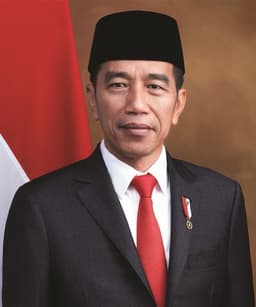
Joko Widodo
Politician · Modern
49.5Total

Julius Caesar
General · Ancient
82.8Total
Basic Information
Born
1961
-100
Died
—
-44
Era
Modern
Ancient
Nationality
Indonesia
Roman Republic
Occupation
Politician
General
Civilization
Eastern
Western
Score Comparison
Military (10%)
12.6
88.0
Political (20%)
53.8
78.0
Influence (20%)
59.0
85.0
Legacy (20%)
44.2
82.0
Leadership (15%)
72.0
80.0
Strategy (15%)
35.5
85.0
TOTAL
49.5
82.8
Joko Widodo — Complete Timeline
2012 AD
Elected Governor of JakartaPolitical Action◆ Major
Joko Widodo, known as Jokowi, was elected Governor of Jakarta, the capital of Indonesia. His campaign focused on clean governance and direct engagement with citizens, and his tenure was marked by improvements in public services and infrastructure.
ElectionIndonesiaJakarta
constructive
2014 AD
Elected President of IndonesiaPolitical Action
Jokowi won the Indonesian presidential election, defeating Prabowo Subianto. His victory was historic as he was the first president from outside the political and military elite, coming from a humble background as a furniture salesman.
ElectionIndonesiaDemocracy
Impact: nationalconstructive
2015 AD
Launched Infrastructure Development ProgramReform◆ Major
Jokowi's government launched an ambitious infrastructure development program, including toll roads, ports, airports, and railways across the Indonesian archipelago. The program aimed to boost connectivity and economic growth, but faced challenges in funding and land acquisition.
InfrastructureIndonesiaDevelopment
Impact: nationalconstructive
2019 AD
Re-elected PresidentPolitical Action◆ Major
Jokowi was re-elected for a second term, again defeating Prabowo Subianto. The election was marked by allegations of irregularities and post-election protests, but Jokowi's victory was confirmed by the Constitutional Court.
ElectionIndonesiaRe-election
Impact: national
2022 AD
Relocated Capital to NusantaraPolitical Action◆ Major
Jokowi announced the relocation of Indonesia's capital from Jakarta to Nusantara in East Kalimantan. The move aimed to address Jakarta's overcrowding and environmental issues, but faced criticism over costs, environmental impact, and lack of transparency.
Capital RelocationIndonesiaPolicy
Impact: nationalconstructive
Julius Caesar — Complete Timeline
58 BC
Gallic WarsWar◆ Major
Caesar, as proconsul of Gaul, launched a series of campaigns that conquered all of Gaul (modern France, Belgium, and parts of Switzerland). He fought numerous battles, including against the Helvetii, the Belgae, and the Gallic chieftain Vercingetorix. The wars brought immense wealth and a loyal army to Caesar.
Gallic WarsConquestRoman Expansion
Impact: regional
49 BC
Crossing the RubiconPolitical Action◆ Major
Caesar led Legio XIII across the Rubicon River into Italy, defying the Roman Senate's order to disband his army. This act triggered a civil war against Pompey and the Optimates, ultimately leading to Caesar's dictatorship and the end of the Roman Republic.
Roman Civil WarEnd of RepublicPower Struggle
Impact: global
48 BC
Battle of PharsalusWar◆ Major
Caesar's outnumbered army defeated the larger forces of Pompey the Great at Pharsalus in Greece. Caesar's tactical use of a reserve line to counter Pompey's cavalry charge proved decisive. Pompey fled to Egypt, where he was assassinated, leaving Caesar as the undisputed master of the Roman world.
Roman Civil WarBattleDecisive Victory
Impact: regional
44 BC
Appointment as Dictator for LifePolitical Action◆ Major
The Roman Senate appointed Caesar dictator perpetuo (dictator for life), granting him unprecedented personal power. This move concentrated military, legislative, and judicial authority in one person, effectively ending the Roman Republic's traditional system of checks and balances and alarming many senators.
DictatorshipEnd of RepublicPower Consolidation
Impact: regionaldestructive
Assassination on the Ides of MarchPolitical Action◆ Major
A group of Roman senators, led by Marcus Junius Brutus and Gaius Cassius Longinus, stabbed Caesar to death at a meeting of the Senate in the Theatre of Pompey. The assassination was intended to restore the Republic, but instead triggered another civil war that led to the rise of the Roman Empire.
AssassinationRoman PoliticsEnd of Republic
Impact: globaldestructive
Expert Analysis
joko-widodo-vs-julius-caesar
# The Dictator and the Democrat
On the Ides of March, 44 BCE, a Roman senator named Casca struck the first blow. Within moments, twenty-three dagger wounds had ended the life of Gaius Julius Caesar, the most powerful man in the Mediterranean world. Two thousand years later and half a world away, a furniture salesman from a Javanese river town would take his oath of office as president of Indonesia, the world's third-largest democracy. What connects these two men across the chasm of millennia? And what, more tellingly, separates them? The answer lies not in their shared ambition, but in how that ambition met its moment.
Origins
Julius Caesar was born into the patrician Julian clan, an ancient but politically diminished family in a Republic already groaning under the weight of its own success. His father died when Caesar was sixteen, leaving him to navigate the treacherous waters of Roman politics with little but his name and his nerve. The Rome of his youth was a place of violent factionalism—the Social War, the civil wars of Marius and Sulla, proscriptions that left heads rotting in the Forum. Caesar learned early that in such a world, mercy was a luxury and decisiveness a necessity.
Joko Widodo, by contrast, entered the world in 1961 in Surakarta, Central Java, the son of a wood seller and a housewife. His Indonesia was a young nation struggling under the thirty-two-year dictatorship of Suharto, a regime that crushed dissent but provided stability. Young Jokowi—as everyone calls him—grew up in a rented bamboo shack by the river, helping his father haul timber. There was no Forum here, no Senate, no path to power through oratory or military glory. There was only survival, and the slow, patient climb of a man who learned to listen before he spoke.
Rise to Power
Caesar’s ascent was a masterpiece of calculated risk. He borrowed fortunes to fund public spectacles, built alliances with the powerful Crassus and Pompey, and then spent eight years conquering Gaul—a campaign of breathtaking brutality and brilliance that gave him a loyal army, immense wealth, and a reputation that threatened the Republic itself. When the Senate ordered him to disband his legions, Caesar crossed the Rubicon River in 49 BCE, uttering the famous words *“Alea iacta est”*—the die is cast. Civil war followed. Within four years, he was dictator for life.
Jokowi’s rise could not be more different. He began as a furniture exporter, a businessman, not a warrior. He entered politics as mayor of Surakarta in 2005, where he earned a reputation for hands-on governance—visiting slums, listening to street vendors, fixing broken drains. In 2012, he was elected Governor of Jakarta, running on a platform of clean government and bureaucratic efficiency. Two years later, in 2014, he won the presidency of Indonesia, defeating a former general with deep ties to the old Suharto regime. Where Caesar seized power through violence, Jokowi won it through patience and a ballot box.
Leadership & Governance
Caesar governed as he conquered: swiftly, absolutely, and with a vision that reshaped the world. He reformed the calendar, granted citizenship to provincials, initiated massive public works, and centralized authority in his own person. His military genius was undeniable—the siege of Alesia, the lightning campaigns in Egypt and Asia Minor—but his political wisdom was more fragile. He pardoned his enemies, but he also accumulated powers that made the Senate a theater of shadows. He was a reformer who believed the Republic was beyond saving, and he may have been right. But he never built the institutions to replace it.
Jokowi governed in a democracy, constrained by a parliament, a constitution, and a free press. His signature achievement was infrastructure: thousands of kilometers of toll roads, new airports and seaports, the construction of a Jakarta mass rapid transit system. In 2019, he announced the audacious plan to move Indonesia’s capital from sinking, congested Jakarta to a new city called Nusantara in East Kalimantan—a project that will take decades. His political style was managerial, not charismatic. He did not inspire devotion; he inspired, at best, trust. Where Caesar rewrote the rules, Jokowi worked within them.
Triumph & Tragedy
Caesar’s greatest triumph was the conquest of Gaul, which added a vast, wealthy province to Rome and made him a legend in his own lifetime. His greatest tragedy was that he could not stop the cycle of violence he had helped unleash. On the Ides of March, 44 BCE, his former allies and pardoned enemies surrounded him in the Senate chamber. He fell, according to some accounts, at the foot of a statue of his rival Pompey. The assassins thought they had saved the Republic. Instead, they unleashed another civil war that ended it forever.
Jokowi’s triumph was more modest but perhaps more meaningful: he proved that a man from a bamboo shack could lead a nation of 270 million people, and that democracy could survive and even thrive in a region where it often faltered. His tragedy was the slow erosion of his reformist ideals. Critics point to his second term, when he appointed his political rivals to cabinet positions, allowed a creeping illiberalism, and failed to dismantle the patronage networks that have long plagued Indonesian politics. He did not become a dictator. But he did not leave the democracy stronger than he found it.
Character & Destiny
Caesar was audacity incarnate. He took risks that would have destroyed lesser men—crossing the Rubicon, pardoning his enemies, pushing his reforms past the breaking point. His character was a blend of cold calculation and reckless ambition, of clemency and ruthlessness. He believed in his own star, and for a time, the stars obliged. But his confidence became his undoing. He dismissed warnings of the conspiracy, walked unarmed into the Senate, and died because he could not imagine a world that did not bend to his will.
Jokowi was caution incarnate. He rose not by challenging the system but by mastering it. His character was shaped by the constraints of a post-authoritarian society where overt ambition could be fatal. He was a conciliator, a listener, a man who preferred consensus to confrontation. This served him well in a diverse, fractious democracy. But it also meant that when he had the chance to push for deeper reforms—to break the political oligarchy, to strengthen the rule of law—he often chose the safer path. He governed not like a conqueror, but like a mayor.
Legacy
Caesar’s legacy is the Roman Empire itself. His name became a title—*Kaiser*, *Tsar*—and his reforms laid the foundation for two thousand years of Western civilization. He is remembered as a genius and a tyrant, a visionary and a destroyer. His story is a warning about the seduction of absolute power, and a testament to what one man can achieve when he dares to cross the Rubicon.
Jokowi’s legacy is still unfolding. He will likely be remembered as the president who built roads and moved a capital, who governed without scandal and left office peacefully. He may not have transformed Indonesia’s soul, but he proved its resilience. In an age of strongmen and demagogues, he was a quiet anomaly—a leader who did not need to break the system to lead it.
Conclusion
One man conquered the world; the other governed a nation. One died by the sword; the other will leave office by the calendar. Caesar and Jokowi are separated by two thousand years, but they share something deeper: both faced a system in crisis, and both chose to act. Caesar chose to break the Republic and rebuild it in his image. Jokowi chose to mend a democracy and work within its flaws. The difference between them is not merely a matter of time or place. It is a difference of philosophy—of whether power is something to be seized, or something to be earned. The Rubicon still flows, but not every leader must cross it. Some, like Jokowi, simply build a bridge.
Rankings
🥇
Julius CaesarLeader
Mil: 88.0Pol: 78.0Inf: 85.0
82.8
🥈
Joko Widodo
Mil: 12.6Pol: 53.8Inf: 59.0
49.5
+33.3 behind
How This Comparison Works
Algorithm
Each figure is scored on 6 dimensions (0—100 scale) based on structured historical data: Military (10%), Political (20%), Influence (20%), Legacy (20%), Leadership (15%), Strategy (15%). The weighted total produces the final ranking.
Data Sources
Scores are computed from structured sub-indicators in the database. Scale factors adjust for era (Ancient ×0.85, Modern ×1.0) and civilization size (Eastern ×1.05, Other ×0.80) to account for differences in population and military scale.
Maximum 3 Figures
Comparisons are limited to 2—3 figures to ensure readability and statistical meaningfulness.
Error Margins
±5 points per dimension — Sub-scores are derived from historical records with inherent uncertainty. Two figures within 5 points on a dimension should be considered roughly equivalent in that area.
Total Score Accuracy
±3 points overall — The weighted combination of 6 dimensions produces a total score with approximately ±3 points of uncertainty. Differences of less than 3 points are not statistically significant— the figures are effectively tied.
Known Limitations
- Historical records are incomplete and uneven across civilizations
- Figures from oral-tradition societies may be underrepresented
- Occupation labels can misclassify multi-role figures
- Scores measure capability and impact, not moral character
- Quantitative scoring is a comparison tool, not absolute truth
Capability Radar
Military (10%) — Battles & Warfare
Battles
16
95
Win Rate
18
92
Expansion
19
97
Political (20%) — Governance & Reform
Reform
60
90
Diplomacy
55
85
Economy
60
82
Influence (20%) — Cultural & Global Reach
Cultural
40
88
Global
45
94
Legacy (20%) — Historical Impact
Historical
35
95
Longevity
30
96
Leadership (15%) — Power & Stability
Tenure
65
75
Stability
55
60
Strategy (15%) — Tactics & Innovation
Strategy
26
94
Tactics
25
96
Reform
27
88
Similar Comparisons
Comments & Discussion
ForumPharaoh6/17/2026
Caesar was assassinated because he centralized power; Jokowi centralized power but left office voluntarily. That’s the difference between a general who crossed the Rubicon and a furniture salesman who crossed the bureaucratic path. Caesar built a dictatorship from military conquest; Jokowi built one from technocratic consensus. One died on the Senate floor, the other retires to Surakarta. The Roman would have never understood the Javanese art of stepping aside. Power isn't about the throne—it's
克娄巴特拉的算盘6/17/2026
拿元首和木匠比,真是侮辱了罗马史。凯撒跨过卢比孔河时赌的是共和国的人头,而佐科维卸任时赌的是民主制度的韧性。凯撒把元老院当玩具,佐科维把内阁当工具箱。一个是发动战争来巩固权力,另一个是靠修下水道来巩固权力。你告诉我,一个用二十三刀终结的传奇,怎么跟一个用五年民意调查维持的官僚相提并论?高卢的战利品和雅加达的交通卡,能划等号吗?
CivisNonSum6/17/2026
The comparison is flawed because Caesar's ambition was existential—he had to seize power or be destroyed by his enemies. Jokowi's ambition was procedural—he wanted to modernize Indonesia without breaking the system. Caesar faced proscription lists and civil war; Jokowi faced traffic jams and corruption scandals. The Roman didn't choose dictatorship; the Republic chose him as dictator when it became ungovernable. Indonesia never reached that breaking point. So what are we comparing? A man who sav
尼罗河畔的泥瓦匠6/17/2026
凯撒在加利亚杀了百万之众,为的是罗马的荣誉和自己的黄金。佐科维修了印尼的高速公路,为的是民主能打通孤岛。一个用刀剑开拓疆域,一个用水泥连接人心。但别搞错了—两个人都知道权力不是靠选举得来的,而是靠行动得来的。凯撒的政绩是征服,佐科维的政绩是基础设施建设。区别在于,一个把敌人踩在脚下,另一个把敌人放进内阁。哪种更聪明?你自己判断吧,历史已经给了答案。