Loading...
This comparison has not been analyzed yet.
One-time AI generation (~1 minute). Scores and timeline are already available below.
Jonas Savimbi vs Yamagata Aritomo
Yamagata Aritomo leads by 26.0 pts · 2 figures compared
…

Jonas Savimbi
General · Modern
56.5Total
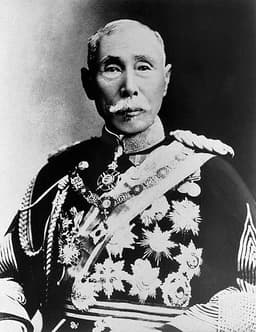
Yamagata Aritomo
General · Modern
82.5Total
Basic Information
Born
1934
1838
Died
—
1922
Era
Modern
Modern
Nationality
Angola
Japan
Occupation
General
General
Civilization
Other
Eastern
Score Comparison
Military (10%)
67.5
78.0
Political (20%)
48.0
82.0
Influence (20%)
59.0
80.0
Legacy (20%)
48.3
90.0
Leadership (15%)
68.0
78.0
Strategy (15%)
55.0
82.0
TOTAL
56.5
82.5
Jonas Savimbi — Complete Timeline
1966 AD
Founding of UNITAPolitical Action◆ Major
Jonas Savimbi founded the National Union for the Total Independence of Angola (UNITA) as a breakaway from the FNLA. UNITA began a guerrilla war against Portuguese colonial rule, establishing a base in eastern Angola and gaining support from China and the Ovimbundu people.
UNITAGuerrilla MovementAnti-Colonial
Impact: national
1975 AD
Civil War Against MPLAWar
After Angolan independence, Savimbi's UNITA launched a civil war against the MPLA government. Backed by the US and South Africa, UNITA fought for control of the country, leading to a decades-long conflict that caused immense suffering and destabilized the region.
Civil WarCold War ProxyDestabilization
Impact: nationaldestructive
1991 AD
Bicesse Accords and Election DefeatPolitical Action◆ Major
Savimbi signed the Bicesse Accords with the MPLA, ending the civil war and leading to UN-monitored elections in 1992. When Savimbi lost the presidential election to Jos
Peace AccordsElection RejectionRenewed War
Impact: nationaldestructive
2002 AD
Death in CombatWar
Savimbi was killed in a firefight with Angolan government forces in Moxico province. His death effectively ended the 27-year civil war, as UNITA quickly sued for peace. His removal allowed for the consolidation of MPLA rule and the beginning of post-war reconstruction.
DeathEnd of Civil WarUNITA Collapse
Impact: national
Yamagata Aritomo — Complete Timeline
1873 AD
Establishment of the Imperial Japanese ArmyReform
Yamagata Aritomo, as War Minister, oversaw the creation of the Imperial Japanese Army based on the Prussian model. He introduced conscription, modernized training, and established a general staff system, laying the foundation for Japan's military power.
Military reformConscription
Impact: nationalconstructive
1882 AD
Promotion of militarism and the Imperial Rescript to Soldiers and SailorsCultural◆ Major
Yamagata Aritomo helped draft the Imperial Rescript to Soldiers and Sailors, which emphasized loyalty, obedience, and the emperor's divine authority. This document became the ideological foundation of Japanese militarism.
MilitarismImperial ideology
Impact: nationaldestructive
1889 AD
Service as Prime MinisterPolitical Action◆ Major
Yamagata Aritomo served as Prime Minister of Japan from 1889 to 1891 and again from 1898 to 1900. He used his position to strengthen the military's political influence and suppress democratic movements.
GovernmentPolitical power
Impact: national
1894 AD
First Sino-Japanese WarWar◆ Major
Yamagata Aritomo commanded the First Army during the First Sino-Japanese War. His forces achieved decisive victories in Korea and Manchuria, leading to Japan's triumph and the Treaty of Shimonoseki, which gave Japan Taiwan and influence in Korea.
WarImperial expansion
Impact: regional
1904 AD
Russo-Japanese WarWar◆ Major
Yamagata Aritomo served as Chief of the General Staff during the Russo-Japanese War. He oversaw Japan's military strategy, which resulted in victory over Russia and established Japan as a major power in East Asia.
WarGreat power
Impact: global
This comparison has not been analyzed yet.
One-time AI generation (~1 minute). Scores and timeline are already available below.
Rankings
🥇
Yamagata AritomoLeader
Mil: 78.0Pol: 82.0Inf: 80.0
82.5
🥈
Jonas Savimbi
Mil: 67.5Pol: 48.0Inf: 59.0
56.5
+26.0 behind
How This Comparison Works
Algorithm
Each figure is scored on 6 dimensions (0—100 scale) based on structured historical data: Military (10%), Political (20%), Influence (20%), Legacy (20%), Leadership (15%), Strategy (15%). The weighted total produces the final ranking.
Data Sources
Scores are computed from structured sub-indicators in the database. Scale factors adjust for era (Ancient ×0.85, Modern ×1.0) and civilization size (Eastern ×1.05, Other ×0.80) to account for differences in population and military scale.
Maximum 3 Figures
Comparisons are limited to 2—3 figures to ensure readability and statistical meaningfulness.
Error Margins
±5 points per dimension — Sub-scores are derived from historical records with inherent uncertainty. Two figures within 5 points on a dimension should be considered roughly equivalent in that area.
Total Score Accuracy
±3 points overall — The weighted combination of 6 dimensions produces a total score with approximately ±3 points of uncertainty. Differences of less than 3 points are not statistically significant— the figures are effectively tied.
Known Limitations
- Historical records are incomplete and uneven across civilizations
- Figures from oral-tradition societies may be underrepresented
- Occupation labels can misclassify multi-role figures
- Scores measure capability and impact, not moral character
- Quantitative scoring is a comparison tool, not absolute truth
Capability Radar
Military (10%) — Battles & Warfare
Battles
65
75
Win Rate
55
70
Expansion
60
80
Political (20%) — Governance & Reform
Reform
30
90
Diplomacy
55
75
Economy
20
70
Influence (20%) — Cultural & Global Reach
Cultural
40
80
Global
45
70
Legacy (20%) — Historical Impact
Historical
50
85
Longevity
30
75
Leadership (15%) — Power & Stability
Tenure
60
85
Stability
15
65
Strategy (15%) — Tactics & Innovation
Strategy
65
85
Tactics
70
80
Reform
50
95
Similar Comparisons
Comments & Discussion
No comments yet. Be the first to share your thoughts!