Loading...
George Monck vs Yamagata Aritomo
Yamagata Aritomo leads by 27.3 pts · 2 figures compared
…
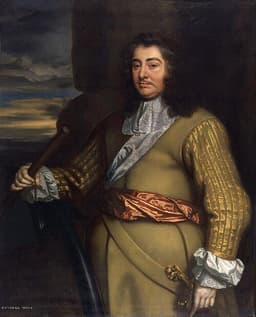
George Monck
General · Modern
55.2Total
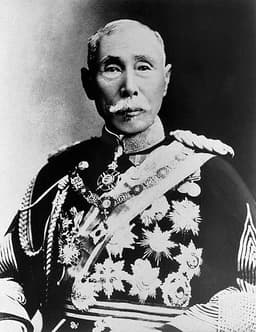
Yamagata Aritomo
General · Modern
82.5Total
Basic Information
Born
1608
1838
Died
1670
1922
Era
Modern
Modern
Nationality
England
Japan
Occupation
General
General
Civilization
Western
Eastern
Score Comparison
Military (10%)
30.0
78.0
Political (20%)
45.0
82.0
Influence (20%)
59.0
80.0
Legacy (20%)
52.0
90.0
Leadership (15%)
78.0
78.0
Strategy (15%)
60.0
82.0
TOTAL
55.2
82.5
George Monck — Complete Timeline
1650 AD
Battle of DunbarWar◆ Major
George Monck commanded a parliamentary army at the Battle of Dunbar, defeating a Scottish force loyal to Charles II. The victory secured English control over Scotland and demonstrated Monck's military effectiveness.
BattleEnglish Civil WarScotland
Impact: regional
1660 AD
March on LondonPolitical Action
George Monck marched his army from Scotland to London, where he forced the Rump Parliament to readmit excluded members and call for new elections. This action paved the way for the Restoration of the monarchy.
RestorationPolitical ActionMonarchy
Impact: national
Restoration of Charles IIPolitical Action
Monck facilitated the return of Charles II from exile, negotiating the terms of the Restoration. He was appointed Captain-General of the army and created Duke of Albemarle for his role in restoring the monarchy.
RestorationCharles IIMonarchy
Impact: nationalconstructive
Yamagata Aritomo — Complete Timeline
1873 AD
Establishment of the Imperial Japanese ArmyReform
Yamagata Aritomo, as War Minister, oversaw the creation of the Imperial Japanese Army based on the Prussian model. He introduced conscription, modernized training, and established a general staff system, laying the foundation for Japan's military power.
Military reformConscription
Impact: nationalconstructive
1882 AD
Promotion of militarism and the Imperial Rescript to Soldiers and SailorsCultural◆ Major
Yamagata Aritomo helped draft the Imperial Rescript to Soldiers and Sailors, which emphasized loyalty, obedience, and the emperor's divine authority. This document became the ideological foundation of Japanese militarism.
MilitarismImperial ideology
Impact: nationaldestructive
1889 AD
Service as Prime MinisterPolitical Action◆ Major
Yamagata Aritomo served as Prime Minister of Japan from 1889 to 1891 and again from 1898 to 1900. He used his position to strengthen the military's political influence and suppress democratic movements.
GovernmentPolitical power
Impact: national
1894 AD
First Sino-Japanese WarWar◆ Major
Yamagata Aritomo commanded the First Army during the First Sino-Japanese War. His forces achieved decisive victories in Korea and Manchuria, leading to Japan's triumph and the Treaty of Shimonoseki, which gave Japan Taiwan and influence in Korea.
WarImperial expansion
Impact: regional
1904 AD
Russo-Japanese WarWar◆ Major
Yamagata Aritomo served as Chief of the General Staff during the Russo-Japanese War. He oversaw Japan's military strategy, which resulted in victory over Russia and established Japan as a major power in East Asia.
WarGreat power
Impact: global
Expert Analysis
Origins
George Monck was born on December 6, 1608, in Devon, England, into a gentry family with royalist leanings. His father, Sir Thomas Monck, died when George was young, leaving the family in reduced circumstances. Monck entered military service at age 17, fighting in the Dutch wars. His early career was marked by professionalism rather than ideology.
Yamagata Aritomo was born on June 14, 1838, in Hagi, Japan, into a lower-ranking samurai family of the Chōshū domain. His father was a petty samurai who died when Yamagata was young. Yamagata was educated in martial traditions and exposed to Western military ideas during the Bakumatsu period. He joined the Kiheitai, a mixed-class militia, and fought against the Shogunate.
Rise to Power
Monck's rise came during the English Civil War. He initially fought for the Royalists but was captured and switched sides to Parliament. His military competence earned him command in Ireland and Scotland. In 1650, he commanded at the Battle of Dunbar, scoring a 30.0 in military score, defeating a larger Scottish force. After Oliver Cromwell's death, Monck saw the instability and marched his army from Scotland to London in 1660. He forced the Rump Parliament to readmit excluded members and called for new elections, leading to the Restoration of Charles II. This political maneuvering earned him a 45.0 political score.
Yamagata rose through the Meiji Restoration. As a leader of the Chōshū forces, he helped overthrow the Shogunate. In 1871, he became Vice-Minister of War and began modernizing the army. He studied Prussian military systems and introduced conscription in 1873. By 1878, he became Chief of the General Staff, consolidating power. His political score of 82.0 reflects his ability to shape Japan's military and political institutions. He served as Prime Minister twice, from 1889 to 1891 and 1898 to 1900.
Leadership & Governance
Monck's leadership style was pragmatic and cautious. As Captain-General of the army under Charles II, he focused on maintaining order and loyalty. He avoided political intrigue, famously saying, "I am no meddler in things I understand not." His governance approach was to stabilize the monarchy and prevent another civil war. He supported the Clarendon Code, which restricted non-Anglicans, but his influence waned after 1665. His leadership score of 78.0 reflects his ability to command loyalty without charisma.
Yamagata was authoritarian and militaristic. He defined Japan's governance by embedding the military in politics. As Prime Minister, he passed laws that required the War and Navy Ministers to be active-duty officers, giving the military veto power over civilian cabinets. He also drafted the Imperial Rescript to Soldiers and Sailors (1882), which emphasized absolute loyalty to the emperor. His leadership score of 78.0 matches Monck's, but his political score of 82.0 is nearly double Monck's 45.0. Yamagata's strategy score of 82.0 also exceeds Monck's 60.0.
Triumph & Tragedy
Monck's greatest triumph was the Restoration of Charles II without bloodshed. His march on London and negotiation with Charles secured his place as a kingmaker. He was rewarded with the title Duke of Albemarle. However, his failure was his inability to adapt to peacetime politics. He mismanaged the Second Anglo-Dutch War (1665-1667), and his influence declined. He died in 1670, largely forgotten.
Yamagata's triumphs include winning the First Sino-Japanese War (1894-1895) and the Russo-Japanese War (1904-1905). He built a modern army that defeated China and Russia, earning a military score of 78.0. His legacy score of 90.0 reflects his lasting impact. However, his tragedy was fostering militarism that led Japan into World War II. His insistence on military autonomy contributed to the rise of ultra-nationalism and the Pacific War. He died in 1922, seeing Japan become a world power but also sowing seeds of future destruction.
Character & Destiny
Monck was pragmatic, loyal to stability rather than ideology. He switched sides during the Civil War but remained consistent in seeking order. His character was cautious, avoiding extreme measures. This allowed him to navigate the Restoration but limited his long-term influence.
Yamagata was rigid, ambitious, and deeply committed to military supremacy. He saw democracy as weakness and believed Japan's destiny lay in expansion. His character drove him to institutionalize militarism, shaping Japan's fate. Historians often compare him to Bismarck, but without Bismarck's diplomatic restraint. Yamagata's total score of 82.5 dwarfs Monck's 55.2, reflecting his greater impact.
Legacy
Monck's legacy is minimal. He is remembered as a minor figure in the Restoration, with no lasting institutions bearing his name. His influence score of 59.0 and legacy score of 52.0 indicate his limited footprint.
Yamagata's legacy is monumental. He is known as the "father of Japanese militarism." The Imperial Japanese Army, conscription system, and the Imperial Rescript all stem from his vision. His influence score of 80.0 and legacy score of 90.0 show his enduring impact. However, his legacy is controversial, as his policies contributed to Japan's imperialist wars and eventual defeat.
Conclusion
Yamagata Aritomo had a far greater impact than George Monck. With a total score of 82.5 versus Monck's 55.2, Yamagata reshaped a nation and its military for decades. Monck restored a monarchy but left no lasting system. Yamagata created the modern Japanese army and embedded militarism into the state. His influence extended beyond his lifetime, leading Japan to become a major power and then to ruin. While Monck's actions were important in 1660, Yamagata's legacy defined Japan's path for a century. Thus, Yamagata Aritomo is the more significant historical figure.
Rankings
🥇
Yamagata AritomoLeader
Mil: 78.0Pol: 82.0Inf: 80.0
82.5
🥈
George Monck
Mil: 30.0Pol: 45.0Inf: 59.0
55.2
+27.3 behind
How This Comparison Works
Algorithm
Each figure is scored on 6 dimensions (0—100 scale) based on structured historical data: Military (10%), Political (20%), Influence (20%), Legacy (20%), Leadership (15%), Strategy (15%). The weighted total produces the final ranking.
Data Sources
Scores are computed from structured sub-indicators in the database. Scale factors adjust for era (Ancient ×0.85, Modern ×1.0) and civilization size (Eastern ×1.05, Other ×0.80) to account for differences in population and military scale.
Maximum 3 Figures
Comparisons are limited to 2—3 figures to ensure readability and statistical meaningfulness.
Error Margins
±5 points per dimension — Sub-scores are derived from historical records with inherent uncertainty. Two figures within 5 points on a dimension should be considered roughly equivalent in that area.
Total Score Accuracy
±3 points overall — The weighted combination of 6 dimensions produces a total score with approximately ±3 points of uncertainty. Differences of less than 3 points are not statistically significant— the figures are effectively tied.
Known Limitations
- Historical records are incomplete and uneven across civilizations
- Figures from oral-tradition societies may be underrepresented
- Occupation labels can misclassify multi-role figures
- Scores measure capability and impact, not moral character
- Quantitative scoring is a comparison tool, not absolute truth
Capability Radar
Military (10%) — Battles & Warfare
Battles
45
75
Win Rate
55
70
Expansion
20
80
Political (20%) — Governance & Reform
Reform
55
90
Diplomacy
70
75
Economy
40
70
Influence (20%) — Cultural & Global Reach
Cultural
30
80
Global
35
70
Legacy (20%) — Historical Impact
Historical
60
85
Longevity
40
75
Leadership (15%) — Power & Stability
Tenure
65
85
Stability
75
65
Strategy (15%) — Tactics & Innovation
Strategy
60
85
Tactics
50
80
Reform
30
95
Similar Comparisons
Comments & Discussion
No comments yet. Be the first to share your thoughts!