Loading...
This comparison has not been analyzed yet.
One-time AI generation (~1 minute). Scores and timeline are already available below.
Jorge Eliecer Gaitan vs Mohammad Hasan Akhund
Jorge Eliecer Gaitan leads by 11.8 pts · 2 figures compared
…
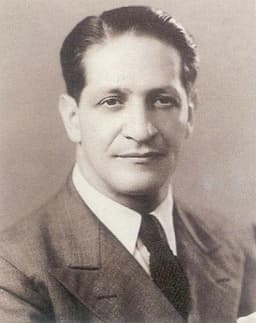
Jorge Eliecer Gaitan
Politician · Modern
49.9Total

Mohammad Hasan Akhund
Politician · Modern
38.1Total
Basic Information
Born
1903
1945
Died
1948
—
Era
Modern
Modern
Nationality
Colombia
Afghanistan
Occupation
Politician
Politician
Civilization
Western
Middle Eastern
Score Comparison
Military (10%)
49.6
23.4
Political (20%)
54.7
30.7
Influence (20%)
58.0
47.9
Legacy (20%)
52.0
37.5
Leadership (15%)
34.6
38.1
Strategy (15%)
40.9
41.1
TOTAL
49.9
38.1
Jorge Eliecer Gaitan — Complete Timeline
1946 AD
Presidential candidacy in 1946Political Action◆ Major
Gaitán ran for president in 1946 as the candidate of the Liberal Party, but lost due to a split in the Liberal vote. His populist platform appealed to the urban poor and rural workers, making him a powerful political force.
ElectionPopulismLiberal Party
Impact: national
1947 AD
Leadership of the Liberal PartyPolitical Action◆ Major
Gaitán became the sole leader of the Liberal Party in 1947, uniting its factions. He advocated for land reform, labor rights, and social justice, gaining massive popular support and threatening the conservative establishment.
Political LeadershipReformSocial Justice
Impact: nationalconstructive
1948 AD
Bogotazo and assassinationPolitical Action
Gaitán was assassinated on April 9, 1948, in Bogotá. His death sparked the Bogotazo, a massive riot and uprising that destroyed parts of the city and led to the period of La Violencia, a decade-long civil war in Colombia.
AssassinationBogotazoLa Violencia
Impact: nationaltragic
Mohammad Hasan Akhund — Complete Timeline
2021 AD
Appointment as Acting Prime Minister of AfghanistanPolitical Action◆ Major
Mohammad Hasan Akhund was appointed Acting Prime Minister of the Taliban's interim government after the fall of Kabul. He is a senior Taliban leader and was previously the head of the Taliban's leadership council.
Taliban GovernmentPrime MinisterInterim
Impact: national
UN Sanctions DesignationPolitical Action
Akhund was listed under UN Security Council sanctions for his role in the Taliban regime. The sanctions included an asset freeze and travel ban, reflecting international disapproval of the Taliban's return to power.
SanctionsUNTaliban
Impact: global
This comparison has not been analyzed yet.
One-time AI generation (~1 minute). Scores and timeline are already available below.
Rankings
🥇
Jorge Eliecer GaitanLeader
Mil: 49.6Pol: 54.7Inf: 58.0
49.9
🥈
Mohammad Hasan Akhund
Mil: 23.4Pol: 30.7Inf: 47.9
38.1
+11.8 behind
How This Comparison Works
Algorithm
Each figure is scored on 6 dimensions (0—100 scale) based on structured historical data: Military (10%), Political (20%), Influence (20%), Legacy (20%), Leadership (15%), Strategy (15%). The weighted total produces the final ranking.
Data Sources
Scores are computed from structured sub-indicators in the database. Scale factors adjust for era (Ancient ×0.85, Modern ×1.0) and civilization size (Eastern ×1.05, Other ×0.80) to account for differences in population and military scale.
Maximum 3 Figures
Comparisons are limited to 2—3 figures to ensure readability and statistical meaningfulness.
Error Margins
±5 points per dimension — Sub-scores are derived from historical records with inherent uncertainty. Two figures within 5 points on a dimension should be considered roughly equivalent in that area.
Total Score Accuracy
±3 points overall — The weighted combination of 6 dimensions produces a total score with approximately ±3 points of uncertainty. Differences of less than 3 points are not statistically significant— the figures are effectively tied.
Known Limitations
- Historical records are incomplete and uneven across civilizations
- Figures from oral-tradition societies may be underrepresented
- Occupation labels can misclassify multi-role figures
- Scores measure capability and impact, not moral character
- Quantitative scoring is a comparison tool, not absolute truth
Capability Radar
Military (10%) — Battles & Warfare
Battles
29
24
Win Rate
32
28
Expansion
35
29
Political (20%) — Governance & Reform
Reform
55
5
Diplomacy
40
10
Economy
30
5
Influence (20%) — Cultural & Global Reach
Cultural
45
10
Global
35
15
Legacy (20%) — Historical Impact
Historical
60
15
Longevity
50
10
Leadership (15%) — Power & Stability
Tenure
15
20
Stability
5
5
Strategy (15%) — Tactics & Innovation
Strategy
36
33
Tactics
40
38
Reform
42
41
Similar Comparisons
Comments & Discussion
No comments yet. Be the first to share your thoughts!