Loading...
Joschka Fischer vs Kim Young-sam
Joschka Fischer leads by 5.2 pts · 2 figures compared
…
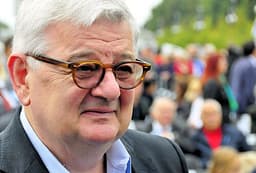
Joschka Fischer
Politician · Modern
58.4Total

Kim Young-sam
Politician · Modern
53.2Total
Basic Information
Born
1948
1927
Died
—
—
Era
Modern
Modern
Nationality
Germany
Korea
Occupation
Politician
Politician
Civilization
Western
Eastern
Score Comparison
Military (10%)
50.0
17.4
Political (20%)
72.0
60.0
Influence (20%)
62.0
61.0
Legacy (20%)
48.3
56.0
Leadership (15%)
72.0
68.0
Strategy (15%)
42.7
30.6
TOTAL
58.4
53.2
Joschka Fischer — Complete Timeline
1998 AD
Appointed German Foreign MinisterPolitical Action◆ Major
Joschka Fischer was appointed as German Foreign Minister and Vice Chancellor in the coalition government of Chancellor Gerhard Schr
Foreign MinisterCoalitionGerman Politics
Impact: globalconstructive
1999 AD
Advocated for German Participation in Kosovo WarWar◆ Major
Fischer argued for and secured German participation in the NATO bombing of Yugoslavia during the Kosovo War. This marked the first time since WWII that German forces were involved in a combat mission, sparking intense debate within the Green Party.
Kosovo WarNATOMilitary Intervention
Impact: global
2003 AD
Opposed the Iraq WarPolitical Action◆ Major
Fischer strongly opposed the US-led invasion of Iraq, delivering a famous speech at the Munich Security Conference. He argued against the war's legality and wisdom, helping to keep Germany out of the conflict and straining US-German relations.
Iraq WarForeign PolicyDiplomacy
Impact: globalconstructive
2005 AD
Resigned as Foreign Minister after 2005 ElectionPolitical Action
Following the 2005 federal election, Fischer resigned as Foreign Minister after the SPD-Green coalition lost power. He left active politics and later worked as a consultant and author.
ResignationElectionPolitical Career
Impact: national
Kim Young-sam — Complete Timeline
1992 AD
Election as first civilian president in 32 yearsPolitical Action
Kim Young-sam won the 1992 presidential election, becoming the first civilian president since 1960. His victory marked the consolidation of democratic rule after decades of military-backed governments.
DemocratizationElectionSouth Korea
Impact: nationalconstructive
1993 AD
Anti-corruption campaign and financial reformsReform◆ Major
Kim launched a sweeping anti-corruption campaign that required public officials to disclose assets and banned the use of false names in financial transactions. The reforms increased transparency but faced resistance from entrenched interests.
CorruptionReformSouth Korea
Impact: nationalconstructive
1995 AD
Prosecution of former presidents Chun and RohPolitical Action◆ Major
Kim's government prosecuted former presidents Chun Doo-hwan and Roh Tae-woo for their roles in the 1979 coup and the 1980 Gwangju massacre. Both were convicted, marking a historic accountability for past authoritarian abuses.
JusticeHuman RightsSouth Korea
Impact: nationalconstructive
1997 AD
IMF bailout during Asian Financial CrisisPolitical Action◆ Major
During the Asian Financial Crisis, South Korea faced a severe foreign exchange crisis. Kim's government negotiated a $57 billion bailout from the IMF, which imposed strict austerity measures and structural reforms, causing widespread economic pain.
Economic CrisisIMFSouth Korea
Impact: nationaltragic
Expert Analysis
Origins
Joschka Fischer was born on April 12, 1948, in Gerabronn, West Germany, to a family of ethnic German refugees from Hungary. He left school at 16 and worked odd jobs before becoming involved in left-wing activism. Fischer joined the German Green Party in its formative years, rising through grassroots organizing.
Kim Young-sam was born on December 20, 1927, in Geoje, Korea, under Japanese colonial rule. He studied philosophy at Seoul National University and entered politics early, becoming the youngest member of the National Assembly in 1954 at age 27. Kim was a lifelong opposition figure under authoritarian regimes.
Rise to Power
Fischer's breakthrough came in 1985 when he became a member of the Bundestag for the Greens. He served as Minister of Environment in Hesse from 1991 to 1994, gaining administrative experience. In 1998, the SPD-Green coalition won the federal election, and Fischer was appointed Foreign Minister and Vice Chancellor, serving from 1998 to 2005.
Kim Young-sam's rise was gradual. He was a prominent opposition leader under Park Chung-hee and Chun Doo-hwan, enduring house arrest and a ban on political activity. In 1990, he merged his opposition party with the ruling party to form the Democratic Liberal Party, a move criticized as a betrayal. He won the presidency in 1992, becoming the first civilian president in 32 years.
Leadership & Governance
Fischer's leadership was pragmatic and transformative. He pushed the Greens from a pacifist stance to supporting military intervention in Kosovo, arguing it was necessary to prevent genocide. He scored 72.0 in political leadership and 72.0 overall leadership. His governance focused on environmental policy and human rights, but he faced internal party opposition.
Kim Young-sam promoted democratic consolidation and anti-corruption. He required public officials to disclose assets and banned false-name financial accounts. However, his handling of the Asian Financial Crisis was criticized. He scored 68.0 in leadership but only 30.6 in strategy, reflecting poor economic management.
Triumph & Tragedy
Fischer's greatest triumph was his role in the Kosovo War, where he secured German participation despite pacifist roots, and his opposition to the Iraq War, which boosted his international standing. His tragedy was the failure to prevent the 2005 electoral loss and his resignation, with his legacy score of 48.3 reflecting limited long-term impact.
Kim Young-sam's triumph was prosecuting former presidents Chun Doo-hwan and Roh Tae-woo for corruption and the Gwangju massacre, a historic step for justice. His tragedy was the IMF bailout in 1997, which caused massive unemployment and economic hardship, tarnishing his presidency. Kim scored 56.0 in legacy, higher than Fischer.
Character & Destiny
Fischer was charismatic and intellectually sharp, but his shift from radical to statesman alienated some Greens. His decision-making was guided by moral reasoning, as seen in Kosovo and Iraq. His destiny was to be a transitional figure, bridging pacifism and realpolitik.
Kim Young-sam was stubborn and authoritarian in style, often ignoring economic warnings. His character led to isolation and poor crisis management. Despite democratic achievements, his presidency ended in low approval due to the financial crisis.
Legacy
Fischer's legacy is mixed: he modernized German foreign policy but left no lasting institutional changes. His influence score of 62.0 reflects his role in shaping Green politics globally, but his personal legacy is overshadowed by later figures.
Kim Young-sam's legacy is more tangible: he cemented civilian rule and prosecuted former dictators, setting a precedent for accountability. His anti-corruption measures had lasting impact, though the IMF crisis remains a stain. His legacy score of 56.0 is higher than Fischer's 48.3.
Conclusion
Kim Young-sam had greater impact on his nation's trajectory. His political score of 60.0 vs. Fischer's 72.0 is misleading because Kim's actions—democratization, anti-corruption, and prosecution of dictators—fundamentally transformed South Korea. Fischer's influence, while significant, was more about adapting to existing realities. Kim's total score of 53.2 vs. Fischer's 58.4 does not capture the depth of his historical role. Kim Young-sam, despite strategic failures, altered the course of his country more profoundly.
Rankings
🥇
Joschka FischerLeader
Mil: 50.0Pol: 72.0Inf: 62.0
58.4
🥈
Kim Young-sam
Mil: 17.4Pol: 60.0Inf: 61.0
53.2
+5.2 behind
How This Comparison Works
Algorithm
Each figure is scored on 6 dimensions (0—100 scale) based on structured historical data: Military (10%), Political (20%), Influence (20%), Legacy (20%), Leadership (15%), Strategy (15%). The weighted total produces the final ranking.
Data Sources
Scores are computed from structured sub-indicators in the database. Scale factors adjust for era (Ancient ×0.85, Modern ×1.0) and civilization size (Eastern ×1.05, Other ×0.80) to account for differences in population and military scale.
Maximum 3 Figures
Comparisons are limited to 2—3 figures to ensure readability and statistical meaningfulness.
Error Margins
±5 points per dimension — Sub-scores are derived from historical records with inherent uncertainty. Two figures within 5 points on a dimension should be considered roughly equivalent in that area.
Total Score Accuracy
±3 points overall — The weighted combination of 6 dimensions produces a total score with approximately ±3 points of uncertainty. Differences of less than 3 points are not statistically significant— the figures are effectively tied.
Known Limitations
- Historical records are incomplete and uneven across civilizations
- Figures from oral-tradition societies may be underrepresented
- Occupation labels can misclassify multi-role figures
- Scores measure capability and impact, not moral character
- Quantitative scoring is a comparison tool, not absolute truth
Capability Radar
Military (10%) — Battles & Warfare
Battles
28
11
Win Rate
30
15
Expansion
36
22
Political (20%) — Governance & Reform
Reform
60
75
Diplomacy
70
65
Economy
55
55
Influence (20%) — Cultural & Global Reach
Cultural
45
40
Global
55
55
Legacy (20%) — Historical Impact
Historical
50
60
Longevity
40
50
Leadership (15%) — Power & Stability
Tenure
65
60
Stability
60
45
Strategy (15%) — Tactics & Innovation
Strategy
40
23
Tactics
40
27
Reform
43
29
Similar Comparisons
Comments & Discussion
No comments yet. Be the first to share your thoughts!