Loading...
Joschka Fischer vs Napoleon Bonaparte
Napoleon Bonaparte leads by 12.5 pts · 2 figures compared
…
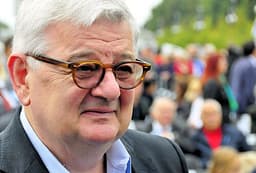
Joschka Fischer
Politician · Modern
58.4Total

Napoleon Bonaparte
General · Modern
70.9Total
Basic Information
Born
1948
1769
Died
—
1821
Era
Modern
Modern
Nationality
Germany
France
Occupation
Politician
General
Civilization
Western
Western
Score Comparison
Military (10%)
50.0
94.0
Political (20%)
72.0
72.0
Influence (20%)
62.0
40.0
Legacy (20%)
48.3
80.0
Leadership (15%)
72.0
78.0
Strategy (15%)
42.7
90.0
TOTAL
58.4
70.9
Joschka Fischer — Complete Timeline
1998 AD
Appointed German Foreign MinisterPolitical Action◆ Major
Joschka Fischer was appointed as German Foreign Minister and Vice Chancellor in the coalition government of Chancellor Gerhard Schr
Foreign MinisterCoalitionGerman Politics
Impact: globalconstructive
1999 AD
Advocated for German Participation in Kosovo WarWar◆ Major
Fischer argued for and secured German participation in the NATO bombing of Yugoslavia during the Kosovo War. This marked the first time since WWII that German forces were involved in a combat mission, sparking intense debate within the Green Party.
Kosovo WarNATOMilitary Intervention
Impact: global
2003 AD
Opposed the Iraq WarPolitical Action◆ Major
Fischer strongly opposed the US-led invasion of Iraq, delivering a famous speech at the Munich Security Conference. He argued against the war's legality and wisdom, helping to keep Germany out of the conflict and straining US-German relations.
Iraq WarForeign PolicyDiplomacy
Impact: globalconstructive
2005 AD
Resigned as Foreign Minister after 2005 ElectionPolitical Action
Following the 2005 federal election, Fischer resigned as Foreign Minister after the SPD-Green coalition lost power. He left active politics and later worked as a consultant and author.
ResignationElectionPolitical Career
Impact: national
Napoleon Bonaparte — Complete Timeline
1799 AD
Coup of 18 BrumaireOther◆ Major
Napoleon Bonaparte, with support from his brother Lucien and key political figures, overthrew the Directory in a bloodless coup. He established the Consulate with himself as First Consul, effectively becoming the ruler of France. This event ended the French Revolution's most unstable period.
French RevolutionCoupRise to Power
Impact: regional
1804 AD
Promulgation of the Napoleonic CodeOther◆ Major
Napoleon enacted the Civil Code of the French, known as the Napoleonic Code, a comprehensive set of laws that replaced the fragmented feudal legal systems. The code established legal equality, protected property rights, and secularized law. It became the basis for legal systems in many European and world countries.
Legal ReformNapoleonic CodeCivil Law
Impact: globalconstructive
1805 AD
Battle of AusterlitzWar◆ Major
Napoleon's Grande Arm
Napoleonic WarsBattleDecisive Victory
Impact: global
1812 AD
Invasion of RussiaWar◆ Major
Napoleon led the Grande Arm
Napoleonic WarsInvasionDisaster
Impact: globaldestructive
1815 AD
Battle of WaterlooWar◆ Major
Napoleon's French army was defeated by the combined forces of the Duke of Wellington's Anglo-Allied army and Gebhard Leberecht von Bl
Napoleonic WarsBattleFinal Defeat
Impact: globaldestructive
Expert Analysis
joschka-fischer-vs-napoleon-bonaparte
# The Emperor and the Environmentalist: Two Paths to Power in Modern Europe
On a spring morning in 1999, Joschka Fischer, the German Foreign Minister and former street-fighting leftist, stood before the Bundestag and argued for war. Germany, he insisted, must send its jets to bomb Serbia—a nation that had not attacked Germany. It was a stunning reversal for a man who had once thrown stones at police during anti-war protests. Two centuries earlier, another man of modest origins had stood before the armies of Europe and declared that he would remake the continent by the force of his will. Napoleon Bonaparte and Joschka Fischer share little in temperament or ideology, yet both faced the same fundamental question: how does a man from outside the established order seize the levers of history?
Origins
Napoleon was born in 1769 on the island of Corsica, a place that had only recently become French. His family was minor nobility, poor enough to feel the sting of social inferiority but connected enough to send him to military school in mainland France. There, the young Corsican with his thick accent was mocked by aristocratic classmates. He read voraciously—history, geography, military tactics—and nursed a burning ambition that was inseparable from resentment. The French Revolution, which toppled the old order, was his great stroke of luck: it opened every door to a man of talent.
Joschka Fischer was born in 1948 in a Germany still picking up the pieces of Hitler's war. His father was a butcher, his family working-class. Fischer left school early, never earning a university degree. He drifted into the radical leftist scene of 1960s Frankfurt, where he wore a leather jacket, fought street battles with police, and read Marx. Where Napoleon studied the campaigns of Caesar and Frederick the Great, Fischer studied the politics of protest. Both men were outsiders who learned early that the world could be changed—but they learned it in different languages.
Rise to Power
Napoleon's ascent was meteoric. In 1793, at age 24, he drove the British out of Toulon and was promoted to brigadier general. By 1796, he commanded the French army in Italy, where he won a series of breathtaking victories against the Austrians. He was not just a brilliant tactician; he was a master of propaganda, writing his own bulletins to shape public opinion. In 1799, he returned from a disastrous campaign in Egypt to find France in chaos. He seized power in a coup, becoming First Consul at age 30. By 1804, he crowned himself Emperor.
Fischer's rise was slower, more incremental, and entirely within the rules of democracy. He joined the Green Party in the early 1980s, when it was a collection of environmentalists, pacifists, and former radicals. He worked his way up through state politics in Hesse, where he served as Minister for Environment in a coalition government. His breakthrough came in 1998, when the Greens won enough seats to form a coalition with the Social Democrats. At age 50, Fischer was appointed Vice Chancellor and Foreign Minister. He had not conquered a country; he had won an election.
Leadership & Governance
Napoleon ruled with the energy of a man who believed he was destined for greatness. He reorganized French law into the Napoleonic Code, which abolished feudal privileges and established equality before the law. He built roads, standardized education, and created a centralized bureaucracy. His military genius was undeniable: at Austerlitz in 1805, he destroyed a combined Russian and Austrian army with a maneuver so perfect it is still studied in war colleges. His political wisdom, however, was flawed. He could not stop conquering. He placed his brothers on thrones across Europe, made enemies of Britain and Russia, and bled France dry in the Spanish guerrilla war.
Fischer governed in an entirely different key. As Foreign Minister, he represented a Germany that had learned the hard way that military power could destroy a nation. His greatest challenge came in 1999, when he argued for German participation in the NATO bombing of Yugoslavia to stop ethnic cleansing in Kosovo. It was a moral and political earthquake: the Green Party, founded on pacifism, was now supporting war. Fischer won the argument, but at great personal cost. He then opposed the Iraq War in 2003, delivering a famous speech at the Munich Security Conference where he told US Defense Secretary Donald Rumsfeld, "Excuse me, I am not convinced." His leadership was about persuasion, not command.
Triumph & Tragedy
Napoleon's greatest triumph was the Battle of Austerlitz in 1805, where he crushed the Third Coalition. His greatest tragedy was the invasion of Russia in 1812. He marched 600,000 men into the vastness of Russia; fewer than 100,000 returned. The Grand Army was destroyed, and with it, Napoleon's aura of invincibility. He was exiled to Elba in 1814, returned for 100 days in 1815, and was finally defeated at Waterloo. He died in exile on Saint Helena in 1821, a prisoner of the British.
Fischer's triumph was the Kosovo intervention, which helped stop a genocide. His tragedy is less dramatic but no less real: the Green Party lost power in 2005, and Fischer resigned as Foreign Minister. He left politics and became a consultant and writer. There was no exile, no Waterloo—just the quiet end of a political career.
Character & Destiny
Napoleon was driven by an insatiable hunger for glory. "I live only for posterity," he once said. His personality—arrogant, restless, brilliant—shaped every decision. He could not stop, because stopping meant admitting he was mortal. This hubris was his undoing.
Fischer was driven by a different engine: guilt. He was a German who had grown up in the shadow of the Holocaust. He wanted to prove that Germany could be a force for good in the world. His personality—pragmatic, principled, willing to compromise—allowed him to navigate the contradictions of power. He could stop, because he knew that the alternative was worse.
Legacy
Napoleon left behind a transformed Europe. The Napoleonic Code influenced legal systems from Brazil to Japan. He destroyed the Holy Roman Empire and spread nationalism across the continent. His legacy is contested: some see him as a reformer, others as a tyrant. His military score of 94 and strategy score of 93 reflect his genius, but his political score of 75 suggests the limits of his wisdom.
Fischer left behind a transformed Germany. He proved that the Greens could govern, that a former radical could become a respected statesman. His leadership score of 85 reflects his ability to guide a party through impossible choices. His legacy is quieter but durable: he helped make environmentalism a mainstream political force in Europe.
Conclusion
What separates the emperor from the environmentalist is not talent or ambition—both had those in abundance. It is the age they lived in. Napoleon came of age in a world of kings and cannon, where a man could conquer a continent with an army and a dream. Fischer came of age in a world of treaties and televisions, where a man had to persuade, negotiate, and compromise. Both were outsiders who changed history. But Napoleon changed it with the sword, and Fischer changed it with the word. The difference between them is the difference between the 19th century and the 20th—and the difference between a man who wanted to be remembered and a man who wanted to be forgiven.
Rankings
🥇
Napoleon BonaparteLeader
Mil: 94.0Pol: 72.0Inf: 40.0
70.9
🥈
Joschka Fischer
Mil: 50.0Pol: 72.0Inf: 62.0
58.4
+12.5 behind
How This Comparison Works
Algorithm
Each figure is scored on 6 dimensions (0—100 scale) based on structured historical data: Military (10%), Political (20%), Influence (20%), Legacy (20%), Leadership (15%), Strategy (15%). The weighted total produces the final ranking.
Data Sources
Scores are computed from structured sub-indicators in the database. Scale factors adjust for era (Ancient ×0.85, Modern ×1.0) and civilization size (Eastern ×1.05, Other ×0.80) to account for differences in population and military scale.
Maximum 3 Figures
Comparisons are limited to 2—3 figures to ensure readability and statistical meaningfulness.
Error Margins
±5 points per dimension — Sub-scores are derived from historical records with inherent uncertainty. Two figures within 5 points on a dimension should be considered roughly equivalent in that area.
Total Score Accuracy
±3 points overall — The weighted combination of 6 dimensions produces a total score with approximately ±3 points of uncertainty. Differences of less than 3 points are not statistically significant— the figures are effectively tied.
Known Limitations
- Historical records are incomplete and uneven across civilizations
- Figures from oral-tradition societies may be underrepresented
- Occupation labels can misclassify multi-role figures
- Scores measure capability and impact, not moral character
- Quantitative scoring is a comparison tool, not absolute truth
Capability Radar
Military (10%) — Battles & Warfare
Battles
28
95
Win Rate
30
90
Expansion
36
95
Political (20%) — Governance & Reform
Reform
60
95
Diplomacy
70
80
Economy
55
85
Influence (20%) — Cultural & Global Reach
Cultural
45
85
Global
55
90
Legacy (20%) — Historical Impact
Historical
50
95
Longevity
40
90
Leadership (15%) — Power & Stability
Tenure
65
85
Stability
60
70
Strategy (15%) — Tactics & Innovation
Strategy
40
95
Tactics
40
98
Reform
43
92
Similar Comparisons
Comments & Discussion
战史判官6/17/2026
军事对比太扯了——拿破仑是亲率六万大军翻越阿尔卑斯,Fischer连兵都没当过。一个在奥斯特里茨亲自布阵,一个在议会里背演讲稿。拿破仑说过"天才是闪电",Fischer只会扔石头变扔议案。拿他俩比,就像把猎豹和办公室盆栽放一起——一个真杀过人,一个只会开会。
史实控6/17/2026
两个人都从边缘起家?拿破仑是科西嘉乡巴佬,Fischer是斯图加特印刷工的儿子。但拿破仑在洛迪桥亲手举旗冲锋,Fischer连基本军事常识都没有。拿破仑29岁拿下土伦战役,Fischer29岁还在往警察脸上扔石子。相似性仅止于"出身低微"四个字,之后天差地别。
和平主义者6/17/2026
拿一个发动战争的霸主和另一个支持战争的绿党比,本身就是对环保运动的侮辱。Fischer的绿党本该反战,结果他成了德国最激进的战争部长——这叫变节,不叫革命。拿破仑至少坦荡荡的说"我要征服",Fischer却用索布兰卡道歉来掩盖科索沃的炸弹。虚伪比残暴更可耻。
CrownAndCodex6/17/2026
Numbers don't lie: Napoleon conquered at 35, Fischer became Foreign Minister at 50. Napoleon's Grande Armée had 600,000 men; Fischer's "army" was a Green Party caucus of 47 MPs. One reshaped Europe with blood and iron, the other with coalition agreements and press releases. The scale isn't just different—it's laughable. Calling Fischer a "Napoleon figure" is historical flatulence.
StoaScholar6/17/2026
Fischer's Bundestag speech was just Napoleon in a suit—raw ambition draped in moral clothing. Both men seized chaos to climb. Napoleon used the Revolution's wreckage; Fischer used post-war guilt. But here's the kicker: Napoleon actually won battles before crowning himself. Fischer? He sent German jets to Kosovo on pure rhetoric, no military record. That's not history-making—that's career opportunism dressed as statesmanship.
RepublicReader6/17/2026
Here's the uncomfortable truth: both men broke rules to gain power. Napoleon crowned himself—illegally. Fischer lied about his CIA contacts for years. Both used violence as a tool: Napoleon with cannon, Fischer as Foreign Minister authorizing bombing runs. The real comparison isn't about style—it's about the brutal pragmatism required to climb from outsider to ruler. History forgives the winners, not the methods.