Loading...
This comparison has not been analyzed yet.
One-time AI generation (~1 minute). Scores and timeline are already available below.
Jose Manuel Balmaceda vs Yi I
Yi I leads by 2.4 pts · 2 figures compared
…
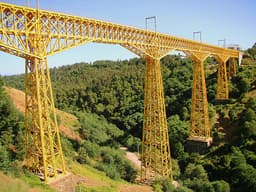
Jose Manuel Balmaceda
Politician · Modern
53.3Total

Yi I
Politician · Modern
55.7Total
Basic Information
Born
1840
1536
Died
1891
1584
Era
Modern
Modern
Nationality
Chile
Korea
Occupation
Politician
Politician
Civilization
Western
Eastern
Score Comparison
Military (10%)
50.0
17.7
Political (20%)
68.0
68.0
Influence (20%)
51.8
58.3
Legacy (20%)
45.0
55.0
Leadership (15%)
64.0
74.0
Strategy (15%)
42.7
43.0
TOTAL
53.3
55.7
Jose Manuel Balmaceda — Complete Timeline
1886 AD
Elected President of ChilePolitical Action◆ Major
Balmaceda won the presidential election as a liberal reformer. His presidency aimed to reduce the power of the conservative oligarchy and expand state control over resources.
PresidencyChileLiberalism
Impact: nationalconstructive
1891 AD
Initiated the Chilean Civil War of 1891War
Balmaceda's conflict with Congress over budget control escalated into a civil war. The Congressional forces, backed by the navy, defeated the presidential army. Balmaceda's defeat ended his presidency and led to a parliamentary system.
Civil WarChilePolitical Crisis
Impact: nationaldestructive
Committed suicidePolitical Action◆ Major
After the civil war defeat, Balmaceda took refuge in the Argentine embassy. He shot himself on September 19, 1891, leaving a letter defending his actions. His death marked the end of the presidentialist era.
SuicideChilePolitical Crisis
Impact: nationaltragic
Yi I — Complete Timeline
1577 AD
Publication of the Gyeongmong yogyol (Essentials for Youth Education)Cultural◆ Major
Yi I compiled this Neo-Confucian primer for young students, outlining moral principles and practical learning. It became a standard textbook in Joseon Korea for educating youth in Confucian ethics and self-cultivation.
EducationNeo-ConfucianismTextbook
Impact: nationalconstructive
1583 AD
Proposal of the Sipchal (Ten Measures for Reform)Reform◆ Major
Yi I presented a comprehensive reform plan to King Seonjo, proposing ten measures including military strengthening, tax reform, and bureaucratic efficiency. The plan was partially implemented but faced opposition from conservative officials.
ReformGovernmentMilitary
Impact: nationalconstructive
Service as Minister of PersonnelPolitical Action
Yi I served as Ijo Panseo (Minister of Personnel), where he attempted to reform the civil service examination system and reduce factional strife. His efforts were limited by entrenched political rivalries.
GovernmentCivil ServiceReform
Impact: nationalconstructive
1584 AD
Prediction of Japanese InvasionPolitical Action◆ Major
Yi I submitted a memorial to the Joseon court warning of a potential Japanese invasion and urging military preparations. His warnings were largely ignored, but the Imjin War (1592-1598) later proved his foresight correct.
Imjin WarWarningMilitary
Impact: national
This comparison has not been analyzed yet.
One-time AI generation (~1 minute). Scores and timeline are already available below.
Rankings
🥇
Yi ILeader
Mil: 17.7Pol: 68.0Inf: 58.3
55.7
🥈
Jose Manuel Balmaceda
Mil: 50.0Pol: 68.0Inf: 51.8
53.3
+2.4 behind
How This Comparison Works
Algorithm
Each figure is scored on 6 dimensions (0—100 scale) based on structured historical data: Military (10%), Political (20%), Influence (20%), Legacy (20%), Leadership (15%), Strategy (15%). The weighted total produces the final ranking.
Data Sources
Scores are computed from structured sub-indicators in the database. Scale factors adjust for era (Ancient ×0.85, Modern ×1.0) and civilization size (Eastern ×1.05, Other ×0.80) to account for differences in population and military scale.
Maximum 3 Figures
Comparisons are limited to 2—3 figures to ensure readability and statistical meaningfulness.
Error Margins
±5 points per dimension — Sub-scores are derived from historical records with inherent uncertainty. Two figures within 5 points on a dimension should be considered roughly equivalent in that area.
Total Score Accuracy
±3 points overall — The weighted combination of 6 dimensions produces a total score with approximately ±3 points of uncertainty. Differences of less than 3 points are not statistically significant— the figures are effectively tied.
Known Limitations
- Historical records are incomplete and uneven across civilizations
- Figures from oral-tradition societies may be underrepresented
- Occupation labels can misclassify multi-role figures
- Scores measure capability and impact, not moral character
- Quantitative scoring is a comparison tool, not absolute truth
Capability Radar
Military (10%) — Battles & Warfare
Battles
28
15
Win Rate
33
14
Expansion
34
18
Political (20%) — Governance & Reform
Reform
65
55
Diplomacy
40
50
Economy
55
60
Influence (20%) — Cultural & Global Reach
Cultural
30
65
Global
20
45
Legacy (20%) — Historical Impact
Historical
40
70
Longevity
30
60
Leadership (15%) — Power & Stability
Tenure
55
40
Stability
20
45
Strategy (15%) — Tactics & Innovation
Strategy
37
23
Tactics
43
29
Reform
43
30
Similar Comparisons
Comments & Discussion
No comments yet. Be the first to share your thoughts!