Loading...
Evika Silina vs Jose Manuel Balmaceda
Jose Manuel Balmaceda leads by 13.8 pts · 2 figures compared
…
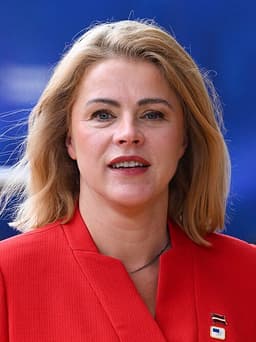
Evika Silina
Politician · Modern
39.5Total
Jose Manuel Balmaceda
Politician · Modern
53.3Total
Basic Information
Born
1975
1840
Died
—
1891
Era
Modern
Modern
Nationality
Latvia
Chile
Occupation
Politician
Politician
Civilization
Western
Western
Score Comparison
Military (10%)
14.2
50.0
Political (20%)
43.7
68.0
Influence (20%)
47.9
51.8
Legacy (20%)
35.8
45.0
Leadership (15%)
51.9
64.0
Strategy (15%)
28.6
42.7
TOTAL
39.5
53.3
Evika Silina — Complete Timeline
2023 AD
Economic Reform EffortsReform
Silina's government pursued economic reforms including tax changes and measures to address inflation and energy costs. The reforms aimed to improve Latvia's competitiveness and fiscal stability.
EconomyTax ReformEnergy
Impact: nationalconstructive
Appointed Prime Minister of LatviaPolitical Action◆ Major
Silina became Prime Minister of Latvia, leading a coalition government formed by the New Unity party, the Union of Greens and Farmers, and the Progressives. She succeeded Kri
Prime MinisterCoalitionGovernment Formation
Impact: nationalconstructive
Continued Support for UkrainePolitical Action
Silina's government maintained Latvia's strong support for Ukraine, including military aid and hosting Ukrainian refugees. Latvia consistently advocated for EU sanctions against Russia.
UkraineForeign PolicySanctions
Impact: regionalconstructive
Jose Manuel Balmaceda — Complete Timeline
1886 AD
Elected President of ChilePolitical Action◆ Major
Balmaceda won the presidential election as a liberal reformer. His presidency aimed to reduce the power of the conservative oligarchy and expand state control over resources.
PresidencyChileLiberalism
Impact: nationalconstructive
1891 AD
Initiated the Chilean Civil War of 1891War
Balmaceda's conflict with Congress over budget control escalated into a civil war. The Congressional forces, backed by the navy, defeated the presidential army. Balmaceda's defeat ended his presidency and led to a parliamentary system.
Civil WarChilePolitical Crisis
Impact: nationaldestructive
Committed suicidePolitical Action◆ Major
After the civil war defeat, Balmaceda took refuge in the Argentine embassy. He shot himself on September 19, 1891, leaving a letter defending his actions. His death marked the end of the presidentialist era.
SuicideChilePolitical Crisis
Impact: nationaltragic
Expert Analysis
Origins
Evika Silina was born on December 30, 1975, in Riga, Latvia. She studied law at the University of Latvia and later worked as a lawyer and in public administration. Her early career included roles in the Ministry of Justice and as a parliamentary secretary. Silina joined the New Unity party, which emerged from the center-right political spectrum. Her background was in legal and administrative work, not in high-profile political activism.
Jose Manuel Balmaceda was born on July 19, 1840, in Santiago, Chile, into a wealthy landowning family. He studied law at the University of Chile and became involved in politics early, serving as a diplomat and minister. Balmaceda was a member of the Liberal Party, advocating for secularization and state expansion. His upbringing in the elite gave him connections but also made him a target of conservative opposition.
Rise to Power
Silina's rise was gradual within the New Unity party. She served as Minister of Justice (2019-2022) and later as Minister of the Interior (2022-2023). In September 2023, she became Prime Minister after the previous government collapsed, forming a coalition with the Union of Greens and Farmers and the Progressives. Her appointment was a result of political negotiation rather than popular mandate.
Balmaceda rose quickly. He served as Minister of Foreign Affairs and then Minister of the Interior under President Domingo Santa Maria. In 1886, he was elected President with strong support from liberals and the growing middle class. His election marked a shift against the conservative oligarchy that had dominated Chilean politics.
Leadership & Governance
Silina's leadership style is pragmatic and consensus-driven. She has focused on maintaining coalition stability, supporting Ukraine (military aid worth 0.3% of GDP), and managing economic challenges like inflation (peaking at 22% in 2022). Her government passed tax reforms to increase revenue for education and healthcare, but faced criticism for slow implementation. Her political score of 43.7 reflects moderate effectiveness in a fractured parliament.
Balmaceda governed with a strong reformist agenda. He expanded public works, including railways and ports, and increased state control over nitrate mines. He clashed with Congress over budget authority, leading to a constitutional crisis. His leadership score of 64.0 indicates decisive action, but his strategy score of 42.7 shows flawed political maneuvering. His governance style was confrontational, seeking to centralize power.
Triumph & Tragedy
Silina's greatest success is maintaining Latvia's pro-Western stance amid Russian aggression. Her government hosted over 40,000 Ukrainian refugees and consistently advocated for EU sanctions. Her failure is limited domestic reform progress; her economic reforms scored modestly, with GDP growth around 2% in 2023. Her military score of 14.2 reflects Latvia's small defense footprint.
Balmaceda's triumph was his ambitious modernization program: railways expanded by 1,200 km, and nitrate exports increased by 30% during his term. His tragedy was the 1891 Civil War, where his conflict with Congress led to his defeat and suicide. His military score of 50.0 reflects his role in instigating the war, but his political score of 68.0 is undermined by his failure to manage opposition.
Character & Destiny
Silina is described as cautious and technocratic. Her decisions are data-driven and incremental, avoiding bold risks. This has kept her coalition together but limited transformative change. Her destiny is tied to Latvia's stability within the EU and NATO, a path set by predecessors.
Balmaceda was idealistic and stubborn. He believed in strong presidential power and refused to compromise, leading to his downfall. His character shaped his fate: a reformer who overreached. Historians note his suicide as a tragic end to a principled but inflexible leader.
Legacy
Silina's legacy is still forming. She will be remembered as a steady hand during a time of geopolitical tension, but her policy impact is modest. Her influence score of 47.9 reflects Latvia's limited global role.
Balmaceda's legacy is more significant. He is seen as a martyr for liberal reform in Chile. The civil war led to a parliamentary system that lasted until 1925. His name is invoked in debates about presidential power. His legacy score of 45.0 is higher than Silina's 35.8.
Conclusion
Jose Manuel Balmaceda had greater impact than Evika Silina. Despite his tragic end, his presidency triggered a structural change in Chilean governance. Silina's tenure, while competent, has not altered Latvia's trajectory. Balmaceda's total score of 53.3 versus Silina's 39.5 reflects this: his political and leadership scores (68.0 and 64.0) outweigh her moderate scores (43.7 and 51.9). In the balance of history, Balmaceda's actions had more profound and lasting consequences.
Rankings
🥇
Jose Manuel BalmacedaLeader
Mil: 50.0Pol: 68.0Inf: 51.8
53.3
🥈
Evika Silina
Mil: 14.2Pol: 43.7Inf: 47.9
39.5
+13.8 behind
How This Comparison Works
Algorithm
Each figure is scored on 6 dimensions (0—100 scale) based on structured historical data: Military (10%), Political (20%), Influence (20%), Legacy (20%), Leadership (15%), Strategy (15%). The weighted total produces the final ranking.
Data Sources
Scores are computed from structured sub-indicators in the database. Scale factors adjust for era (Ancient ×0.85, Modern ×1.0) and civilization size (Eastern ×1.05, Other ×0.80) to account for differences in population and military scale.
Maximum 3 Figures
Comparisons are limited to 2—3 figures to ensure readability and statistical meaningfulness.
Error Margins
±5 points per dimension — Sub-scores are derived from historical records with inherent uncertainty. Two figures within 5 points on a dimension should be considered roughly equivalent in that area.
Total Score Accuracy
±3 points overall — The weighted combination of 6 dimensions produces a total score with approximately ±3 points of uncertainty. Differences of less than 3 points are not statistically significant— the figures are effectively tied.
Known Limitations
- Historical records are incomplete and uneven across civilizations
- Figures from oral-tradition societies may be underrepresented
- Occupation labels can misclassify multi-role figures
- Scores measure capability and impact, not moral character
- Quantitative scoring is a comparison tool, not absolute truth
Capability Radar
Military (10%) — Battles & Warfare
Battles
25
28
Win Rate
25
33
Expansion
27
34
Political (20%) — Governance & Reform
Reform
30
65
Diplomacy
40
40
Economy
35
55
Influence (20%) — Cultural & Global Reach
Cultural
10
30
Global
15
20
Legacy (20%) — Historical Impact
Historical
15
40
Longevity
10
30
Leadership (15%) — Power & Stability
Tenure
15
55
Stability
30
20
Strategy (15%) — Tactics & Innovation
Strategy
31
37
Tactics
32
43
Reform
36
43
Similar Comparisons
Comments & Discussion
No comments yet. Be the first to share your thoughts!