Loading...
This comparison has not been analyzed yet.
One-time AI generation (~1 minute). Scores and timeline are already available below.
Jose Maria Velasco Ibarra vs Sir Thomas Stamford Raffles
Sir Thomas Stamford Raffles leads by 5.8 pts · 2 figures compared
…

Jose Maria Velasco Ibarra
Politician · Modern
49.0Total
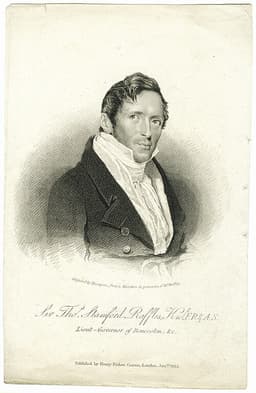
Sir Thomas Stamford Raffles
Politician · Modern
54.8Total
Basic Information
Born
1893
1781
Died
1979
1826
Era
Modern
Modern
Nationality
Ecuador
Great Britain
Occupation
Politician
Politician
Civilization
Western
Western
Score Comparison
Military (10%)
36.6
43.3
Political (20%)
45.1
45.0
Influence (20%)
54.1
58.3
Legacy (20%)
45.8
55.0
Leadership (15%)
55.3
67.0
Strategy (15%)
52.8
53.8
TOTAL
49.0
54.8
Jose Maria Velasco Ibarra — Complete Timeline
1934 AD
First PresidencyPolitical Action◆ Major
Jose Maria Velasco Ibarra was elected President of Ecuador for the first time. His term was marked by populist rhetoric and conflict with Congress, leading to his overthrow by the military after less than a year.
PresidencyPopulismEcuador
Impact: national
1944 AD
Second Presidency and ExilePolitical Action◆ Major
Velasco returned to power after leading a popular uprising. He enacted social reforms but was again overthrown in 1947 and went into exile. This pattern of return and overthrow defined his political career.
PresidencyExileEcuador
Impact: national
1952 AD
Third Presidency and OverthrowPolitical Action◆ Major
Velasco was elected president for a third time. He completed his term, a rarity in his career, but was overthrown shortly after the end of his term in 1956. He went into exile again.
PresidencyOverthrowEcuador
Impact: national
1968 AD
Fifth Presidency and Final OverthrowPolitical Action◆ Major
Velasco was elected president for a fifth time. He attempted to implement reforms but faced opposition from Congress and the military. He was overthrown in 1972 and went into exile, ending his political career.
PresidencyOverthrowExile
Impact: nationaltragic
Sir Thomas Stamford Raffles — Complete Timeline
1817 AD
Published 'The History of Java'Cultural◆ Major
Raffles published 'The History of Java' in 1817, a two-volume work detailing Javanese history, culture, and archaeology. The book included descriptions of Borobudur and other temples, and became a foundational text for Southeast Asian studies.
ScholarshipHistoryJava
Impact: globalconstructive
1818 AD
Discovery of the Rafflesia arnoldiiInvention◆ Major
Raffles, as a naturalist, discovered the Rafflesia arnoldii in Sumatra in 1818. This parasitic plant produces the largest individual flower in the world, up to one meter in diameter. The discovery was documented by botanist Joseph Arnold.
BotanyDiscoveryNatural History
Impact: globalconstructive
1819 AD
Founding of SingaporePolitical Action◆ Major
Raffles, as Lieutenant-Governor of Bencoolen, signed a treaty with the Sultan of Johor on February 6, 1819, establishing a British trading post on the island of Singapore. This action created a free port that rapidly grew into a major commercial hub.
ColonialismTradeSingapore
Impact: globalconstructive
1824 AD
Anglo-Dutch Treaty of 1824Political Action◆ Major
Raffles' establishment of Singapore led to the Anglo-Dutch Treaty of 1824, which divided the Malay Archipelago into British and Dutch spheres of influence. The treaty confirmed British control of Singapore and Malacca, while the Dutch retained the East Indies.
ColonialismTreatySoutheast Asia
Impact: global
This comparison has not been analyzed yet.
One-time AI generation (~1 minute). Scores and timeline are already available below.
Rankings
🥇
Sir Thomas Stamford RafflesLeader
Mil: 43.3Pol: 45.0Inf: 58.3
54.8
🥈
Jose Maria Velasco Ibarra
Mil: 36.6Pol: 45.1Inf: 54.1
49.0
+5.8 behind
How This Comparison Works
Algorithm
Each figure is scored on 6 dimensions (0—100 scale) based on structured historical data: Military (10%), Political (20%), Influence (20%), Legacy (20%), Leadership (15%), Strategy (15%). The weighted total produces the final ranking.
Data Sources
Scores are computed from structured sub-indicators in the database. Scale factors adjust for era (Ancient ×0.85, Modern ×1.0) and civilization size (Eastern ×1.05, Other ×0.80) to account for differences in population and military scale.
Maximum 3 Figures
Comparisons are limited to 2—3 figures to ensure readability and statistical meaningfulness.
Error Margins
±5 points per dimension — Sub-scores are derived from historical records with inherent uncertainty. Two figures within 5 points on a dimension should be considered roughly equivalent in that area.
Total Score Accuracy
±3 points overall — The weighted combination of 6 dimensions produces a total score with approximately ±3 points of uncertainty. Differences of less than 3 points are not statistically significant— the figures are effectively tied.
Known Limitations
- Historical records are incomplete and uneven across civilizations
- Figures from oral-tradition societies may be underrepresented
- Occupation labels can misclassify multi-role figures
- Scores measure capability and impact, not moral character
- Quantitative scoring is a comparison tool, not absolute truth
Capability Radar
Military (10%) — Battles & Warfare
Battles
5
5
Win Rate
5
5
Expansion
5
25
Political (20%) — Governance & Reform
Reform
50
60
Diplomacy
30
55
Economy
30
65
Influence (20%) — Cultural & Global Reach
Cultural
40
55
Global
25
65
Legacy (20%) — Historical Impact
Historical
45
70
Longevity
30
70
Leadership (15%) — Power & Stability
Tenure
40
30
Stability
10
40
Strategy (15%) — Tactics & Innovation
Strategy
5
15
Tactics
5
10
Reform
5
10
Similar Comparisons
Comments & Discussion
No comments yet. Be the first to share your thoughts!