Loading...
Jose Mujica vs Mokgweetsi Masisi
Jose Mujica leads by 2.9 pts · 2 figures compared
…
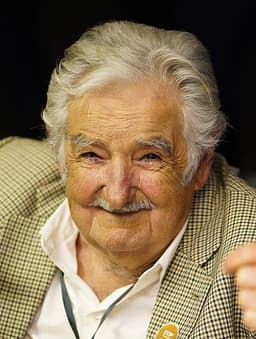
Jose Mujica
Politician · Modern
52.3Total
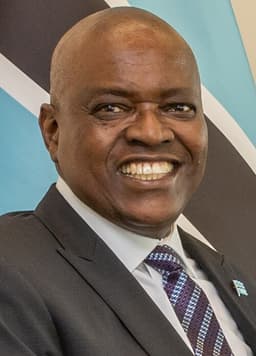
Mokgweetsi Masisi
Politician · Modern
49.4Total
Basic Information
Born
1935
1961
Died
—
—
Era
Modern
Modern
Nationality
Uruguay
Botswana
Occupation
Politician
Politician
Civilization
Western
Other
Score Comparison
Military (10%)
41.6
20.6
Political (20%)
45.0
62.7
Influence (20%)
58.0
53.3
Legacy (20%)
45.0
40.8
Leadership (15%)
68.0
72.0
Strategy (15%)
54.8
36.0
TOTAL
52.3
49.4
Jose Mujica — Complete Timeline
1960 AD
Joined the Tupamaro guerrilla movementPolitical Action◆ Major
Mujica joined the Movimiento de Liberaci
GuerrillaUruguayTupamaros
Impact: nationaldestructive
1972 AD
Imprisonment during the dictatorshipPolitical Action◆ Major
Mujica was captured by Uruguayan security forces and imprisoned for 14 years, including 7 years in solitary confinement. He was held in military barracks and subjected to harsh conditions, emerging as a symbol of resistance.
ImprisonmentDictatorshipHuman Rights
Impact: nationaltragic
2009 AD
Elected President of UruguayPolitical Action
Mujica won the 2009 presidential election as the candidate of the Broad Front coalition, defeating former President Luis Alberto Lacalle. He took office in 2010, becoming known as the 'world's poorest president' for donating most of his salary.
ElectionPresidencyUruguay
Impact: nationalconstructive
2013 AD
Legalized same-sex marriage in UruguayReform◆ Major
Mujica signed the Equal Marriage Law, making Uruguay the 12th country in the world to legalize same-sex marriage. The law granted same-sex couples the same rights as heterosexual couples, including adoption and inheritance.
LGBT RightsMarriage EqualitySocial Reform
Impact: nationalprogressive
Legalized cannabis regulationReform◆ Major
Mujica's government passed a law legalizing the production, sale, and consumption of cannabis under state regulation. Uruguay became the first country in the world to fully legalize cannabis for recreational use, aiming to combat drug trafficking.
Drug PolicyCannabisInnovation
Impact: globalprogressive
Mokgweetsi Masisi — Complete Timeline
2014 AD
Elected Vice President of BotswanaPolitical Action◆ Major
Masisi was elected Vice President by the National Assembly in November 2014, serving under President Ian Khama. He was responsible for education and social services.
Vice PresidencyPolitical Rise
Impact: national
2018 AD
Became President of BotswanaPolitical Action
Masisi became President of Botswana on April 1, 2018, succeeding Ian Khama. He inherited a stable economy but faced challenges of unemployment and inequality.
PresidencyPower Transition
Impact: national
2019 AD
Reversed ban on elephant huntingPolitical Action◆ Major
Masisi's government lifted the 2014 ban on elephant hunting, citing human-wildlife conflict and economic benefits. The decision was criticized by conservation groups but supported by local communities.
Environmental PolicyElephant Hunting
Impact: national
Re-elected President (2019)Political Action◆ Major
Masisi was re-elected in the 2019 general election, winning 52.7% of the vote. The election was deemed free and fair by observers, though the opposition alleged irregularities.
Re-electionDemocratic Process
Impact: national
2020 AD
Launched the Botswana Economic Recovery PlanReform◆ Major
Masisi launched a P10 billion economic recovery plan in response to the COVID-19 pandemic. The plan aimed to support businesses, protect jobs, and stimulate economic growth.
Economic PolicyCOVID-19 Response
Impact: nationalconstructive
Expert Analysis
Origins
**Jose Mujica** was born on May 20, 1935, in Montevideo, Uruguay, into a modest farming family. His early life was shaped by poverty and the death of his father when he was a child. He attended a public high school but left to work as a flower seller. Mujica's political awakening came during his youth, leading him to join the Movimiento de Liberación Nacional-Tupamaros (MLN-T) in the 1960s, a left-wing urban guerrilla group inspired by the Cuban Revolution. The Tupamaros engaged in armed robberies, kidnappings, and attacks on the state, which resulted in Mujica's capture in 1972. He spent 14 years in prison, including seven years in solitary confinement, during Uruguay's military dictatorship (1973-1985). His imprisonment hardened his resolve but also taught him the value of dialogue and democratic processes.
**Mokgweetsi Masisi** was born on July 21, 1962, in Moshupa, Botswana, into a politically active family. His father, Edison Masisi, served as a member of parliament and cabinet minister. Masisi attended the University of Botswana, earning a degree in English and History, and later a master's in education from the University of South Africa. He worked as a teacher and then as a school inspector before entering politics. Masisi's early career was in education, serving as the Deputy Permanent Secretary for Education and later as the Minister of Education under President Ian Khama. His rise was facilitated by his family connections and his reputation as a loyal administrator.
Rise to Power
Mujica's path to power was unconventional. After his release in 1985 following the return to democracy, he co-founded the Movement of Popular Participation (MPP), a left-wing party within the Broad Front coalition. His guerilla past initially made him a controversial figure, but his charisma and authenticity won over many Uruguayans. In 1999, he was elected to the Chamber of Deputies, and in 2004, he became a senator. In 2009, Mujica ran for president as the Broad Front candidate, defeating former President Luis Alberto Lacalle with 52.4% of the vote in the second round. His victory was seen as a triumph for the left and a sign of Uruguay's progressive turn.
Masisi's rise was more conventional. He was elected to the National Assembly in 2009 as a member of the Botswana Democratic Party (BDP). In 2014, President Ian Khama appointed him Vice President, a position that traditionally leads to the presidency. Masisi was responsible for education and skills development. When Khama's term ended in 2018, Masisi succeeded him as president, as per BDP tradition. He won the 2019 general election with 52.7% of the vote, though the opposition disputed the results. His rise was marked by a smooth transition within a dominant-party system.
Leadership & Governance
Mujica's leadership style was frugal and populist. He famously lived on his wife's farm, donated 90% of his salary to charity, and drove a 1987 Volkswagen Beetle. Symbolically, he rejected the trappings of power. Substantively, his governance focused on social reforms. Under his presidency (2010-2015), Uruguay legalized same-sex marriage (2013) and cannabis (2013), becoming the first country to do so. He also pursued economic policies that maintained growth (Uruguay's GDP grew at an average of 4.5% per year during his term) while reducing poverty and inequality. Critics noted his lack of focus on economic diversification and his reliance on commodity exports.
Masisi's leadership style is more bureaucratic and pragmatic. He has emphasized continuity with the BDP's pro-business policies while addressing social issues. His major initiative was the Botswana Economic Recovery Plan (2020), a P10 billion (about $900 million) stimulus to mitigate COVID-19 impacts. He also reversed the ban on elephant hunting in 2019, prioritizing human-wildlife conflict and economic benefits over conservation concerns. Masisi has faced criticism for slow progress on unemployment (which hovers around 20%) and corruption. His political score of 62.7 reflects his ability to maintain power and implement policies, but his legacy score of 40.8 suggests limited transformative impact.
Triumph & Tragedy
Mujica's greatest triumph was his social reforms: legalizing same-sex marriage and cannabis. These policies made Uruguay a global leader in progressive legislation. He also successfully transitioned from guerrilla to respected statesman, symbolizing reconciliation. His tragedy was his failure to achieve structural economic change; Uruguay remained dependent on agriculture and tourism. Additionally, his personal frugality, while admired, did not translate into systemic anti-corruption measures.
Masisi's triumph was managing a peaceful transition of power and maintaining stability in Botswana, a rare feat in Africa. His economic recovery plan helped cushion the pandemic's blow. His tragedy was the controversial lifting of the elephant hunting ban, which damaged Botswana's image as a conservation leader. He also struggled with high unemployment and inequality, with the Gini coefficient remaining high at 0.53.
Character & Destiny
Mujica's character was shaped by his prison experience. He emerged as a humble, philosophical figure who prioritized social justice over personal gain. His decision to legalize cannabis and same-sex marriage reflected his belief in personal freedoms. However, his laissez-faire economic approach was criticized as insufficient. His destiny was to be a global symbol of simplicity, but his domestic impact was more modest.
Masisi is a cautious, consensus-building leader. His character is less colorful; he is seen as a competent administrator rather than a visionary. His destiny was to lead a stable, middle-income country facing emerging challenges. He has not taken bold risks, which has kept Botswana on a steady but unspectacular course.
Legacy
Mujica's legacy is strong in the realm of social policy. Uruguay's cannabis regulation and same-sex marriage laws remain in place, influencing other countries. He is remembered as the "world's poorest president," a title that underscores his ethical stance. However, his political score of 45.0 and legacy score of 45.0 reflect limited institutional change. Masisi's legacy is still forming. He will be remembered for the elephant hunting reversal and the COVID-19 response, but his long-term impact on Botswana's economy and governance is uncertain.
Conclusion
Comparing Mujica and Masisi reveals two different models of leadership. Mujica scored 52.3 overall to Masisi's 49.4, a gap of 2.9 points. Mujica's higher scores in military (41.6 vs 20.6), influence (58.0 vs 53.3), and strategy (54.8 vs 36.0) reflect his global impact and strategic vision. Masisi leads in political (62.7 vs 45.0) and leadership (72.0 vs 68.0), indicating better institutional management. However, Mujica's transformative social reforms and unique personal story give him a greater historical footprint. While Masisi has maintained stability, Mujica pushed boundaries. Thus, Jose Mujica had greater impact on a global scale.
Rankings
🥇
Jose MujicaLeader
Mil: 41.6Pol: 45.0Inf: 58.0
52.3
🥈
Mokgweetsi Masisi
Mil: 20.6Pol: 62.7Inf: 53.3
49.4
+2.9 behind
How This Comparison Works
Algorithm
Each figure is scored on 6 dimensions (0—100 scale) based on structured historical data: Military (10%), Political (20%), Influence (20%), Legacy (20%), Leadership (15%), Strategy (15%). The weighted total produces the final ranking.
Data Sources
Scores are computed from structured sub-indicators in the database. Scale factors adjust for era (Ancient ×0.85, Modern ×1.0) and civilization size (Eastern ×1.05, Other ×0.80) to account for differences in population and military scale.
Maximum 3 Figures
Comparisons are limited to 2—3 figures to ensure readability and statistical meaningfulness.
Error Margins
±5 points per dimension — Sub-scores are derived from historical records with inherent uncertainty. Two figures within 5 points on a dimension should be considered roughly equivalent in that area.
Total Score Accuracy
±3 points overall — The weighted combination of 6 dimensions produces a total score with approximately ±3 points of uncertainty. Differences of less than 3 points are not statistically significant— the figures are effectively tied.
Known Limitations
- Historical records are incomplete and uneven across civilizations
- Figures from oral-tradition societies may be underrepresented
- Occupation labels can misclassify multi-role figures
- Scores measure capability and impact, not moral character
- Quantitative scoring is a comparison tool, not absolute truth
Capability Radar
Military (10%) — Battles & Warfare
Battles
15
26
Win Rate
10
30
Expansion
5
33
Political (20%) — Governance & Reform
Reform
60
55
Diplomacy
65
60
Economy
55
55
Influence (20%) — Cultural & Global Reach
Cultural
45
30
Global
45
30
Legacy (20%) — Historical Impact
Historical
40
25
Longevity
30
20
Leadership (15%) — Power & Stability
Tenure
55
60
Stability
50
60
Strategy (15%) — Tactics & Innovation
Strategy
15
32
Tactics
20
37
Reform
5
39
Similar Comparisons
Comments & Discussion
No comments yet. Be the first to share your thoughts!