Loading...
Joaquim Chissano vs Jose Mujica
Joaquim Chissano leads by 7.5 pts · 2 figures compared
…
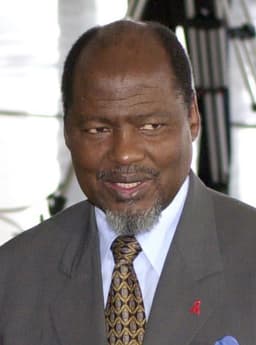
Joaquim Chissano
Politician · Modern
59.8Total
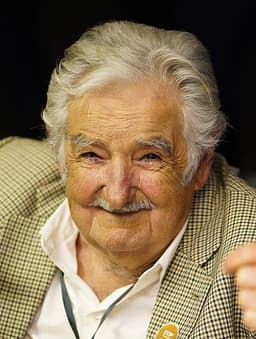
Jose Mujica
Politician · Modern
52.3Total
Basic Information
Born
1939
1935
Died
—
—
Era
Modern
Modern
Nationality
Mozambique
Uruguay
Occupation
Politician
Politician
Civilization
Other
Western
Score Comparison
Military (10%)
36.6
41.6
Political (20%)
78.0
45.0
Influence (20%)
58.0
58.0
Legacy (20%)
50.0
45.0
Leadership (15%)
80.0
68.0
Strategy (15%)
54.3
54.8
TOTAL
59.8
52.3
Joaquim Chissano — Complete Timeline
1992 AD
Rome General Peace AccordsPolitical Action◆ Major
As President of Mozambique, Joaquim Chissano signed the Rome General Peace Accords with the rebel group RENAMO, ending the 16-year Mozambican Civil War. The agreement established a multiparty democracy and led to UN-supervised elections in 1994, which Chissano won.
Peace AgreementCivil War EndDemocratization
Impact: nationalconstructive
1994 AD
Economic reform and growthReform◆ Major
Chissano implemented market-oriented economic reforms, including privatization, trade liberalization, and fiscal discipline, supported by the IMF and World Bank. Mozambique experienced sustained GDP growth averaging 8% annually from 1994 to 2004, reducing poverty but also increasing inequality.
Economic ReformGrowthPoverty Reduction
Impact: nationalconstructive
1994 Mozambican general electionPolitical Action◆ Major
Chissano won the first multiparty elections in Mozambique's history, securing 53.3% of the presidential vote against RENAMO's Afonso Dhlakama. His FRELIMO party also won a majority in parliament. The election marked the successful transition from war to democracy.
ElectionDemocracyTransition
Impact: nationalprogressive
2000 AD
HIV/AIDS responseReform◆ Major
Chissano's government launched a national HIV/AIDS strategy, including prevention campaigns and antiretroviral treatment programs. Mozambique had one of the highest HIV prevalence rates in the world, and the response helped slow the epidemic, though challenges remained.
Public HealthHIV/AIDSTreatment
Impact: nationalconstructive
2004 AD
2004 Mozambican general electionPolitical Action◆ Major
Chissano stepped down after two terms, respecting constitutional term limits. He oversaw peaceful elections that brought his successor, Armando Guebuza, to power. This peaceful transfer of power was a milestone for democratic consolidation in Mozambique.
ElectionDemocratic TransitionTerm Limits
Impact: nationalprogressive
Jose Mujica — Complete Timeline
1960 AD
Joined the Tupamaro guerrilla movementPolitical Action◆ Major
Mujica joined the Movimiento de Liberaci
GuerrillaUruguayTupamaros
Impact: nationaldestructive
1972 AD
Imprisonment during the dictatorshipPolitical Action◆ Major
Mujica was captured by Uruguayan security forces and imprisoned for 14 years, including 7 years in solitary confinement. He was held in military barracks and subjected to harsh conditions, emerging as a symbol of resistance.
ImprisonmentDictatorshipHuman Rights
Impact: nationaltragic
2009 AD
Elected President of UruguayPolitical Action
Mujica won the 2009 presidential election as the candidate of the Broad Front coalition, defeating former President Luis Alberto Lacalle. He took office in 2010, becoming known as the 'world's poorest president' for donating most of his salary.
ElectionPresidencyUruguay
Impact: nationalconstructive
2013 AD
Legalized same-sex marriage in UruguayReform◆ Major
Mujica signed the Equal Marriage Law, making Uruguay the 12th country in the world to legalize same-sex marriage. The law granted same-sex couples the same rights as heterosexual couples, including adoption and inheritance.
LGBT RightsMarriage EqualitySocial Reform
Impact: nationalprogressive
Legalized cannabis regulationReform◆ Major
Mujica's government passed a law legalizing the production, sale, and consumption of cannabis under state regulation. Uruguay became the first country in the world to fully legalize cannabis for recreational use, aiming to combat drug trafficking.
Drug PolicyCannabisInnovation
Impact: globalprogressive
Expert Analysis
Origins
Joaquim Chissano was born on October 22, 1939, in Malehice, Gaza Province, Portuguese Mozambique. He studied medicine at the University of Lisbon but left to join the Mozambican liberation struggle. Chissano became a founding member of FRELIMO (Mozambique Liberation Front) in 1962, working closely with Samora Machel. His background was in diplomacy and party organization rather than combat.
José Mujica was born on May 20, 1935, in Montevideo, Uruguay, into a modest farming family. He attended law school briefly but dropped out. In the 1960s, he joined the Tupamaros (Movimiento de Liberación Nacional), an urban guerrilla group inspired by the Cuban Revolution. Mujica participated in armed robberies and kidnappings, leading to his capture in 1972 and 14 years of imprisonment, including solitary confinement.
Rise to Power
Chissano rose within FRELIMO after Mozambique's independence in 1975, serving as Foreign Minister under President Samora Machel. He gained international experience and was seen as a moderate. After Machel's death in a 1986 plane crash, Chissano succeeded him as president. His rise was thus by succession, not election. He consolidated power by balancing party factions and initiating peace talks with RENAMO rebels.
Mujica's rise was more unconventional. After his release in 1985, he co-founded the Movement of Popular Participation and later joined the Broad Front coalition. He was elected to Congress in 1994 and became Minister of Agriculture in 2005 under President Tabaré Vázquez. Mujica won the presidency in 2009, defeating Luis Alberto Lacalle, and took office in 2010. His guerrilla past was both a liability and a symbol of radical transformation.
Leadership & Governance
Chissano's leadership was pragmatic and conciliatory. He signed the Rome General Peace Accords in 1992, ending the 16-year civil war. He then oversaw Mozambique's first multiparty elections in 1994, winning 53.3% of the vote. Economically, he implemented IMF-backed structural adjustments, privatizing state enterprises and liberalizing trade. Mozambique's GDP grew at an average of 8% annually in the late 1990s. However, critics note that inequality persisted and poverty remained high.
Mujica's governance was marked by progressive social policies and austerity. He legalized same-sex marriage in 2013 and regulated cannabis in 2013, making Uruguay the first country to do so. He also pushed for tax reforms and redistribution. Mujica was known for his frugal lifestyle, donating 90% of his salary to charity. However, his political scores are lower (45.0) because his coalition faced legislative gridlock and economic growth slowed to 3-4% annually under his tenure.
Triumph & Tragedy
Chissano's greatest triumph was ending the civil war and establishing democratic stability. He also peacefully transferred power in 2004, respecting term limits. His tragedy was the continued economic dependence on foreign aid and the HIV/AIDS crisis, which peaked in the early 2000s with a prevalence of 16% among adults. His government's response was slow initially, though later scaled up.
Mujica's triumph was his symbolic impact: a former guerrilla who became president and implemented progressive laws. His tragedy was limited economic growth and rising crime rates. Cannabis legalization did not significantly reduce drug trafficking as hoped. He also faced criticism for his close ties to the Venezuelan government.
Character & Destiny
Chissano was a calm, diplomatic figure. He scored 80.0 in leadership, reflecting his ability to negotiate peace. His strategic score (54.3) indicates caution rather than boldness. He avoided confrontation with FRELIMO hardliners and international donors. His destiny was to be a transitional figure, not a transformative one.
Mujica was charismatic and ideological. His leadership score (68.0) reflects his personal appeal, but his political score (45.0) shows limited institutional power. He was a symbol of austerity and simplicity, but his policies often lacked broad support. His destiny was to inspire rather than to build lasting institutions.
Legacy
Chissano's legacy is the peace and stability of Mozambique. The Rome Accords are still in effect, and FRELIMO has remained in power. He is remembered as a peacemaker but not a radical reformer. His influence score (58.0) reflects Mozambique's continued poverty and donor dependence.
Mujica's legacy is more global. He became an icon of humble leadership, and his cannabis legalization sparked debates worldwide. However, Uruguay's economy did not transform, and the Broad Front lost power in 2020. His influence score (58.0) is equal to Chissano's, but his legacy score (45.0) is lower due to limited domestic impact.
Conclusion
Joaquim Chissano had greater impact overall, with a total score of 59.8 versus Mujica's 52.3. Chissano's political score (78.0) and leadership (80.0) far exceeded Mujica's (45.0 and 68.0). While Mujica's symbolic power is undeniable, Chissano's concrete achievements—ending a civil war, establishing democracy, and overseeing economic growth—are more substantial. A leader who stops killing and builds institutions outweighs one who inspires but struggles to govern. Thus, Chissano is the more effective historical figure.
Rankings
🥇
Joaquim ChissanoLeader
Mil: 36.6Pol: 78.0Inf: 58.0
59.8
🥈
Jose Mujica
Mil: 41.6Pol: 45.0Inf: 58.0
52.3
+7.5 behind
How This Comparison Works
Algorithm
Each figure is scored on 6 dimensions (0—100 scale) based on structured historical data: Military (10%), Political (20%), Influence (20%), Legacy (20%), Leadership (15%), Strategy (15%). The weighted total produces the final ranking.
Data Sources
Scores are computed from structured sub-indicators in the database. Scale factors adjust for era (Ancient ×0.85, Modern ×1.0) and civilization size (Eastern ×1.05, Other ×0.80) to account for differences in population and military scale.
Maximum 3 Figures
Comparisons are limited to 2—3 figures to ensure readability and statistical meaningfulness.
Error Margins
±5 points per dimension — Sub-scores are derived from historical records with inherent uncertainty. Two figures within 5 points on a dimension should be considered roughly equivalent in that area.
Total Score Accuracy
±3 points overall — The weighted combination of 6 dimensions produces a total score with approximately ±3 points of uncertainty. Differences of less than 3 points are not statistically significant— the figures are effectively tied.
Known Limitations
- Historical records are incomplete and uneven across civilizations
- Figures from oral-tradition societies may be underrepresented
- Occupation labels can misclassify multi-role figures
- Scores measure capability and impact, not moral character
- Quantitative scoring is a comparison tool, not absolute truth
Capability Radar
Military (10%) — Battles & Warfare
Battles
5
15
Win Rate
5
10
Expansion
5
5
Political (20%) — Governance & Reform
Reform
80
60
Diplomacy
85
65
Economy
65
55
Influence (20%) — Cultural & Global Reach
Cultural
40
45
Global
50
45
Legacy (20%) — Historical Impact
Historical
55
40
Longevity
45
30
Leadership (15%) — Power & Stability
Tenure
75
55
Stability
80
50
Strategy (15%) — Tactics & Innovation
Strategy
10
15
Tactics
5
20
Reform
15
5
Similar Comparisons
Comments & Discussion
No comments yet. Be the first to share your thoughts!