Loading...
This comparison has not been analyzed yet.
One-time AI generation (~1 minute). Scores and timeline are already available below.
Joseph Cook vs Joseph Kasa-Vubu
Joseph Kasa-Vubu leads by 3.0 pts · 2 figures compared
…
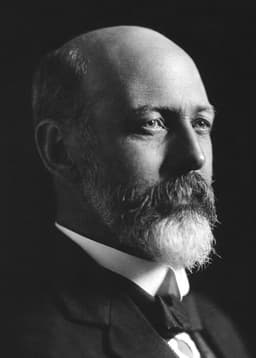
Joseph Cook
Politician · Modern
46.1Total

Joseph Kasa-Vubu
Politician · Modern
49.1Total
Basic Information
Born
1860
1917
Died
1947
1969
Era
Modern
Modern
Nationality
Australia
DR Congo
Occupation
Politician
Politician
Civilization
Western
Other
Score Comparison
Military (10%)
50.0
38.9
Political (20%)
42.3
46.6
Influence (20%)
48.6
54.1
Legacy (20%)
41.7
42.5
Leadership (15%)
51.9
64.0
Strategy (15%)
43.7
44.5
TOTAL
46.1
49.1
Joseph Cook — Complete Timeline
1913 AD
Leadership of the Liberal PartyPolitical Action◆ Major
Cook became the leader of the Commonwealth Liberal Party in 1913, succeeding Alfred Deakin. He led the party to a narrow victory in the 1913 federal election, forming a minority government that lasted until 1914.
Party LeadershipLiberal PartyElection Victory
Impact: national
1914 AD
Prime Ministership and Entry into World War IWar◆ Major
Joseph Cook became Prime Minister of Australia in June 1913, leading a Liberal government. When World War I broke out in August 1914, Cook's government declared Australia's support for Britain and began military preparations, but he lost the subsequent federal election in September 1914.
World War IWar DeclarationLiberal Government
Impact: global
Defeat in the 1914 Federal ElectionPolitical Action◆ Major
Cook's Liberal government was defeated in the double dissolution election of September 1914, called over the Government Ships Bill. The Labor Party under Andrew Fisher won a majority, ending Cook's brief prime ministership after just over a year.
Election DefeatLiberal PartyDouble Dissolution
Impact: nationaltragic
1919 AD
Participation in the Paris Peace ConferencePolitical Action
Cook served as a member of the Australian delegation to the Paris Peace Conference in 1919, alongside Prime Minister Billy Hughes. He contributed to negotiations on the Treaty of Versailles and the establishment of the League of Nations.
Paris Peace ConferenceTreaty of VersaillesDiplomacy
Impact: global
1921 AD
Retirement from PoliticsPolitical Action
Cook retired from the House of Representatives in 1921, after serving as a member since federation. He was later appointed as a member of the Australian delegation to the League of Nations and served as High Commissioner to the United Kingdom from 1921 to 1927.
RetirementHigh CommissionerLeague of Nations
Impact: national
Joseph Kasa-Vubu — Complete Timeline
1960 AD
Became First President of DR CongoPolitical Action◆ Major
Kasa-Vubu was elected as the first president of the independent Democratic Republic of the Congo (then Congo-L
IndependencePresidencyDR Congo
Impact: national
Dismissed Prime Minister LumumbaPolitical Action◆ Major
Kasa-Vubu dismissed Prime Minister Patrice Lumumba, triggering a constitutional crisis. This action deepened the Congo Crisis, leading to Lumumba's arrest and eventual assassination, and escalating the conflict with the Katanga secession.
Congo CrisisPolitical ConflictLumumba
Impact: nationaldestructive
1965 AD
Overthrown by Mobutu CoupPolitical Action◆ Major
Kasa-Vubu was overthrown in a military coup led by Joseph-D
CoupMobutuEnd of First Republic
Impact: nationaltragic
This comparison has not been analyzed yet.
One-time AI generation (~1 minute). Scores and timeline are already available below.
Rankings
🥇
Joseph Kasa-VubuLeader
Mil: 38.9Pol: 46.6Inf: 54.1
49.1
🥈
Joseph Cook
Mil: 50.0Pol: 42.3Inf: 48.6
46.1
+3.0 behind
How This Comparison Works
Algorithm
Each figure is scored on 6 dimensions (0—100 scale) based on structured historical data: Military (10%), Political (20%), Influence (20%), Legacy (20%), Leadership (15%), Strategy (15%). The weighted total produces the final ranking.
Data Sources
Scores are computed from structured sub-indicators in the database. Scale factors adjust for era (Ancient ×0.85, Modern ×1.0) and civilization size (Eastern ×1.05, Other ×0.80) to account for differences in population and military scale.
Maximum 3 Figures
Comparisons are limited to 2—3 figures to ensure readability and statistical meaningfulness.
Error Margins
±5 points per dimension — Sub-scores are derived from historical records with inherent uncertainty. Two figures within 5 points on a dimension should be considered roughly equivalent in that area.
Total Score Accuracy
±3 points overall — The weighted combination of 6 dimensions produces a total score with approximately ±3 points of uncertainty. Differences of less than 3 points are not statistically significant— the figures are effectively tied.
Known Limitations
- Historical records are incomplete and uneven across civilizations
- Figures from oral-tradition societies may be underrepresented
- Occupation labels can misclassify multi-role figures
- Scores measure capability and impact, not moral character
- Quantitative scoring is a comparison tool, not absolute truth
Capability Radar
Military (10%) — Battles & Warfare
Battles
26
21
Win Rate
30
23
Expansion
35
29
Political (20%) — Governance & Reform
Reform
30
30
Diplomacy
40
35
Economy
30
20
Influence (20%) — Cultural & Global Reach
Cultural
10
25
Global
20
30
Legacy (20%) — Historical Impact
Historical
30
35
Longevity
20
20
Leadership (15%) — Power & Stability
Tenure
20
40
Stability
25
15
Strategy (15%) — Tactics & Innovation
Strategy
38
28
Tactics
43
34
Reform
45
37
Similar Comparisons
Comments & Discussion
No comments yet. Be the first to share your thoughts!