Loading...
Joseph Cook vs Napoleon Bonaparte
Napoleon Bonaparte leads by 24.8 pts · 2 figures compared
…
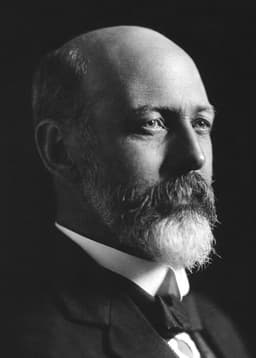
Joseph Cook
Politician · Modern
46.1Total

Napoleon Bonaparte
General · Modern
70.9Total
Basic Information
Born
1860
1769
Died
1947
1821
Era
Modern
Modern
Nationality
Australia
France
Occupation
Politician
General
Civilization
Western
Western
Score Comparison
Military (10%)
50.0
94.0
Political (20%)
42.3
72.0
Influence (20%)
48.6
40.0
Legacy (20%)
41.7
80.0
Leadership (15%)
51.9
78.0
Strategy (15%)
43.7
90.0
TOTAL
46.1
70.9
Joseph Cook — Complete Timeline
1913 AD
Leadership of the Liberal PartyPolitical Action◆ Major
Cook became the leader of the Commonwealth Liberal Party in 1913, succeeding Alfred Deakin. He led the party to a narrow victory in the 1913 federal election, forming a minority government that lasted until 1914.
Party LeadershipLiberal PartyElection Victory
Impact: national
1914 AD
Prime Ministership and Entry into World War IWar◆ Major
Joseph Cook became Prime Minister of Australia in June 1913, leading a Liberal government. When World War I broke out in August 1914, Cook's government declared Australia's support for Britain and began military preparations, but he lost the subsequent federal election in September 1914.
World War IWar DeclarationLiberal Government
Impact: global
Defeat in the 1914 Federal ElectionPolitical Action◆ Major
Cook's Liberal government was defeated in the double dissolution election of September 1914, called over the Government Ships Bill. The Labor Party under Andrew Fisher won a majority, ending Cook's brief prime ministership after just over a year.
Election DefeatLiberal PartyDouble Dissolution
Impact: nationaltragic
1919 AD
Participation in the Paris Peace ConferencePolitical Action
Cook served as a member of the Australian delegation to the Paris Peace Conference in 1919, alongside Prime Minister Billy Hughes. He contributed to negotiations on the Treaty of Versailles and the establishment of the League of Nations.
Paris Peace ConferenceTreaty of VersaillesDiplomacy
Impact: global
1921 AD
Retirement from PoliticsPolitical Action
Cook retired from the House of Representatives in 1921, after serving as a member since federation. He was later appointed as a member of the Australian delegation to the League of Nations and served as High Commissioner to the United Kingdom from 1921 to 1927.
RetirementHigh CommissionerLeague of Nations
Impact: national
Napoleon Bonaparte — Complete Timeline
1799 AD
Coup of 18 BrumaireOther◆ Major
Napoleon Bonaparte, with support from his brother Lucien and key political figures, overthrew the Directory in a bloodless coup. He established the Consulate with himself as First Consul, effectively becoming the ruler of France. This event ended the French Revolution's most unstable period.
French RevolutionCoupRise to Power
Impact: regional
1804 AD
Promulgation of the Napoleonic CodeOther◆ Major
Napoleon enacted the Civil Code of the French, known as the Napoleonic Code, a comprehensive set of laws that replaced the fragmented feudal legal systems. The code established legal equality, protected property rights, and secularized law. It became the basis for legal systems in many European and world countries.
Legal ReformNapoleonic CodeCivil Law
Impact: globalconstructive
1805 AD
Battle of AusterlitzWar◆ Major
Napoleon's Grande Arm
Napoleonic WarsBattleDecisive Victory
Impact: global
1812 AD
Invasion of RussiaWar◆ Major
Napoleon led the Grande Arm
Napoleonic WarsInvasionDisaster
Impact: globaldestructive
1815 AD
Battle of WaterlooWar◆ Major
Napoleon's French army was defeated by the combined forces of the Duke of Wellington's Anglo-Allied army and Gebhard Leberecht von Bl
Napoleonic WarsBattleFinal Defeat
Impact: globaldestructive
Expert Analysis
joseph-cook-vs-napoleon-bonaparte
# The Conqueror and the Caretaker
In the summer of 1914, as the guns of August began to thunder across Europe, two men stood at the precipice of history, though neither could have known how differently their names would echo through time. Napoleon Bonaparte, exiled on the remote island of Saint Helena, had been dead for nearly a century. Yet his shadow stretched across the continent he had once dominated, and the war that now erupted was, in many ways, a continuation of the struggle he had begun. Meanwhile, in a modest office in Melbourne, Australia, Prime Minister Joseph Cook faced a different kind of decision: whether to commit his young nation to a war that would define its identity but not his own legacy. One man had reshaped the world through sheer force of will; the other had been shaped by it, a caretaker in a storm not of his making.
Origins
Napoleon Bonaparte was born in 1769 on the island of Corsica, a place that had only recently become French. His family was minor nobility, but their world was one of Mediterranean ambition and Italianate intrigue. From the start, Napoleon was an outsider—a Corsican who would become the master of France, a man of modest birth who would crown himself emperor. The French Revolution, which erupted when he was twenty, shattered the old order and created the vacuum into which he would step. It was an era of chaos, opportunity, and violence, where military talent could propel a man from obscurity to glory.
Joseph Cook, born in 1860 in Staffordshire, England, came from a world of coal mines and Methodism. He emigrated to Australia as a young man, working in the mines of New South Wales before entering politics. Where Napoleon was forged in the fire of revolution, Cook was shaped by the quiet pragmatism of colonial self-government. Australia in the late nineteenth century was a land of labor movements and liberal reforms, where politicians debated tariffs and railway gauges, not the fate of empires. Cook’s rise was steady, unspectacular, and deeply rooted in the democratic processes of a new nation.
Rise to Power
Napoleon’s ascent was meteoric. In 1796, at just twenty-six, he was given command of the French army in Italy, where he won a series of stunning victories that made him a national hero. His capture of Venice and the Treaty of Campo Formio in 1797 established him as a military genius. By 1799, he had seized power in a coup d’état, becoming First Consul. Five years later, in 1804, he crowned himself Emperor of the French. His path was one of conquest—each victory a stepping stone, each defeat a temporary setback that he would overcome with sheer audacity.
Joseph Cook’s rise was far more pedestrian. He entered the Australian parliament in 1891, served as a minister in various governments, and in 1913, at the age of fifty-three, became leader of the Commonwealth Liberal Party. He won a narrow victory in the federal election of that year, becoming prime minister with a one-seat majority. There was no coup, no grand gesture. He was a politician who had worked his way up through committees and coalitions, a man of method rather than vision.
Leadership & Governance
Napoleon ruled Europe with a combination of military brilliance and administrative reform. His Napoleonic Code, introduced in 1804, standardized French law and influenced legal systems across the continent. He built roads, established banks, and reformed education. His military campaigns—from Austerlitz in 1805 to Jena in 1806—were masterpieces of strategy, using speed, deception, and concentration of force to shatter larger armies. But his governance was also autocratic. He centralized power, suppressed dissent, and placed his family on thrones. His ambition knew no bounds, and that ambition would ultimately be his undoing.
Joseph Cook’s governance was defined by a single, momentous decision: taking Australia into World War I. When Britain declared war on Germany in August 1914, Cook did not hesitate. “When the Empire is at war, so is Australia,” he declared. The decision was popular, but it was also politically costly. Cook’s government had been weakened by internal divisions and a narrow majority. In September 1914, he called a double dissolution election over a controversial bill, and his Liberal Party was soundly defeated. His prime ministership lasted just over a year—a brief interlude in the larger story of Australian politics.
Triumph & Tragedy
Napoleon’s greatest triumph was Austerlitz in 1805, where he destroyed the combined armies of Russia and Austria, forcing the Holy Roman Empire to dissolve. His greatest tragedy was the invasion of Russia in 1812, a catastrophic campaign that cost half a million men and shattered his aura of invincibility. Exiled to Elba in 1814, he returned for a final, desperate gamble in 1815, only to be defeated at Waterloo. He died in 1821 on Saint Helena, a prisoner of the British, his empire reduced to memory.
Joseph Cook’s triumph was his role in the Paris Peace Conference of 1919, where he served on the Australian delegation alongside Prime Minister Billy Hughes. He helped secure Australia’s interests in the post-war settlement, including control over German New Guinea. His tragedy was the brevity of his prime ministership—a term so short that he is often forgotten, a footnote in a war that consumed the world. He retired from politics in 1921, a respected but unremarkable figure.
Character & Destiny
Napoleon was driven by an insatiable hunger for power and glory. “I am not a man, but a thing,” he once said. “I have never been able to control my destiny.” His personality was a paradox: brilliant yet reckless, charismatic yet cold, a reformer who destroyed as much as he built. His decisions were shaped by a belief in his own destiny, and that belief led him to overreach again and again.
Joseph Cook was cautious, methodical, and deeply aware of his limitations. He was a man of duty rather than ambition, a servant of a system he did not create. His decisions were shaped by the constraints of parliamentary democracy and the expectations of a young nation. He did not dream of empire; he sought only to govern well.
Legacy
Napoleon’s legacy is immense. He is remembered as one of the greatest military commanders in history, a reformer who shaped modern Europe, and a figure of mythic proportions. His name is synonymous with ambition, genius, and tragedy. The Napoleonic Code, his legal reforms, and his impact on nationalism and warfare continue to influence the world.
Joseph Cook’s legacy is modest. He is remembered, if at all, as the prime minister who took Australia into World War I, a decision that had profound consequences for the nation. But his name does not echo through history. He is a footnote, a caretaker in a time of crisis.
Conclusion
Napoleon and Joseph Cook lived in different worlds, yet they shared a moment in history—the outbreak of a war that would define the twentieth century. One man shaped that war from beyond the grave, his strategies and ambitions still echoing in the minds of generals. The other man faced it as a practical decision, a duty to be fulfilled. Napoleon was a force of nature, a man who bent history to his will. Joseph Cook was a product of his time, a man who did what was expected of him. Both were Western leaders, but their differences reveal the vast range of human ambition and circumstance. Napoleon’s story is one of glory and ruin; Cook’s is one of duty and obscurity. In the end, perhaps the most remarkable thing is that history could produce both—and that we still find meaning in their contrast.
Rankings
🥇
Napoleon BonaparteLeader
Mil: 94.0Pol: 72.0Inf: 40.0
70.9
🥈
Joseph Cook
Mil: 50.0Pol: 42.3Inf: 48.6
46.1
+24.8 behind
How This Comparison Works
Algorithm
Each figure is scored on 6 dimensions (0—100 scale) based on structured historical data: Military (10%), Political (20%), Influence (20%), Legacy (20%), Leadership (15%), Strategy (15%). The weighted total produces the final ranking.
Data Sources
Scores are computed from structured sub-indicators in the database. Scale factors adjust for era (Ancient ×0.85, Modern ×1.0) and civilization size (Eastern ×1.05, Other ×0.80) to account for differences in population and military scale.
Maximum 3 Figures
Comparisons are limited to 2—3 figures to ensure readability and statistical meaningfulness.
Error Margins
±5 points per dimension — Sub-scores are derived from historical records with inherent uncertainty. Two figures within 5 points on a dimension should be considered roughly equivalent in that area.
Total Score Accuracy
±3 points overall — The weighted combination of 6 dimensions produces a total score with approximately ±3 points of uncertainty. Differences of less than 3 points are not statistically significant— the figures are effectively tied.
Known Limitations
- Historical records are incomplete and uneven across civilizations
- Figures from oral-tradition societies may be underrepresented
- Occupation labels can misclassify multi-role figures
- Scores measure capability and impact, not moral character
- Quantitative scoring is a comparison tool, not absolute truth
Capability Radar
Military (10%) — Battles & Warfare
Battles
26
95
Win Rate
30
90
Expansion
35
95
Political (20%) — Governance & Reform
Reform
30
95
Diplomacy
40
80
Economy
30
85
Influence (20%) — Cultural & Global Reach
Cultural
10
85
Global
20
90
Legacy (20%) — Historical Impact
Historical
30
95
Longevity
20
90
Leadership (15%) — Power & Stability
Tenure
20
85
Stability
25
70
Strategy (15%) — Tactics & Innovation
Strategy
38
95
Tactics
43
98
Reform
45
92
Similar Comparisons
Comments & Discussion
SilverSword6/17/2026
Cook was a footnote, Napoleon was the book itself. The Prime Minister of Australia in 1914 couldn't even command his own troops—they were under British control. Meanwhile, Napoleon revolutionized military logistics, creating the corps system that allowed armies to live off the land for weeks. Cook's legacy? A world war he stumbled into. Napoleon's? A war machine that reshaped Europe until Waterloo. One was a clerk, the other a conqueror.
古堡疑云6/17/2026
比拿破仑?约瑟夫·库克连他自己的外交部都管不住,更别提军队了。拿破仑在1805年奥斯特里茨战役中以少胜多,用七万击败九万俄奥联军,而库克只会签条约。历史书里,库克是脚注中的脚注;拿破仑却是整章的主线。
DataSkeptic6/17/2026
Give me numbers, not narratives. Napoleon commanded 600,000 men in 1812; Cook barely had a population of 4.5 million to draw from. The French Emperor fought 60 battles; Australia was a colonial afterthought in WWI. Let's cut the romanticism: comparing a globe-striding dictator to a two-year PM of a dominion is like comparing a tsunami to a teacup ripple.
烽火戏诸侯6/17/2026
别拿数据骗人。库克在1914年宣布参战时,澳大利亚人口不足500万,却派出33万志愿军;拿破仑在莫斯科损兵40万。库克是民主选举上台,拿破仑是政变夺权。一个为帝国尽忠,一个为帝国尽毁。时代不同,但库克的选择让澳大利亚第一次成为独立国家,这是拿破仑在滑铁卢做不到的。
ClassicsScholar6/17/2026
Read Napoleon's memoirs and you'll find echoes of Caesar; read Cook's letters and you'll find a bureaucrat's tedium. Napoleon reformed the legal code, the education system, and the economy of France; Cook's great achievement was managing the 1914 election while the world burned. One was an architect of civilizations, the other an architect of his own irrelevance.
青史不留名6/17/2026
经典学者就是看不起小人物。库克在1914年8月3日发表演讲,说“当帝国战争时,澳大利亚也在战争中”,这句话把澳洲从殖民地推向了盟友。拿破仑有《拿破仑法典》,库克有《国防法》,后者让澳洲组建了第一支本土军队。法典千年不朽,但国防法案救了澳洲独立。谁更务实?历史能打脸。