Loading...
Joseph Estrada vs Julius Caesar
Julius Caesar leads by 43.6 pts · 2 figures compared
…
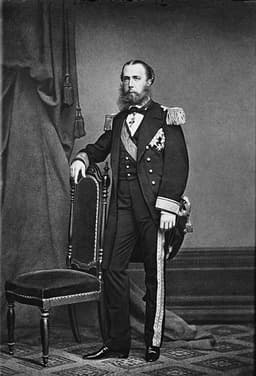
Joseph Estrada
Politician · Modern
39.2Total

Julius Caesar
General · Ancient
82.8Total
Basic Information
Born
1937
-100
Died
—
-44
Era
Modern
Ancient
Nationality
Philippines
Roman Republic
Occupation
Politician
General
Civilization
Eastern
Western
Score Comparison
Military (10%)
15.8
88.0
Political (20%)
26.4
78.0
Influence (20%)
52.5
85.0
Legacy (20%)
38.3
82.0
Leadership (15%)
48.4
80.0
Strategy (15%)
37.2
85.0
TOTAL
39.2
82.8
Joseph Estrada — Complete Timeline
1969 AD
Elected Mayor of San Juan, Metro ManilaPolitical Action◆ Major
Joseph Estrada was elected Mayor of San Juan, a municipality in Metro Manila. He served for 17 years, transforming the town into a city and building a political base.
Local GovernmentPolitical Career
constructive
1992 AD
Elected Vice President of the PhilippinesPolitical Action◆ Major
Joseph Estrada was elected Vice President of the Philippines under President Fidel V. Ramos. He used the position to build a national political profile and prepare for a presidential run.
Vice PresidencyPolitical Career
Impact: national
1998 AD
Elected President of the PhilippinesPolitical Action
Joseph Estrada was elected President of the Philippines in a landslide victory, winning 39.9% of the vote. He campaigned on a pro-poor platform, promising to help the masses.
PresidencyElection
Impact: nationalconstructive
2001 AD
Ousted in EDSA II RevolutionPolitical Action
Joseph Estrada was ousted from the presidency after mass protests (EDSA II) following allegations of corruption and a failed impeachment trial. He was replaced by Vice President Gloria Macapagal Arroyo.
OusterPeople Power
Impact: nationaldestructive
2007 AD
Convicted of plunderPolitical Action◆ Major
Joseph Estrada was convicted of plunder by the Sandiganbayan anti-graft court and sentenced to life imprisonment. He was later pardoned by President Gloria Macapagal Arroyo in 2007.
Corruption ConvictionPlunder
Impact: nationaldestructive
Julius Caesar — Complete Timeline
58 BC
Gallic WarsWar◆ Major
Caesar, as proconsul of Gaul, launched a series of campaigns that conquered all of Gaul (modern France, Belgium, and parts of Switzerland). He fought numerous battles, including against the Helvetii, the Belgae, and the Gallic chieftain Vercingetorix. The wars brought immense wealth and a loyal army to Caesar.
Gallic WarsConquestRoman Expansion
Impact: regional
49 BC
Crossing the RubiconPolitical Action◆ Major
Caesar led Legio XIII across the Rubicon River into Italy, defying the Roman Senate's order to disband his army. This act triggered a civil war against Pompey and the Optimates, ultimately leading to Caesar's dictatorship and the end of the Roman Republic.
Roman Civil WarEnd of RepublicPower Struggle
Impact: global
48 BC
Battle of PharsalusWar◆ Major
Caesar's outnumbered army defeated the larger forces of Pompey the Great at Pharsalus in Greece. Caesar's tactical use of a reserve line to counter Pompey's cavalry charge proved decisive. Pompey fled to Egypt, where he was assassinated, leaving Caesar as the undisputed master of the Roman world.
Roman Civil WarBattleDecisive Victory
Impact: regional
44 BC
Appointment as Dictator for LifePolitical Action◆ Major
The Roman Senate appointed Caesar dictator perpetuo (dictator for life), granting him unprecedented personal power. This move concentrated military, legislative, and judicial authority in one person, effectively ending the Roman Republic's traditional system of checks and balances and alarming many senators.
DictatorshipEnd of RepublicPower Consolidation
Impact: regionaldestructive
Assassination on the Ides of MarchPolitical Action◆ Major
A group of Roman senators, led by Marcus Junius Brutus and Gaius Cassius Longinus, stabbed Caesar to death at a meeting of the Senate in the Theatre of Pompey. The assassination was intended to restore the Republic, but instead triggered another civil war that led to the rise of the Roman Empire.
AssassinationRoman PoliticsEnd of Republic
Impact: globaldestructive
Expert Analysis
joseph-estrada-vs-julius-caesar
# The Ides of March and the Fall of a Star: Caesar and Estrada
On a cool March morning in 44 BCE, Julius Caesar walked into the Senate chamber in Rome, unaware that sixty senators had conspired to end his life. Within minutes, he lay bleeding on the marble floor, stabbed twenty-three times. Nearly two millennia later, in January 2001, another leader—Joseph Estrada of the Philippines—stood in his presidential palace as crowds gathered in the streets of Manila, chanting for his removal. Unlike Caesar, Estrada would walk out alive, though his political career lay in ruins. What drives one leader to a violent end and another to an ignominious exit? The answer lies not merely in circumstance, but in the very fabric of their characters and the worlds they inhabited.
Origins
Julius Caesar was born into the patrician Julian clan, one of Rome’s oldest families, but his childhood was shadowed by political turmoil. His uncle Gaius Marius had plunged the Republic into civil war, and young Caesar watched his family’s enemies, led by Sulla, hunt down and execute his relatives. This early exposure to the brutal logic of Roman politics—where defeat meant death—shaped a man who understood that power was not a gift but a prize to be seized. He fled Rome as a youth to avoid Sulla’s proscriptions, learning early that survival required cunning and speed.
Joseph Estrada, by contrast, was born in 1937 in Tondo, Manila, a working-class district. The son of a civil engineer and a homemaker, he grew up in a nation emerging from American colonial rule. Estrada’s path to prominence was not through noble blood but through the silver screen. He became a movie star, playing heroic underdogs and tough-talking action figures in Filipino films. His fame gave him a platform, but it also taught him that popularity, not pedigree, was the currency of power in a country where the gap between rich and poor was vast—and where the poor yearned for a champion who looked and sounded like them.
Rise to Power
Caesar’s ascent was a masterclass in patience and audacity. He climbed the Roman political ladder—the *cursus honorum*—step by step: military tribune, quaestor, aedile, praetor. But his true breakthrough came in 58 BCE when he secured command in Gaul. Over eight years, he conquered a territory larger than Italy, winning battles at Alesia and Gergovia that would become legend. His *Commentaries on the Gallic War* were not just military reports but political propaganda, crafted to keep his name alive in Rome. When the Senate ordered him to disband his army, Caesar refused. On January 10, 49 BCE, he crossed the Rubicon River, a line no general could legally cross with his troops. “The die is cast,” he reportedly said. Civil war began.
Estrada’s rise was faster, less bloody, and far more theatrical. In 1969, he was elected mayor of San Juan, a Manila suburb, and served for seventeen years, transforming the town from a rural backwater into a bustling urban center. He built roads, schools, and markets—earning a reputation as a man of action. In 1992, he became vice president under Fidel Ramos, a position that gave him visibility but little power. Estrada used it to cultivate an image as the voice of the poor. In 1998, he won the presidency in a landslide, capturing nearly 40 percent of the vote. He campaigned on a simple promise: “Erap para sa mahirap” (Erap for the poor). The nation believed him.
Leadership & Governance
Caesar governed with the precision of a general and the vision of a reformer. As dictator, he overhauled the Roman calendar, introduced land reforms, extended citizenship to conquered peoples, and launched public works projects that employed the urban poor. He centralized power in his own hands but did so with a pragmatism that kept the Senate functional—at least on the surface. His military genius was undeniable: at the Battle of Pharsalus in 48 BCE, he defeated Pompey’s larger army with tactical brilliance, and in Egypt, he wooed Cleopatra while settling a dynastic war. Yet Caesar’s governance was also autocratic. He accepted the title of “dictator for life” in 44 BCE, a move that alarmed even his allies. Power, for Caesar, was a tool to reshape Rome—but it also blinded him to the resentment it bred.
Estrada’s style was populist and personal. He surrounded himself with friends from his movie days, known as the “Midnight Cabinet,” who met in his bedroom for late-night drinking sessions. His policies favored the poor—he increased subsidies for rice and expanded health care—but his administration was marred by cronyism. Estrada appointed unqualified allies to key positions and allegedly took bribes from gambling syndicates. Unlike Caesar, who wrote his own history, Estrada left no memoirs, only court documents. His leadership was less about vision than about loyalty, and loyalty, in politics, is a fragile foundation.
Triumph & Tragedy
Caesar’s greatest moment came in 46 BCE, when he returned to Rome after defeating his last rivals. He celebrated a quadruple triumph, parading captives and treasures from Gaul, Egypt, Pontus, and Africa. The city hailed him as a god. But his tragedy was the Ides of March—March 15, 44 BCE—when his own senators, men he had pardoned and promoted, stabbed him to death. “Et tu, Brute?” he is said to have whispered to his friend Marcus Junius Brutus. Caesar died not on a battlefield but in the heart of the Republic he had conquered.
Estrada’s triumph was his 1998 landslide, a victory that seemed to validate his belief that celebrity could redeem governance. But his tragedy unfolded in 2001, when the EDSA II Revolution—named after the highway where protesters gathered—forced him from office. Unlike Caesar, Estrada did not resist. He left the palace, his presidency truncated after just two years. In 2007, he was convicted of plunder and sentenced to life in prison, though he was later pardoned. His fall was not a dagger but a slow, public humiliation.
Character & Destiny
Caesar was driven by an unquenchable ambition. “I would rather be the first man in a barbarian village than the second man in Rome,” he once said. His arrogance—his refusal to disband his army, his acceptance of dictatorship—was both his strength and his undoing. He saw the Republic’s decay and believed only he could save it. But in saving Rome, he destroyed the very system that had made him.
Estrada, by contrast, was driven by a need for love. He craved the adulation of the crowd, the warmth of celebrity. His corruption was not grand larceny but petty greed—a man who could not say no to friends. His destiny was not assassination but irrelevance. The poor who had cheered him turned away, and the elites who had despised him from the start simply waited.
Legacy
Caesar’s legacy is colossal. His name became synonymous with imperial rule—*Kaiser* in German, *Tsar* in Russian. His reforms shaped Western governance, and his writings remain classics of military literature. He is remembered as a genius, a tyrant, and a martyr.
Estrada’s legacy is smaller but instructive. He is a cautionary tale about the limits of celebrity politics. In the Philippines, he remains a figure of nostalgia for some, a symbol of wasted potential for others. His story reminds us that democracy, unlike ancient autocracy, can remove a leader without bloodshed—but also that popularity alone cannot sustain power.
Conclusion
Caesar and Estrada, separated by two thousand years, share a common thread: both rose through charisma and fell through hubris. Yet their fates diverge because their worlds demanded different things. Caesar’s Rome had no safety valve; power could only be taken, never surrendered. Estrada’s Philippines had a constitution, a free press, and a public that could say “enough.” One died at the hands of his peers; the other lived to see his own failure. In the end, history judges not just what leaders achieve, but what their times allow them to become.
Rankings
🥇
Julius CaesarLeader
Mil: 88.0Pol: 78.0Inf: 85.0
82.8
🥈
Joseph Estrada
Mil: 15.8Pol: 26.4Inf: 52.5
39.2
+43.6 behind
How This Comparison Works
Algorithm
Each figure is scored on 6 dimensions (0—100 scale) based on structured historical data: Military (10%), Political (20%), Influence (20%), Legacy (20%), Leadership (15%), Strategy (15%). The weighted total produces the final ranking.
Data Sources
Scores are computed from structured sub-indicators in the database. Scale factors adjust for era (Ancient ×0.85, Modern ×1.0) and civilization size (Eastern ×1.05, Other ×0.80) to account for differences in population and military scale.
Maximum 3 Figures
Comparisons are limited to 2—3 figures to ensure readability and statistical meaningfulness.
Error Margins
±5 points per dimension — Sub-scores are derived from historical records with inherent uncertainty. Two figures within 5 points on a dimension should be considered roughly equivalent in that area.
Total Score Accuracy
±3 points overall — The weighted combination of 6 dimensions produces a total score with approximately ±3 points of uncertainty. Differences of less than 3 points are not statistically significant— the figures are effectively tied.
Known Limitations
- Historical records are incomplete and uneven across civilizations
- Figures from oral-tradition societies may be underrepresented
- Occupation labels can misclassify multi-role figures
- Scores measure capability and impact, not moral character
- Quantitative scoring is a comparison tool, not absolute truth
Capability Radar
Military (10%) — Battles & Warfare
Battles
12
95
Win Rate
16
92
Expansion
21
97
Political (20%) — Governance & Reform
Reform
10
90
Diplomacy
20
85
Economy
15
82
Influence (20%) — Cultural & Global Reach
Cultural
40
88
Global
15
94
Legacy (20%) — Historical Impact
Historical
20
95
Longevity
10
96
Leadership (15%) — Power & Stability
Tenure
30
75
Stability
10
60
Strategy (15%) — Tactics & Innovation
Strategy
23
94
Tactics
24
96
Reform
27
88
Similar Comparisons
Comments & Discussion
GladiusGrouch6/17/2026
Caesar was a military genius who literally wrote the book on conquest. Estrada was a B-movie actor who couldn't even finish his term without a coup. Comparing them is like putting Alexander the Great next to a high school drama club president. The man who crossed the Rubicon with a legion doesn't share a category with a guy whose biggest scandal was a jueteng gambling racket.
数据侦探6/17/2026
这份对比明显在偷换概念:凯撒遇刺是政治体制崩溃的终极表现,而埃斯特拉达下台是民主弹劾的正常流程。把23刀和一场国会投票并列,就像拿核泄漏比蜡烛熄灭。材料里连埃斯特拉达的任期都没写完,选择性记忆比菲律宾雨季还泛滥。
LectioRerum6/17/2026
You're missing the crucial legal dimension. Caesar's assassination was extrajudicial murder by senators who lacked constitutional authority—Rome had no impeachment mechanism. Estrada's fall followed Article XI of the Philippine Constitution, with an impeachment trial that collapsed only when prosecutors walked out. One died by conspiracy, the other by constitutional crisis. Apples and oranges, but with very different constitutional fruits.
广场上的苏拉6/17/2026
别扯什么民主对比了。埃斯特拉达下台时群众挤满EDSA大道,而凯撒临死前元老院外连个抗议的都没。真正的问题是权力封闭性:罗马贵族刺杀是内部清洗,菲律宾人上街是人民力量。材料该提凯撒的独裁官头衔和埃斯特拉达的八年地方官经历,那才叫真正的统治根基差异。
ManilaMemesmith6/17/2026
Honestly, Estrada surviving his "Ides" is the ultimate plot twist. Caesar got 23 stab wounds from senators in togas; Estrada got impeached for taking bribes via Chinese-Filipino gambling lords while eating balut on camera. One defines tragedy, the other defines Filipino political soap opera. My grandfather lived through EDSA II and still laughs harder at 'Erap' jokes than Shakespeare.