Loading...
Joseph Stalin vs Mustafa Kemal Ataturk
Mustafa Kemal Ataturk leads by 11.2 pts · 2 figures compared
…
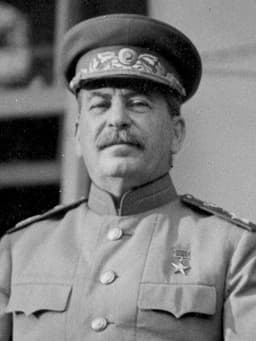
Joseph Stalin
Politician · Modern
68.8Total
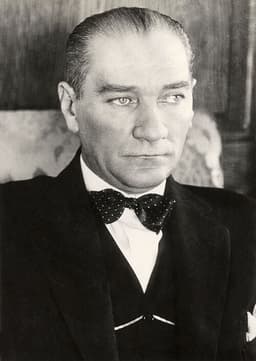
Mustafa Kemal Ataturk
Politician · Modern
80.0Total
Basic Information
Born
1878
1881
Died
1953
1938
Era
Modern
Modern
Nationality
Russia
Turkey
Occupation
Politician
Politician
Civilization
Western
Middle Eastern
Score Comparison
Military (10%)
75.0
75.0
Political (20%)
70.0
85.0
Influence (20%)
72.0
75.0
Legacy (20%)
55.0
90.0
Leadership (15%)
80.0
80.0
Strategy (15%)
70.0
65.0
TOTAL
68.8
80.0
Joseph Stalin — Complete Timeline
1928 AD
Launched the First Five-Year PlanReform
Stalin initiated a series of centralized economic plans aimed at rapid industrialization and collectivization of agriculture. The First Five-Year Plan set ambitious targets for heavy industry, leading to significant growth but also severe shortages and human cost.
Impact: global
1929 AD
Implemented forced collectivization of agricultureReform
Stalin ordered the consolidation of individual peasant farms into collective farms (kolkhozy). This was met with resistance, leading to the liquidation of kulaks (wealthy peasants) as a class. The policy caused a catastrophic famine, particularly in Ukraine (Holodomor), resulting in millions of deaths.
Impact: nationaldestructive
1937 AD
Conducted the Great Purge (Great Terror)Political Action
Stalin orchestrated a campaign of political repression against alleged enemies of the state. Millions were arrested, executed, or sent to the Gulag labor camps. The purges targeted the Communist Party, military leadership, intellectuals, and ordinary citizens, consolidating Stalin's absolute power.
Impact: nationaldestructive
1945 AD
Led the Soviet Union to victory in World War IIWar
Stalin served as Supreme Commander of the Soviet armed forces. The Soviet Union bore the brunt of the war against Nazi Germany, suffering immense casualties. The Red Army's victory at Stalingrad and the capture of Berlin were key turning points. The war ended with Soviet domination of Eastern Europe.
Impact: global
Established the Eastern Bloc and the Iron CurtainPolitical Action◆ Major
After WWII, Stalin imposed communist governments in Eastern European countries occupied by the Red Army, creating a buffer zone against the West. This division of Europe into Soviet and Western spheres of influence marked the beginning of the Cold War.
Impact: globaldestructive
Mustafa Kemal Ataturk — Complete Timeline
1915 AD
Battle of GallipoliWar
As a colonel, Mustafa Kemal commanded Ottoman forces at Gallipoli, successfully repelling Allied landings. His leadership at critical points like Chunuk Bair made him a national hero and laid the foundation for his political career.
World War IOttoman EmpireMilitary Victory
Impact: regional
1919 AD
Turkish War of IndependenceWar
Kemal organized and led the Turkish National Movement against the Allied occupation of Anatolia and the Treaty of S
Independence WarNational MovementAnkara
Impact: nationalconstructive
1922 AD
Abolition of the SultanatePolitical Action◆ Major
The Grand National Assembly of Turkey, under Kemal's leadership, abolished the Ottoman Sultanate, ending 600 years of imperial rule. This severed the link with the old regime and paved the way for the proclamation of the Republic.
SultanateRepublicPolitical Reform
Impact: nationalprogressive
1923 AD
Proclamation of the Republic of TurkeyPolitical Action
Kemal declared Turkey a republic, becoming its first president. He moved the capital to Ankara and initiated a series of radical reforms to modernize and secularize the state, including the adoption of a new legal code and the Latin alphabet.
RepublicModernizationSecularism
Impact: globalprogressive
1925 AD
Adoption of the Hat LawReform◆ Major
Kemal introduced the Hat Law, banning the fez and encouraging Western-style hats. This was part of his broader cultural revolution to secularize and Westernize Turkish society, symbolizing the break with Ottoman traditions.
Cultural ReformSecularismWesternization
Impact: nationalprogressive
1934 AD
Granting of Women's SuffrageReform◆ Major
Kemal's government granted women the right to vote and stand for election in national elections, ahead of many European countries. This reform was part of his commitment to gender equality and modernization of Turkish society.
Women's RightsSuffrageModernization
Impact: nationalprogressive
Expert Analysis
Joseph Stalin vs Mustafa Kemal Ataturk
# The Architect and the Tyrant
On a spring morning in 1934, two men sat at opposite ends of Europe, each reshaping the world with an iron will. In Ankara, Mustafa Kemal Atatürk signed a law granting Turkish women the right to vote—a reform that would ripple through the Middle East. In Moscow, Joseph Stalin reviewed reports from his secret police, preparing another list of names for execution. Both were modernizers. Both were revolutionaries. But one built a nation that still stands; the other built an empire that crumbled within decades. Why?
Origins
The Ottoman Empire and the Russian Empire both entered the twentieth century as "sick men of Europe," but their sons emerged from vastly different wounds. Atatürk was born in 1881 in Salonika, a multicultural port city where Greeks, Jews, Bulgarians, and Turks lived side by side. His father, a minor customs official, died when Mustafa was young, leaving his mother to raise him in modest circumstances. The Ottoman military school became his escape, his forge, and his classroom. There, he absorbed the ideas of the French Enlightenment alongside the science of modern warfare.
Stalin, born Ioseb Djugashvili in 1878 in the Georgian town of Gori, grew up in poverty and violence. His father, a cobbler, beat him; his mother, a devout Orthodox Christian, wanted him to become a priest. He entered the Tiflis Theological Seminary but was expelled for reading Marxist literature. Where Atatürk found discipline in the army, Stalin found purpose in the underground world of revolutionary conspiracy. The contrast was set early: one man learned to command men in the open; the other learned to manipulate them in the shadows.
Rise to Power
Atatürk's path to leadership was forged in fire. At the Battle of Gallipoli in 1915, Colonel Mustafa Kemal famously ordered his troops: "I am not ordering you to attack, I am ordering you to die." His defense of the peninsula against the Allied landings made him a national hero. But the Ottoman Empire collapsed anyway, and when the victorious Allies carved up Anatolia in 1919, Kemal refused to accept the humiliation. He resigned from the Ottoman army and organized a resistance movement from the provincial city of Ankara. The Turkish War of Independence (1919–1922) was his masterpiece—a guerrilla campaign that defeated Greek, French, and Armenian forces, culminating in the abolition of the Sultanate in 1922.
Stalin's rise was quieter, deadlier, and far more bureaucratic. After the Bolshevik Revolution of 1917, he worked behind the scenes as Commissar for Nationalities, building a network of loyalists within the Communist Party. Lenin called him "too coarse," but Stalin understood power as no one else did. After Lenin's death in 1924, he outmaneuvered rivals like Trotsky and Bukharin not through battlefield victories but through party appointments, secret dossiers, and carefully orchestrated purges. By 1929, he was the absolute master of the Soviet Union—and he began to remake it in his image.
Leadership & Governance
Atatürk governed with the precision of a military strategist and the vision of a philosopher. His reforms were systematic: he replaced the Arabic script with the Latin alphabet, abolished the caliphate, introduced Western legal codes, and secularized education. The Hat Law of 1925, which banned the fez, was symbolic but profound—he understood that modernization required visible change, even in how men covered their heads. He moved the capital from cosmopolitan Istanbul to inland Ankara, a deliberate break with Ottoman tradition. Women gained suffrage in 1934, earlier than in France or Italy. Atatürk's rule was authoritarian—he suppressed dissent and banned rival parties—but his authoritarianism was pedagogical. He saw himself as a teacher dragging a reluctant nation into the modern world.
Stalin's governance was industrial terror. The First Five-Year Plan, launched in 1928, aimed to transform a peasant society into a superpower overnight. Steel mills rose from the steppes; tractors replaced wooden plows. But the cost was catastrophic. Forced collectivization of agriculture in 1929 led to the Holodomor famine in Ukraine, killing millions. The Great Purge of 1937–1938 consumed the Communist Party itself: three-quarters of the Central Committee were executed, along with most senior military officers. Stalin ruled not through persuasion but through fear—every official, every general, every citizen knew that one wrong word could mean the gulag or the firing squad.
Triumph & Tragedy
Atatürk's greatest triumph was the survival of his nation. Against all odds, he turned a defeated, occupied, multi-ethnic empire into a unified, sovereign republic. His tragedy was personal: he died in 1938 at age 57, his body ravaged by cirrhosis from years of heavy drinking. He left no children, no dynasty—only ideas.
Stalin's triumph was World War II. When Nazi Germany invaded in 1941, he proved a capable war leader, rallying the Soviet people with calls to defend "Mother Russia" rather than communism. The victory at Stalingrad in 1943 was his vindication. But his tragedy was collective: his paranoia and brutality had already killed millions before the war, and after 1945, he imposed the Iron Curtain across Eastern Europe, condemning millions more to decades of communist rule.
Character & Destiny
Atatürk was a man of immense discipline and clarity. He once said, "A nation that does not know its history is like a tree without roots"—but he also believed that the past could be shed like a snake's skin. His personality was magnetic, his temper controlled, his vision singular. He drank heavily but worked ferociously, often through the night.
Stalin was paranoid, vindictive, and profoundly insecure. He said, "Death solves all problems—no man, no problem." Where Atatürk used power to build, Stalin used it to destroy. Atatürk's enemies were exiled or silenced; Stalin's were tortured and shot. The difference was not just in method but in purpose: Atatürk wanted to create a modern Turkey; Stalin wanted to eliminate any threat to his personal rule.
Legacy
Today, Atatürk's image still adorns every Turkish lira, every government building, every school. His reforms remain the bedrock of the Turkish Republic, even as his secularism faces challenges from religious movements. He is remembered as the father of his nation—a title no other modern leader has claimed with such universal acceptance.
Stalin's legacy is more contested. Under Mikhail Gorbachev, the Soviet Union began to acknowledge his crimes; after the USSR's collapse in 1991, monuments to Stalin were torn down across Eastern Europe. Yet in Russia today, opinion polls show many view him favorably as a wartime leader who made the country strong. The difference is telling: Atatürk built a nation that has endured for a century; Stalin built an empire that lasted barely half that.
Conclusion
Both men were products of collapsing empires, both seized history by the throat, and both left their countries transformed. But Atatürk's revolution was surgical, Stalin's was savage. One sought to elevate his people; the other sought to control them. Perhaps the deepest lesson is this: the difference between a founder and a tyrant is not the amount of change they bring, but whether that change survives them. Atatürk's Turkey still stands, flawed but free. Stalin's Soviet Union is a graveyard of utopian dreams. The architect built for the ages; the tyrant built only for himself.
Rankings
🥇
Mustafa Kemal AtaturkLeader
Mil: 75.0Pol: 85.0Inf: 75.0
80.0
🥈
Joseph Stalin
Mil: 75.0Pol: 70.0Inf: 72.0
68.8
+11.2 behind
How This Comparison Works
Algorithm
Each figure is scored on 6 dimensions (0—100 scale) based on structured historical data: Military (10%), Political (20%), Influence (20%), Legacy (20%), Leadership (15%), Strategy (15%). The weighted total produces the final ranking.
Data Sources
Scores are computed from structured sub-indicators in the database. Scale factors adjust for era (Ancient ×0.85, Modern ×1.0) and civilization size (Eastern ×1.05, Other ×0.80) to account for differences in population and military scale.
Maximum 3 Figures
Comparisons are limited to 2—3 figures to ensure readability and statistical meaningfulness.
Error Margins
±5 points per dimension — Sub-scores are derived from historical records with inherent uncertainty. Two figures within 5 points on a dimension should be considered roughly equivalent in that area.
Total Score Accuracy
±3 points overall — The weighted combination of 6 dimensions produces a total score with approximately ±3 points of uncertainty. Differences of less than 3 points are not statistically significant— the figures are effectively tied.
Known Limitations
- Historical records are incomplete and uneven across civilizations
- Figures from oral-tradition societies may be underrepresented
- Occupation labels can misclassify multi-role figures
- Scores measure capability and impact, not moral character
- Quantitative scoring is a comparison tool, not absolute truth
Capability Radar
Military (10%) — Battles & Warfare
Battles
85
85
Win Rate
80
90
Expansion
85
60
Political (20%) — Governance & Reform
Reform
90
98
Diplomacy
70
85
Economy
85
75
Influence (20%) — Cultural & Global Reach
Cultural
70
90
Global
95
80
Legacy (20%) — Historical Impact
Historical
95
95
Longevity
80
85
Leadership (15%) — Power & Stability
Tenure
95
85
Stability
60
70
Strategy (15%) — Tactics & Innovation
Strategy
85
85
Tactics
60
88
Reform
90
80
Similar Comparisons
Comments & Discussion
Kemalist Crusader6/16/2026
Any comparison that equates Stalin's mass murder with Atatürk's reforms is intellectually bankrupt. Atatürk lifted Turkey from medieval decay to modernity in just 15 years, while Stalin left 20 million dead and a paranoid state that couldn't survive its own weight. Stalin built a prison, Atatürk built a nation that still works. Case closed.
数字真相揭露者6/16/2026
数据不会撒谎:斯大林时期苏联人口增长几乎停滞,净增仅300万,而土耳其同期增长了800万。斯大林用五年计划搞工业化,粮食产量却暴跌37%;Atatürk靠农业合作社和妇女识字率翻倍,把文盲率从90%打到40%。算人头,高下立判。
血火中的辩证法6/16/2026
你们这些自由主义叙事真是可笑。斯大林确实屠杀了数百万,但他把沙俄的农村文盲国家建成了核大国,卫国战争里扛住了纳粹钢铁洪流。Atatürk的改革看着漂亮,但土耳其直到现在还在跟库尔德问题、军人干政较劲。谁更成功?得看你要稳定还是表面民主——斯大林至少给了苏联存在主义意义上的'硬'。
Chronicler21636/16/2026
Both men burned the old world down, but Atatürk planted olive trees in the ashes while Stalin salted the earth. Atatürk abolished the caliphate, secularized law, and gave women the vote in 1934—a decade before France. Stalin collectivized agriculture, starved millions, and couldn't even let his own wife write poetry. One modernized with vision, the other with a meat grinder.
Chronicler62096/16/2026
Revisionist nonsense aside, Atatürk's reforms were top-down cultural genocide in slow motion. He banned the fez, swapped Arabic script for Latin, and literally told Turks to stop being Muslim—all while his cult of personality turned into a secular religion that still haunts Turkish politics. Stalin at least admitted his violence was violence; Atatürk dressed his up as 'civilization.' Hypocrisy is the worst sin.