Loading...
Joseph Stalin vs Mao Zedong
Mao Zedong leads by 10.6 pts · 2 figures compared
…
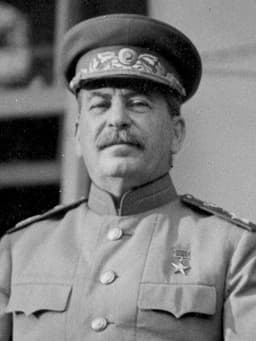
Joseph Stalin
Politician · Modern
68.8Total
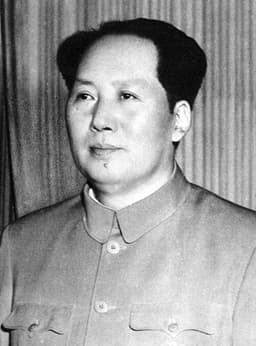
Mao Zedong
Politician · Modern
79.4Total
Basic Information
Born
1878
1893
Died
1953
1976
Era
Modern
Modern
Nationality
Russia
China
Occupation
Politician
Politician
Civilization
Western
Eastern
Score Comparison
Military (10%)
75.0
75.0
Political (20%)
70.0
88.0
Influence (20%)
72.0
85.0
Legacy (20%)
55.0
70.0
Leadership (15%)
80.0
85.0
Strategy (15%)
70.0
72.0
TOTAL
68.8
79.4
Joseph Stalin — Complete Timeline
1928 AD
Launched the First Five-Year PlanReform
Stalin initiated a series of centralized economic plans aimed at rapid industrialization and collectivization of agriculture. The First Five-Year Plan set ambitious targets for heavy industry, leading to significant growth but also severe shortages and human cost.
Impact: global
1929 AD
Implemented forced collectivization of agricultureReform
Stalin ordered the consolidation of individual peasant farms into collective farms (kolkhozy). This was met with resistance, leading to the liquidation of kulaks (wealthy peasants) as a class. The policy caused a catastrophic famine, particularly in Ukraine (Holodomor), resulting in millions of deaths.
Impact: nationaldestructive
1937 AD
Conducted the Great Purge (Great Terror)Political Action
Stalin orchestrated a campaign of political repression against alleged enemies of the state. Millions were arrested, executed, or sent to the Gulag labor camps. The purges targeted the Communist Party, military leadership, intellectuals, and ordinary citizens, consolidating Stalin's absolute power.
Impact: nationaldestructive
1945 AD
Led the Soviet Union to victory in World War IIWar
Stalin served as Supreme Commander of the Soviet armed forces. The Soviet Union bore the brunt of the war against Nazi Germany, suffering immense casualties. The Red Army's victory at Stalingrad and the capture of Berlin were key turning points. The war ended with Soviet domination of Eastern Europe.
Impact: global
Established the Eastern Bloc and the Iron CurtainPolitical Action◆ Major
After WWII, Stalin imposed communist governments in Eastern European countries occupied by the Red Army, creating a buffer zone against the West. This division of Europe into Soviet and Western spheres of influence marked the beginning of the Cold War.
Impact: globaldestructive
Mao Zedong — Complete Timeline
1934 AD
Long MarchWar
Mao Zedong led the Chinese Red Army on a strategic retreat from Nationalist forces, covering approximately 6,000 miles over 370 days. The march solidified Mao's leadership within the Chinese Communist Party and became a foundational myth of the Communist revolution.
Chinese Civil WarCommunist RevolutionRetreat
Impact: national
1949 AD
Proclamation of the People's Republic of ChinaPolitical Action
Mao Zedong declared the founding of the People's Republic of China from Tiananmen Gate in Beijing. This ended the Chinese Civil War and established Communist rule over mainland China, with Mao as Chairman of the Central People's Government.
Founding of PRCCommunist VictoryRevolution
Impact: global
1958 AD
Great Leap ForwardReform◆ Major
Mao launched a campaign to rapidly industrialize China and collectivize agriculture. The policy led to widespread mismanagement, resulting in a famine that caused an estimated 15-45 million deaths between 1959 and 1961.
FamineIndustrializationCollectivization
Impact: nationaldestructive
1960 AD
Sino-Soviet SplitPolitical Action◆ Major
Mao's ideological differences with Soviet leader Nikita Khrushchev led to a breakdown in relations between China and the Soviet Union. The split ended the Sino-Soviet alliance and reshaped global Cold War dynamics, with China pursuing an independent path.
Cold WarIdeological ConflictAlliance Breakdown
Impact: global
1966 AD
Cultural RevolutionPolitical Action
Mao initiated a sociopolitical movement to purge capitalist and traditional elements from Chinese society. The Red Guard youth groups attacked intellectuals and officials, leading to widespread violence, destruction of cultural artifacts, and an estimated 1-2 million deaths.
Political PurgeSocial UpheavalRed Guard
Impact: nationaldestructive
1971 AD
Ping-Pong DiplomacyCultural◆ Major
Mao approved an invitation for the U.S. table tennis team to visit China, initiating a thaw in Sino-American relations. This cultural exchange paved the way for President Nixon's visit to China in 1972 and the eventual normalization of diplomatic ties.
DiplomacyU.S.-China RelationsCultural Exchange
Impact: globalconstructive
Expert Analysis
Mao Zedong vs Joseph Stalin
# The Two Titans of Revolution
In the winter of 1949, as Mao Zedong stood atop Tiananmen Gate proclaiming the birth of the People’s Republic of China, he had already studied Stalin’s methods for decades. Sixteen years earlier, Stalin had dismissed Mao as a “margarine communist”—a pale imitation of the real thing. Yet by the time of Mao’s death in 1976, the Chinese leader had outlived his Soviet counterpart by twenty-three years and left a nation transformed, though at a staggering cost. What drove these two colossi of twentieth-century communism down such different paths, and why did their fates diverge so sharply?
Origins
Joseph Stalin was born Ioseb Besarionis dze Jughashvili in 1878, in the Georgian town of Gori—a provincial backwater of the Russian Empire. His father was a violent cobbler, his mother a devout laundress. A childhood bout with smallpox scarred his face; a later accident left his left arm permanently stiff. These physical marks, combined with a seminary education that taught him scripture and suspicion, forged a man who trusted no one and saw betrayal everywhere.
Mao Zedong, born fifteen years later in 1893, came from a different world. His father was a prosperous farmer in Shaoshan, Hunan Province—a region known for its revolutionary tradition. Mao grew up reading Chinese classics and the Romance of the Three Kingdoms, tales of cunning and warfare that would shape his strategic mind. While Stalin learned Marxist theory in Orthodox seminaries, Mao absorbed it through the lens of peasant rebellion, arguing from the start that China’s revolution would not follow the European script.
Rise to Power
Stalin’s ascent was a masterclass in bureaucratic maneuvering. After the 1917 Bolshevik Revolution, he appointed himself General Secretary in 1922—a position considered administrative drudgery. But Stalin saw what others missed: control over party appointments meant control over the party itself. By 1928, he had outmaneuvered Trotsky, Zinoviev, and Kamenev, consolidating absolute power not through battlefield glory but through patronage and ruthlessness.
Mao’s rise was forged in fire. During the Long March of 1934-1935, he emerged as the Red Army’s strategic genius, leading 100,000 communists on a 6,000-mile retreat that killed nine out of ten participants. At the Zunyi Conference in January 1935, Mao seized control of the party, arguing that China’s revolution must be peasant-based, not proletarian. While Stalin consolidated from a desk, Mao consolidated from a horse.
Leadership & Governance
Their ruling styles could not have been more different. Stalin governed through terror and paperwork. The Great Purge of 1937-1938 saw him arrest over 1.5 million people, executing perhaps 700,000—including three-quarters of the Red Army’s senior officers. He micromanaged everything from tractor production to literary criticism, signing death lists in his Kremlin office while sipping Georgian wine.
Mao governed through mass mobilization and ideological fervor. The Great Leap Forward of 1958-1961 was his attempt to surpass British industrial output in fifteen years—by melting farm tools in backyard furnaces and organizing peasants into communes. The result was the deadliest famine in human history, with estimates ranging from 15 to 45 million deaths. Yet Mao’s response was not Stalin’s purges but the Cultural Revolution of 1966-1976, a chaotic upheaval that destroyed China’s bureaucracy and educational system in the name of permanent revolution.
Their military leadership reflected these differences. Stalin’s score of 75 in military acumen was earned through sheer endurance: he lost 27 million Soviet citizens defeating Nazi Germany, often by ordering his generals to fight to the last man. Mao’s score of 65 masks a more subtle genius: he won the Chinese Civil War through guerrilla tactics and political warfare, never commanding a single major conventional battle until the Korean War.
Triumph & Tragedy
Stalin’s greatest moment came in 1945, when he stood alongside Churchill and Roosevelt at Yalta, having crushed Hitler’s armies and carved Europe into spheres of influence. His tragedy was that this victory cemented a system of paranoia and repression that would outlive him, poisoning Soviet society for decades.
Mao’s triumph was more existential: he united China after a century of foreign domination and civil war. But his tragedy was that the very tools of unification—mass mobilization and ideological purity—became instruments of destruction. The Cultural Revolution, meant to renew the revolution, instead created a generation of traumatized youth and a shattered economy.
Character & Destiny
Stalin was a man of shadows. He trusted no one, slept in different rooms each night, and played his subordinates against each other. His paranoia was both his strength and his undoing: it kept him in power but destroyed the very institutions he built. Mao, by contrast, was a man of grand gestures—swimming the Yangtze at 73, writing poems about revolution, and believing that “political power grows out of the barrel of a gun.” Yet his romanticism masked a cold pragmatism: he sacrificed millions for his vision and never wavered.
Legacy
Today, Stalin’s legacy scores 55.0—a man remembered as much for the Gulag as for defeating Hitler. In Russia, his statues have fallen; his name is a curse or a nostalgia trip, never a model. Mao’s legacy scores 69.9—more complex. In China, he remains the “Great Helmsman,” his portrait still hangs in Tiananmen, and his writings are studied as scripture. Yet the China he built has largely abandoned his economic policies, embracing a capitalism he would have condemned.
Conclusion
What separates these two titans is not their cruelty—both were capable of monstrous acts—but their relationship to history. Stalin sought to control history through bureaucracy and terror, building a machine that crushed everything it touched. Mao sought to ride history like a wave, harnessing chaos itself as a creative force. One created a system that collapsed thirty-eight years after his death; the other created a nation that, despite its wounds, has become a global superpower. Perhaps the deepest difference is this: Stalin’s revolution consumed itself, while Mao’s revolution—for all its horrors—gave birth to something that could adapt and survive. In the end, the peasant revolutionary from Hunan understood something the seminary dropout from Gori never did: that the most enduring power is not the power to destroy, but the power to transform.
Rankings
🥇
Mao ZedongLeader
Mil: 75.0Pol: 88.0Inf: 85.0
79.4
🥈
Joseph Stalin
Mil: 75.0Pol: 70.0Inf: 72.0
68.8
+10.6 behind
How This Comparison Works
Algorithm
Each figure is scored on 6 dimensions (0—100 scale) based on structured historical data: Military (10%), Political (20%), Influence (20%), Legacy (20%), Leadership (15%), Strategy (15%). The weighted total produces the final ranking.
Data Sources
Scores are computed from structured sub-indicators in the database. Scale factors adjust for era (Ancient ×0.85, Modern ×1.0) and civilization size (Eastern ×1.05, Other ×0.80) to account for differences in population and military scale.
Maximum 3 Figures
Comparisons are limited to 2—3 figures to ensure readability and statistical meaningfulness.
Error Margins
±5 points per dimension — Sub-scores are derived from historical records with inherent uncertainty. Two figures within 5 points on a dimension should be considered roughly equivalent in that area.
Total Score Accuracy
±3 points overall — The weighted combination of 6 dimensions produces a total score with approximately ±3 points of uncertainty. Differences of less than 3 points are not statistically significant— the figures are effectively tied.
Known Limitations
- Historical records are incomplete and uneven across civilizations
- Figures from oral-tradition societies may be underrepresented
- Occupation labels can misclassify multi-role figures
- Scores measure capability and impact, not moral character
- Quantitative scoring is a comparison tool, not absolute truth
Capability Radar
Military (10%) — Battles & Warfare
Battles
85
85
Win Rate
80
80
Expansion
85
85
Political (20%) — Governance & Reform
Reform
90
95
Diplomacy
70
80
Economy
85
70
Influence (20%) — Cultural & Global Reach
Cultural
70
90
Global
95
90
Legacy (20%) — Historical Impact
Historical
95
95
Longevity
80
85
Leadership (15%) — Power & Stability
Tenure
95
95
Stability
60
60
Strategy (15%) — Tactics & Innovation
Strategy
85
85
Tactics
60
75
Reform
90
90
Similar Comparisons
Comments & Discussion
GulagCounter6/16/2026
Stalin's "margarine communist" jab was pure arrogance. Mao outmaneuvered him by actually understanding peasant warfare—Stalin's urban-focused purges left his rural strategy stunted. While Stalin killed millions through paranoid show trials, Mao's Great Leap Forward was a catastrophic but ideologically consistent experiment in mass mobilization. Stalin couldn't even hold the line against Hitler without Western Lend-Lease; Mao won a civil war against a superpower-backed enemy. Different graveyards
农家算盘6/16/2026
数据上,斯大林统治下苏联因镇压、饥荒和战争死亡约2000-3000万人,毛时代中国死亡约4500万(包括大跃进和文革),但苏联人口基数小得多——按比例,斯大林年均死亡率更高。更关键的是,斯大林的工业化为二战逆转提供物质基础,而毛的大炼钢铁摧毁了农业基础。两人都是灾难性的改革者,但斯大林至少留下了坦克工厂,毛留下了土高炉。
WarChronicler6/16/2026
Stalin's 1939 pact with Hitler was a tactical masterstroke—it bought time and territory, even if it cost him a decade of trust. Mao's 1972 Nixon handshake is the diplomatic equivalent: using the enemy to isolate a rival. Both men understood realpolitik better than ideology. But Stalin's terror was systematic, bureaucratic—you'd disappear by 2 a.m. with a signed list. Mao's chaos was organic, a wildfire of Red Guards. Stalin created a machine; Mao set the countryside on fire and called it sociali
铁幕书生6/16/2026
斯大林从托洛茨基那里偷来了“一国建成社会主义”的招牌,却用古拉格填满它。毛则从斯大林那里学来集体化的暴力,却加入了《三国演义》的权谋——庐山会议上对彭德怀的整肃,活脱脱就是“杯酒释兵权”的现代版。两人都是极端残酷的实干家,但斯大林骨子里是个官僚,毛骨子里是个诗人。官僚可以预测,诗人——你永远不知道他下一步是写诗还是放火。
MaoistMilitant6/16/2026
Revisionists always ignore context: Stalin inherited a backward Russia surrounded by hostile powers; Mao took over a China ravaged by a century of imperialism. Both had to industrialize at gunpoint or be wiped out. The Purges eliminated fifth columnists—just check how many Soviet officers collaborated with the Nazis. The Land Reform in China broke centuries of feudal chains. You can’t make an omelet without cracking eggs, and these two cracked the hardest eggs in history to build the only viable
test46/13/2026
test
test56/13/2026
test
test16/13/2026
test
test26/13/2026
test
test36/13/2026
test