Loading...
This comparison has not been analyzed yet.
One-time AI generation (~1 minute). Scores and timeline are already available below.
Joseph Stilwell vs Zachary Taylor
Joseph Stilwell leads by 6.6 pts · 2 figures compared
…
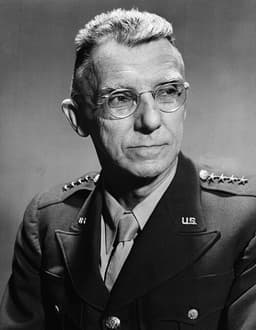
Joseph Stilwell
General · Modern
54.7Total
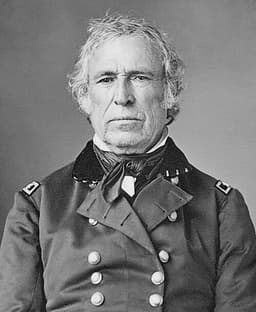
Zachary Taylor
General · Modern
48.1Total
Basic Information
Born
1883
1784
Died
1946
1850
Era
Modern
Modern
Nationality
United States
United States
Occupation
General
General
Civilization
Western
Western
Score Comparison
Military (10%)
40.0
63.3
Political (20%)
48.0
29.3
Influence (20%)
62.0
53.3
Legacy (20%)
50.0
44.2
Leadership (15%)
64.5
48.4
Strategy (15%)
58.0
57.5
TOTAL
54.7
48.1
Joseph Stilwell — Complete Timeline
1942 AD
Command of US Forces in China-Burma-India TheaterWar◆ Major
Stilwell was appointed commander of US forces in the China-Burma-India Theater and chief of staff to Chiang Kai-shek. He was responsible for coordinating Allied operations against Japan in the region and training Chinese forces.
World War IIChina-Burma-IndiaCommand
Impact: regional
Retreat from BurmaWar◆ Major
Stilwell led a group of 114 people on a 140-mile retreat through the Burmese jungle after the Japanese conquest of Burma. The retreat ended in India, and Stilwell famously stated 'We got a hell of a beating.'
World War IIBurmaRetreat
Impact: regionaltragic
Ledo Road ConstructionWar◆ Major
Stilwell initiated and oversaw the construction of the Ledo Road, a supply route from India to China. The road was built through difficult jungle and mountain terrain to bypass the Japanese blockade of Burma.
World War IILogisticsLedo Road
Impact: regionalconstructive
1944 AD
Myitkyina CampaignWar◆ Major
Stilwell directed the campaign to capture Myitkyina, a key Japanese-held town in northern Burma. The operation involved Chinese and American forces, including Merrill's Marauders, and resulted in the capture of the town after a prolonged siege.
World War IIBurmaMyitkyina
Impact: regional
Recall from ChinaPolitical Action◆ Major
Stilwell was recalled from China by President Roosevelt after a breakdown in relations with Chiang Kai-shek. The recall ended his command in the China-Burma-India Theater and marked a failure of US-China military cooperation.
World War IIChinaCommand
Impact: regional
Zachary Taylor — Complete Timeline
1846 AD
Battle of Palo AltoWar◆ Major
Taylor commanded U.S. forces in the first major battle of the Mexican-American War near present-day Brownsville, Texas. His army defeated Mexican forces under General Mariano Arista, securing the Rio Grande border.
Mexican-American WarBattleMilitary
Impact: regional
1847 AD
Battle of Buena VistaWar◆ Major
Taylor's outnumbered army defeated a larger Mexican force led by Santa Anna at Buena Vista, Coahuila. The victory made Taylor a national hero and boosted his presidential prospects.
Mexican-American WarBattleSanta Anna
Impact: regional
1848 AD
Elected President of the United StatesPolitical Action◆ Major
Taylor won the 1848 presidential election as the Whig candidate, defeating Democrat Lewis Cass and Free Soil candidate Martin Van Buren. His military fame and ambiguous stance on slavery secured victory.
PresidencyElectionWhig Party
Impact: national
1850 AD
Threatened to Veto Compromise of 1850Political Action◆ Major
Taylor opposed the Compromise of 1850, threatening to veto it and even to lead troops against secessionists. His death in July 1850 removed the main obstacle to the compromise's passage.
Compromise of 1850SlaverySecession
Impact: national
Died in OfficeOther◆ Major
Taylor died suddenly on July 9, 1850, after a brief illness likely caused by gastroenteritis. His death elevated Millard Fillmore to the presidency, who then signed the Compromise of 1850.
DeathPresidential Succession
Impact: nationaltragic
This comparison has not been analyzed yet.
One-time AI generation (~1 minute). Scores and timeline are already available below.
Rankings
🥇
Joseph StilwellLeader
Mil: 40.0Pol: 48.0Inf: 62.0
54.7
🥈
Zachary Taylor
Mil: 63.3Pol: 29.3Inf: 53.3
48.1
+6.6 behind
How This Comparison Works
Algorithm
Each figure is scored on 6 dimensions (0—100 scale) based on structured historical data: Military (10%), Political (20%), Influence (20%), Legacy (20%), Leadership (15%), Strategy (15%). The weighted total produces the final ranking.
Data Sources
Scores are computed from structured sub-indicators in the database. Scale factors adjust for era (Ancient ×0.85, Modern ×1.0) and civilization size (Eastern ×1.05, Other ×0.80) to account for differences in population and military scale.
Maximum 3 Figures
Comparisons are limited to 2—3 figures to ensure readability and statistical meaningfulness.
Error Margins
±5 points per dimension — Sub-scores are derived from historical records with inherent uncertainty. Two figures within 5 points on a dimension should be considered roughly equivalent in that area.
Total Score Accuracy
±3 points overall — The weighted combination of 6 dimensions produces a total score with approximately ±3 points of uncertainty. Differences of less than 3 points are not statistically significant— the figures are effectively tied.
Known Limitations
- Historical records are incomplete and uneven across civilizations
- Figures from oral-tradition societies may be underrepresented
- Occupation labels can misclassify multi-role figures
- Scores measure capability and impact, not moral character
- Quantitative scoring is a comparison tool, not absolute truth
Capability Radar
Military (10%) — Battles & Warfare
Battles
55
65
Win Rate
40
70
Expansion
30
55
Political (20%) — Governance & Reform
Reform
35
10
Diplomacy
50
20
Economy
20
10
Influence (20%) — Cultural & Global Reach
Cultural
30
30
Global
50
20
Legacy (20%) — Historical Impact
Historical
55
40
Longevity
40
25
Leadership (15%) — Power & Stability
Tenure
45
15
Stability
25
25
Strategy (15%) — Tactics & Innovation
Strategy
70
65
Tactics
65
60
Reform
60
20
Similar Comparisons
Comments & Discussion
No comments yet. Be the first to share your thoughts!