Loading...
Paul Kagame vs Zachary Taylor
Paul Kagame leads by 21.0 pts · 2 figures compared
…

Paul Kagame
General · Modern
69.1Total
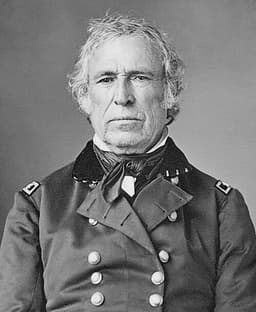
Zachary Taylor
General · Modern
48.1Total
Basic Information
Born
1957
1784
Died
—
1850
Era
Modern
Modern
Nationality
Rwanda
United States
Occupation
General
General
Civilization
Other
Western
Score Comparison
Military (10%)
70.0
63.3
Political (20%)
82.0
29.3
Influence (20%)
72.0
53.3
Legacy (20%)
52.0
44.2
Leadership (15%)
80.0
48.4
Strategy (15%)
68.0
57.5
TOTAL
69.1
48.1
Paul Kagame — Complete Timeline
1990 AD
Leadership of Rwandan Patriotic FrontWar◆ Major
Kagame led the Rwandan Patriotic Front (RPF) in a civil war against the Hutu-led government. The war ended with the Arusha Accords in 1993, but the peace was short-lived.
Civil WarRPFArusha Accords
Impact: national
1994 AD
End of Rwandan GenocideWar
Kagame's RPF captured Kigali and ended the 100-day genocide that killed an estimated 800,000 Tutsis and moderate Hutus. The RPF victory stopped the massacres but also led to reprisal killings.
GenocideRPF VictoryHumanitarian Crisis
Impact: global
1996 AD
Controversial Role in Congo WarsWar◆ Major
Kagame's Rwanda invaded Zaire (DRC) twice, supporting rebel groups and exploiting Congolese resources. The wars caused millions of deaths and destabilized the Great Lakes region.
Congo WarsRegional ConflictResource Exploitation
Impact: regionaldestructive
2000 AD
Economic Reconstruction and DevelopmentReform◆ Major
Kagame implemented economic reforms that led to rapid growth, with Rwanda becoming one of Africa's fastest-growing economies. He focused on technology, infrastructure, and attracting foreign investment.
Economic GrowthDevelopmentTechnology
Impact: nationalconstructive
Presidency and National Unity GovernmentPolitical Action◆ Major
Kagame became President of Rwanda, succeeding Pasteur Bizimungu. He formed a government of national unity, including Hutus in key positions, to promote reconciliation after the genocide.
PresidencyReconciliationUnity Government
Impact: nationalconstructive
2015 AD
Constitutional Amendment for Third TermPolitical Action◆ Major
Kagame oversaw a constitutional referendum that removed term limits, allowing him to run for a third term in 2017. Critics accused him of entrenching authoritarian rule.
Constitutional ReformTerm LimitsAuthoritarianism
Impact: national
Zachary Taylor — Complete Timeline
1846 AD
Battle of Palo AltoWar◆ Major
Taylor commanded U.S. forces in the first major battle of the Mexican-American War near present-day Brownsville, Texas. His army defeated Mexican forces under General Mariano Arista, securing the Rio Grande border.
Mexican-American WarBattleMilitary
Impact: regional
1847 AD
Battle of Buena VistaWar◆ Major
Taylor's outnumbered army defeated a larger Mexican force led by Santa Anna at Buena Vista, Coahuila. The victory made Taylor a national hero and boosted his presidential prospects.
Mexican-American WarBattleSanta Anna
Impact: regional
1848 AD
Elected President of the United StatesPolitical Action◆ Major
Taylor won the 1848 presidential election as the Whig candidate, defeating Democrat Lewis Cass and Free Soil candidate Martin Van Buren. His military fame and ambiguous stance on slavery secured victory.
PresidencyElectionWhig Party
Impact: national
1850 AD
Threatened to Veto Compromise of 1850Political Action◆ Major
Taylor opposed the Compromise of 1850, threatening to veto it and even to lead troops against secessionists. His death in July 1850 removed the main obstacle to the compromise's passage.
Compromise of 1850SlaverySecession
Impact: national
Died in OfficeOther◆ Major
Taylor died suddenly on July 9, 1850, after a brief illness likely caused by gastroenteritis. His death elevated Millard Fillmore to the presidency, who then signed the Compromise of 1850.
DeathPresidential Succession
Impact: nationaltragic
Expert Analysis
Origins
Paul Kagame was born in 1957 in Rwanda, then part of Belgian-controlled Ruanda-Urundi. His family fled to Uganda in the early 1960s after the Hutu revolution. Kagame grew up in refugee camps and later joined Yoweri Museveni's rebel forces in Uganda, rising to become a senior intelligence officer. He co-founded the Rwandan Patriotic Front (RPF) in 1987, drawing on his military training in Uganda and Cuba.
Zachary Taylor was born in 1784 in Virginia to a prominent planter family. He grew up on the frontier in Kentucky, receiving little formal education. Taylor joined the U.S. Army in 1808 as a lieutenant and spent decades on frontier duty, fighting in the War of 1812, the Black Hawk War, and the Second Seminole War. His nickname "Old Rough and Ready" reflected his casual dress and closeness to his troops.
Rise to Power
Kagame's rise began with the RPF's invasion of Rwanda in 1990. After the 1994 genocide, his forces captured Kigali in July 1994, ending the mass killings. He became Vice President and Minister of Defense, effectively controlling the army. In 2000, he assumed the presidency after the resignation of Pasteur Bizimungu. He has since won multiple elections, though critics note the lack of political freedom.
Taylor's rise came through military victories in the Mexican-American War. He won the Battle of Palo Alto (May 8, 1846) and the Battle of Buena Vista (February 22-23, 1847), where his outnumbered army defeated Santa Anna. These victories made him a national hero. The Whig Party nominated him for president in 1848, and he won the election without ever having held political office.
Leadership & Governance
Kagame's leadership is centralized and development-focused. He implemented rapid economic reforms, achieving 8% annual growth from 2000 to 2020. His government invested in technology, healthcare, and gender equality. However, political dissent is suppressed; opposition figures are jailed or exiled. His military strategy in the Congo Wars (1996-2003) involved invasions that caused millions of deaths, though he argues they were necessary for security.
Taylor's presidency lasted only 16 months. He opposed the Compromise of 1850, which would have admitted California as a free state and strengthened the Fugitive Slave Act. Taylor threatened to veto it and to lead troops against secessionists. His death in July 1850 from gastroenteritis removed the main obstacle to the compromise, which passed under his successor Millard Fillmore.
Triumph & Tragedy
Kagame's triumph is ending the genocide and rebuilding Rwanda. Under his rule, Rwanda's GDP per capita rose from $230 in 1994 to $820 in 2022. Life expectancy increased from 28 years in 1995 to 69 years in 2021. His tragedy is the authoritarian crackdown and the Congo Wars, where his forces exploited resources and committed atrocities. The UN estimated 5.4 million deaths in the Congo Wars, with Kagame's actions contributing significantly.
Taylor's triumph was his military victories, especially Buena Vista, which preserved his reputation as a capable commander. His tragedy is his short, ineffective presidency. His death prevented him from shaping the Compromise of 1850, and his military legacy is overshadowed by the Civil War a decade later.
Character & Destiny
Kagame is disciplined, strategic, and ruthless. He is known for micromanaging and demanding loyalty. His character shaped Rwanda's recovery but also its lack of democracy. Historians give him a political score of 82.0 and leadership score of 80.0.
Taylor was blunt, apolitical, and stubborn. He had little interest in politics and often ignored party leaders. His character made him a poor president but a good general. His military score of 63.3 reflects his battlefield successes but limited strategic impact.
Legacy
Kagame's legacy is mixed: he rebuilt a shattered nation but maintained authoritarian rule. Rwanda is a model for development in Africa, but human rights groups criticize his repression. His influence score of 72.0 and legacy score of 52.0 reflect this duality.
Taylor's legacy is as a military hero and a footnote in presidential history. The Compromise of 1850 delayed the Civil War, but his death allowed it to pass. His legacy score of 44.2 is low due to his brief tenure.
Conclusion
Kagame had a greater impact than Taylor, scoring 69.1 to Taylor's 48.1. Kagame ended a genocide and transformed Rwanda's economy, while Taylor's presidency was cut short. Kagame's military (70.0) and political (82.0) scores exceed Taylor's (63.3 and 29.3). Despite ethical concerns, Kagame's influence on modern Africa is substantial. Taylor, while a capable general, failed to achieve lasting political change.
Rankings
🥇
Paul KagameLeader
Mil: 70.0Pol: 82.0Inf: 72.0
69.1
🥈
Zachary Taylor
Mil: 63.3Pol: 29.3Inf: 53.3
48.1
+21.0 behind
How This Comparison Works
Algorithm
Each figure is scored on 6 dimensions (0—100 scale) based on structured historical data: Military (10%), Political (20%), Influence (20%), Legacy (20%), Leadership (15%), Strategy (15%). The weighted total produces the final ranking.
Data Sources
Scores are computed from structured sub-indicators in the database. Scale factors adjust for era (Ancient ×0.85, Modern ×1.0) and civilization size (Eastern ×1.05, Other ×0.80) to account for differences in population and military scale.
Maximum 3 Figures
Comparisons are limited to 2—3 figures to ensure readability and statistical meaningfulness.
Error Margins
±5 points per dimension — Sub-scores are derived from historical records with inherent uncertainty. Two figures within 5 points on a dimension should be considered roughly equivalent in that area.
Total Score Accuracy
±3 points overall — The weighted combination of 6 dimensions produces a total score with approximately ±3 points of uncertainty. Differences of less than 3 points are not statistically significant— the figures are effectively tied.
Known Limitations
- Historical records are incomplete and uneven across civilizations
- Figures from oral-tradition societies may be underrepresented
- Occupation labels can misclassify multi-role figures
- Scores measure capability and impact, not moral character
- Quantitative scoring is a comparison tool, not absolute truth
Capability Radar
Military (10%) — Battles & Warfare
Battles
65
65
Win Rate
70
70
Expansion
40
55
Political (20%) — Governance & Reform
Reform
90
10
Diplomacy
80
20
Economy
85
10
Influence (20%) — Cultural & Global Reach
Cultural
60
30
Global
65
20
Legacy (20%) — Historical Impact
Historical
75
40
Longevity
55
25
Leadership (15%) — Power & Stability
Tenure
85
15
Stability
70
25
Strategy (15%) — Tactics & Innovation
Strategy
80
65
Tactics
75
60
Reform
85
20
Similar Comparisons
Comments & Discussion
No comments yet. Be the first to share your thoughts!