Loading...
Joseph Warioba vs Koprulu Mehmed Pasha
Koprulu Mehmed Pasha leads by 11.3 pts · 2 figures compared
…

Joseph Warioba
Politician · Modern
50.3Total
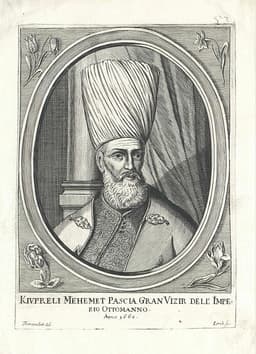
Koprulu Mehmed Pasha
Politician · Modern
61.6Total
Basic Information
Born
1940
1575
Died
—
1661
Era
Modern
Modern
Nationality
Tanzania
Ottoman Empire
Occupation
Politician
Politician
Civilization
Other
Middle Eastern
Score Comparison
Military (10%)
35.5
30.0
Political (20%)
68.0
62.7
Influence (20%)
49.4
72.0
Legacy (20%)
40.8
55.0
Leadership (15%)
66.0
78.0
Strategy (15%)
41.0
57.5
TOTAL
50.3
61.6
Joseph Warioba — Complete Timeline
1985 AD
Appointed Prime Minister of TanzaniaPolitical Action◆ Major
Joseph Warioba was appointed Prime Minister of Tanzania by President Ali Hassan Mwinyi, serving from 1985 to 1990. He oversaw the implementation of economic reforms during a period of transition from socialism to market-oriented policies.
Tanzanian PoliticsEconomic ReformMwinyi Era
Impact: nationalconstructive
1990 AD
Resigned as Prime MinisterPolitical Action
Warioba resigned as Prime Minister in 1990, reportedly due to disagreements over economic policy and governance. His resignation marked a shift in Tanzania's political landscape, leading to the appointment of John Malecela as his successor.
Tanzanian PoliticsResignationGovernance
Impact: national
2001 AD
Served as Judge on the East African Court of JusticePolitical Action
Warioba was appointed as a judge on the East African Court of Justice, the judicial arm of the East African Community. He served in this role, contributing to regional legal integration and dispute resolution among member states.
East African CommunityJudiciaryRegional Integration
Impact: regionalconstructive
Koprulu Mehmed Pasha — Complete Timeline
1656 AD
Reform of the Ottoman Military and BureaucracyReform◆ Major
Koprulu Mehmed Pasha implemented sweeping reforms, including purging corrupt officials, restoring discipline in the Janissary corps, and reorganizing the tax system. These measures stabilized the empire and restored its military effectiveness after years of decline.
ReformOttoman AdministrationMilitary
Impact: nationalconstructive
Appointment as Grand VizierPolitical Action
Koprulu Mehmed Pasha was appointed Grand Vizier by Sultan Mehmed IV during a period of crisis. He was granted unprecedented authority to restore order, marking the beginning of the Koprulu era of reform and revitalization of the Ottoman state.
Koprulu EraReformOttoman Politics
Impact: nationalconstructive
1657 AD
Suppression of the Venetian Blockade of the DardanellesWar◆ Major
Koprulu Mehmed Pasha led a campaign to break the Venetian blockade of the Dardanelles. The Ottoman navy defeated the Venetian fleet, securing the sea route to Istanbul and restoring Ottoman naval power in the Aegean.
Ottoman-Venetian WarNaval BattleDardanelles
Impact: regionalconstructive
Execution of Patriarch Parthenius IIIPolitical Action
Koprulu Mehmed Pasha ordered the execution of Greek Orthodox Patriarch Parthenius III, accusing him of treason and correspondence with the Venetians. This act demonstrated his harsh methods in suppressing dissent and consolidating control.
ExecutionReligious PoliticsRepression
destructive
Expert Analysis
Origins
Joseph Warioba was born in 1940 in Tanzania, then Tanganyika. He studied law and became a magistrate, rising through the judiciary. His early career was shaped by the post-independence legal system under Julius Nyerere. Koprulu Mehmed Pasha was born around 1578 in Albania, part of the Ottoman Empire. He entered the devshirme system, serving in the palace bureaucracy. His background in administration and military logistics prepared him for high office.
Rise to Power
Warioba was appointed Prime Minister in 1985 by President Ali Hassan Mwinyi, succeeding Edward Sokoine. He had previously served as Minister of Justice and Attorney General. His rise was steady, based on legal expertise and loyalty. Koprulu Mehmed Pasha became Grand Vizier in 1656 at age 78, during a crisis: the Venetian blockade of the Dardanelles and internal rebellion. Sultan Mehmed IV granted him unprecedented authority, including the power to execute without trial. His appointment marked the start of the Koprulu era.
Leadership & Governance
Warioba's governance focused on economic reforms, including structural adjustment programs under IMF guidance. He faced resistance from Nyerere's socialist legacy. His leadership style was cautious and legalistic. Koprulu Mehmed Pasha ruled with an iron fist: he purged corrupt officials, executed thousands, and restored discipline in the Janissary corps. He reorganized the bureaucracy and military. His score of 78.0 in leadership contrasts with Warioba's 66.0. Koprulu's methods were authoritarian but effective in restoring order.
Triumph & Tragedy
Warioba's triumph was overseeing Tanzania's transition from socialism to market reforms. His tragedy was resigning in 1990 due to policy disagreements, limiting his impact. Koprulu Mehmed Pasha's greatest success was breaking the Venetian blockade in 1657, securing Ottoman naval supremacy. He also suppressed revolts in Transylvania and Crete. His tragedy includes ordering the execution of Patriarch Parthenius III, a controversial act that strained relations with Orthodox subjects. He died in 1661, leaving a legacy of reform but also state terror.
Character & Destiny
Warioba was principled and reserved; his resignation reflected integrity but also political weakness. He scored 68.0 in politics, showing competence but not dominance. Koprulu Mehmed Pasha was ruthless, decisive, and pragmatic. His character shaped his destiny: he saved the empire but at a cost of lives. Historians note his administrative genius but also his brutality. His political score of 62.7 is lower than Warioba's 68.0, but his influence (72.0) and leadership (78.0) are higher.
Legacy
Warioba's legacy is as a reformer who laid groundwork for economic liberalization in Tanzania. His tenure as East African Court of Justice judge reinforced regional rule of law. Koprulu Mehmed Pasha founded the Koprulu dynasty of grand viziers, who dominated Ottoman politics for decades. His military and bureaucratic reforms stabilized the empire. His score of 55.0 in legacy edges Warioba's 40.8. Today, he is remembered as a savior of the Ottoman state.
Conclusion
Koprulu Mehmed Pasha had greater impact: his reforms reversed Ottoman decline and established a ruling dynasty. Warioba's achievements were significant but limited to a short tenure and constrained by political context. Koprulu's total score of 61.6 surpasses Warioba's 50.3, reflecting his decisive role in history. While Warioba's integrity is admirable, Koprulu's actions reshaped an empire. Thus, Koprulu Mehmed Pasha is the more consequential figure.
Rankings
🥇
Koprulu Mehmed PashaLeader
Mil: 30.0Pol: 62.7Inf: 72.0
61.6
🥈
Joseph Warioba
Mil: 35.5Pol: 68.0Inf: 49.4
50.3
+11.3 behind
How This Comparison Works
Algorithm
Each figure is scored on 6 dimensions (0—100 scale) based on structured historical data: Military (10%), Political (20%), Influence (20%), Legacy (20%), Leadership (15%), Strategy (15%). The weighted total produces the final ranking.
Data Sources
Scores are computed from structured sub-indicators in the database. Scale factors adjust for era (Ancient ×0.85, Modern ×1.0) and civilization size (Eastern ×1.05, Other ×0.80) to account for differences in population and military scale.
Maximum 3 Figures
Comparisons are limited to 2—3 figures to ensure readability and statistical meaningfulness.
Error Margins
±5 points per dimension — Sub-scores are derived from historical records with inherent uncertainty. Two figures within 5 points on a dimension should be considered roughly equivalent in that area.
Total Score Accuracy
±3 points overall — The weighted combination of 6 dimensions produces a total score with approximately ±3 points of uncertainty. Differences of less than 3 points are not statistically significant— the figures are effectively tied.
Known Limitations
- Historical records are incomplete and uneven across civilizations
- Figures from oral-tradition societies may be underrepresented
- Occupation labels can misclassify multi-role figures
- Scores measure capability and impact, not moral character
- Quantitative scoring is a comparison tool, not absolute truth
Capability Radar
Military (10%) — Battles & Warfare
Battles
21
55
Win Rate
24
60
Expansion
28
45
Political (20%) — Governance & Reform
Reform
55
85
Diplomacy
50
70
Economy
45
65
Influence (20%) — Cultural & Global Reach
Cultural
20
50
Global
15
55
Legacy (20%) — Historical Impact
Historical
25
70
Longevity
20
65
Leadership (15%) — Power & Stability
Tenure
60
60
Stability
55
80
Strategy (15%) — Tactics & Innovation
Strategy
28
65
Tactics
32
50
Reform
35
75
Similar Comparisons
Comments & Discussion
No comments yet. Be the first to share your thoughts!