Loading...
Koprulu Mehmed Pasha vs Patrice Trovoada
Koprulu Mehmed Pasha leads by 14.7 pts · 2 figures compared
…
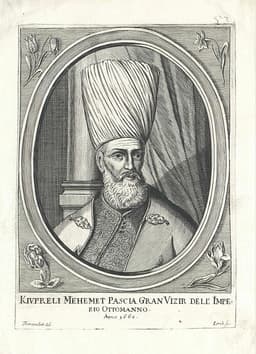
Koprulu Mehmed Pasha
Politician · Modern
61.6Total
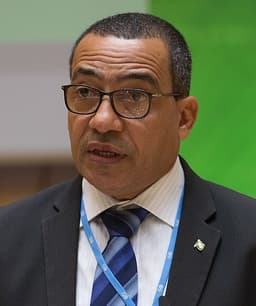
Patrice Trovoada
Politician · Modern
46.9Total
Basic Information
Born
1575
1962
Died
1661
—
Era
Modern
Modern
Nationality
Ottoman Empire
Sao Tome
Occupation
Politician
Politician
Civilization
Middle Eastern
Other
Score Comparison
Military (10%)
30.0
46.1
Political (20%)
62.7
68.0
Influence (20%)
72.0
47.9
Legacy (20%)
55.0
39.2
Leadership (15%)
78.0
40.0
Strategy (15%)
57.5
43.0
TOTAL
61.6
46.9
Koprulu Mehmed Pasha — Complete Timeline
1656 AD
Reform of the Ottoman Military and BureaucracyReform◆ Major
Koprulu Mehmed Pasha implemented sweeping reforms, including purging corrupt officials, restoring discipline in the Janissary corps, and reorganizing the tax system. These measures stabilized the empire and restored its military effectiveness after years of decline.
ReformOttoman AdministrationMilitary
Impact: nationalconstructive
Appointment as Grand VizierPolitical Action
Koprulu Mehmed Pasha was appointed Grand Vizier by Sultan Mehmed IV during a period of crisis. He was granted unprecedented authority to restore order, marking the beginning of the Koprulu era of reform and revitalization of the Ottoman state.
Koprulu EraReformOttoman Politics
Impact: nationalconstructive
1657 AD
Suppression of the Venetian Blockade of the DardanellesWar◆ Major
Koprulu Mehmed Pasha led a campaign to break the Venetian blockade of the Dardanelles. The Ottoman navy defeated the Venetian fleet, securing the sea route to Istanbul and restoring Ottoman naval power in the Aegean.
Ottoman-Venetian WarNaval BattleDardanelles
Impact: regionalconstructive
Execution of Patriarch Parthenius IIIPolitical Action
Koprulu Mehmed Pasha ordered the execution of Greek Orthodox Patriarch Parthenius III, accusing him of treason and correspondence with the Venetians. This act demonstrated his harsh methods in suppressing dissent and consolidating control.
ExecutionReligious PoliticsRepression
destructive
Patrice Trovoada — Complete Timeline
2008 AD
Appointed Prime Minister of São Tomé and PríncipePolitical Action
Patrice Trovoada, son of former president Miguel Trovoada, was appointed Prime Minister by President Fradique de Menezes. His first term was short-lived due to a no-confidence vote.
AppointmentGovernmentSão Tomé and Príncipe
Impact: national
2010 AD
Returned as Prime MinisterPolitical Action◆ Major
Trovoada's party won the parliamentary elections, and he became Prime Minister again. He served until 2012, implementing economic reforms and facing political instability.
ElectionGovernmentSão Tomé and Príncipe
Impact: nationalconstructive
2014 AD
Third Term as Prime MinisterPolitical Action
Trovoada won a third term as Prime Minister after his party secured a majority in parliament. His government focused on infrastructure and attracting foreign investment.
ElectionGovernmentSão Tomé and Príncipe
Impact: nationalconstructive
Expert Analysis
Origins
Koprulu Mehmed Pasha was born around 1575 in the village of Kopru (now in Albania) into an Albanian Orthodox family. His early life is obscure, but he entered Ottoman service through the devshirme system, converting to Islam and rising through the palace bureaucracy. He served as a tax official and governor before becoming Grand Vizier at age 80 in 1656. In contrast, Patrice Trovoada was born in 1962 in Sao Tome and Principe, the son of Miguel Trovoada, the country's first prime minister and later president. He studied in Portugal and France, earning a degree in law. His political career was shaped by his family's prominence and the small island nation's turbulent democratic transitions.
Rise to Power
Koprulu Mehmed Pasha's rise culminated in his appointment as Grand Vizier on September 15, 1656, during a severe crisis: the Ottoman Empire faced military defeats, a Venetian blockade of the Dardanelles, and internal corruption. Sultan Mehmed IV granted him unprecedented authority, including the power to execute anyone without prior approval. Koprulu restored order by executing corrupt officials and disciplining the Janissaries. Patrice Trovoada first became Prime Minister in 2008 after his party, Independent Democratic Action (ADI), won elections, but his government fell after a no-confidence vote in 2009. He returned to power in 2010, serving until 2012, and again in 2014 after his party won a majority, focusing on infrastructure and attracting foreign investment. His multiple terms reflect the fragmented politics of Sao Tome.
Leadership & Governance
Koprulu Mehmed Pasha's leadership was authoritarian and reformist. He purged the bureaucracy, executing an estimated 30,000-60,000 people to root out corruption, and restored military discipline. He reorganized the Janissary corps and tax system, increasing state revenue. His political score of 62.7 and leadership score of 78.0 reflect his decisive, ruthless governance. Patrice Trovoada's governance was more democratic but constrained by coalition politics. He implemented economic reforms, including privatization and budget discipline, and secured loans from the IMF. His political score of 68.0 matches his diplomatic skills, but his leadership score of 40.0 indicates less decisive control compared to Koprulu's autocratic style.
Triumph & Tragedy
Koprulu Mehmed Pasha's greatest triumph was breaking the Venetian blockade of the Dardanelles in 1657, securing Ottoman sea routes. His reforms revitalized the empire, enabling future conquests. However, his methods were brutal: the execution of Patriarch Parthenius III in 1657 alienated Christian subjects, and his repression created fear. His legacy score of 55.0 reflects mixed long-term impact. Patrice Trovoada's triumph was stabilizing Sao Tome's economy and securing international support, but his failure to diversify the economy beyond oil and cocoa left the country vulnerable. His legacy score of 39.2 indicates limited lasting change.
Character & Destiny
Koprulu Mehmed Pasha was pragmatic, authoritarian, and ruthless. His advanced age (80 at appointment) did not hinder his energy; he worked tirelessly to restore order. His character shaped his fate: his harsh methods succeeded in the short term but sowed resentment. Patrice Trovoada was more conciliatory, but his reliance on family connections and political maneuvering led to instability. His strategic score of 43.0 shows less foresight than Koprulu's 57.5.
Legacy
Koprulu Mehmed Pasha founded the Koprulu dynasty, which produced five Grand Viziers in 50 years, shaping Ottoman governance. His reforms delayed the empire's decline. Patrice Trovoada's legacy is tied to Sao Tome's democratic consolidation, but his impact is limited by the country's small size and economic challenges. Koprulu's influence score of 72.0 far exceeds Trovoada's 47.9.
Conclusion
Koprulu Mehmed Pasha had a greater impact on history. His total score of 61.6 vs Trovoada's 46.9 reflects his transformative role in the Ottoman Empire. While Trovoada was a competent leader in a small nation, Koprulu's reforms affected millions and altered the course of an empire. His leadership score of 78.0 and influence of 72.0 demonstrate a more significant historical footprint. The 14.7-point gap underscores this. Koprulu Mehmed Pasha is the more consequential figure.
Rankings
🥇
Koprulu Mehmed PashaLeader
Mil: 30.0Pol: 62.7Inf: 72.0
61.6
🥈
Patrice Trovoada
Mil: 46.1Pol: 68.0Inf: 47.9
46.9
+14.7 behind
How This Comparison Works
Algorithm
Each figure is scored on 6 dimensions (0—100 scale) based on structured historical data: Military (10%), Political (20%), Influence (20%), Legacy (20%), Leadership (15%), Strategy (15%). The weighted total produces the final ranking.
Data Sources
Scores are computed from structured sub-indicators in the database. Scale factors adjust for era (Ancient ×0.85, Modern ×1.0) and civilization size (Eastern ×1.05, Other ×0.80) to account for differences in population and military scale.
Maximum 3 Figures
Comparisons are limited to 2—3 figures to ensure readability and statistical meaningfulness.
Error Margins
±5 points per dimension — Sub-scores are derived from historical records with inherent uncertainty. Two figures within 5 points on a dimension should be considered roughly equivalent in that area.
Total Score Accuracy
±3 points overall — The weighted combination of 6 dimensions produces a total score with approximately ±3 points of uncertainty. Differences of less than 3 points are not statistically significant— the figures are effectively tied.
Known Limitations
- Historical records are incomplete and uneven across civilizations
- Figures from oral-tradition societies may be underrepresented
- Occupation labels can misclassify multi-role figures
- Scores measure capability and impact, not moral character
- Quantitative scoring is a comparison tool, not absolute truth
Capability Radar
Military (10%) — Battles & Warfare
Battles
55
23
Win Rate
60
26
Expansion
45
26
Political (20%) — Governance & Reform
Reform
85
45
Diplomacy
70
55
Economy
65
40
Influence (20%) — Cultural & Global Reach
Cultural
50
10
Global
55
15
Legacy (20%) — Historical Impact
Historical
70
20
Longevity
65
15
Leadership (15%) — Power & Stability
Tenure
60
60
Stability
80
35
Strategy (15%) — Tactics & Innovation
Strategy
65
31
Tactics
50
32
Reform
75
34
Similar Comparisons
Comments & Discussion
No comments yet. Be the first to share your thoughts!