Loading...
This comparison has not been analyzed yet.
One-time AI generation (~1 minute). Scores and timeline are already available below.
Juan Alvarez vs Nikolai Kuznetsov
Nikolai Kuznetsov leads by 12.2 pts · 2 figures compared
…
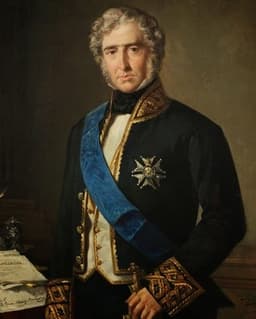
Juan Alvarez
General · Modern
47.0Total

Nikolai Kuznetsov
General · Modern
59.2Total
Basic Information
Born
1790
1904
Died
1867
1974
Era
Modern
Modern
Nationality
Mexico
USSR
Occupation
General
General
Civilization
Western
Western
Score Comparison
Military (10%)
45.0
46.7
Political (20%)
43.7
62.7
Influence (20%)
51.8
55.0
Legacy (20%)
44.2
58.0
Leadership (15%)
54.2
72.0
Strategy (15%)
38.6
60.7
TOTAL
47.0
59.2
Juan Alvarez — Complete Timeline
1854 AD
Led the Revolution of AyutlaPolitical Action
Alvarez issued the Plan of Ayutla, calling for the overthrow of Santa Anna's dictatorship. He led a rebellion in southern Mexico that gained widespread support, forcing Santa Anna into exile in 1855.
Revolution of AyutlaSanta AnnaPlan of Ayutla
Impact: nationalprogressive
1855 AD
Became President of MexicoPolitical Action◆ Major
After Santa Anna's fall, Alvarez was elected interim president of Mexico. He served for only a few months, but his government initiated the liberal Reforma, including the Ley Ju
PresidencyReformaLey Juárez
Impact: nationalconstructive
Resigned the PresidencyPolitical Action
Alvarez resigned the presidency in favor of Ignacio Comonfort, citing his age and the need for a more moderate leader. He returned to his home state of Guerrero, where he remained a political figure.
ResignationComonfortGuerrero
Impact: national
Nikolai Kuznetsov — Complete Timeline
1939 AD
Appointment as People's Commissar of the NavyPolitical Action◆ Major
Kuznetsov was appointed People's Commissar of the Navy of the USSR at age 35. He oversaw the modernization and expansion of the Soviet fleet, including the construction of new battleships and submarines.
Soviet NavyModernizationLeadership
Impact: nationalconstructive
1941 AD
Order to put the fleet on high alert before Operation BarbarossaPolitical Action◆ Major
On June 21, 1941, Kuznetsov ordered the Soviet Navy to move to operational readiness, anticipating the German invasion. This action prevented the fleet from being caught by surprise, saving many ships and personnel.
World War IIPreparednessNavy
Impact: nationalconstructive
1947 AD
Dismissal and demotion after the warPolitical Action◆ Major
Kuznetsov was dismissed from his post as Navy Commander-in-Chief and demoted to vice-admiral by Stalin. This was part of a purge of military leaders, with Kuznetsov accused of insufficient political loyalty.
Stalinist PurgeDemotionPost-War
Impact: nationaltragic
1953 AD
Rehabilitation and reinstatement as Admiral of the FleetPolitical Action◆ Major
After Stalin's death, Kuznetsov was rehabilitated and reinstated as Admiral of the Fleet of the Soviet Union. He resumed leadership of the navy, advocating for a balanced fleet including aircraft carriers.
RehabilitationCold WarNavy
Impact: nationalconstructive
1956 AD
Second dismissal and final demotionPolitical Action
Kuznetsov was again dismissed by Khrushchev after disagreements over naval strategy, particularly the role of surface ships versus submarines. He was demoted to vice-admiral and forced into retirement.
KhrushchevNaval StrategyRetirement
Impact: nationaltragic
This comparison has not been analyzed yet.
One-time AI generation (~1 minute). Scores and timeline are already available below.
Rankings
🥇
Nikolai KuznetsovLeader
Mil: 46.7Pol: 62.7Inf: 55.0
59.2
🥈
Juan Alvarez
Mil: 45.0Pol: 43.7Inf: 51.8
47.0
+12.2 behind
How This Comparison Works
Algorithm
Each figure is scored on 6 dimensions (0—100 scale) based on structured historical data: Military (10%), Political (20%), Influence (20%), Legacy (20%), Leadership (15%), Strategy (15%). The weighted total produces the final ranking.
Data Sources
Scores are computed from structured sub-indicators in the database. Scale factors adjust for era (Ancient ×0.85, Modern ×1.0) and civilization size (Eastern ×1.05, Other ×0.80) to account for differences in population and military scale.
Maximum 3 Figures
Comparisons are limited to 2—3 figures to ensure readability and statistical meaningfulness.
Error Margins
±5 points per dimension — Sub-scores are derived from historical records with inherent uncertainty. Two figures within 5 points on a dimension should be considered roughly equivalent in that area.
Total Score Accuracy
±3 points overall — The weighted combination of 6 dimensions produces a total score with approximately ±3 points of uncertainty. Differences of less than 3 points are not statistically significant— the figures are effectively tied.
Known Limitations
- Historical records are incomplete and uneven across civilizations
- Figures from oral-tradition societies may be underrepresented
- Occupation labels can misclassify multi-role figures
- Scores measure capability and impact, not moral character
- Quantitative scoring is a comparison tool, not absolute truth
Capability Radar
Military (10%) — Battles & Warfare
Battles
25
30
Win Rate
30
35
Expansion
10
20
Political (20%) — Governance & Reform
Reform
40
75
Diplomacy
30
50
Economy
20
30
Influence (20%) — Cultural & Global Reach
Cultural
25
40
Global
15
45
Legacy (20%) — Historical Impact
Historical
35
65
Longevity
20
50
Leadership (15%) — Power & Stability
Tenure
35
60
Stability
20
40
Strategy (15%) — Tactics & Innovation
Strategy
25
55
Tactics
20
40
Reform
15
85
Similar Comparisons
Comments & Discussion
No comments yet. Be the first to share your thoughts!